| Author |
 Replies: 18 / Views: 3,759 Replies: 18 / Views: 3,759 |
|
Pillar of the Community
Canada
576 Posts |
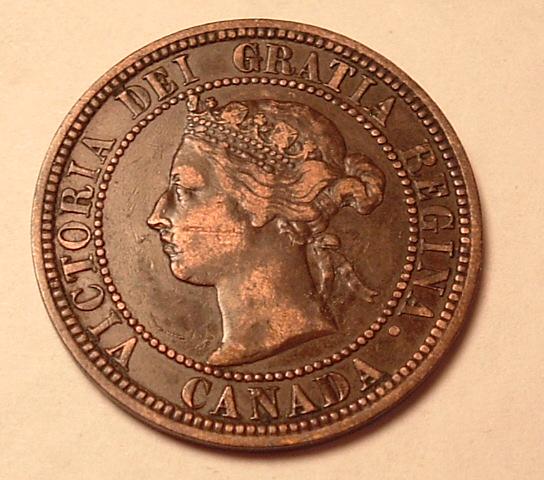
I've just picked up the 2011 catalogue with its extended large cent varieties section at the back. Love it. A question for you. I've checked about 25 1882H cents and have already found 3 examples of the extreme doubling on the obverse. According to the guide these are expensive coins. Am I just lucky or are these prices preliminary?
|
|
|
|
Pillar of the Community
 United States
1380 Posts |
Very lucky. It is an interesting and scarce coin. When we wrote the section, I knew of four pieces. It stands to reason that there are more, but given their scarcity I don't think the die lasted very long. That die is also one of the obverse 2 over obverse 1 dies.
The pricing in the variety section was set based upon the apparent scarcity and demand for the various varieties. However, making the variety prices reasonably fit with the scarcity, demand, and pricing for the 1859 DP1 and DP2 was a challenge. In the end the market will settle out where it setttles out on these varieties.
http://www.victoriancent.com2011 & 2025 Fred Bowman Literary Award, 2025 Guy Potter Literary Award, 2022 Paul Fiocca Award, & 2020 J. Douglas Ferguson Award. Life Member of RCNA.
|
|
Pillar of the Community
 Canada
576 Posts |
Thanks for the reply! I appreciate it. Now a second quesiton: If I send these 1882H cents in to ICCS or CCCS will they clearly identify the variety on their holder?
|
|
Pillar of the Community
United States
1380 Posts |
As an interesting example of variety pricing, an 1859 triple punched 9 cent has been available on E-Bay for a couple of months at a price near that listed in the new Charlton variety section. It is a very scarce coin, but hasn't sold yet, probably because of the price.
My suspicion is that most variety collectors will not pay that price now because they harbor hopes of cherry picking that piece at the regular 1859 price. That is what variety collectors have done for years and for now it keeps the actual trading prices of these coins down.
Now that varieties are becoming more publicized, we will see them become much harder to find as unattributed varieties. Collectors will find them and most will disappear fromt he general cent population. That is when we will see if the popularity of variety collecting (demand) and the scarcity of some of these varieties (supply) work to drive the price up to levels consistent with the 1859 DP1 and DP2. Quite frankly, many of the varieties listed in the new Charlton section, including the 1859 TP1, are much scarcer than either the DP1 or DP2, but for now they have much less demand.
http://www.victoriancent.com2011 & 2025 Fred Bowman Literary Award, 2025 Guy Potter Literary Award, 2022 Paul Fiocca Award, & 2020 J. Douglas Ferguson Award. Life Member of RCNA.
|
|
Pillar of the Community
United States
1380 Posts |
I suspect that ICCS will not as of yet, but CCCS would if you ask.
http://www.victoriancent.com2011 & 2025 Fred Bowman Literary Award, 2025 Guy Potter Literary Award, 2022 Paul Fiocca Award, & 2020 J. Douglas Ferguson Award. Life Member of RCNA.
|
|
Pillar of the Community
United States
1380 Posts |
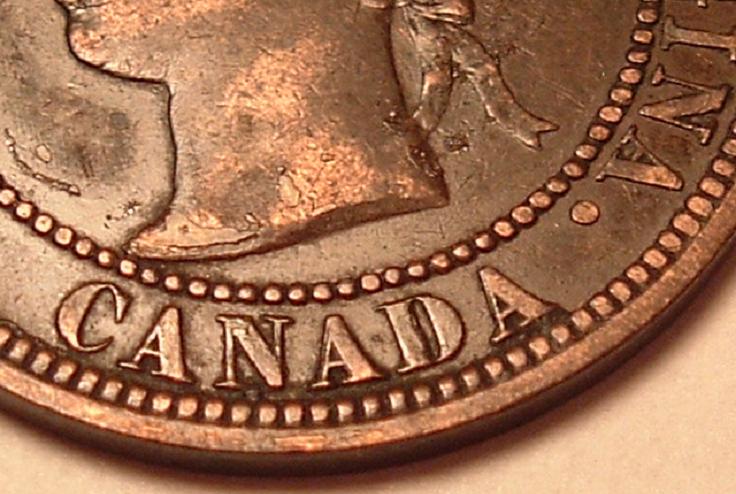
P.S. Just to make sure we are talking about the same variety, yours should have a die crack and a die chip in the C of VICTORIA. There are other hub doubled 1882H cents with much less doubling than the one in the Charlton catalog.
http://www.victoriancent.com2011 & 2025 Fred Bowman Literary Award, 2025 Guy Potter Literary Award, 2022 Paul Fiocca Award, & 2020 J. Douglas Ferguson Award. Life Member of RCNA.
|
|
Valued Member
Canada
153 Posts |
And to add (and reitterate) what Bosox said about the Obverse. It should be an Obv 2/1, where Vicky will have a smooth rounded chin/throat, but the neck truncation point will be to the left of the bead just above the C in Canada (it will be an Obv 2 truncation). As Bosox said, there are other hub-doubled 1882H's that are not as scarce as that listed in Charlton. Unless someone sprinkled pixie dust on you, I don't think that you have 3 out of 25 .. it would be extremely rare just to have 1.
|
|
Pillar of the Community
Canada
576 Posts |
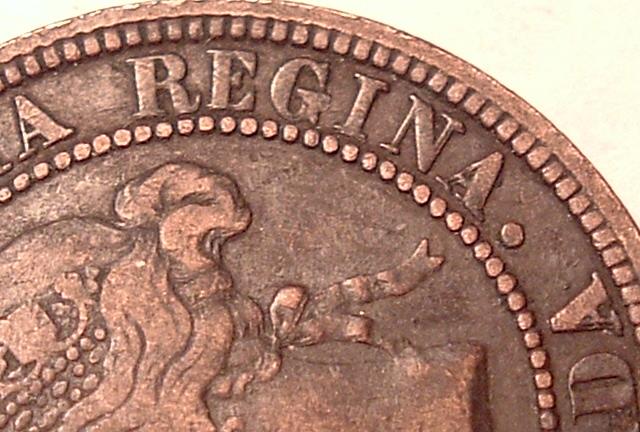
Bosox, thanks for the info! Two of the three have the die crack and die chip in the C of Victoria, as well as pronounced doubling of the adjacent T. The third has REGINA with doubling but it's more subdued as if it's an early die example.
|
|
Pillar of the Community
United States
1380 Posts |
The third will be a different die, not a different state of the same die. The doubling comes from when the die was made. It does not change as the die ages and wears. Pics would be good.
http://www.victoriancent.com2011 & 2025 Fred Bowman Literary Award, 2025 Guy Potter Literary Award, 2022 Paul Fiocca Award, & 2020 J. Douglas Ferguson Award. Life Member of RCNA.
|
|
Pillar of the Community
Canada
576 Posts |
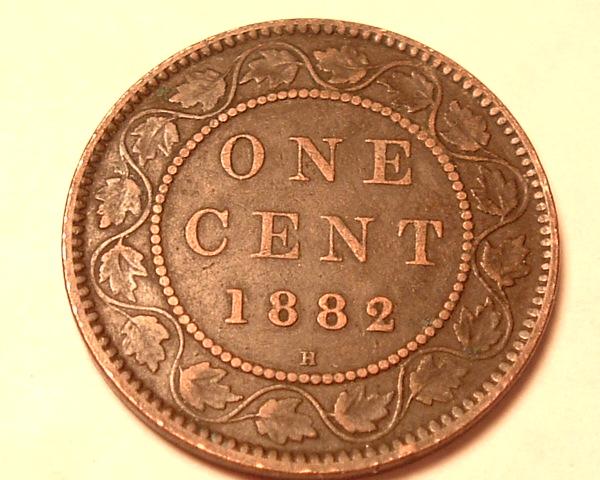
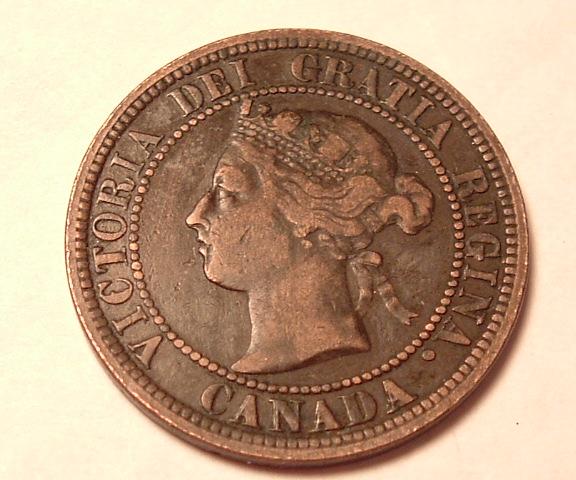
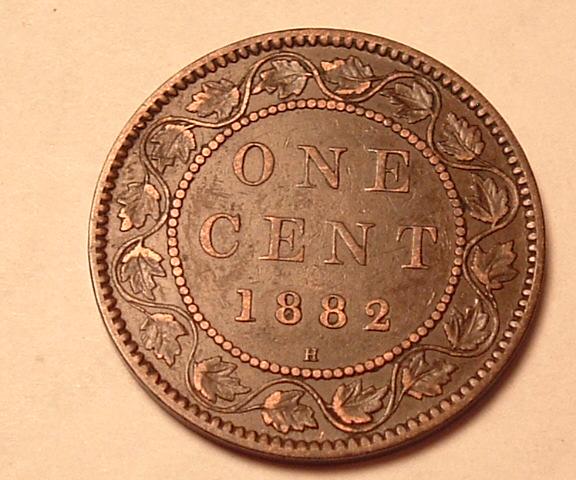
Here they are. The first example is a little rough. It has some rim and surface damage. Obviously a dug item. But it has the strongest doubling of the three. The second coin is a lower grade and 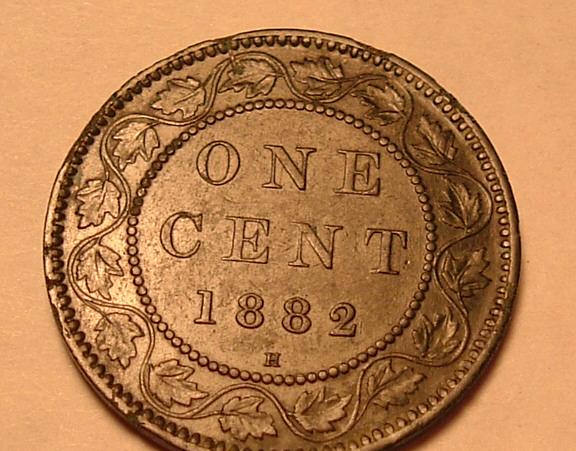 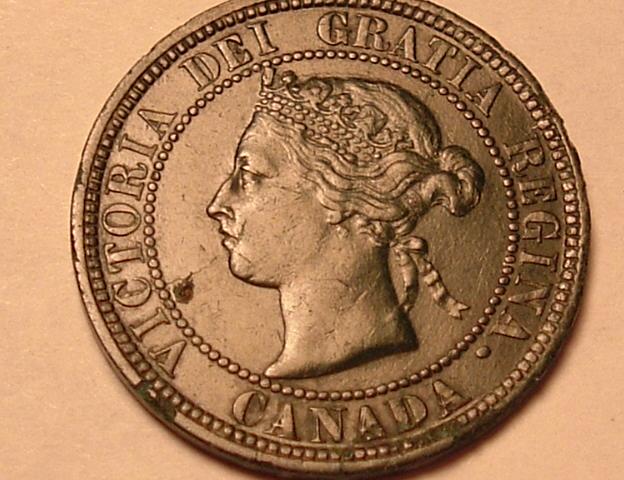 the die crack on C isn't as robust. The third coin has subtle doubling of the letters of REGINA and the two A's in Canada. |
|
Pillar of the Community
Canada
576 Posts |
Another view of the first one. 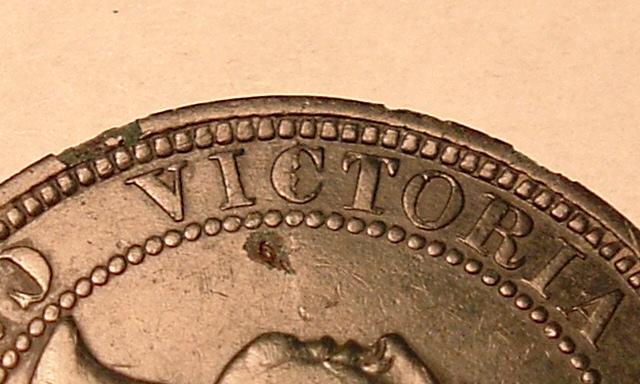 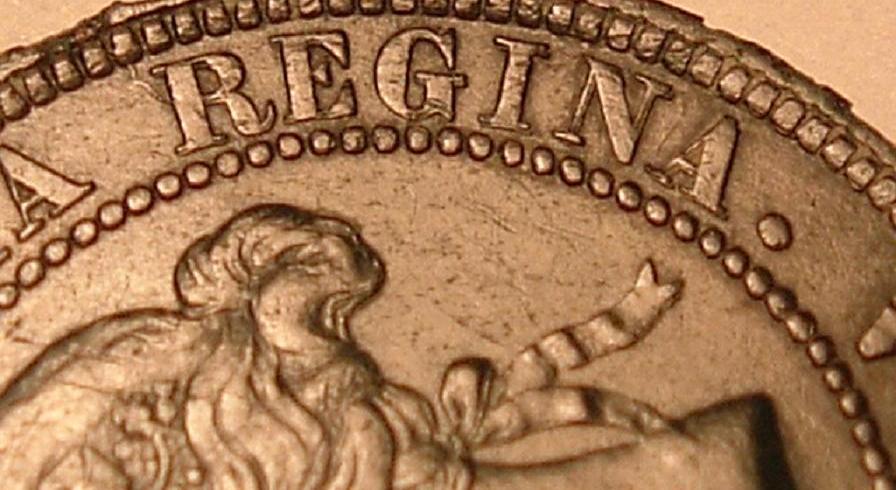 |
|
Pillar of the Community
Canada
576 Posts |
|
|
Pillar of the Community
Canada
576 Posts |
|
|
Pillar of the Community
United States
1380 Posts |
The first two look to be the one listed in the Charlton catalog. The third is also a known 2 over 1 die, but a different die, one with the denticles also doubled between VICTORIA and CANADA.
http://www.victoriancent.com2011 & 2025 Fred Bowman Literary Award, 2025 Guy Potter Literary Award, 2022 Paul Fiocca Award, & 2020 J. Douglas Ferguson Award. Life Member of RCNA.
|
|
Pillar of the Community
Canada
576 Posts |
Bosox, thanks for the reply! I have many more to check here. You never know what will turn up. I'd like to find one of those single serif on N 1881 pieces but after checking 47 coins so far, not one!
|
|
Valued Member
Canada
250 Posts |
Hi Bosox, can you recommend where I can look for resources (other than coinsandcanada.com and Charltons) for comprehensive coin varieties?
Thx
(sorry this is a little off topic)
|
| |
Replies: 18 / Views: 3,759 |




 Posted 10/05/2010 2:28 pm