| Author |
 Replies: 15 / Views: 7,443 Replies: 15 / Views: 7,443 |
|
|
Pillar of the Community
United States
3546 Posts |
I would like some feedback on these two notes w/r/t: a) authenticity, b) grade, c) rarity, d) current $ value in today's market and e) why these type of notes are special compared to the normal $ 20 confederate note. f) I also have another similar note like these two but it, unfortunately, is completely torn in half. What type of monetary value, if any, does a torn note like this have? It appears that these two notes have been folded extensively and are almost ready to tear in half but are not quite there. I have heard that the 'ratification' confederate bill commands a premium if authentic etc. Any assistance in answering the above points a) - f) along with any other useful comments would be greatly appreciated. Thanks 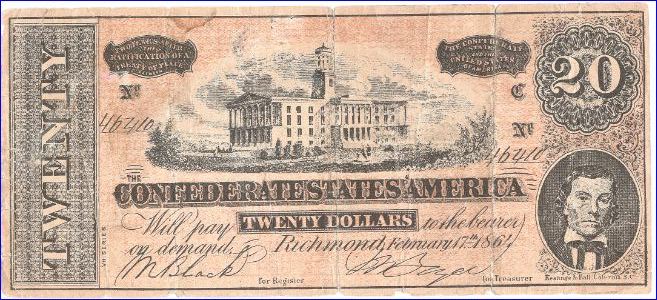 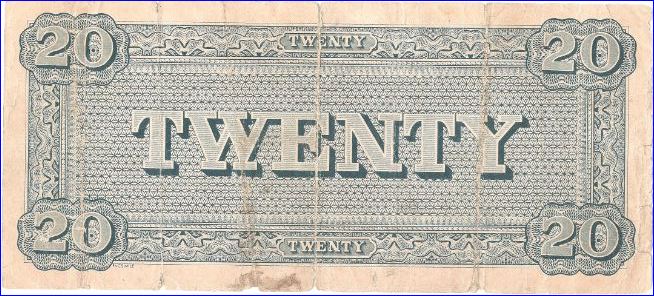 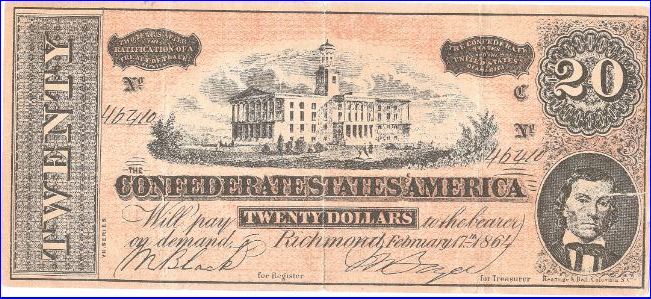 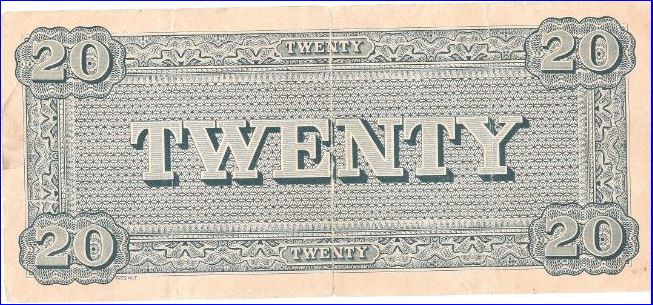 |
|
|
|
Pillar of the Community
United States
4846 Posts |
these are copy notes IMO and are not worth much more then the paper its printed on...
|
|
Pillar of the Community
 United States
3546 Posts |
Adam,
What exact clues can one look for to ascertain whether these particular notes are real or copies?
Would your response also apply to other other confederate notes?
Thanks
|
|
Pillar of the Community
United States
4846 Posts |
well, look at the serial numbers....the EXACT same. and the printing looks all wrong. and if you feel and bend the notes ill expect them to be crispy and make a crackling noise when you bend them? and for my answer, if there are 2 of the same SN's on 2 different notes, its a 99.999% chance that they are fake.
Edited by Adam_E
10/24/2010 01:38 am
|
|
Pillar of the Community
United States
3546 Posts |
Adam,
Is it correct to assume that you are saying that all authentic confederate notes would not have this crispy crackly feature/sound?
By the way these notes do make a crackling noise.
Mark
|
|
Pillar of the Community
United States
4846 Posts |
|
|
Pillar of the Community
United States
3546 Posts |
please excuse my lack of knowledge but what does IMO stand for?
|
|
Pillar of the Community
United States
4846 Posts |
|
|
Valued Member
United States
121 Posts |
Here is a list of the more popular serial numbers that have been copied or "faked"
$20; Feb. 17, 1864
1372, 2625, 2626, 13410, 18410, 23483, 46410, 76627, 80967, 93941
Sorry to say yours is among them.
|
|
Pillar of the Community
United States
3546 Posts |
When the comment was made that the printing just did not look right on my samples I personally was unable to determine what specifically did not look right since I do not have an original one to compare it to.
Could someone elaborate on this aspect further and assist to help folks that are not as versed in paper currency?
Thanks
|
|
Pillar of the Community
United States
3546 Posts |
Has anyone ever run into fake Confederate currency that does not have that crispy feeling texture?
How could one differentiate between a real and a fake federate bill if the fake one did not have either a crispy texture or one of the above mentioned serial numbers, for example?
I am sure that it's possible every now and then to even find counterfeit federate currency with serial numbers other than the ones mentioned above.
thanks
|
|
Pillar of the Community
United States
4846 Posts |
the crispy feeling was more of an educated guess.
the design is mostly right but it just doesn't "look" right
|
|
Valued Member
United States
439 Posts |
Is there something specific that we can look for to determine if a confederate bill is a fake? I see them sometimes and assume that they are fakes. If there is one on ebay is there a way to tell the ones to stay away from? |
|
Valued Member
United States
439 Posts |
There is a guy on Craigslist selling some confederate bills. I asked for the sn but forgot to ask for the dates. However the serial numbers are, the one bill is 18424 the five is 18262 and the twenty is 46410. BINGO. The 46410 is there, I guess I don't have to ask the date, to coincidental to even bother. Be careful out there.
|
|
New Member
United States
10 Posts |
One of the indicators I use is the ink in the signatures. On most authentic notes the ink from the signature would have bled through to the back because of the thinness of the paper. The signatures would also never be black but more of a faded red color from the high amount of iron present in early ink.
|
|
Pillar of the Community
United States
3098 Posts |
Also, the ink they used for signatures were acidic, so the area around the signature would have some "scorch" marks
|
| |
Replies: 15 / Views: 7,443 |
|









 Posted 10/24/2010 01:32 am


