Quote:
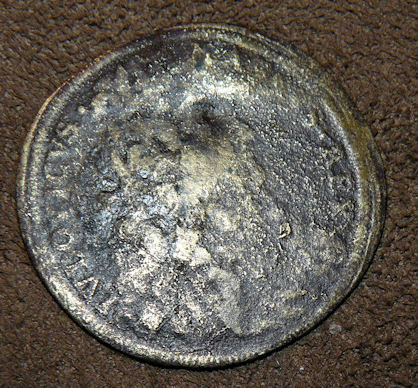
why is there an image of Louis XIV on the obverse - a 17th century (mostly) French King on an 18th Century German token?
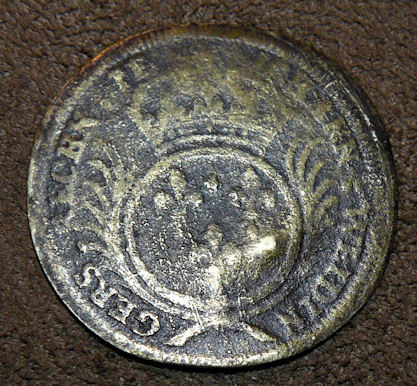
Though these rechenpfennigs were made in Nuremberg, they were exported all over Europe. Ones with French designs were intended primarily for the French market.
The reign of Louis XIV and the mastership of Johann Wiedinger did overlap for a few years: 1710-1715. It's entirely possible that this rechenpfennig dates from this narrow window of time, though it could also have been produced afterwards as a kind of memorial piece.
Quote:
Any idea how many were made?
I don't think mintage records were kept, certainly not for individual types. Jetons in France itself were issued under strict government control, but Nuremberg wasn't in France; mintages were limited only by what they could market and sell. Estimates of mintages could be guessed at from calculating the number of different dies used for each design, but I'm not aware of rechenpfennigs being studied in that much detail. If they have been conducted, the studies would probably be in German.
Quote:
What was the purpose of these things?
As was stated on the UKDFD page I linked to above, rechenpfennigs or jetons were originally used on an abacus-like board called a "counting board", which was necessary to calculate sums of money back before the invention of modern conveniences like the calculator, decimal currency and 10-digit Western-style numerals.
However, the jeton-makers of Nuremberg didn't really care what you used their jetons for, as long as you bought lots of them. They were often sold with packs of playing cards, dice, or other games of chance, to allow people to "gamble" without illegally using real money. You could even buy a bagful for your kids to use as play money, if you were so inclined.
Don't say "infinitely" when you mean "very"; otherwise, you'll have no word left when you want to talk about something really infinite. - C. S. Lewis












 Posted 12/07/2010 8:29 pm


