










 Posted 12/17/2010 3:45 pm


I disagree with DCH.
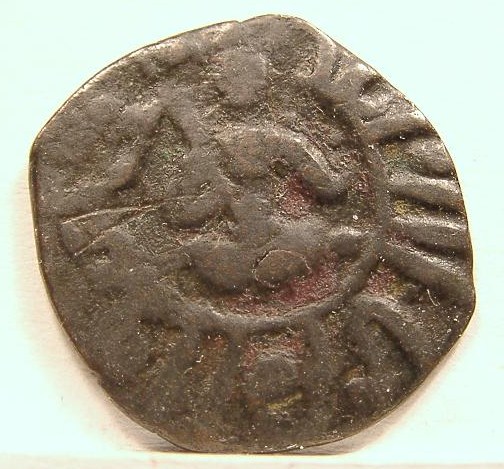
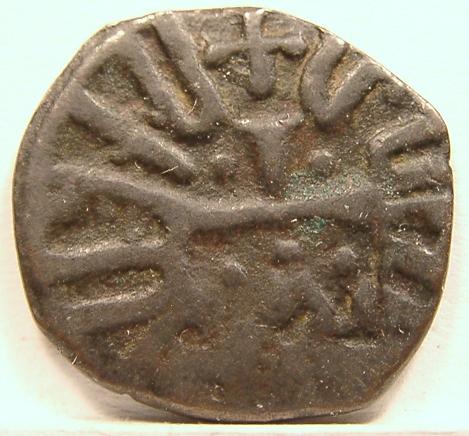
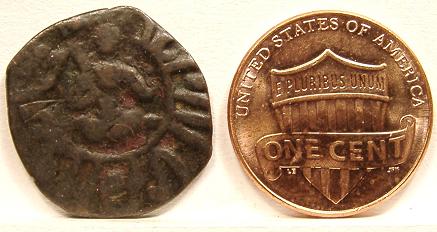
I'm pretty sure this is a copper styca of the kingdom of Northumbria, which was partly in England and partly in Scotland. The styca was the commonest coin in the British Anglo-Saxon series of coins. I've never seen one in such worn condition. However, most stycas are readable and have the name of the king or archbishop on one side and the moneyer on the other. This isn't readable, and I think it was probably issued after 867 AD when the Vikings' puppet king, Egbert, was installed in York. The Vikings issued their own copies of the styca coinage, and these are often rough and with blundered inscriptions.
Value about $5-10 in the US. I doubt that anyone would buy this in the UK.
There are some better specimens at
http://finds.org.uk/earlymedievalco...type/id/1638 and lots on ebay - search for 'Northumbria styca'
I'm pretty sure this is a copper styca of the kingdom of Northumbria, which was partly in England and partly in Scotland. The styca was the commonest coin in the British Anglo-Saxon series of coins. I've never seen one in such worn condition. However, most stycas are readable and have the name of the king or archbishop on one side and the moneyer on the other. This isn't readable, and I think it was probably issued after 867 AD when the Vikings' puppet king, Egbert, was installed in York. The Vikings issued their own copies of the styca coinage, and these are often rough and with blundered inscriptions.
Value about $5-10 in the US. I doubt that anyone would buy this in the UK.
There are some better specimens at
http://finds.org.uk/earlymedievalco...type/id/1638 and lots on ebay - search for 'Northumbria styca'


