| Author |
 Replies: 95 / Views: 9,327 Replies: 95 / Views: 9,327 |
|
|
|
Pillar of the Community
3660 Posts |
Quote:Finally, a 1887-O VAM 22B PCGS MS 62 example was also compared. This coin belongs to Bud Sprink. This coin confirmed the sequencing. So....were you just testing us, or just wearing us out, or waiting to see just how silly we could get by trying to figure it out based on online photos of two of the four coins?  |
|
Pillar of the Community
United States
709 Posts |
Actually, why do we have two stages of pitting? That is the question.
|
|
Pillar of the Community
 United States
3076 Posts |
yes and the photo's clearly show the question at hand........while the eds should show the progressive rusting, and yet the LDS SHOULD show the eliminationtion of the rust... it does not....and the photo's show as the progression continues,,,,in mid state....there is the question....as we see the EXACT rust imprints are there...but more advanced..which proof beyond a doubt that this is...AN ULTRA RARE EDS
|
|
Pillar of the Community
3660 Posts |
I like this theory: Quote:
V22 Plain Jane was struck. The press broke, and in typical laissez-faire New Orleans fashion, the dies sat in the press during the repair process. The anvil reverse pits during this time, being unprotected from the New Orleans climate. The press breaks down again...the dies sit in the press again during the repair process. The anvil reverse pits further during this time. |
|
Pillar of the Community
United States
3076 Posts |
you are so into forensics ZEE...
|
|
Moderator
 United States
23522 Posts |
We should be devoting as much research into the process as the coins themselves.
|
|
Pillar of the Community
United States
709 Posts |
I believe there were two separate 'onset' events that caused these two stages. Dave touched on it when he said the dies were left in the press. I agree with that thesis. In fact, we have a researcher looking into maintenance issues of whether or not the Morgan and Orr presses were down for any appreciable length of time.
I have also asked him to look into whether the New Orleans mint was closed for any appreciable time. It turns out 1887 was the third most active year for hurricanes in history.
No radar in those days. The weather got progressively worse and likely the mint sent their workers home. At lest two and possibly a third hurricane affected New Orleans, Louisiana that year. Either way, the dies were left in the press and when the press was restarted, the workers were only interested in getting coins out the door. The other thing that was noticed was the pitting pattens matched on both die states.
Edited by Ozland
12/19/2010 02:22 am
|
|
Pillar of the Community
United States
3076 Posts |
that was my entire point...
OZ.the patterns match both....
|
|
Pillar of the Community
3660 Posts |
Quote:
Actually, why do we have two stages of pitting? That is the question. Probably not a very good question either, unless it can be determined that there are two stages of pitting. Quote:
Only explanation I can come up with is that the dies clashed without letter transfer before the pitting progressed from the EDS coin to the LDS coin. It doesn't sound to me like anyone is very clear on whether the pitting is staged, or progressive....(There really is a very big difference believe it or not). Quote:
Dave touched on it when he said the dies were left in the press. Dave did not say that.....He mentioned it as a hypothetical theory only.....a "what if" sort of thing. Quote:
In fact, we have a researcher looking into maintenance issues of whether or not the Morgan and Orr presses were down for any appreciable length of time. I'll be sure to hold my breath on that one. Quote:
At lest two and possibly a third hurricane affected New Orleans, Louisiana that year. Either way, the dies were left in the press and when the press was restarted, the workers were only interested in getting coins out the door. You would have to have lived in New Orleans or another Gulf area to realize how silly that sounds...People do not go running away from hurricanes as you may think, hurricanes take only a few hours to pass, and when they have, it is back to life as normal. Regardless of whether or not the dies were left in the presses for extended periods of time due to hurricanes or mechanical breakdowns or any other reason..... If your purpose is to determine if 22A EDS or 22A LDS came first, it really does not take too much exertion of thought to see the obvious (unless a person actually believes that pitting (down in a die device) is a reversible possibility). |
|
Pillar of the Community
3660 Posts |
Look guys, I know that many times I am looking too closely at something with a particular agenda in mind, and I completely overlook the obvious, so I am not trying to brow beat anyone here..... but pitting in a device cannot be reversed.....(okay, sure you can polish the die down to remove the pitting in the field), but if you continue to polish the die to remove the pitting in the device, you will remove the device as well....this coin was not struck with a die void of devices (EDS is EDS and LDS is LDS). 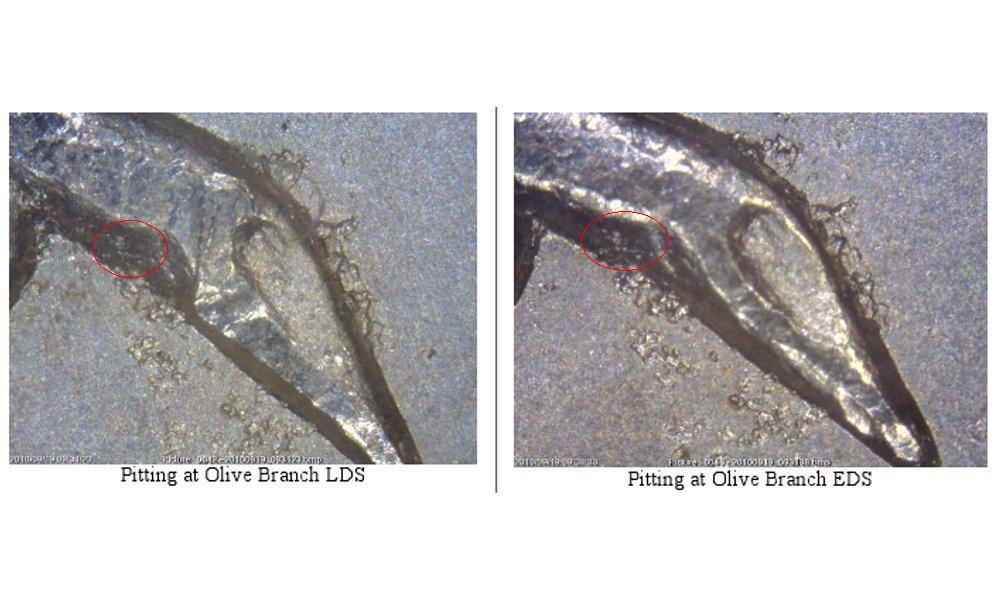 edited to add: Take another look and think about it: 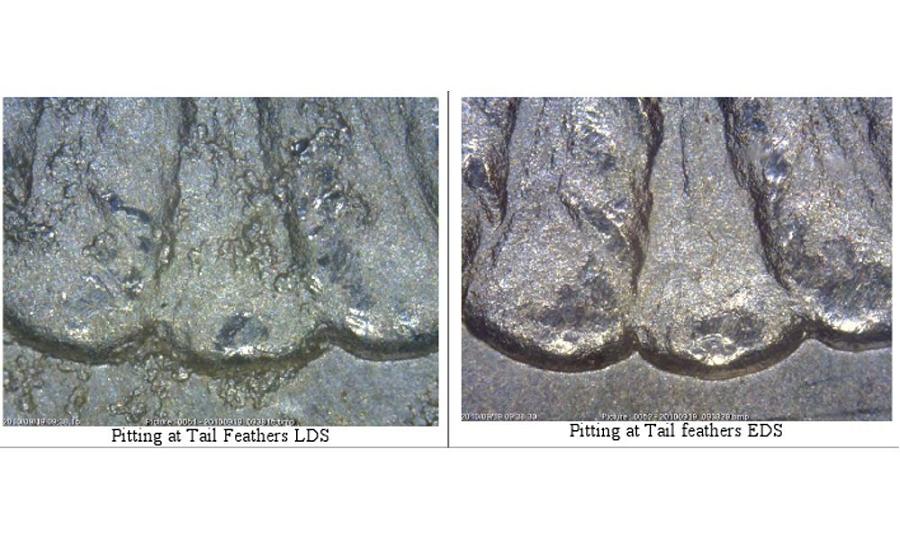 Edited by zeewool
12/19/2010 10:26 am
|
|
Valued Member
United States
133 Posts |
Since there seems to be more of the LDS than the one EDS, Why does PCGS have the EDS listed as a Minor Variety?
|
|
Pillar of the Community
3660 Posts |
|
|
Moderator
United States
23522 Posts |
Quote:
Since there seems to be more of the LDS than the one EDS, Why does PCGS have the EDS listed as a Minor Variety? According to VAMworld, the EDS was only known as of May 2010. 8 months is far too brief a time for PCGS to react to anything short of a fire in the President's office. |
|
Pillar of the Community
United States
709 Posts |
From Leroy Van Allen. 87-O VAM 22A (revised). Has doubled eyelids and stars of VAM 22. Pitting only at end of olive branch and at olive. So is early die state of pitting that progresses to below tail feathers. Revised description to indicate progressive pitting. 22A(revised) III218 · C3a (Doubled Eyelid & Stars, Pitted Reverse) (181) I-3 R-6 Reverse C3a-- Raised dots of die rust pitting that starts at olive branch end and progresses to below tail feathers. |
|
Pillar of the Community
United States
709 Posts |
The top 100 Morgan dollar Varieties: The VAM keys by Michael S. Fey Ph.D and Jeff Oxman was published in 1997. 1887-O VAM 22A pitted reverse is a top 100 coin. In the thirteen years since the publication of The VAM Keys, this is the only early die state specimen known at this time. From the time I acquired the coin I was curious about the pitting on the reverse and the operative mechanism of what caused the pitting and whether the pitting matched a later die state. |
| |
Replies: 95 / Views: 9,327 |





 First Page
 Previous Page


 Posted 12/19/2010 01:24 am





