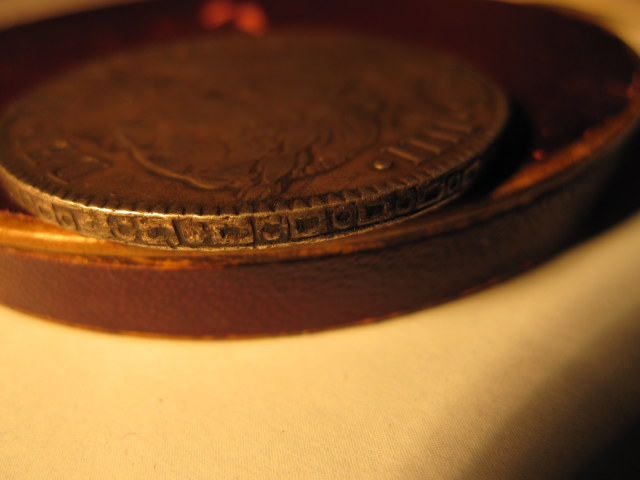
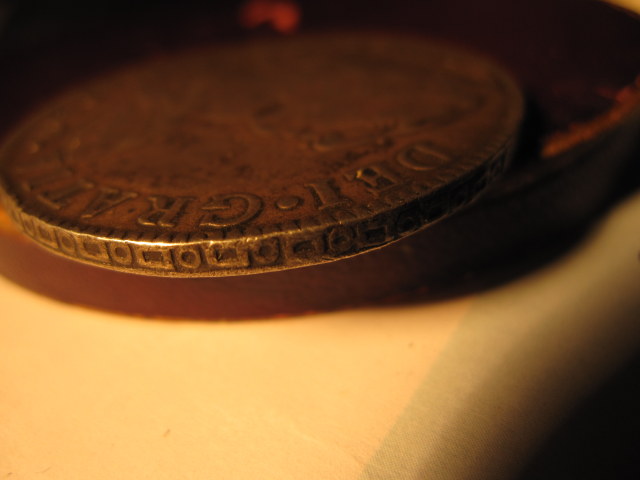
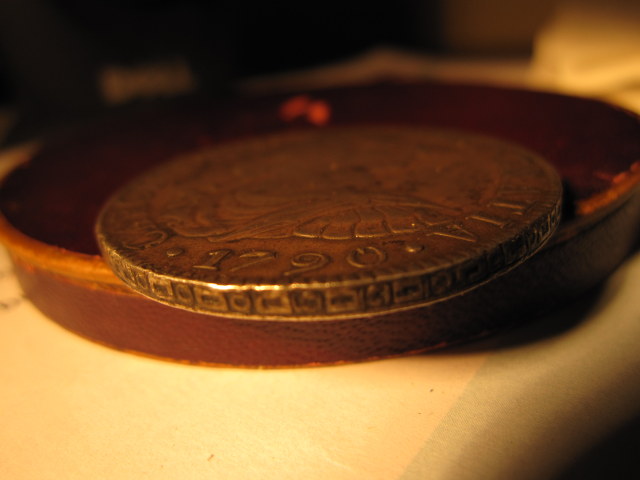
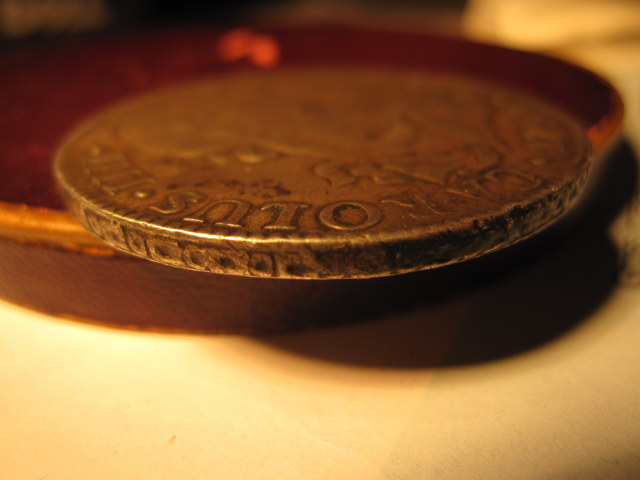
will-walk I will give it a try. The photos do show the overlap but because there are only 4 pictures it makes the continuity of the edge hard to evaluate. The darkness to the right side of each shot further reduces the portion that is clear.
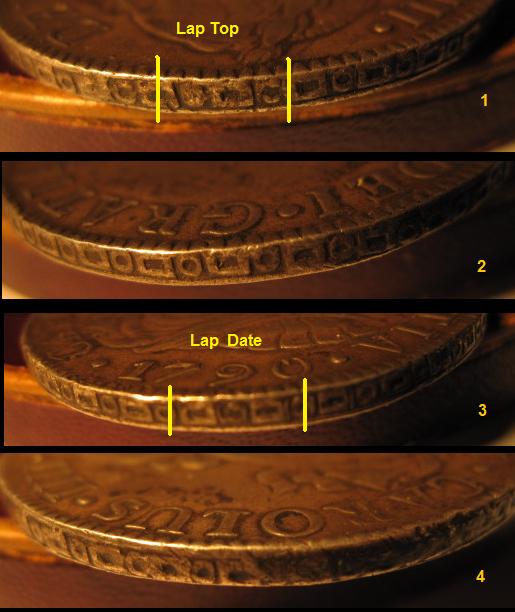
The overlaps are found in photos 1 and 3. They are about the same length (hard to be positive because of what appears to be damage). The first is over the laurel leaves starting at the left most laurel and running toward the King's forehead (right to left in the picture). The end point at the left is not clear. The opposite lap is in the proper area at 180 degrees and runs from the 0 to the 7 in the date. Both ends are clear.
Here is a modified view of what you posted.
That evidence points to the coin being real.
But I also see some possible wobble in the design which best seen on a color inversion of your pictures,
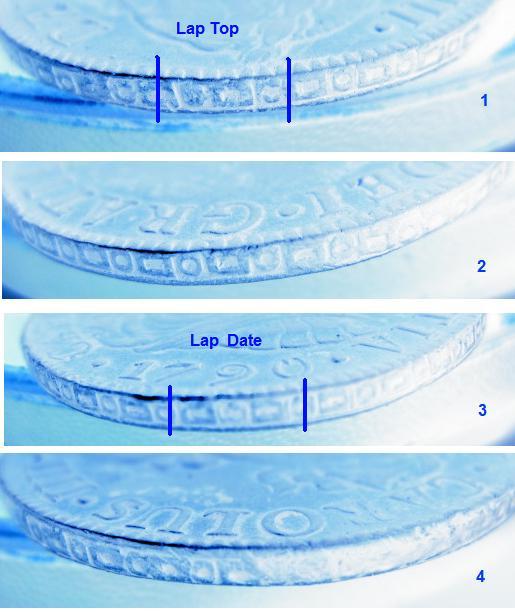
If you notice - the area under the DEI on picture 1 seems to rapidly move downward toward the bottom edge of the coin and then on picture 2 moves upward to the opposite side. This rapid side to side movement is not normal. But I can not rule out an optical illusion based on the distortion in the photographs.
On the 4th picture there is an obscured area on the right side at the King's name and then another dip in the edge design near the IIII.
This wobble, if it is really there, is very typical of Boston types and is not seen on real Mexico City coins which were edged on an edging mill with retaining lips on the edge dies.
On the 4th picture I believe I also notice some diagonal marks running down and to the right on a portion of the edge. This is rather similar to the grip marks on coins that go through a single edge machine twice. If the "scratches" are parallel and cover only ONE side of the coin (as it appears) that is also a possible indication the coin is a Boston type.
So at this point while I believe the coin is most likely real I still can not absolutely rule out a Boston type. But I would also never claim based on this very limited evidence that it IS a Boston type either.
Boston type forgeries are often diagnosed on a combination of factors. A perfect Boston type might have all of the following:
1. A slightly off weight - overweight coins being rather conclusive.
2. A slightly incorrect SG - I have some in the 10.4 area.
3. An orange peel surface texture indicative of high speed rolling of the ingot.
4. Soft die breaks and odd lumps.
5. Tapered planchets due to rolling issues.
6. A severe side to side wobble.
7. An edge pattern repeated sequence. Or a die chip seen on opposite edge halves.
8. A variation in the wall thicknesses of the circles or the rectangles.
9. A clear edge boarder line running off an on the coin's edge.
10. Rectangles or circles that vary in shape or dimensions.
11. Tilted segments
12. Parallel diagonal cut lines on HALF the edge.
13. One clear overlap or two overlaps that have the reversed order of priority.
There are other clues but they rarely all occur on the same coin.
While I am discussing edges there are other edge problems that "more automatically" diagnose a counterfeit. They are:
1. ONLY ONE OVERLAP
2. Two overlaps of different lengths
3. Incorrect edge design
4. Indications of use of a collar (vertical seams)
5. Edge grinding before application of a Shallow edge pattern.
6. Corner grinding
7. Edge wear that does not match the coin's surfaces.






 First Page


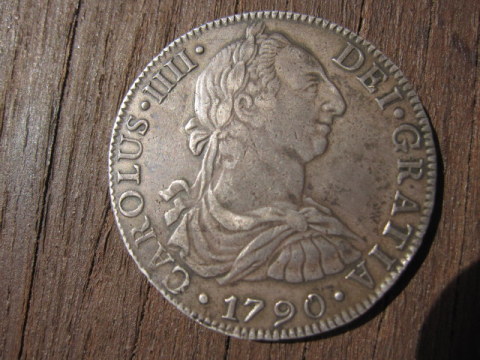
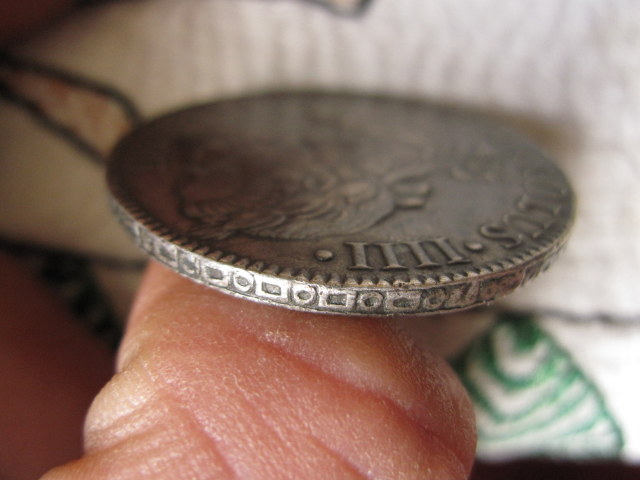


 Posted 05/11/2011 01:39 am