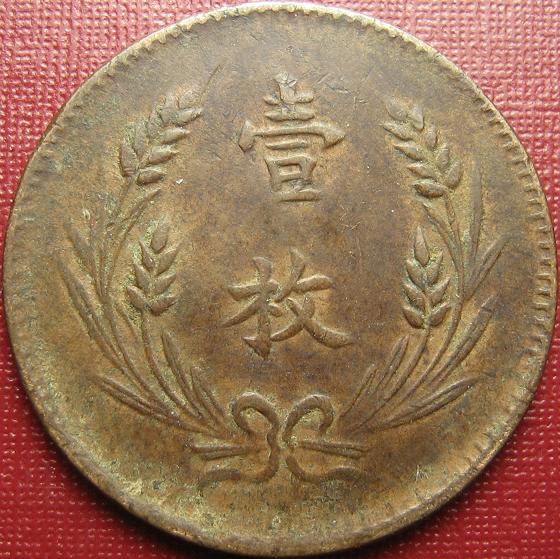
Yes. You have to remember that China was and is a huge country. Your average Chinese province is larger in area and definitely in population than an average European country. It's estimated that between 1900 and 1917, there were over 32 billion 10-cash coins minted. There's no way that a country that size which still hadn't fully industrialized could centralize production for that many coins. Centralized control of the provincial mints was implemented in theory but impossible in practice. The provincial mints were left to basically do whatever they wished.
Provincial coins were generally accepted outside the borders of that province, but there were exceptions. Some provincial governors and warlords, especially during the Republic period after 1910, discovered that minting 10 and 20 cash coins was a money-maker: they bought cheap scrap brass and turned it into coins, tripling their money. The copper coins became so common and the silver coins so scarce that the street value was closer to 300 cents to a dollar, rather than the nominal 100. The coins of some provinces were so cheaply made and plentiful that the governors of neighbouring provinces banned their use.
Don't say "infinitely" when you mean "very"; otherwise, you'll have no word left when you want to talk about something really infinite. - C. S. Lewis









 Posted 03/11/2011 06:02 am


