| Author |
 Replies: 9 / Views: 5,969 Replies: 9 / Views: 5,969 |
|
|
Pillar of the Community
United States
2651 Posts |
Hi all! This was handed down to me from my Grandfather. Its a piece of currency that he got in the pacific. I do not know the real name of it. All I know is the info he told me about it. It was produced in the field due to supply lines being cut or difficulty getting "regular" currency. If they were stamped and signed by the appropriate officer then it was Legal Tender. Does it have any value besides sentimental? How do you know when to get a note/currency graded? I have many WWI and WWII era notes.  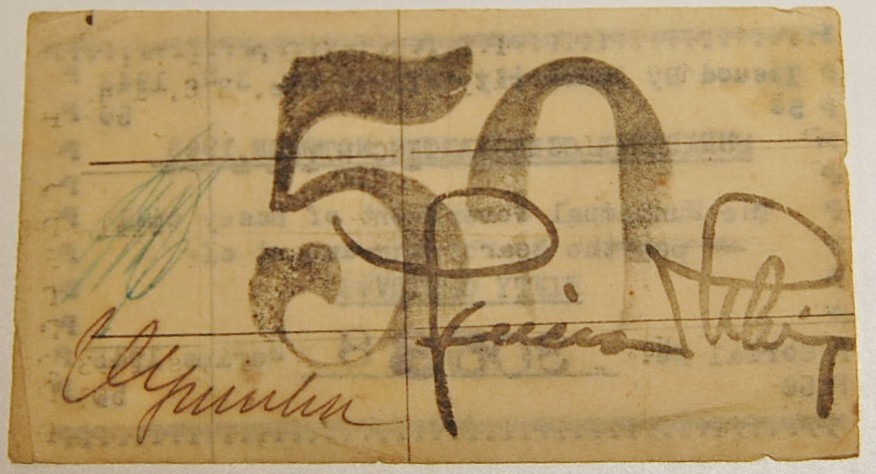 Edited by Jayman931
04/12/2011 1:03 pm
|
|
|
|
Pillar of the Community
Australia
2830 Posts |
"Basey is a municipality in the province of Samar, Philippines. ..." http://en.wikipedia.org/wiki/Basey,_SamarLooks like it would have been worthless outside the location of issue, and therefore not many would have survived, if ever many were produced. |
|
Pillar of the Community
 United States
2651 Posts |
Ok...I have already researched the basic history of Basey and Samar...Tp my knowledge there are only 5 of these 50 centavos bills talked about in the internet. I suppose there were at least over 30,000 produced but how many survived. They were field notes.. The Naval battle of Samar is the biggest reason people know about Samar and Basey, but these bills were printed before them by Guerilla fighters in 1943. They are called "emergency currency"...I just don't know if there are tons of them? Or if they are rare. I have ther Japanese Occupation and Phillipines occupation notes that are common.....I want to know about this "emergency currency"...
Edited by Jayman931
04/13/2011 02:34 am
|
|
Pillar of the Community
Australia
2830 Posts |
"emergency currency" has been issued in many places over history: every example has a special story to tell.
It could be a very interesting area to concentrate on.
|
|
Pillar of the Community
United States
2651 Posts |
I guess when I say there are only 5 I am refering specifically this note i.e 50 centavos from Basey
|
|
Pillar of the Community
United States
508 Posts |
That's a pretty neat piece of history you have there.
|
|
New Member
United States
2 Posts |
I collect Philippine guerrilla notes, but am not familiar with this one. I think it may be a municipal issue. If so, it could be rare. They're not commonly seen, and little is known about them since most of the official records were destroyed during the war (and the issuing authorities executed, if captured by the Japanese) and I don't think they were redeemed by the national govt. after the war. I don't have my references handy, but can check them later this week. Since they were handed down by your grandfather, they should be legit. Unfortunately, there has been a lot of counterfeiting of rarely seen guerrilla notes in recent years - just because they are so scarcely seen by the non-advanced collector.
|
|
Pillar of the Community
United States
2651 Posts |
Askari come back! Knock Knock
|
|
New Member
Israel
20 Posts |
|
|
New Member
United States
2 Posts |
Sorry, I had some family issues come up and subsequently totally forgot about this. Other than images, I haven't found much on it other than that it might have the catalog no. of SMR-214a ( http://www.banknotebank.com/note/933124). I'm unfamiliar with this source and am trying to track a copy down. The standard municipal issues listed in Krause's Specialized Issues catalog were authorized by the provinces, but a number of municipalities such as Basey in Western Samar Province appear to have issued their own on their own authority later in the war. Your example appears to me to be legit as there are other denominations and signature groupings. Grading is as per customary standards, although yellowing of edges is not particularly noteworthy. As for value, they are too uncommon to be able to say. While rare, they are thinly collected. |
| |
Replies: 9 / Views: 5,969 |
|










 Posted 04/13/2011 02:33 am


