Coin Community Family of Web Sites Join Thousands of Coin, Bullion, & Money Collectors
Specializing in Modern Numismatics Coin, Banknote and Medal Collectors's Online Mall Join Thousands of Coin, Bullion, & Money Collectors Vancouvers #1 Coin and Paper Money Dealer Royal Estate Auctions - $1 Coin Auctions300,000 items to help build your collection! Royal Canadian Mint products, Canadian, Polish, American, and world coins and banknotes.


Username:
Password:
Save Password
Forgot your Password?


This page may contain links that result in small commissions to keep this free site up and running.

Welcome Guest! Registering and/or logging in will remove the anchor (bottom) ads. It's Free!

Double Struck 8 Reales

To participate in the forum you must log in or register.
Author Previous TopicReplies: 10 / Views: 4,619Next Topic  
New Member

United States
7 Posts
 Posted 07/21/2011  1:46 pm Show Profile   Bookmark this topic Add Key Keeper to your friends list Get a Link to this Message Number of Subscribers
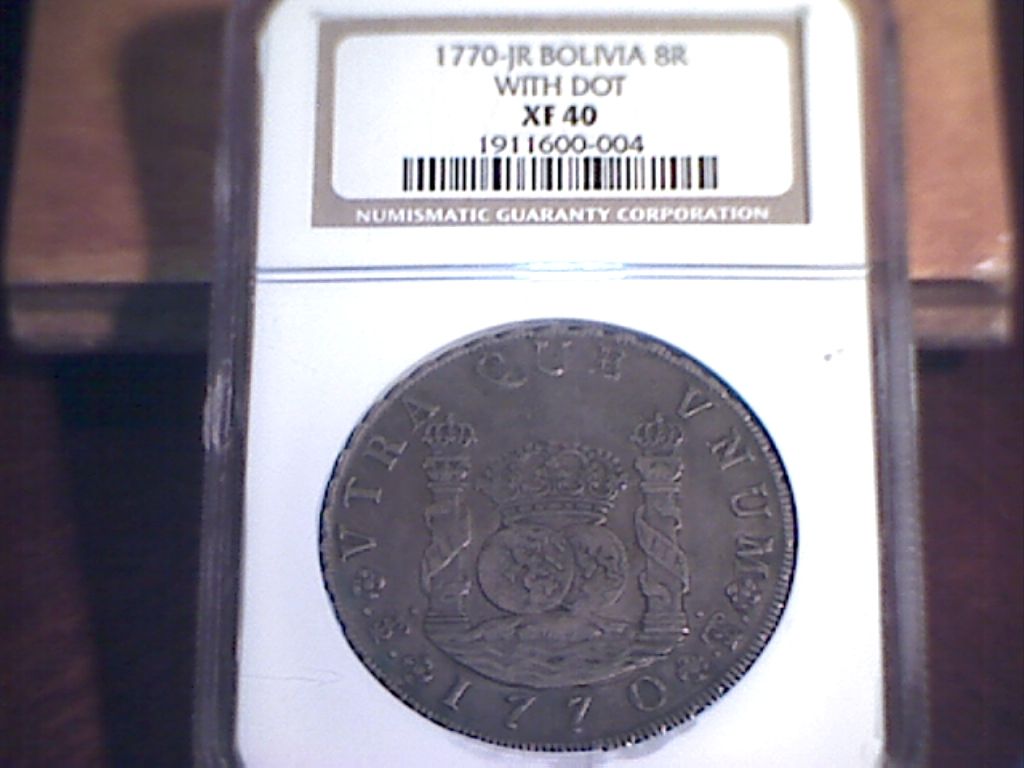
Greetings! I've read with interest comments on a double struck 1844 8 reales back in 2009 ("Double strikes (both sides) are fairly common thing on a manual screw press. If the coin sticks to the die at all the fellow pulling out the finished coins has a split second to react before the dies come together again"). I recently bought a nice NGC XF 40 1770 Bolivian 8 reales with a fairly wide double strike on both sides. It was mentioned that these are fairly common, but I've looked at more then a 1000 raw (so many counterfeits, it's scary)and hundreds of certified 8 reales, and find virtually no double strikes from the 1730"s through 1771. It was also mentioned in a post in 2010 that "double strikes in the series are rather common. The dies moved constantly and quickly. If there was inadequate time to safely remove the struck coin and insert a blank - the operators would have opted to double strike a coin INSTEAD of clashing the dies with no planchet in between. A clash could damage one or both dies. Now we all know how common clashes were so I would opt for the theory that double struck coins occurred more often than clashes". On early US type and many other 1700 series there's lot's of clashing, but again virtually no double struck coins. Manual screw presses were used on foreign and US coins until at least 1836 and the operator controlled the striking speed(when a coin is struck). It was mentioned that the operator only has a "split second" to remove a coin, but again he controlled when the next coin is struck. I guess I'm confused given what I know about early type coins, manual screw presses and the fact that double struck 8 reales would be "fairly common" in this series, yet are rare in other coin series struck on the same manual presses. Clearly there a tremendous amount of experience with this series on this site. Yet double struck 8 reales from the 1730's through 1771 just don't seem to be "common" or even available on the Internet or at big shows at this point. Clashing does seem to be fairly common and double struck coins seem much rarer. I would really appreciate hearing some comments. The previous posts have been very informative. Thanks again
Pillar of the Community
tokenmast's Avatar
United States
648 Posts
 Posted 07/21/2011  2:20 pm  Show Profile   Bookmark this reply Add tokenmast to your friends list Get a Link to this Reply
picture ? picture?


Quote:
Double strikes (both sides)

New Member
United States
7 Posts
 Posted 07/22/2011  11:20 am  Show Profile   Bookmark this reply Add Key Keeper to your friends list Get a Link to this Reply
Thanks for the welcome. I'll try to figure out how to do photos. Hoping for some more responses from the 8 reales folks. I've seen a lot of informative responses from "swamperbob". I tried to email him since he has so much experience with this series, but this website blocked me as a new member.
New Member
United States
7 Posts
 Posted 07/26/2011  11:39 am  Show Profile   Bookmark this reply Add Key Keeper to your friends list Get a Link to this Reply
Still haven't received any feedback. What is the best way to hear from the 8 reales members? Is there a better forum to get feedback? I'm still working on pictures. I'm a new member so thanks for any help or info.
New Member
United States
7 Posts
 Posted 07/30/2011  6:25 pm  Show Profile   Bookmark this reply Add Key Keeper to your friends list Get a Link to this Reply
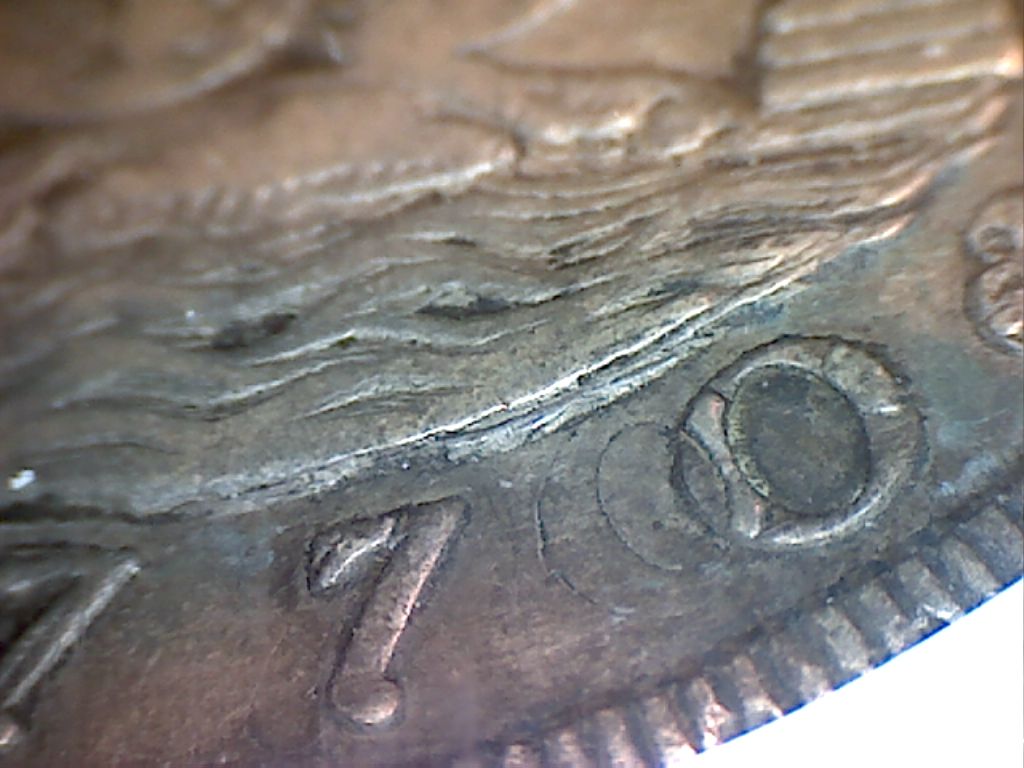
Obverse double struck date, with the second strike on the right.

Double-Struck-8-Reales

New Member
United States
7 Posts
 Posted 07/30/2011  6:44 pm  Show Profile   Bookmark this reply Add Key Keeper to your friends list Get a Link to this Reply
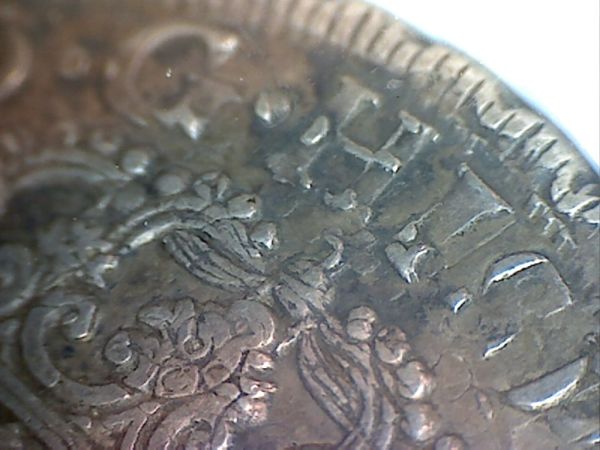
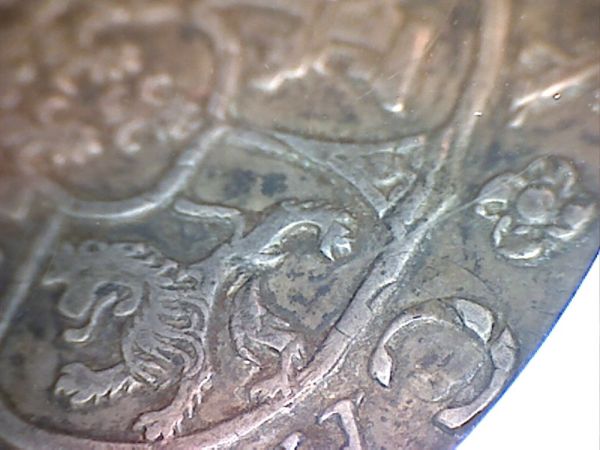
Double struck reverse pictures.


Double-Struck-8-Reales

Double-Struck-8-Reales


Bedrock of the Community
Bryan1315's Avatar
United States
14454 Posts
 Posted 07/30/2011  9:25 pm  Show Profile   Bookmark this reply Add Bryan1315 to your friends list Get a Link to this Reply
swamperbob is the one I always turn to with these types of questions about these types of coins. He has forgotten more about the Spanish coins than I will ever be able to learn. He doesn't get on the forum very much here lately but I will throw him an email to bring this thread to his attention
Pillar of the Community
swamperbob's Avatar
United States
5362 Posts
 Posted 07/31/2011  7:35 pm  Show Profile   Bookmark this reply Add swamperbob to your friends list Get a Link to this Reply
I was in New York last week so I missed the thread until Bryan asked me to comment.

I think we have a misunderstanding of terms here and a small bit of misunderstanding of availability versus occurrence. Since I am the likely original author I will try to correct some of what is being misunderstood.

First let me state clearly that the number of Double Strikes that are "available" for collectors is low. But not low enough to make them truly rare. Whats more even though numbers are low - they are not worth proportionately more based on their scarcity. There is currently no market and I really don't believe there should be.

I will start this discussion with a STRONG WARNING that the majority of Double Struck 8R's I have reviewed are COUNTERFEIT. That is a given.

There are two primary reasons for low availability of real double struck 8R coins. First is that collectors like myself tend to keep them longer than they would an average strike. They tend to become prized possessions because of their oddity. Many collectors retain them NOT FOR THE ADDED value but just because of preference. The second reason, missed by most is because most of the really wide double strikes ever made (like the severely off center strikes) never got out of the mint. They were made but are no longer in existence.

A badly struck coin - and most widely double struck coins fall into that category were normally MELTED not released into circulation. They were classified as DEFECTIVE like off center strikes etc. Remember we are dealing with a KING (read ego) and the workers in a mint were paid for essentially perfect coins for their Lord and Master. Defective coins resulted in NO Payment of wages for any of the work involved. Defective coins were simply recycled.

Another reason which is tied to manufacturing practice is that many coins struck in an open collar screw press were intentionally double struck to bring up a complete impression. If a planchet remains on the hammer die motionless and there is no give in the apparatus - a coin can be struck twice with no trace of that having happened. Too many blows and there is obvious stretching.

That is why the vast majority of real double struck coins, which went into circulation are closely doubled so that the letters and devices remain clear. These close double strikes mostly pass undetected. They could be termed strike doubles but I since I believe two blows were used they are CLOSE Double strikes. These closely doubled coins (call them what you will) are fairly common - as many as 1 in every 100 coins that I review has a trace of doubling. How many are double struck with no evidence - who knows? Or ever will know.

The wide double strikes happen when the initially struck coin lifts off the anvil die and then falls or is placed back on the anvil die displaced (rotationally, laterally or both). These wide double strikes are far scarcer and are usually identified with an extra added price (which is in my opinion not really warranted). But I would bet I see 1 for every couple thousand 8Rs that I review. So in my mind they are NOT rare.

Widely doubled coins like the one in this thread are SCARCE as originals (say one in 2000) but common as forgeries - especially the bullion forgeries of the 1890s (say 1 in 100 tops) and the Modern Chinese even more common.

But the best double struck pieces like the 50% off center strikes were manufactured but never released. They were melted and with them the physical evidence of die protection by the press operators.

How many 50% off center 8Rs do you see?

Regarding striking speed - the only operators that had any control over speed were the two guys spinning the 5000 pound counterweights with ropes. The fellow in the pit who took coins off the dies and inserted planchets was NOT in control of speed. He could yell "Hey, Slow down" (or whatever that is in Spanish) but this was a crude manual screw press. An 8R press is a three man press. We are not talking the small reproduction presses or the 1R presses which were a 1 man show - but the BIG presses that needed a 15 foot diameter operating circle. These small modern presses use a narrow pitch on the threads to multiply the force applied on the screw handle to make the coins. The older big presses USED IMPACT MOMENTUM AND APPARATUS WEIGHT to SMASH an impression into the planchet. Look to the building foundations and added bracing used in mints under the screw presses.

Perhaps "split second" was misleading on my part but I was trying to convey that there is a very limited opportunity to remove a fully struck coin and replace it with a blank planchet. During that interval the pit man has to look at the coin and decide is it adequately struck up. Then he removes the coin and replaces it with a blank. There might be a half second or even a second but every drop of the hammer threatens your fingers.

Another issue here is momentum. At the top and bottom of the screw there will be some natural recoil. This can only be prevented by the oprators pulling backward JUST at the point of maximum stress. That does not happen in practice especially on the down stroke. If it did the coin would be blank. So NO they do not pull back they smash the hammer die into the planchet sitting on the anvil die. Remember the shock of this impact was adequate to break even well designed presses of the 1770s. The counterweights stop rotating one direction when they hit the limit of the turn and reverse under that recoil effect. Now the same thing happens at the top of the cycle. The screw hits a stop and the counterweights reverse a second time. A good operating pair of employees uses that recoil effect to keep the screw turning smoothly and to reduce fatigue - a STOPPING point is extremely unlikely - perhaps IMPOSSIBLE. A second impact is not only possible but even normal to get the strike set deep enough.

But the decision to pull a finished coin out and insert a new planchet takes place during the rotation of the counterweights between the stops. Regarding this use of recoil and hitting the stops - there is a complaint about this practice in correspondence from the 1760s in a reference that I read recently but which I can not now put my hand on. The gist was that the new mint manager (from the continent) blamed premature press failure (a cracked frame) on the operators methods used in the striking process which strained the frame.

Clashes did happen - but NOT very often at all.

A clash comes at a great potential cost to production. Dies were NOT cheap and a clash can break a brand new die so to prevent a clash a coin would remain in the press and then be thrown into the melt bin if it was considered defective. How many double struck coins were remelted as defective will never be known but many were.


Quote:
Now we all know how common clashes were so I would opt for the theory that double struck coins occurred more often than clashes


I believe the statement is true exactly as put. But the conclusion being drawn by inference is that we should see more double struck coins than we do coins with evidence of clashes. The conclusion is simply wrong statistically.

I wrote the original statement but was NOT making the conclusion as proposed.

The problem with the thought process here is that a single clash produces evidence of it's occurrence on every coin struck by those same dies for the balance of their working life. The clash occurred to the DIES not the coin. The numbers of coins struck from previously clashed dies has ZERO bearing on the survival rates for double struck coins.

By way of example - Say a die pair clashes at a point 100 coins into its production life and then the die pair survives to produce 20,000 coins. There are therefore 19,900 coins showing evidence of a clash and 100 showing no clash. But in reality there was only one event that actually happened. ONE CLASH - BUT thousands of coins with evidence of that one clash.

A double struck coin on the other hand is also a single event in time but it does not produce 19,900 pieces of evidence. In fact, in the example above all 100 coins produced before the clash could have been struck twice and there would be NO evidence at all if there was NO displacement of the coin on the dies between strikes.

I would propose the correct conclusion is that the number of coins with evidence of die clashing has NOTHING whatsoever to do with numbers of actual clashes versus actual double strikes.

How many 8R coins do we encounter with NO CLASH? How many dies were made each year? What percentage of these dies clashed One or MORE Times? How many coins were actually remelted? All of these questions lack adequate answers - the best we can do is to observe where possible, look at the original apparatus that has survived and read all of the old documents that exist and then propose theories that take all known facts into account.

Your coin clearly has a double strike combined with a slight lateral displacement - it should not have been released from the mint in my opinion, but it was. I have seen about 100 coins with a similar displaced second strike that I consider to be real in my time as a collector of 8Rs. That is over a 50 year period of time. Is yours real? NGC says so - so if that is good enough for you it is fine for me.

If I saw your coin raw, I would be all over it trying to be sure it was real, because I would presume forgery and try to prove reality - not vice versa.

Counterfeiters - especially the Chinese know that many collectors see double and their brains go out the window so to speak.

By 1844, the date of the coin in the original discussion things had changed a bit. The striking pressures were greater due to better steel being used (the old cast bronze screw presses were long gone). In many cases, the second strike makes the first strike invisible. I have cherry picked 50 degree rotations out of dealer stock based on traces of an understrike. The dealers didn't notice a partial second image under the first. In one case, the dealer listed the coin as scratched when the "scratch" was in fact the trace of a first strike tail. IT is like trying to spot the date of the host coin on a Brazilian 960 Reis a lot of luck is involved in spotting double strikes. They also had steel presses.

I was really trying to stop people from assuming that a double struck 8R coin is WORTH a fortune. It is an error in a field where errors are not normally collected.

Rare - That depends on your definition of RARE - BECAUSE every double struck coin is actually UNIQUE. Not just RARE but a unique product of a production error that can not be precisely duplicated.

But that alone is NOT a measure of value and novice collectors should not presume that a "double struck" will be treated as special when the time comes to sell it.

They may find themselves trying to overcome reluctance to buy a damaged coin.

New Member
United States
7 Posts
 Posted 08/01/2011  5:28 pm  Show Profile   Bookmark this reply Add Key Keeper to your friends list Get a Link to this Reply
I appreciate the useful, informative reply.

Clashing:
"Now we all know how common clashes were so I would opt for the theory that double struck coins occurred more often than clashes"

On the issue of clashing, I misunderstood your implications. I read it as "clashed coins", which in my experience appear in the market place significantly more then double struck coins. When comparing the frequency of DIES that were clashed, with the frequency of COINS that are double struck, your statement clearly would be correct. But comparing clashed coins to double struck coins (coin to coin comparison) arrives at a very different conclusion.

On the issue of rarity:
"Rare - That depends on your definition of RARE ..."
Given the number of 8 reales you own and have studied, if you've seen only a 100 in more then 50 years of collecting these coins, then I guess that does speaks to scarcity.

On the issue of value:
"What's more even though numbers are low - they are not worth proportionately more based on their scarcity. There is currently no market and I really don't believe there should be".
Why shouldn't there be? People collect what is of interest to them and value coins based on lots of things like scarcity, history, visual interest, etc. By your own admission, these are "treated as prized possessions" even by 8 reales purists.

"There are two primary reasons for low availability of real double struck 8R coins. First is that collectors like myself tend to keep them longer than they would an average strike. They tend to become prized possessions because of their oddity. Many collectors retain them NOT FOR THE ADDED value but just because of preference"
That is the definition of an error collector even for an 8 reales "purist". The number of collectors for coins which circulated widely in the US prior demonetization in 1857 are clearly increasing (based on price appreciation), as are error collectors (based on dramatic price appreciation).

On the issue of rarity vs desirability:
"But that alone is NOT a measure of value and novice collectors should not presume that a "double struck" will be treated as special when the time comes to sell it. They may find themselves trying to overcome reluctance to buy a damaged coin".
Again, damage is the mint's definition or maybe narrow type / purist collectors. Errors are always considered "damaged" by someone, but valued by another part of the market. Heritage just sold a double denomination 11 cent piece, which the purist dime guys and the penny guys may not like, but it sold for many, many times what it brought just 20 years ago. Lots of collectors base their decisions on clear visual uniqueness (an obvious error or mint "damage"), scarcity, and will it become one of their "prized" possessions. Price appreciation, for most true collectors like me, is of little importance.

Your concern about counterfeits in this coin series is well founded. It is a shame to see more counterfeit 8 reales on ebay then genuine coins. I did have the NGC authenticator again look at this coin, as well as the authenticator for ICG and both agreed the coin is "good". I suppose anyone can be wrong.
I've looked at many of your posts with interest and really do feel like you provide a wealth of much needed information. You're truly a collector's friend and I appreciate that. As a collector, I just wanted to express my additional observations on this subject as well. Thanks!


Double-Struck-8-Reales
Pillar of the Community
swamperbob's Avatar
United States
5362 Posts
 Posted 08/01/2011  11:21 pm  Show Profile   Bookmark this reply Add swamperbob to your friends list Get a Link to this Reply
Key Keeper I had almost completed a reply when my PC ate it.

I really agree with just about everything you are saying but perhaps with a slight tweak.

I tend to agree that the double struck 8Rs are collectible errors but they are (or should be) about as valuable as other out of collar double struck coins of similar scarcity and age. The value is predicated primarily on the popularity of the series NOT on the fact that they are double strikes. I like the way most error books treat value - they add value to a coin of essentially fixed amount (based on type of error) above the value of a "normal" coin.

Novice collectors often miss that point and equate Unique or nearly unique status with GREAT VALUE. It is NOT a 1 to 1 relationship.

I own NUMEROUS UNIQUE COUNTERFEIT 8R coins but they are of limited value because of a very limited market.

Over the years, I have picked up numerous double struck coins just because I like them. I never pay too much because I see them as worth more but not a huge amount more than other coins in the same series.

For example, I own a nice double struck double dated MS 1893 Indian cent. It is a popular coin. It is valuable. I also own a L'an 5 French Cinq Centimes in near MS that is FAR LESS valuable but arguably scarcer than the Indian cent.

You say:


Quote:
Price appreciation, for most true collectors like me, is of little importance.


That is a VERY TRUE statement but it is largely falling on deaf ears. By your definition there are really very few "true collectors" out there.


New Member
United States
7 Posts
 Posted 08/02/2011  11:18 am  Show Profile   Bookmark this reply Add Key Keeper to your friends list Get a Link to this Reply
Swamperbob, I appreciate the response. I hear what you're saying. I have a rare(about 150 in existence)US territorial gold piece which is valuable, but would be valued at more then 20 times greater if it was a Morgan dollar.

On the issue of rarity, I know one thing - YOU are a very wise, informed, rare collector. Research, research, stay informed, buy the coin and enjoy. Educate, learn from others and find real value in your collector friends.

Be well and I will continue to read your posts on this site with interest.
  Previous TopicReplies: 10 / Views: 4,619Next Topic  

To participate in the forum you must log in or register.


Disclaimer: While a tremendous amount of effort goes into ensuring the accuracy of the information contained in this site, Coin Community assumes no liability for errors. Copyright 2005 - 2026 Coin Community Family- all rights reserved worldwide. Use of any images or content on this website without prior written permission of Coin Community or the original lender is strictly prohibited.
Contact Us  |  Advertise Here  |  Privacy Policy / Terms of Use

Coin Community Forum © 2005 - 2026 Coin Community Forums
It took 0.44 seconds to rattle this change. Forums