| Author |
 Replies: 10 / Views: 36,596 Replies: 10 / Views: 36,596 |
|
|
Pillar of the Community
United States
3552 Posts |
Hello, I have just received this penny from a little 6 year old girl who was so excited that she found a silver penny. I unfortunately had to inform her that this coin appeared to be steel (or at least steel plated) since it sticks to a magnet (see attached photo). I noticed what appeared to be some copper showing on the reverse above AMERICA . I could not understand how such a thin layer of steel plating could adhere so well to the shown magnet. The characteristics of this coin are as follows: a) thickness: 1.50 mm b) O.D.: 19.06 mm c) weight: 2.54 grams d) edge: plain e) metal ?: attracted to a magnet The two pictures with the black background are scans while the other three are photos. Please investigate what I appear to have here and let me know if it is worth more than one cent. I really would like to make this little girl happy by giving her parents some good news but I am not really that optimistic. Thanks much, mdpmedia 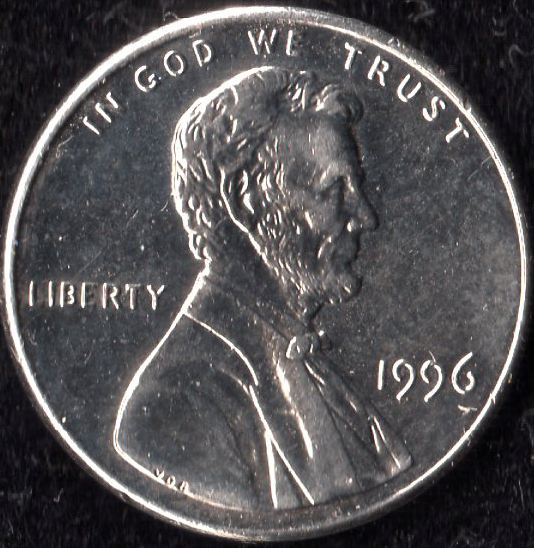 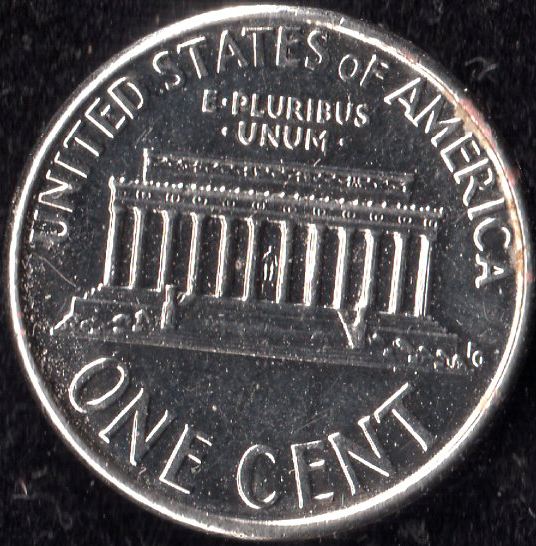 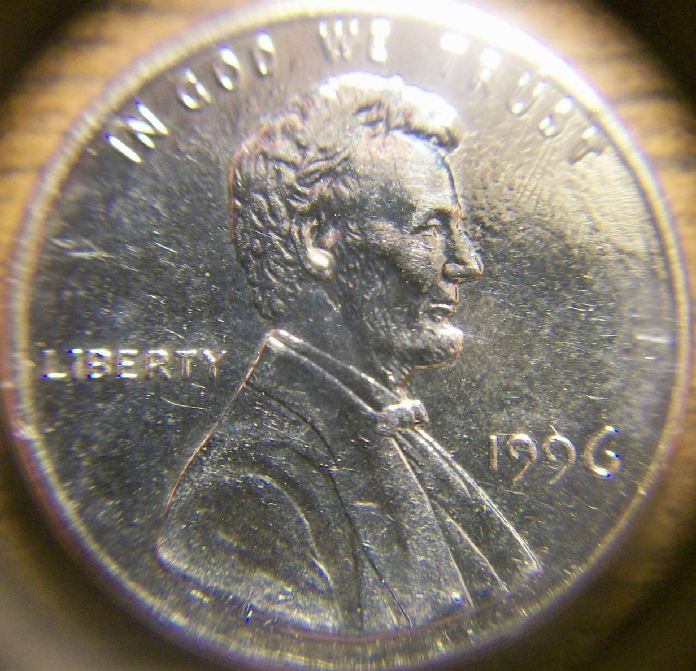 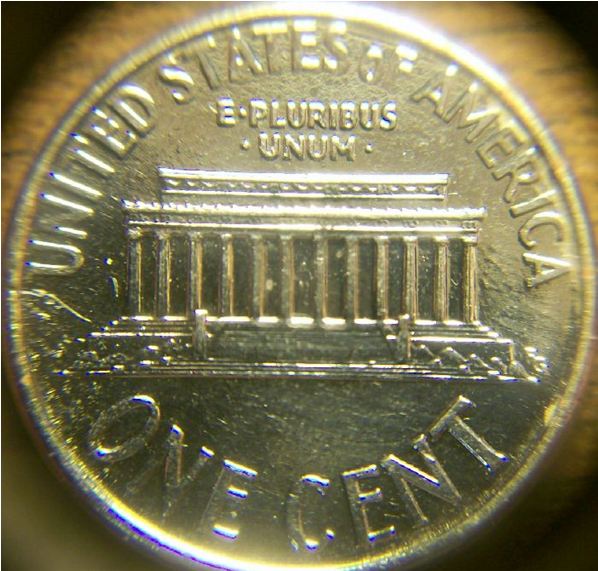 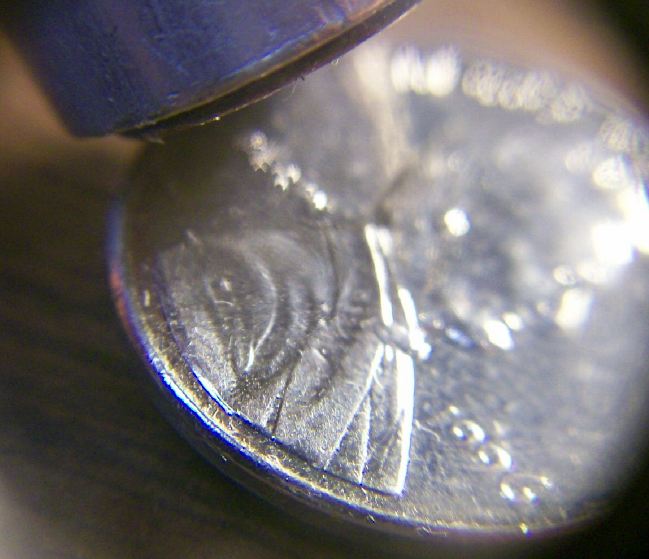
|
|
|
|
Pillar of the Community
United States
4846 Posts |
|
|
Pillar of the Community
Philippines
606 Posts |
|
|
Pillar of the Community
United States
4846 Posts |
no, if it were dipped, it wouldnt take on that silver color.
|
|
Pillar of the Community
 United States
3552 Posts |
On average how much additional weight does either plating or dipping a coin add to the original weight of a coin.
I realize that the answer (in x amount of grams) should vary depending upon the surface area of a particular coin.
What I am after, therefore, is an approximate % increase applicable to all plated/dipped coins useable for future applications...
thanks,
mdpmedia
|
|
Pillar of the Community
United States
744 Posts |
I think what this little girl has found was a school plating project.... I have found this 1997 while roll searching myself, I keep it because I find it cool.... IMHO, what we have is a novelty more than any numismatic value....Wild Bill 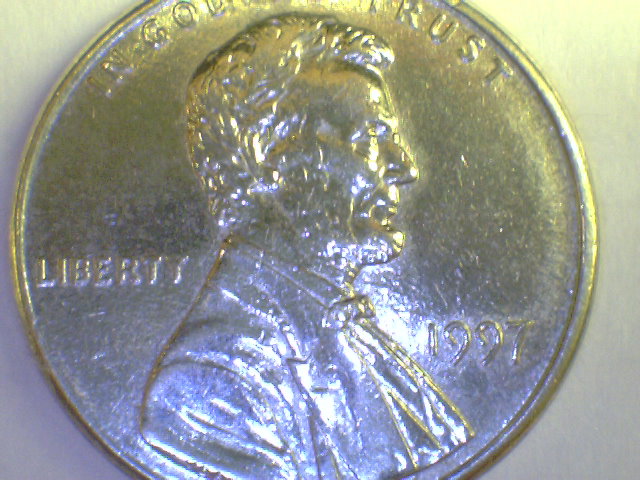 |
|
Bedrock of the Community
United States
62064 Posts |
When you mention it is magnetic. Is it exactly like the 1943 steel cents that stick to a magnet very strongly? Even a plated cent will show a little attraction, but no where near the attraction of a steel cent.
But what I'm seeing is a plated cent. Very thick plating. Looks like a PRO job rather than a chemistry class one. A professional job would include a three part plating process.
|
|
Pillar of the Community
United States
3552 Posts |
Coop, This coin does stick to a strong magnet but with nowhere near the level of force that a common 1943 Lincoln Cent would exhibit. |
|
Bedrock of the Community
United States
62064 Posts |
I've seen that before. So it is just a plated example.
|
|
Bedrock of the Community
United States
12437 Posts |
Quote:
On average how much additional weight does either plating or dipping a coin add to the original weight of a coin.
That question is impossible to answer without knowing how the coin was plated, not all platings are equal. The vast majority of electroplating jobs add a negligible amount of metal, not even enough to detect by weight when planchet tolerance is added in to the equation. In fact, an abnormal-looking coin such as the one posted with a normal weight can usually be assumed to be plated. Also, I doubt it is plated with steel as steel is not typically used as a plating metal due to rusting. Most likely it was plated with nickel which is also magnetic. |
|
Bedrock of the Community
United States
17884 Posts |
I was wondering when someone was going to identify it as nickel plated.
|
| |
Replies: 10 / Views: 36,596 |
|







 Posted 07/24/2011 10:18 pm





