| Author |
 Replies: 29 / Views: 4,119 Replies: 29 / Views: 4,119 |
|
Pillar of the Community
 United States
1551 Posts |
I have seen a few folks list things as an Error, that are a variety. I have always had the understanding that an Error is a mint production mistake. Double struck, plancet clip, off center strike and alike. Where as a variety is seen as something to do with the Die. A doubled die, a gouge put into a die during a refreshing, or a Late die state die break or clash. All are an error by the US mint! To me the difference is a Variety had Many produced as a Variety is in the Die. Here is the other coin that I got back from Noel. A 3 legged Buffalo is caused be a mint worker over polishing the die. And more then 1 coin was struck from the die. 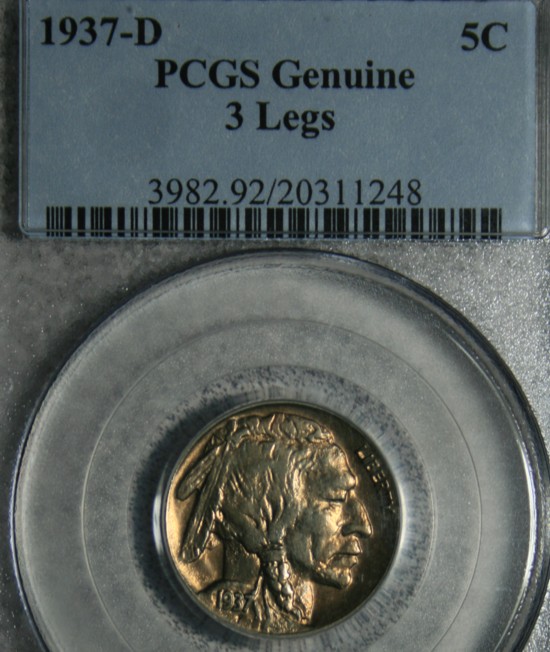 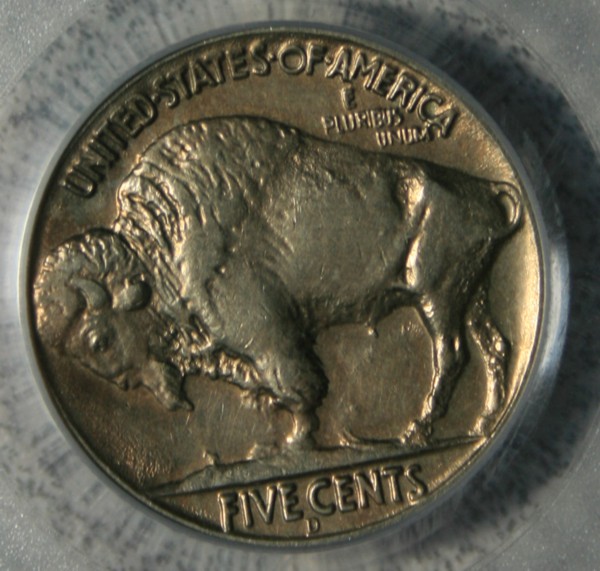 I had this coin as cleaned it's still a solid AU-53/55 Sorry for the Nana's my son likes them   Edited by twohawks
08/02/2011 12:12 am
|
|
|
|
Valued Member
United States
60 Posts |
Im still a little confused myself on that subject
|
|
Pillar of the Community
United States
7629 Posts |
There have been numerous breakdowns and explanations posted here in the past, and the subject seems to be under some debate among people who have been doing this for years - but the correct answer as defined a few decades ago that was followed closely by all the experts in the field until recently is basically this: If the oddity happened ON the die BEFORE it was hung on the press to mint coins, it is a die variety. Otherwise it is an error. The Buffalo nickel you post is a good example...it is NOT a variety because the leg was polished off somewhere during the coining process. It could well have minted tens of thousands of completely normal coins before the leg was removed. This is a DIE ERROR. Clashes and breaks also fit into this wide category. If the planchet was fouled before it entered the coining press, then it's a planchet error. If the strike itself fouled the coin, it's a striking error. But...if the design on the die was fouled while the die was being created, it's a die variety. Things that fit: repunched dates and mintmarks, over dates, over mintmarks, hub doubling (doubled dies). These are ALL die varieties. |
|
Pillar of the Community
United States
860 Posts |
I recall back in the old days, they were referred to as "mint errors" and "die varieties", with the latter being caused by some action on the die causing it's progeny to be distinctive from others. As I remember "mules" were just called mules, or put into variety category. Some of the confusion comes about because many people ( especially ebay sellers) do not know how dies are produced nor the coining process itself, so they are clueless anyway. Jim |
|
Pillar of the Community
United States
7629 Posts |
That cluelessness extends in large part to the dealers and even the slabbing companies - so many of the experts have shrugged it off to semantics and have given up the fight.
Fact of the matter is, these are all very clear definitions for very different things, and there are collectors who collect one but not the other, and some (like me) even have distaste for the category they do NOT collect. I deal in die varieties and do not care about errors at all.
|
|
Pillar of the Community
 United States
1551 Posts |
|
|
Pillar of the Community
United States
7629 Posts |
And mules are not varieties OR die varieties. They are striking errors.
|
|
Pillar of the Community
 United States
4618 Posts |
Thanks for the great post. It's a question I thought I knew the answer to, but I was wrong. I've always had my own idea of what an error and variety were. I've even joked that they are both errors because someone made a mistake either before or during the minting process. Now I'm rethinking things. I was always of the opinion that a unique coin, such as a clip, off-center, broad strike, double strike, etc. were errors, and I still think that the coin types I listed are errors. If the coin was made with a die that had an error, which caused a number of coins to be minted with an early, mid and late die states, it was a variety. I now feel I need to revise my ideas on what makes a coin a variety. Quote:If the oddity happened ON the die BEFORE it was hung on the press to mint coins, it is a die variety. Otherwise it is an error. The Buffalo nickel you post is a good example...it is NOT a variety because the leg was polished off somewhere during the coining process. It could well have minted tens of thousands of completely normal coins before the leg was removed. This is a DIE ERROR. Clashes and breaks also fit into this wide category. I had never thought of the error -vs- variety question within these parameters. I see why this would apply to die polished varieties errors. Quote:
And mules are not varieties OR die varieties. They are striking errors. I find mules interesting in that, for the most part, they had someone striking them outside the normal minting process with the mule being the desired output. Almost any mules were made to be mules with one or two exceptions. I have one question. I'm still not clear on coins that have missed a step during the minting process, such as the missing edge lettering Dollars, I think these would be errors, but is this correct? I also have to say I am guilty of using the term error as a catch-all for any coin that is not as the designer intended and the mint set out to strike, I have used the word error to describe these coin and I know better, but it was just easier to use the word error so that everyone understood, than to try to explain a variety. To lump both error and variety coins into one group on a board like this is not what I should be doing. The people who know one from the other look at my comment and think about the fact that I'm wrong and the new collector will see conflicting terms used on both types of coins and may quote me thinking I know what I'm saying. This is bad for the new collector. As the CCF is all about sharing our coins, experience and offering help to educate collectors of any age or experience level, I will not use the term incorrectly again. I don't think everyone will ever agree on the error -vs- variety question and some coins ride a close line between both. But after 40 years collecting errors and varieties, I now have a better description of each and have to move some variety coins into the error column. Thanks for teaching an old dog a new trick! Ben ANA ID: 3203813 - CONECA ID: N-5637 Clean a coin that may be worth collecting? Please DON'T! When in doubt, leave it dirty!! 
|
|
Pillar of the Community
United States
7629 Posts |
Actually the only statement I disagree with here is that some coins ride a close line between both - that's actually not true. Everything has a very clear place once you really grasp the difference. Mules are striking errors because their cause happened in the striking chamber - improper design on one of the dies. The Sac dollar / quarter errors are type mules - the cent / dime is a denomination mule. The wide / Close AM cents are variety mules. I can muddy the waters here a bit for those who understand the difference already and are ready for an intermediate class: Variety versus die variety... A variety is a usually small, intended change on a coin's design within one year that was not necessarily meant to be noticed - like small and large date coins. To spread this out a bit, design changes within a year that WERE meant to be noticed would be a sub-type...like the 1853 quarters. Then completely different designs - like the 1909 indian and Lincoln cents are types. So, from biggest change to smallest change we have types, sub-types, and varieties. Now die varieties are unintended problems that occur (usually doubling) on a die during its creation. Every single coin minted by a die exhibiting a die variety will carry that die variety regardless of how far down the line the coin is minted. This category includes all doubled dies, repunched mintmarks (and sub-types), and repunched dates. To clarify and classify - a 1946S cent with a repunched mintmark is a die variety. A 1946S cent with a sans-serif mintmark would be a variety. The definitions are ONLY difficult to learn if you do not understand the minting process - otherwise they are VERY clear and VERY cut and dried. |
|
Pillar of the Community
Philippines
606 Posts |
Coppercoins thank you very much for your expert views on this subject. Today, I have learned a lot between the differences of Error vs. Variety. It's very clear.
|
|
Valued Member
United States
108 Posts |
Quote:
Variety versus die variety... I am a very winded person, and rarely ever summarize things into one sentence. But, the easiest way to remember it, IMHO, is simply: A "variety" is an intentional change to the die whereas a "die variety" is accidental. And if you really want to get technical: A "variety" is an authorized change to the die, whereas a "die variety" is unauthorized". Of course, as you already stated, you have the "types" and "sub-types", but the ability to grasp the basic ideas behind each term is imperative. Thank you, Mr. Daughtrey, for clarifying this issue for everyone and taking a stance on something that is more than "just semantics". A numismatists is one who studies money. There are specific terms and specific meanings to those terms used in our hobby/industry. It's always good to see someone stand up and "tell it like it is" and help spread the knowledge. edited: I should probably emphasize, as you had mentioned, that the change occurs on the die before it's hung on the press. However, I personally see "errors" as damage. In other words, I do not necessarily see the 3-legged Buffalo error as a "change to the die" so much as "damage to the die". My philosophy on the situation is that anything that occurs anomalous in the minting process after the dies are in place is "damage" and thus an error. Of course, "mules" are in a class all their own. Like in roulette, they are neither red nor black, neither odd nor even. I believe the core of this debate stems from one's view of what "damage" is. But, that's just my opinion and view on the matter. Edited by NPCoin
08/03/2011 04:44 am
|
|
Pillar of the Community
United States
4047 Posts |
Isn't what you are calling "variety" really called "design variety" ? These are designs that have small differences from the running production design. The Cheerios Sac is a good example. Small dates vs large dates, etc are other examples. A "design variety" that is the normal running production design for an entire year or more of mint output is a "type".
|
|
Pillar of the Community
United States
1551 Posts |
I think that again falls into a sub-type like in the 1970 large and small date.
|
|
Pillar of the Community
United States
2751 Posts |
Distinguishing "variety" from "die variety" is a nuance that will escape most collectors, especially since the two terms are used interchangeably by many hobby authorities. It might be better to call a "variety" a "design variant" or something else linguistically distinct.
While I applaud and adhere to Chuck's concepts, it should be noted that many other top authorities do not. For example, Ken Potter and the VAMers regard any die defect as a die variety.
In the end, as long as the collector recognizes the nature and origin of the particular defect/change, the overarching category doesn't matter.
Error coin writer and researcher.
|
|
Pillar of the Community
United States
7629 Posts |
I personally do think the categories matter. In the end people will collect what they want to collect regardless of what they call it, but it would sure help a lot of us who do only collect one or the other if the aforementioned (and other) authorities in the matter would simply stick to the guns of calling all of it what it really is. Calling a die variety an error only adds to the mud that clouds the education of the masses and serves to confuse them - as is obvious from the number of questions posted on online forums by beginners who have basically given up trying to understand because of the conflicting input they see in newspapers, magazines, and books. It also serves negatively in the time spent by others - like myself - who have to re-hash and re-explain time and time again because of the mud that does get published and put on slab labels.
I frankly wish I could wave a wand and give everyone a good education int he minting process so they could easily understand one from the other once and for all. It would certainly help all of them understand me much better when I tell them that I do die varieties but don't care about errors. They cannot seem to understand why I care about one and not the other...it's because they are two very different things, and I chose to go in the direction of the one that is cataloged by die and photographic evidence can definitely determine a coin to be from one die and not another.
The only two things that fit into this category are die varieties and die errors - the former of the two began on the die, the second developed on the die with use...i.e., a doubled die versus a broken die. A broken die error is identifiable by the die that caused it, but only after the break occurred. Prior to the break, the die would probably not be distinguishable from any other die of the issue. Doubled dies, on the other hand, are distinguishable as having been made by a single die from the first coin in the run to the last coin in the run. It's this certainty and this clear-cut rule that brought me to die varieties and not die errors. Progression of the die is easy to track from the first coin to the last coin produced by the die.
Edited by coppercoins
08/07/2011 12:28 pm
|
|
Pillar of the Community
United States
4047 Posts |
Since it is difficult to get specialists who fully understand what's going on to agree on terminology, the battle to have a broad range of collectors agree, or even understand, is futile. In this situation the best course would seem to be simplification rather than further subdivision. This is known in psychology as "cognitive misery", where misery is not pain and suffering but the result of being a miser: simplification in order to improve understanding. It is to this end that many error and/or variety collectors have drawn the line with a simple definition that says if it's on the die, it's a variety. This neatly defines that errors are unique, and varieties are not. With this simplification the specialists can then subdivide the varieties however they like to carve out their specialty.
|
| |
Replies: 29 / Views: 4,119 |










 Posted 08/02/2011 12:18 am


