Gentlemen,
Thanks for your expert advise.
I just can't keep up.
I feel like I'm waterskiing behind a 747.
It isn't so much the material we discuss as it is the other demands in my life. (Let me just say that there is no danger of an illegal immigrant taking my job) So please be patient.
Just so you know where I am in my studies...
I'm familiar with the Kelvin scale of thermal activity from Chemistry and Boyle's law, and from Mechanical Engineering and Thermodynamics.
I don't know how the naked eye subconsciously tricks me to see one color if it is an object and not if it is a picture of the same object, but I'll set aside that discussion for another thread.
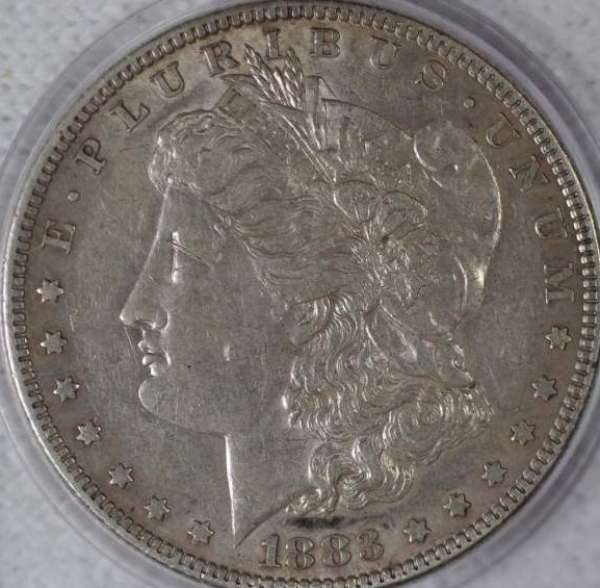
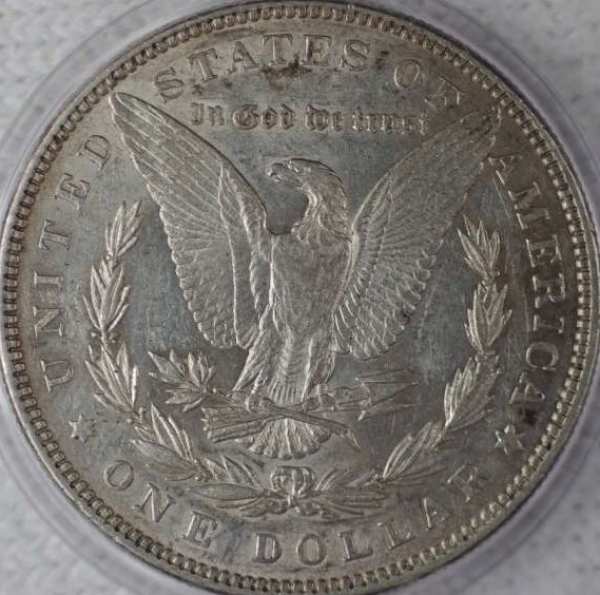
What is important, is that I learned the camera is not a human eye. And thankfully, it can see things I cannot. But when I print the camera's captured image, it shows that it saw something other than what I did. Like the gold tones of the coin.
And you were so right in knowing it was due to the conventional tungsten lamps.
I got CFLs to reduce the effect of my hair catching on fire while working over a hot work area, but discovered my garage sale lamp holders were of poor quality, and did not want to risk a broken CFL bulb over my work desk.
Your suggestions on changing camera settings are greatly appreciated. And I'll try them later tonight, but not until long after midnight. And I cannot hope to post them before tomorrow.
Truthfully, I feel guilty letting you assist me in matters that I should be researching for myself.
If the information I need is in the Owners Manual, then that is where I should be getting it.
Still, your expertise greatly speeds up my progress in one narrow field of photography. Coin shoots.
I have knowledge of the AC adaptor, and must get one. It seems to be designed for desktop shoots, and maybe not so useful when chasing the migration of wild butterflies in a National Forrest.
Out of order, I'd like to address the anti-shake features. I'm supposing it might be wise for me to learn how to use the timed shutter release, before learning about the anti-shake features.
Then I would like to know more about the Rodenstock lens. It is talked about as though it is a foregone conclusion that I'll be needing one. That being the case, what is it, how is it used, and does it have any substitutes?
I gather it is a lens of fine quality used for Macro photography.
Does it attach directly to the camera? If so, then aren't there several models manufactured for other cameras (Cannon, Nikon and Kodak etc?)
Is it used exclusively with a bellows? Which I'll need if I get the lens.
If I guess correctly, Rodenstock is the manufacturer. Rodagon-D is a model -- that means nothing to me. APO is also an acronym that escapes me. And I think the 75 mm is the focal length, or the distance from the lens to the film or receptor.
Now, of course I just have to have one if you guys say it's good. And will as soon as I win the lottery, or my turtle ranch starts producing trophy breeders. But until then I'll be looking for bargains.
But of all the Rodenstock lenses I've seen on
ebay, would any others do as well or better for my purposes?
I'll assume it must be a Rodagon (but don't know why.)
It might need to be a --D, and APO (and again don't know why.)
But are there other sizes (80mm etc,) that are as good or better?
On this issue I may need to take a long time looking before purchase, and would like to know if I am viewing a bargain of equal usefulness.
And Ray, I am in awe of what you can do with a camera. The value of your input is hard to calculate. Especially the advise about the Sorbothane. It converts the stresses from torsional to tensional. A good thing. (Anyone can use a bottle opener and tear the lid off a bottle of beer from one side, but how much greater must one pull to remove it straight off, as if pulling a cork from a bottle. It requires much more force.)
Just remember that I am like a puppy.
I want to learn everything, and can easily be distracted by anything.
At my stage, all learning is good learning.
Thanks for everything, and I must get back to work.
Kurt







 First Page


 Posted 08/18/2011 12:06 pm



 Chute72
 is intraview? Go directly to


