| Author |
 Replies: 12 / Views: 2,998 Replies: 12 / Views: 2,998 |
|
|
Valued Member
United States
87 Posts |
What happened to this cent? My first thought was double struck but then I noticed the gouge on the obverse. This gouge lines up exactly where the extra columns are present. The front gouge looks like it could have been pressed but there are no signs of damage on the rims like a typical garage job. If you think it is PMD, is it even possible to get that high of relief with a soft die? Could jamming in the collar in any way cause the damage on the obverse? Ignoring the full shifted columns, it could even be a DDR. Look at columns 10 & 11 at the top right of each. It resembles the 1998-D DDR. It weighs 2.5 grams. So what happened? 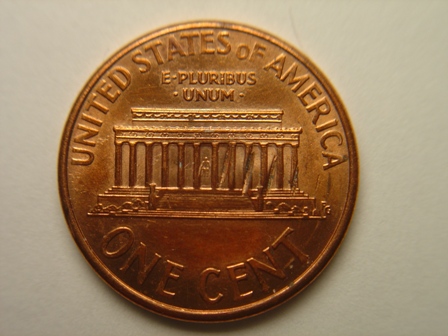 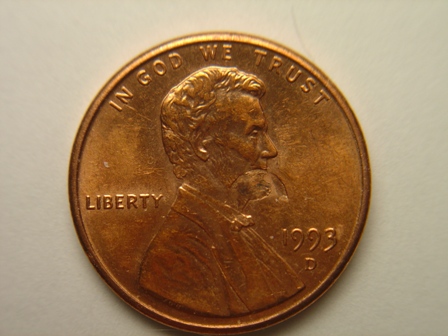 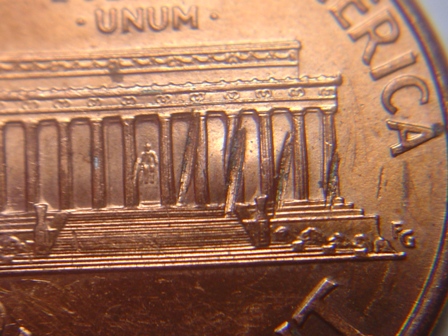 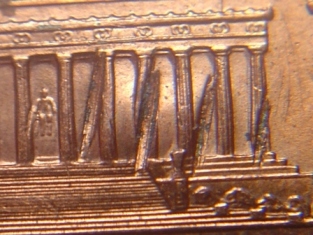 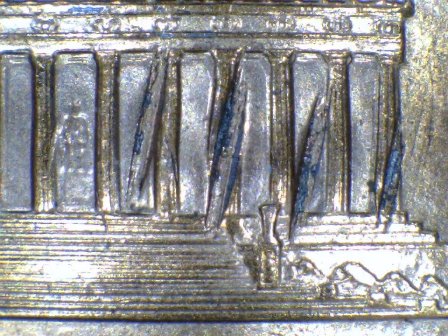 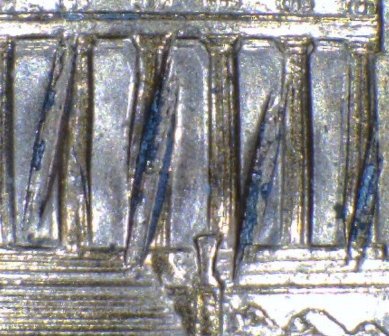 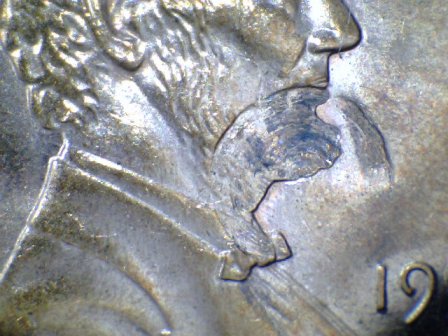 |
|
|
|
Pillar of the Community
United States
609 Posts |
|
|
Pillar of the Community
United States
3345 Posts |
dude lincoln shaved his beard... thats really weird, I'm thinking the obverse is PMD but the reverse I got no idea |
|
Pillar of the Community
Philippines
606 Posts |
The reverse could be something new in the numismatic field. The obverse has a PMD image. |
|
Valued Member
 United States
87 Posts |
Any other opinions, the reviews seem to be mixed, at least for the reverse. I still don't know what to make of it with the columns that strong.
|
|
Pillar of the Community
United States
4132 Posts |
Are the "extra columns" raised or incuse? It looks to me like the penny was crushed in some vise or something with teeth that created column-like impressions on the reverse, but if they're raised it's something else.
|
|
Valued Member
United States
123 Posts |
I'm relatively new to this but, the reverse looks like PMD to me. The distance between the "extra" columns is bigger than that of the original columns. Like I said though, I may have no idea what I'm talking about. :) |
|
Bedrock of the Community
United States
62064 Posts |
The plating is split in the area in question. If it were a die anamoly, it wouldn't be split. Looks intentional to make it look like something?
|
|
Valued Member
United States
87 Posts |
The columns are raised but at the same time pressed into the coin which is why there is plate splitting. Here is 2 more pics if it helps. In the first one you can see the raised column at the top right of the stairs. In the 2nd one you can see more of the splitting. I don't think I studied it at this angle before and I'm starting to think it's PMD but I don't understand how the columns could be raised. Thanks for the opinions. 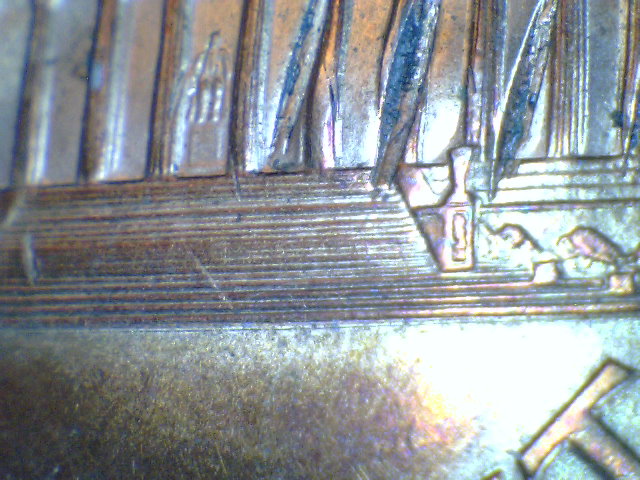 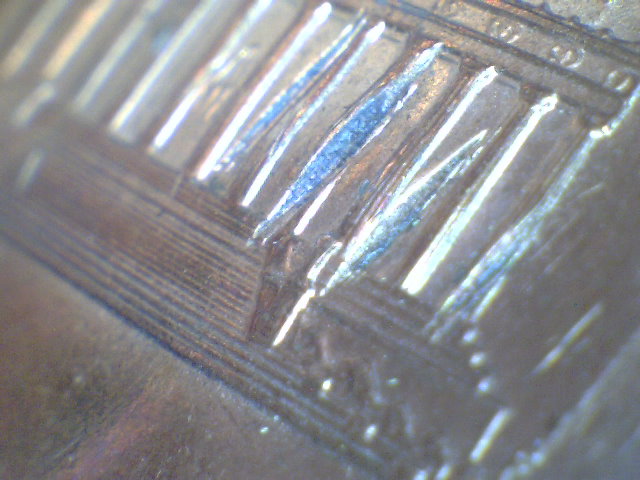 |
|
Pillar of the Community
United States
526 Posts |
Even if the "extra" columns occurred at the U.S. Mint, all the anomalies shown on this coin would be considered post production damage. Exactly why the plating has split on the reverse die does appear to be a mystery, but it does not seem to be strike related and it is definitely not hub related, so other than being a curiosity it would not carry a premium.
BJ Neff
|
|
Valued Member
United States
87 Posts |
Thanks guys for the opinions, I learned a little extra from this. It's funny that you start to see the coin differently immediately after some input.
|
|
Bedrock of the Community
United States
12437 Posts |
It was caused by metal displaced from the teeth of a tool such as pliers or vise grips, almost certainly related to the circular impression on the obverse.
|
|
Pillar of the Community
United States
817 Posts |
 With bio. |
| |
Replies: 12 / Views: 2,998 |
|







 Posted 08/28/2011 8:59 pm





