| Author |
 Replies: 45 / Views: 5,311 Replies: 45 / Views: 5,311 |
|
|
|
Pillar of the Community
 United States
1950 Posts |
I was able to go back and find some photos from BNB pieces I have had which I am certain of the authenticity of: Here are a few 1940-H's: 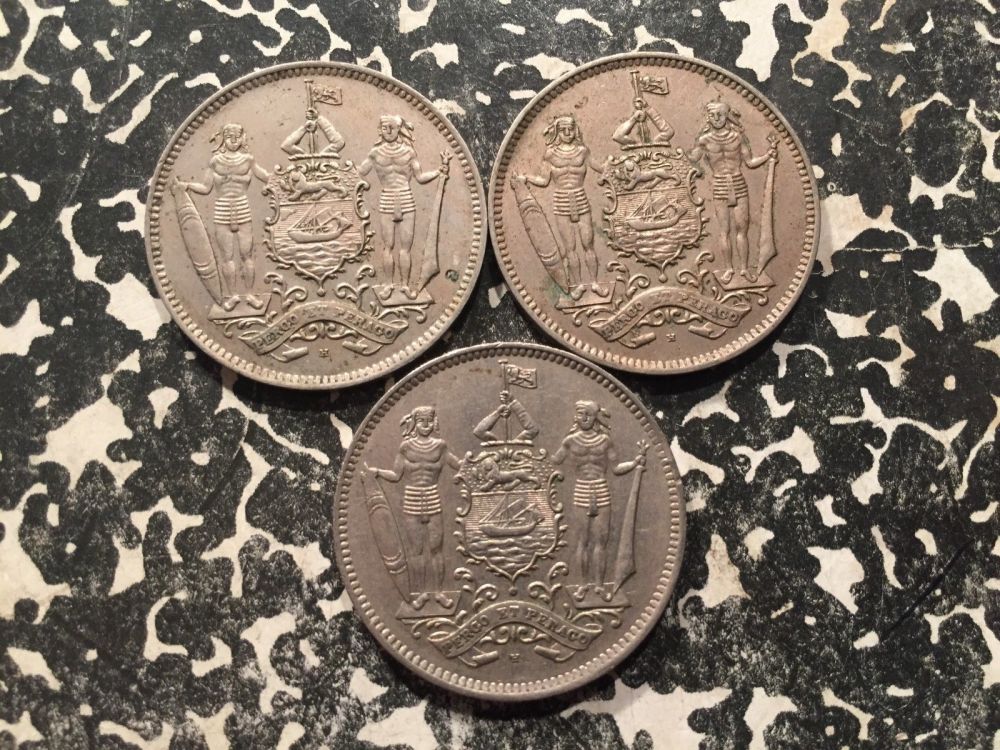  |
|
Pillar of the Community
United States
5362 Posts |
Interesting topic - but is this coin fake? There have been a few statements that are not 100% correct. First is the value of a coin like this in high grades. An MS 65 example brought over $500 on Heritage and a MS 61 brought $79. So if a forger achieved actual die parity that would fool authenticators - the pay day would not be for a few dollars. The fact that this particular coin makes no claims to MS means that it may trade for only a few dollars, but anything over a few cents represents a profit to a forger that possesses these dies. As you can see - I do believe the coin is a numismatic forgery. The dies are a faithful copy made from a genuine coin. The clues are in the fine details - specifically where the forger had to strengthen the details of the design. Here are three comparisons of three areas that display die tooling of various types. The word cents appears to show strengthening of the T by line engraving. 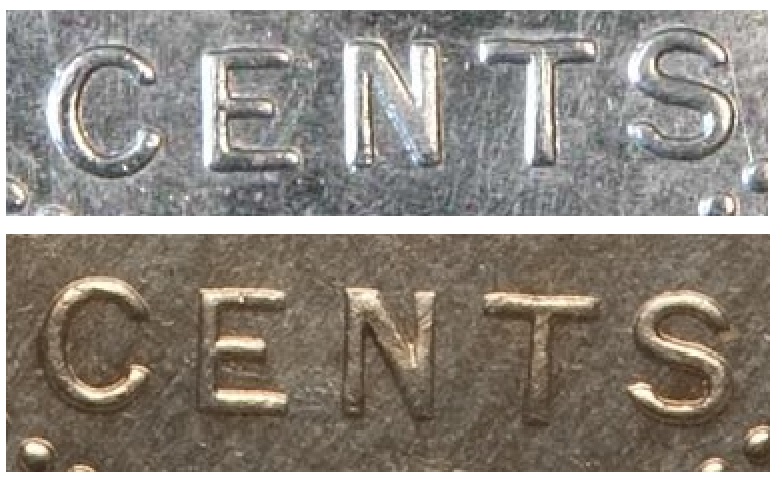 In the date notice that the thickness of the numbers appears heavier in the fake - typical of transferred dies. 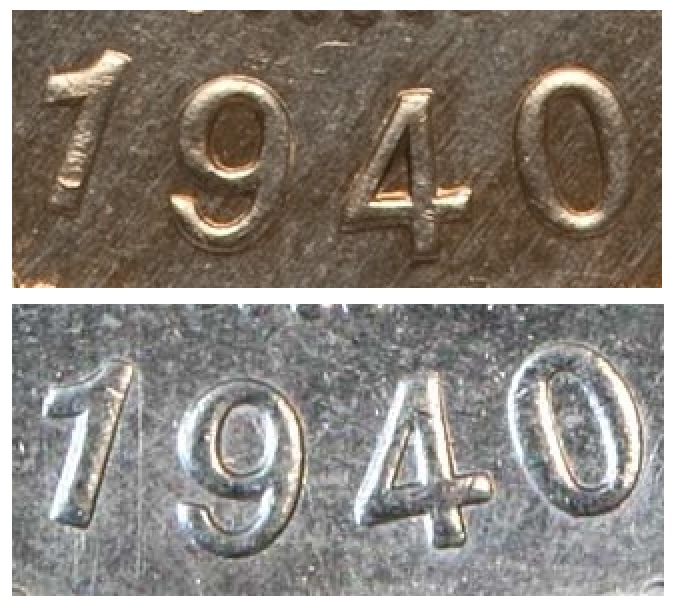 Finally the left head details have been re-engraved onto the die by a less than expert engraver. 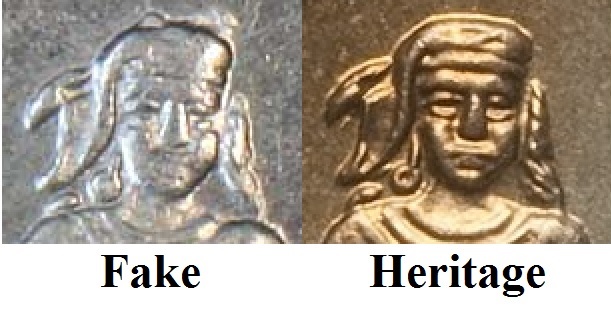 So given the statement of the seller that the coin was a fake I have little reason to doubt that unless and until specific data in support of an original are provided. |
|
Pillar of the Community
 Singapore
631 Posts |
As always swamperbob has very detailed almost scientific explanations and analysis. I'm glad his on our side, or is he hmmmm......  I have always seen these terms 'die tooling', 'transferred dies', 'casting' but I'm not by any means a metal smith as I'm sure many in this forum aren't, I do not have a visual understanding on what these terms mean. Are there any videos that sheds light on these terms ? Edited by Numister
11/02/2016 04:48 am
|
|
Pillar of the Community
United States
6370 Posts |
I had noticed that the fabric of this coin resembled my Chinese struck (NOT cast) counterfeits, but I waited for a more-informed opinion to confirm my gut feeling. The characteristic I saw that were consistent of counterfeits were PL surfaces with a slight bulge, hairlines that look to be heavy die polish lines (especially near the rim next to STATE), and rounded edges to the devices. If you look at a side-by-side comparison of the reverse lettering, you can see there is a definitedifference in the crispness in the edges of the letters. On the OP coin, they are fat, rounded, and undefined. On the genuine coin, they are very crisp and the letters are considerably thinner. This is the stylistic diagnostics I was asking about in my pervious posts. 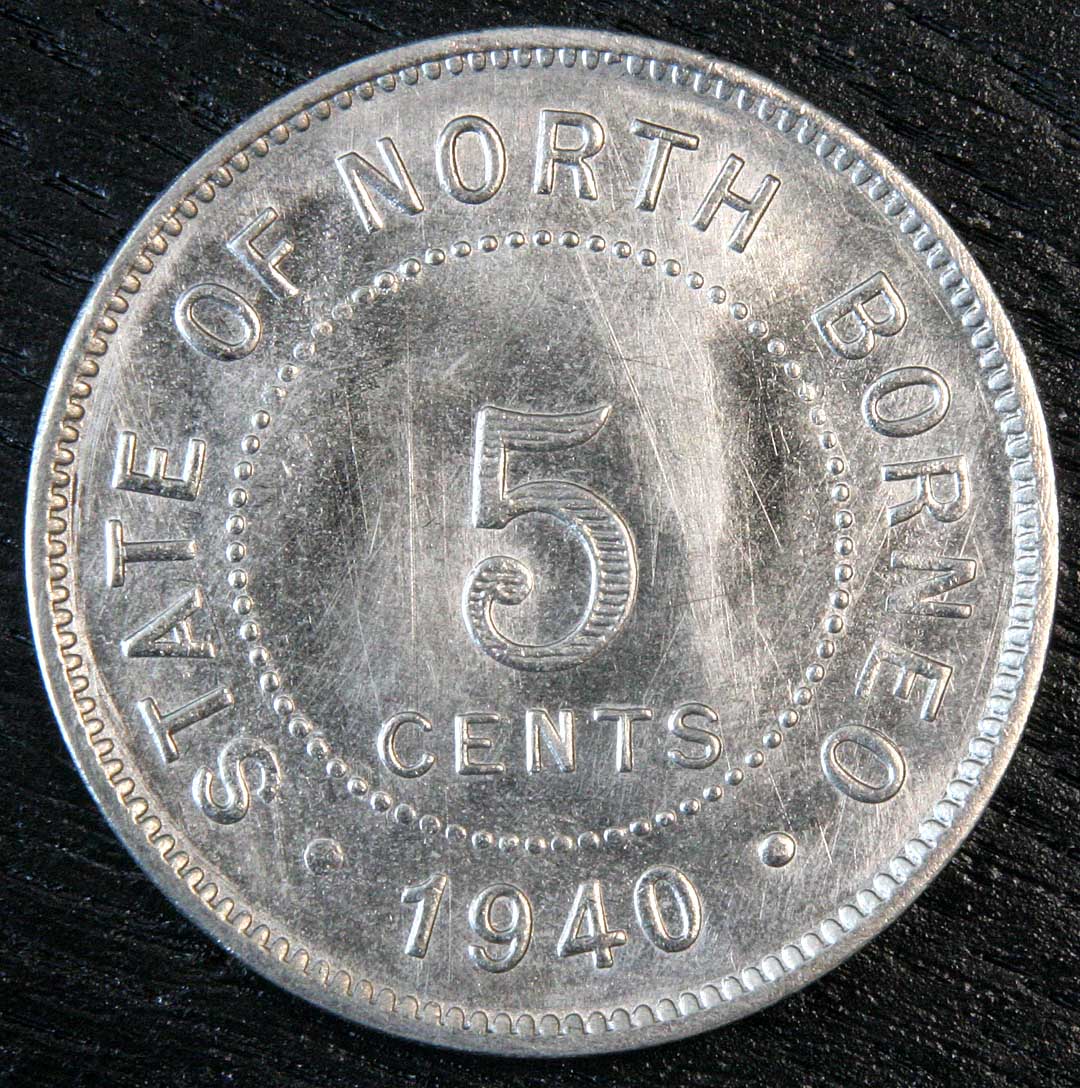 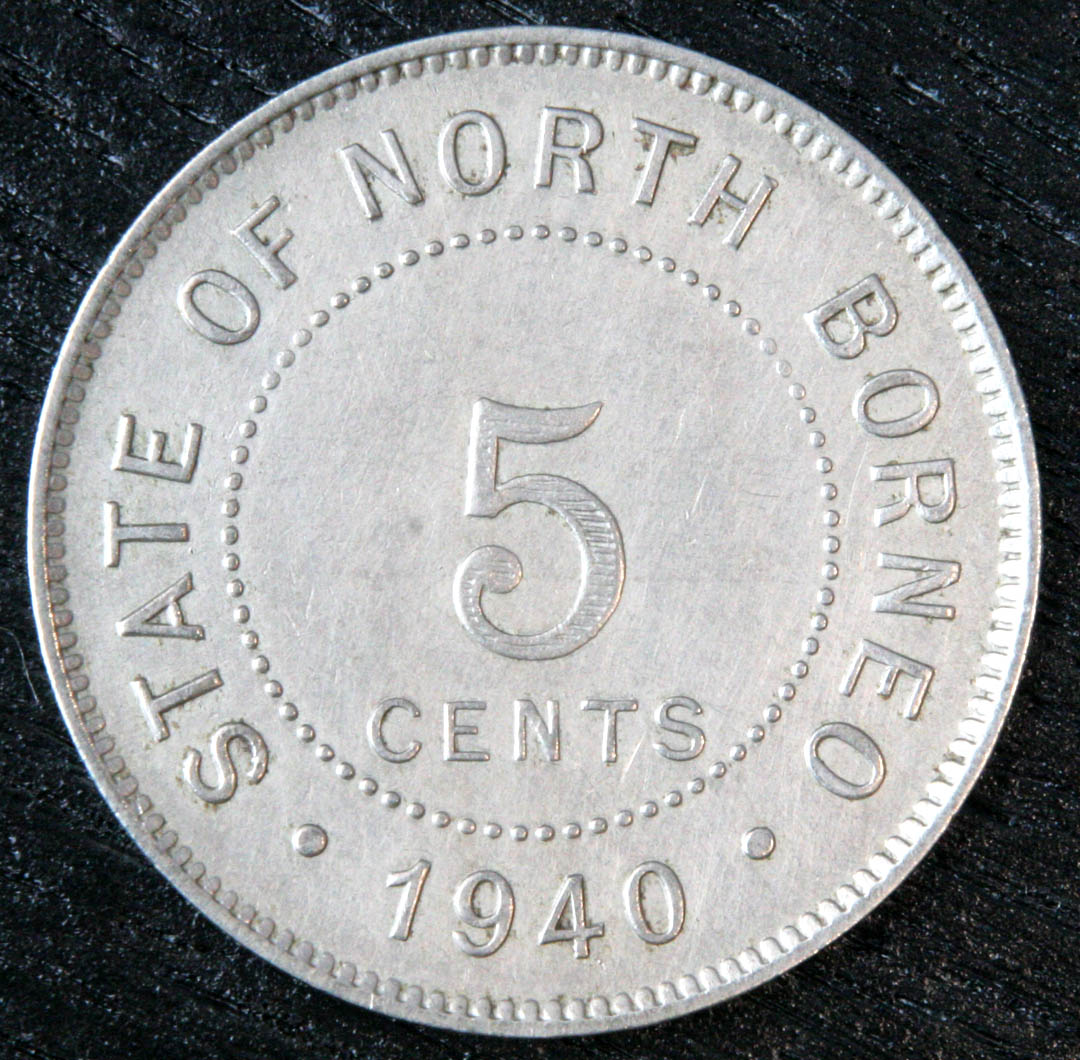 |
|
Pillar of the Community
United States
1784 Posts |
Look below the "A" in STATE are those die casting bubbles?
Just a five second perusal ...
JPL
|
|
Moderator
 United States
34569 Posts |
I've been following this thread with some interest as I'm sure have a great many others on CCF.
I have proven myself incapable of identifying ancient Chinese fakes previously and wonder about my ability with more modern coins some days. In any case, one diagnostic that I generally use for trying to identify fakes is the presence of missing parts of letters in the inscription. The OP coin does not have that, but one of the denticles (above the R in NORTH) is stunted. I absolutely defer to swamperbob, typecoin, and those others who know this stuff much better than I do, but that partially missing denticle strikes me as significant.
"If you climb a good tree, you get a push."
-----Ghanaian proverb
"The danger we all now face is distinguishing between what is authentic and what is performed."
-----King Adz
|
|
Pillar of the Community
United States
5362 Posts |
Spence The dentils and the upset rim are actually a great thing to look at provided you have two examples that are photographed in similar lighting conditions and at similar angles. In some cases these features, dentiles in particular, can be deceptive; so always be careful when making a decision on one feature alone. Once I see one trait like dentils, I start looking for other traits seen on similar coins. (Here I mean coins made in the same way with about the same technology - this applies to genuine examples and forgeries. It is the contrast - the differences - that should not be there that you are looking for). In this case, the dentils do look odd so you are correct. When you see that and since the coin appears to be struck (look at the edge for collar scratches made when the collar was withdrawn - fine scratches that are parallel to one another and are perpendicular to the faces of the coin); then start look for tooling marks or other problems that commonly appear on forged dies but rarely on genuine dies.
Do not concern yourself that you can't do this if you have no tool and die experience. I do have almost 3 years experience making and using dies in addition to my experience gained from talking to people who were actual counterfeiters. I also studied metal working and of course civil engineering mechanics and strength of materials in college. So I have over the years developed a good feeling for the traces that pass from die to finished object especially when repairs to the die faces were needed for a myriad of reasons.
However, anyone can do it. It is entirely logical and clearly visual. The clues can often be seen in a decent photo as were provided here. In person it is even easier. Look at enough coins and it will all of a sudden become clear. Just do not give up.
Numister Don't quit collecting because of forgeries - educate yourself to be able to ID them. It is a lot of fun and you can protect not only yourself but your friends as well.
colonieljohn The coin is struck in my opinion. The features that look like casting bubbles are most likely die features that developed during the image transfer process. When a die image is transferred to metal imperfections in the host will transfer as well. That is how the micro-O dollars were finally identified by repeated die marks on different dates.
When I posted the enlarged pictures, I gave clues to three different elemental causes of differences between genuine dies and replicated dies. Keep looking at the pictures until you can see those differences for yourself. Shadows will help when deciding if a feature is raised or incuse. Shadows always are on the same side of a raised feature and on the opposite side of a depressed feature on a single picture made with a single light source.
In the case of "cents" for some reason the die maker felt the letters were weak. He deepened the letter in the die (remember they are negatives and are cut INTO the die face). What you see as the top of each letter on the finished coin is actually the bottom of a small trench on the die. The die maker deepened the letters in some cases with a graving tool that left straight line segments in an area where polishing could not get rid of them. In the same process the fellow also thickened the letters and may have altered the angle of the side slopes. A really badly botched job often shows slips of the graver - scratches that cross at angles that should not be seen. Example at the top of the T where graver lines CROSS.
Someone mentioned the rather rough filing of the die face. That can be a give away because fields are difficult to transfer. Fields are copies of a flat or tapered ground surface done by experts at die finishing. Forgers typically are hacks at this step. They need to get the dies finished and fail to take the needed time to learn how original dies were finished and to duplicate the process precisely. Best defense is to look at MANY originals of the same type to see how dies were originally finished and at the same time to observe how dies were lapped once placed in the press. These are different processes and there are easy ways to distinguish between the two forms of grinding. That is something I will not discuss now because most forgers still get this wrong. But a comparison of forged coins and genuine coins side by side will be obvious after enough time is spent looking.
For anyone fearful that I could let the cat out of the bag and divulge secret techniques - don't fool yourself - forgers all possess the knowledge to do it right - they simply don't bother because they can get away with less work by not doing every single step. Cutting corners always leads to errors so look for them.
I am trying to explain a methodology that gives any student of authentication the tools needed to move on.
Anyone with questions just ask. I will answer the ones that cover facets of the process that have already been published and are generally well known. I may reserve some but in most cases forgers are actually ahead of authenticators.
|
|
Valued Member
Uruguay
217 Posts |
The truth is that this coin has been some days in discussion here. Despite magnified photos, share opinions and time to study it and make a decision, for some experienced collectors (and some sellers too) the subject coin was authentic. So, what defense against these counterfeit type can have an average collector, who looks for coins in street markets, on the internet, etc.?
I really do not think I have to quit collecting, the answer is to learn more and more.....but I am sure all this filth will drop the value of our collections in the future ... Why? Because the common collector, on the doubt, will not to buy unless the coin had been authenticated.
Swamperbob, could you explain for all us (in this thread or in a new topic if you want)the steps given by counterfeiters to make these modern forgeries? Many doubts: the die transfer procedure, the correct alloy, the correct weight, we need to learn.
|
|
Pillar of the Community
Singapore
631 Posts |
Swamperbob, can I get your opinion on these 2 China Dragon dollars ? My gut feeling are these are fake but older fakes. Anyone else with knowledge on these coins are also welcome to give their 2 cents. 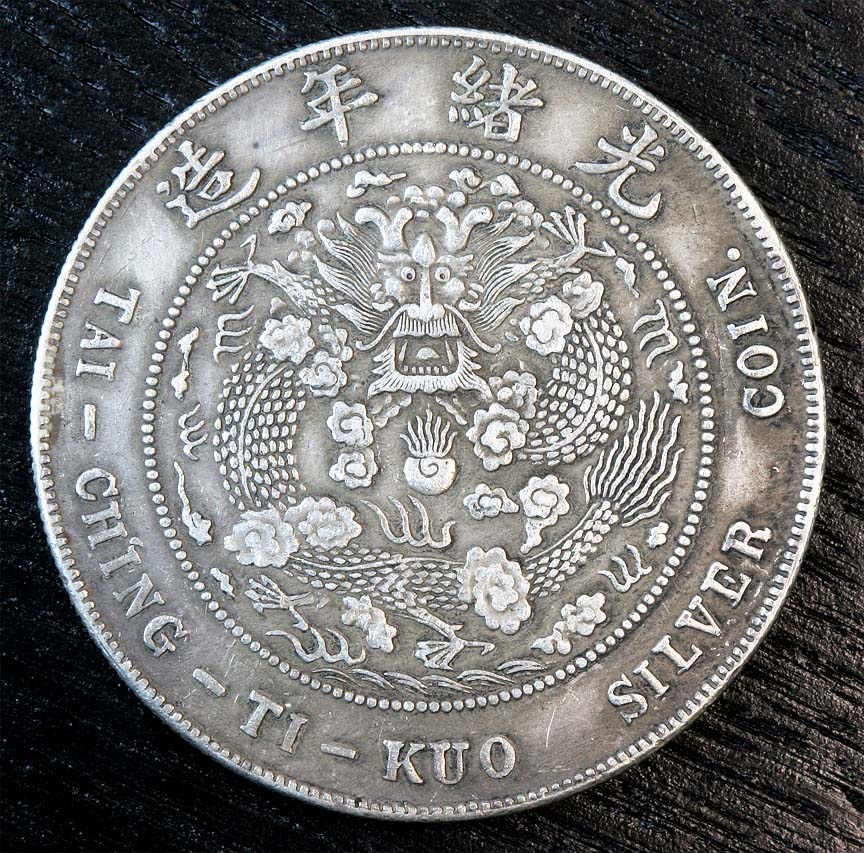 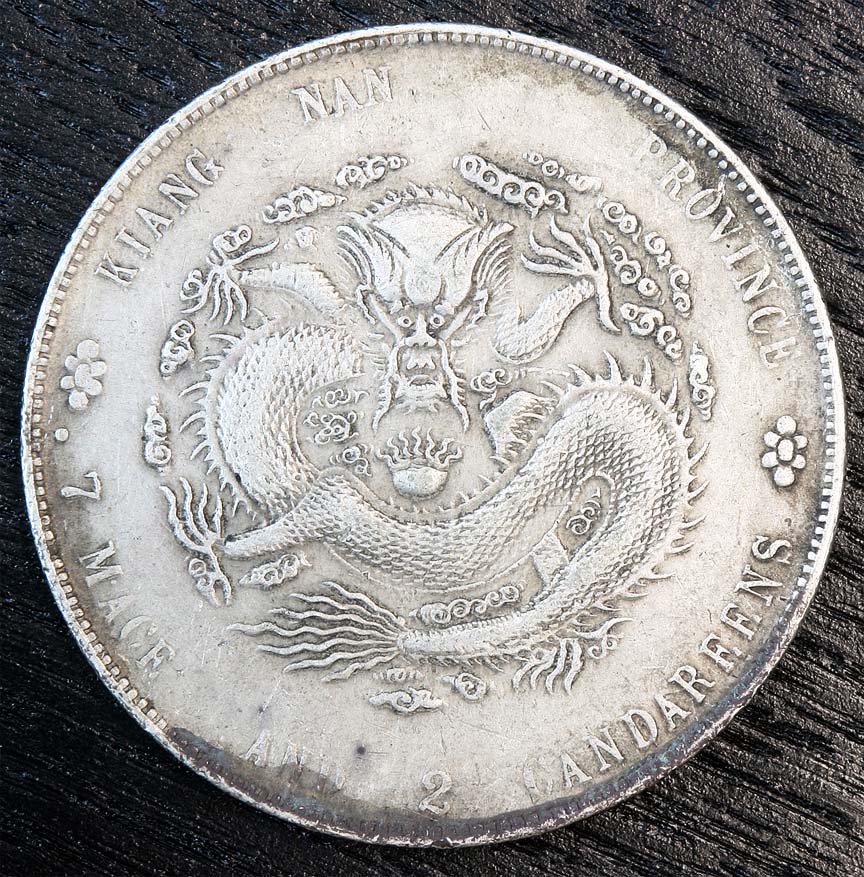
|
|
Pillar of the Community
United States
5362 Posts |
cara You ask: Quote:
Swamperbob, could you explain for all us (in this thread or in a new topic if you want)the steps given by counterfeiters to make these modern forgeries? Many doubts: the die transfer procedure, the correct alloy, the correct weight, we need to learn. This discussion may have taken days, but my opinion was formed within 30 seconds. Even in a street market, you can examine a coin for a minute or two. Now, I must point out that PROVING MY OPINION to others takes a much longer time. However, when buying coins I do not need to prove anything to the seller unless I want to. Regarding methods I would suggest that every collector needs to start by reading Charles Larson's "Numismatic Forgery". It is a great book and a good starting point for anyone wishing to avoid modern forgeries. Once you have examined modern forgeries IN PERSON and you are able to see for yourself the different textures, you will be able to pick out fakes very quickly with a 10X loupe. Not that I don't like to explain things but there are many different techniques discussed in Larson's book - way to much detail to get into here.
|
|
Pillar of the Community
United States
5362 Posts |
Numister You ask: Quote:
Swamperbob, can I get your opinion on these 2 China Dragon dollars ? My gut feeling are these are fake but older fakes. When dealing with Chinese dragon dollars, you need to start with the edge first. I have probably examined roughly 1000 of these coins in person and in my experience all but 1 or 2 coins could be classified without ever looking at the face designs. Many are magnetic - made of iron or nickel. So check the weight and see if they are magnetic. Most modern forgeries are cast and the edge reeds are added AFTER the coin was created. Even a majority of the struck examples are edged POST strike because the forgers use non-collared presses. To understand what the edge should look like you need to study collared press dollar strikes. The Chinese actually purchased old US coining presses. So start with Morgan dollars. The Dragon Dollars should be similarly edged. The pattern will be different but the surface textures will be the same. To pick out most fakes, learn how to recognize a split tail reed. The type made with a ring die. There are several threads where I have covered this. Some earlier forgeries (still numismatic types) were made will rolled on reeds. These have reeds that OVERLAP. That is never seen on genuine coins. Some even had had applied reeds. Make sure the reeds are all similar in size and shape. If the edge looks genuine and the coin is NOT magnetic, then check weight. If the weight is correct Specific Gravity would be next but if you are away from home - at that point I would look at the faces of the coin. Look at the face texture. Do not look at the design yet. Are the fields appropriate? Is there trace mint luster in protected areas? Do the fields meet the lettering and other raised details in a sharp 90 degree angle? Can you see polishing lines transferred from the dies? Are their surface lumps bumps and holes that point to a cast coin? Then FINALLY after 99 out of a hundred are eliminated then check to see if the design is a good match. When dealing with counterfeits made for circulation near the turn of the 20th century, you should be looking for electroplated base metal usually brass or bronze. At times tin, zinc and lead mixtures were used to make counterfeits of the period - some were electroplated as well. What you would not expect are mechanical plates (like Sheffield) or debased struck copies.
|
|
Pillar of the Community
Singapore
631 Posts |
Thanks swamperbob but I only understood about 25% of your explanations,
as mentioned without a background in metal smithing or visual aids like videos its really hard to visualise
the intricate detailed processes that goes into making and counterfeiting a coin.
An analogy I would use is trying to explain colour to a person who has been born blind. Maybe not that extreme but you get the idea.
Edited by Numister
11/03/2016 05:54 am
|
|
Pillar of the Community
Australia
2180 Posts |
Thanks swamperbob - very informative.
Looking at the comparison images the first two make sense but looking at the faces it looks like the face could pass for a partially filled die, but on closer inspection the ring is larger on the fake.
|
|
Pillar of the Community
United States
5362 Posts |
Numister I need a bit of help knowing where to start to answer your questions. So I will start by asking you some questions.
1. Do you understand the process of casting an object like a coin in a mold?
2. Do you understand the various historical methods of striking a coin?
3. Do you understand how a mold is made?
4. Do you understand the various historical methods of manufacturing a coining die?
I think I need to know where to begin and at what level to proceed?
Did you take and like science classes in school?
Do you like history? Math (geometry)?
Have you attended college?
|
|
Pillar of the Community
Singapore
631 Posts |
Swamperbob, No to the first 4 questions.
My math and science were not great but I passed, I like watching Brian Cox on BBC and love history.
That's why we love collecting coins right because of the history.
|
| |
Replies: 45 / Views: 5,311 |





 First Page
 Previous Page


 Posted 11/02/2016 03:53 am


