Coin Community Family of Web Sites Join Thousands of Coin, Bullion, & Money Collectors
Shop for APMEX Bullion on eBay!Royal Canadian Mint products, Canadian, Polish, American, and world coins and banknotes. Join Thousands of Coin, Bullion, & Money Collectors Vancouvers #1 Coin and Paper Money Dealer 300,000 items to help build your collection! Coin, Banknote and Medal Collectors's Online Mall Specializing in Modern Numismatics


Username:
Password:
Save Password
Forgot your Password?


This page may contain links that result in small commissions to keep this free site up and running.

Welcome Guest! Registering and/or logging in will remove the anchor (bottom) ads. It's Free!

Cleaning Coins With Acetone.

To participate in the forum you must log in or register.
Author Previous TopicReplies: 73 / Views: 47,012Next Topic
Page: of 5
Moderator
Learn More...
Spence's Avatar
United States
34397 Posts
 Posted 08/18/2018  2:25 pm  Show Profile   Bookmark this reply Add Spence to your friends list Get a Link to this Reply

Quote:
Anyone ever try MEK?


Yes, but at a previous job. I would never use anything so strong on coins. Just my Two Cents...
"If you climb a good tree, you get a push."
-----Ghanaian proverb

"The danger we all now face is distinguishing between what is authentic and what is performed."
-----King Adz
Valued Member
MeowtheKitty's Avatar
353 Posts
 Posted 08/18/2018  3:47 pm  Show Profile   Bookmark this reply Add MeowtheKitty to your friends list Get a Link to this Reply
It was just a thought, as it was one of the most powerful solvents that was available publicly. The MSD sheet makes it sound dangerous. It might even have a line saying, "Kills Cats Instantly". Maybe Meow should not let curiosity rule this Cats life so much.
Valued Member
Villa Rose's Avatar
United States
68 Posts
 Posted 01/13/2019  11:15 am  Show Profile   Bookmark this reply Add Villa Rose to your friends list Get a Link to this Reply
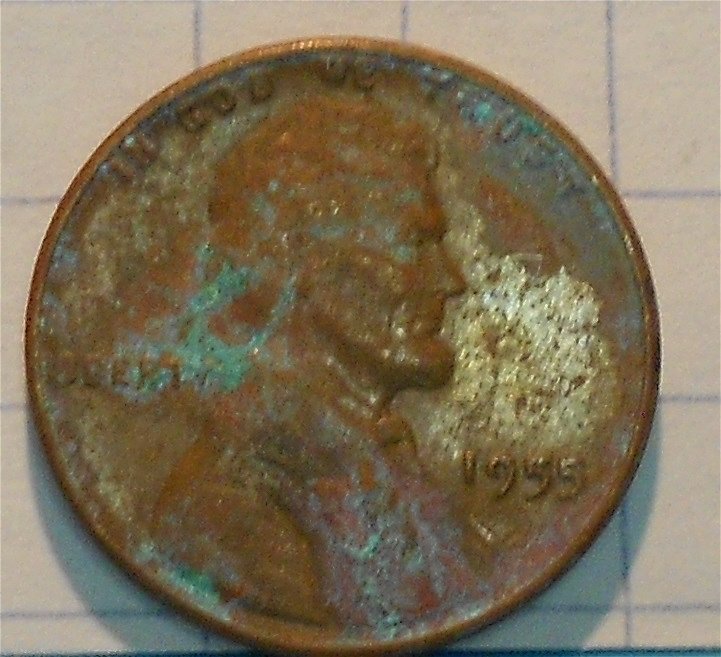
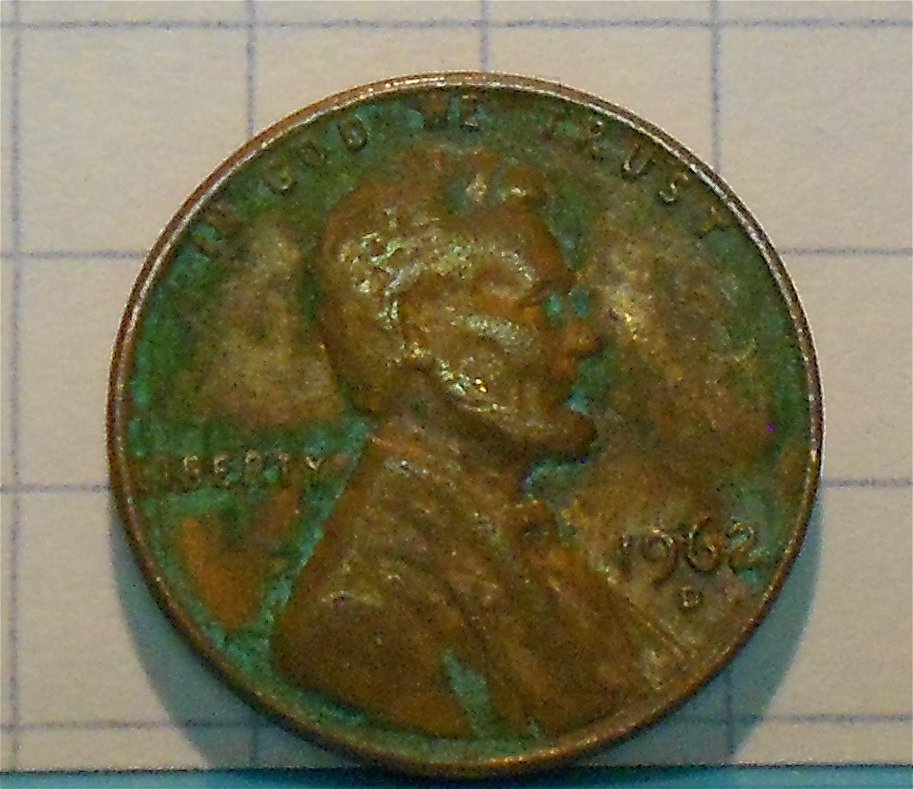
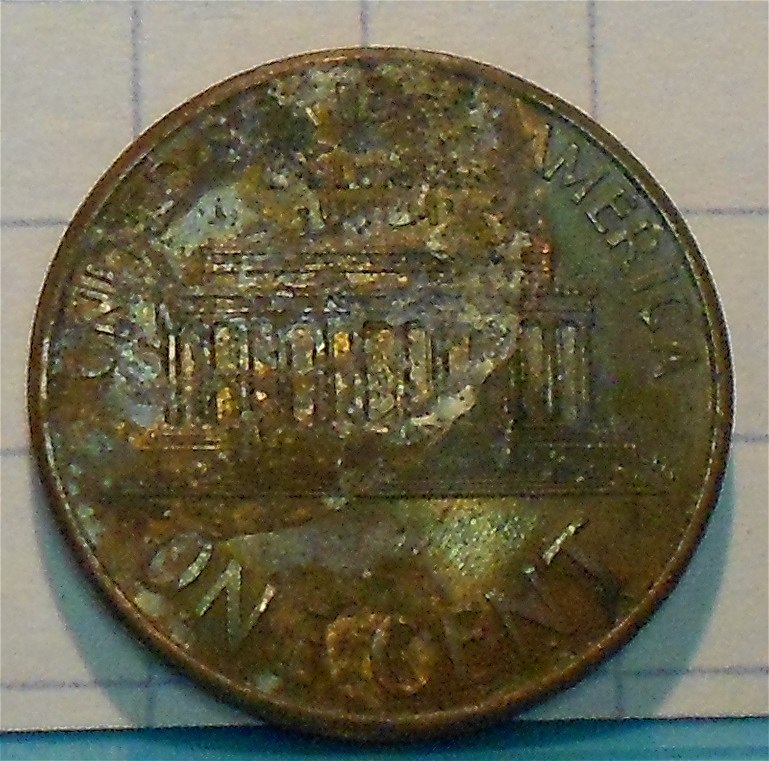
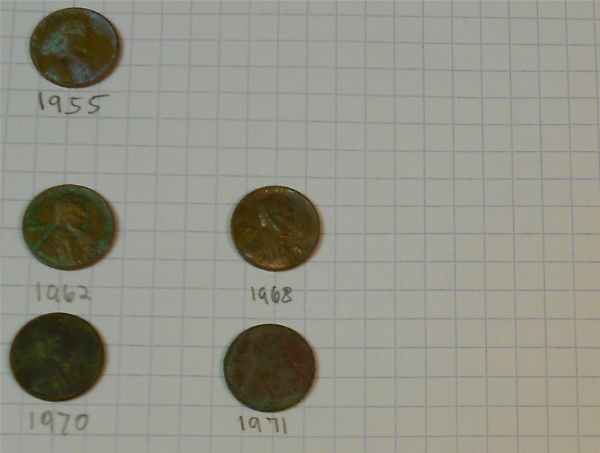
I pulled these out of my pocket change (which I keep in my pocket) and soaked them in water overnight. Would any of them benefit from an acetone soak? Or any other "legitimate" cleaning technique? I'm not talking about whizzing, polishing or anything like that. By the way, I know these coins are virtually worthless. Well, I guess they're each worth one cent. That's why I'm experimenting with them. If I ruin them, so what? I've included one group shot and a couple of close-ups. The close-up that shows the reverse is the 1997-D.

Cleaning-Coins-With-Acetone.
Pillar of the Community
llewellin's Avatar
United States
1005 Posts
 Posted 01/13/2019  12:04 pm  Show Profile   Bookmark this reply Add llewellin to your friends list Get a Link to this Reply
Good to see you back here. If I were to try, I would first soak those in distilled water to get off salts/acids and such, then perhaps try some verdicare to see if it helps the corrosion. Would not expect acetone to make much of a difference for those.
Pillar of the Community
llewellin's Avatar
United States
1005 Posts
 Posted 01/13/2019  12:14 pm  Show Profile   Bookmark this reply Add llewellin to your friends list Get a Link to this Reply

Quote:
I think the moderators should pin this as a sticky topic. It's a very important one, in my opinion, as there's so much good and valuable information given on this thread.


I agree this is very important to inform people. I have seen an alarming number of recent posts recommending harsh cleaning or chemicals that would likely result in damaging the coin, so I think we really do need to be better at giving prudent advice to novices here. When in doubt, leave coins alone and I really don't think that can be stressed enough. That being said, there is some misinformation on this topic that I'd like to point out:


Quote:
Acetone(and apparently MEK) is for organic substances, and Xylene base is for non-organic gunk on coins. One is an acid base the other alkaline. ... If MEK is advertised as a stronger substitute for acetone, more damage than acetone may occur... stick with the known factor, acetone.


Acetone, MEK, and xylene are solvents for organic substances, in increasing order of non polarity; among them xylene will be best at removing oils and acetone will be worst, but all will be safe for coin surfaces in principle. Describing them as acids or bases is complete nonsense, as is describing any of them as categorically stronger/safer solvents. Depending on what you want to remove will determine your best treatment protocol. Acetone is the best all-rounder solvent commonly available and relatively safe to human health which is why it is universally recommended here.
Valued Member
numisnut1960's Avatar
Canada
57 Posts
 Posted 07/20/2021  8:11 pm  Show Profile   Bookmark this reply Add numisnut1960 to your friends list Get a Link to this Reply
Hi everyone. I've read this whole thread. Very informative. However I'm still not sure about cleaning tarnished silver coins. Is it acceptable to use lemon and salt solution to soak them in? Or something else? I have some old nclt stuff that I'd like to make shiny again. Just for fun.
Moderator
Learn More...
Sap's Avatar
Australia
16816 Posts
 Posted 07/20/2021  9:41 pm  Show Profile   Bookmark this reply Add Sap to your friends list Get a Link to this Reply
Removing "tarnish" from silver coins is generally considered "bad cleaning". We don't even call it "tarnish", unless it looks really ugly, we call it "toning" instead. Silver coin "dips" such as the acid-and-salt method remove the toning/tarnish by dissolving the silver sulfide off the surface of the coin. As such the process removes part of the silver from the coin itself - as opposed to acetone etc which remove non-metallic surface contaminants only.

They're your coins, and you can legally do with them whatever you wish, short of physically destroying them (which is still illegal in Canada). If you personally like the look of "nice shiny coins" rather than "tarnished coins", then go right ahead and dip them. Just be aware that most coin collectors don't like the look of over-dipped coins, and therefore most coin dealers don't like them either. Dipping is highly likely to remove any collector premium such coins might carry, turning them into bullion pieces. If the coins in question are so common they are traded at bullion rates anyway, then no harm, no foul.
Don't say "infinitely" when you mean "very"; otherwise, you'll have no word left when you want to talk about something really infinite. - C. S. Lewis
Valued Member
United States
55 Posts
 Posted 08/01/2021  10:43 am  Show Profile   Bookmark this reply Add Eagle_Eye to your friends list Get a Link to this Reply
I learned quite a bit from this post and the replies.
Thank you all.

EE
New Member
OldSilverDollar's Avatar
United States
27 Posts
 Posted 09/16/2021  7:34 pm  Show Profile   Bookmark this reply Add OldSilverDollar to your friends list Get a Link to this Reply

It has helped me avoid several mistakes that would have ruined some nice old coins down the drain.
This is the most helpful conversation regarding the subject online I just want to thank everyone for the advice shared here.
New Member
OklaNumist's Avatar
United States
30 Posts
 Posted 10/13/2025  12:27 pm  Show Profile   Bookmark this reply Add OklaNumist to your friends list Get a Link to this Reply
Reviving old thread
I got BadThads polarity ladder for cleaning, great info.

At what composition percentage would a chemical be unsafe to a coin?

For example: MEK is bad for Copper, so would any coin containing Cu be at risk? Or a coin with 2.5% Cu be ok since its an alloy instead of clad.

FYI: Even a silver coin has 0.07% Cu.

Here are some coin compositions:
Alloy 75%Cu - 25% Ni
Alloy 88.5% Cu - 6% Zn - 3.5% Mn - 2% Ni
Alloy 90% Ag - 10% Cu
Alloy 91.67% Au - 3% Ag - 5.33% Cu
Alloy 97.5% Zn - 2.5% Cu
Clad 40% Ag - 60% Cu
Clad 75% Cu - 25% Ni
Clad 80% Ag - 20% Cu
Clad 91.67% Cu - 8.33% Ni
Solid 99% Fe
Alloy 99.93% Ag - 0.07% Cu
Solid 99.95% Pd
Solid 99.95% Pt
Solid 99.99% Au
Alloy 95% Cu - 5% Tin/Zinc
Edited by OklaNumist
10/13/2025 1:09 pm
Moderator
Learn More...
Dearborn's Avatar
United States
95443 Posts
 Posted 10/13/2025  9:14 pm  Show Profile   Bookmark this reply Add Dearborn to your friends list Get a Link to this Reply
Can you corelate these values to the coins they belong to?
For example what coin has a cladding of copper (91.67) and nickel (8.33)

Also for example - what would MEK do to the core of a Clad Kennedy half dollar that has 75% Cu - 25% Ni cladding, but the core is 100% Cu.
New Member
OklaNumist's Avatar
United States
30 Posts
 Posted 10/14/2025  8:04 pm  Show Profile   Bookmark this reply Add OklaNumist to your friends list Get a Link to this Reply
To me, it looks like coins that are clad are not totally incapsulated with the clad so the chemical can come with in direct contact with the core, also if the clad is porous or has micro holes, the chemical can permeate the clad. Just observation, I very well could be totally wrong.
These are just coin types in my collection, most likely not an all-inclusive list.

Canada, Dime - Bluenose under sail (1937 - 1966, 1968 - present) Solid 100% Ni
Canada, Nickle - The Beaver (1937 - 1942, 1946 - 1950, 1952 - 1966, 1968 - present) Solid 100% Ni
Canada, Quarter - The Caribou (1937 - 1972, 1974 - 1991, 1993 - 1998, 2001-2008 and 2001-present) Solid 100% Ni
Eisenhower dollar - Clad (1971 - 1978) Clad 91.67% Cu - 8.33% Ni
Mercury dime - Winged Liberty Silver (1916 - 1945) Alloy 90% Ag - 10% Cu
Roosevelt dime - Silver (1946 - 1964) Alloy 90% Ag - 10% Cu
Susan B Anthony - Clad (1979 - 1981, 1999) Clad 91.67% Cu - 8.33% Ni
Canada, Quarter - The Caribou (1937 - 1972, 1974 - 1991, 1993 - 1998, 2001-2008 and 2001-present) Clad 80% Ag - 20% Cu
Roosevelt dime - Silver (1946 - 1964) Alloy 90% Ag - 10% Cu
Indian Head cent - Bronze (1864 - 1909) Alloy 95% Cu - 5% Tin/Zinc
Morgan dollars - Early Silver (1878 - 1921) Alloy 90% Ag - 10% Cu
Barber quarter - Early Silver (1892 - 1916) Alloy 90% Ag - 10% Cu
Peace dollar - Early Silver (1921 - 1935) Alloy 90% Ag - 10% Cu
Standing Liberty - Type 2 (1917 - 1930) Alloy 90% Ag - 10% Cu
Ireland, 10 Pence (1969 - 1986) Clad 75% Cu - 25% Ni
Washington quarters - Bicentennial Design (1976) Clad 91.67% Cu - 8.33% Ni
Washington quarters - Silver (1932 - 1964) Alloy 90% Ag - 10% Cu
Franklin half dollar - Liberty Bell (1948 - 1963) Alloy 90% Ag - 10% Cu
Ireland, 1 Pingin (1940 - 1968) Alloy 95.5% Cu, 3% Sn, 1.5% Zn
Native American & Sacagawea dollars - Golden Dollar (2000 - 2008) Alloy 88.5% Cu - 6% Zn - 3.5% Mn - 2% Ni
Presidential dollars - (2009 - Present) Alloy 88.5% Cu - 6% Zn - 3.5% Mn - 2% Ni
Buffalo nickels - Line Type (1913 - 1938) Alloy 75%Cu - 25% Ni
Jefferson nickel - Pre-War (1938 - 2003) Clad 75% Cu - 25% Ni
Kennedy half dollar - Silver (1964) Alloy 90% Ag - 10% Cu
Kennedy half dollar - 40% Silver (1965 - 1970) Clad 40% Ag - 60% Cu
Kennedy half dollar - Clad (1971 - Present) Clad 91.67% Cu - 8.33% Ni
Kennedy half dollar - Bicentennial Design (1976) Clad 91.67% Cu - 8.33% Ni

Moderator
Learn More...
Sap's Avatar
Australia
16816 Posts
 Posted 10/14/2025  9:35 pm  Show Profile   Bookmark this reply Add Sap to your friends list Get a Link to this Reply
To the best of my knowledge, MEK does not actually react with or damage copper; rather, it's the other way around - prolonged exposure to copper will damage and degrade your MEK. Copper is listed in the MSDS as being "incompatible" with MEK because over prolonged exposure (we're talking weeks or months), copper can catalyse MEK into MEK peroxide - which is not something you want to happen to your bottle of MEK, since MEK peroxide is a shock-sensitive explosive (as most organic peroxides are).

MEK should be just as safe as acetone to use on coins - given that either a MEK soak or acetone soak should be over in a few seconds, or a few minutes at most. If the goo doesn't dissolve after 10 minutes soaking in acetone (or MEK), then further soaking isn't going to help.
Don't say "infinitely" when you mean "very"; otherwise, you'll have no word left when you want to talk about something really infinite. - C. S. Lewis
  Previous TopicReplies: 73 / Views: 47,012Next Topic
Page: of 5

To participate in the forum you must log in or register.


Disclaimer: While a tremendous amount of effort goes into ensuring the accuracy of the information contained in this site, Coin Community assumes no liability for errors. Copyright 2005 - 2026 Coin Community Family- all rights reserved worldwide. Use of any images or content on this website without prior written permission of Coin Community or the original lender is strictly prohibited.
Contact Us  |  Advertise Here  |  Privacy Policy / Terms of Use

Coin Community Forum © 2005 - 2026 Coin Community Forums
It took 0.39 seconds to rattle this change. Forums