| Author |
 Replies: 55 / Views: 6,190 Replies: 55 / Views: 6,190 |
|
|
|
Moderator
 United States
23522 Posts |
I wouldn't be at all surprised if it's a power play under the surface.
|
|
Pillar of the Community
Puerto Rico
778 Posts |
CAC is extra useless 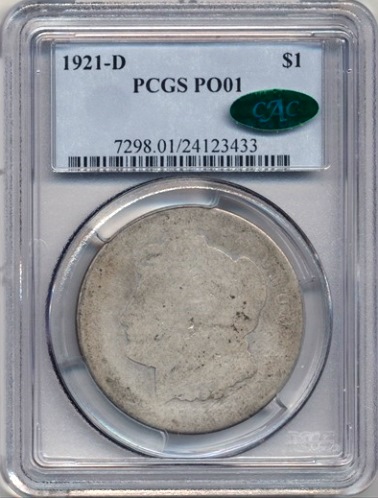 |
|
Pillar of the Community
 United States
4337 Posts |
wow. And there you have it folks. Thanks for sharing that pic junjun.
|
|
Moderator
United States
23522 Posts |
That's not remotely indicative of anything except that you're unaware of how popular Lowball collecting is among Morgan people. Look at my avatar.
|
|
Pillar of the Community
United States
937 Posts |
I must admit I have purchased a coin with a green bean on it once. A 1942 MS65 FB Merc. dime graded by PCGS as I remember. It is a nice coin and fits nicely in my Dansco. Did I pay more for the coin because it had a sticker on it? Nope. Did the coin look super special for the grade? Not real special, it was what I would expect for the grade. Did the sticker influence my decision? Nope. Now, having said that I know there is a place for the Bean in the market; just as there is a place for TPG. Yes, I bad mouth slabs and giggle at people who wonder if they should send a graded coin to another grader to see if it will cross over. But as others have stated very eloquently in this thread they serve a valuable and specific purpose for those with deep wallets. I cannot and do not play at those stakes. When I see common coins in common grades in a TPG holder with a bean on it I cannot help but think about ‘a fool and his money'. So to answer the original question, No, CAC has not lost its appeal at the level it was intended for. At the level of 1942 MS65 FB Mercury dime that I purchased for $18, YES it has lost its appeal. If the person who paid to have PCGS grade then CAC verify this coin made any money at all I would be surprised. |
|
Pillar of the Community
Canada
5417 Posts |
Never have and never will pay a premium for a CAC'd coin. Just like I don't pay premiums for TPG'd coins over raw coins unless they are actual rarities (but then I'm really just paying a premium for the rarity). Although I admit, if I had a choice between a raw coin and the same coin in a slab, I'd take the slabbed coin (for the same price ofcourse). And if I had a choice between a CAC'd coin and a non-CAC'd coin I'd take the CAC coin. |
|
Pillar of the Community
United States
4337 Posts |
Quote:
That's not remotely indicative of anything except that you're unaware of how popular Lowball collecting is among Morgan people. Look at my avatar. Duly noted. |
|
Moderator
United States
23522 Posts |
Honestly, the coin noted is - to the standard required - a tremendous example of the grade. You can barely tell it's a Morgan, and knowing '21's the reverse isn't much better. It's a wonder there's enough meat left to see the mint mark.
And here's how it works: There are 11 examples of a 1921-D in PCGS P01. There are 63 active PCGS Registry Sets of Lowball Morgans which require one of those. It's a $250+ coin.
Demand is a funny thing.
|
|
Valued Member
United States
72 Posts |
Another part of the CAC brand is their attestation that the coin has "original" surfaces. I perceive that claim to a coin having market AND CAC acceptable surfaces. This is particularly valued by those collectors and dealers who do not have expertise in gold. Separately, I've heard Albanese state that the average value of a coin they certify is $5000. More grist for this mill!  |
|
Bedrock of the Community
United States
10982 Posts |
I think that PO01 Morgan is really cool. Amazing they identified it as a 1921-D.
I look at the CAC green bean as meaning the top dealers in the country would pay the current market price for that coin in the assigned grade.
|
|
Pillar of the Community
United States
4337 Posts |
First, as I had recently said in another thread last week with regard to having learned of the New England 6PENCE and the Noe Variates, I'll repeat here with the 1921-D discovery made today along with the bean it posses, "you learn something new every week on the CCF"  respect Speaking of the bean it posses, Quote:Several of my own coins I wonder if it's the scarcity of the issue grade by a major TPG that earned it the green bean. ~DSFREEWORLD More so than the rarity demand ratio of the coin shared, what the bean SAID to me about the coin is what I have always, and now feel more conviction on, stated and that is a scarcity of some sort existed. And on this 1921-D I was unaware of what that was. I simply chalked it up as foolish, imagine what I think now! I'm gonna hunt junk jars at pawn shops if I ever get the chance! $250! In any event, a sticker indicating rarity to me would have made me judge other wise. Figure out how to sticker 'em on rarity indexes and I bet people would enjoy that. Maybe Who knows  |
|
Pillar of the Community
Puerto Rico
778 Posts |
@dsfreeworld
If you find a PO01 1921-D in a junk jar you just get melt value. If you find a PO01 1921-D in a PCGS holder and with the CAC sticker then you have a $250 coin. In this case the value is in the holder and the sticker, not in the coin.
|
|
Pillar of the Community
United States
4337 Posts |
Oh I understood the angle. If one is found I n a junk jar and it fit the bill, it's on its way for double down gamble where on the other side Youll either have a $250 coin or a coin thats melt plus $60 for.
I don't even go to pawn junk bins...but that's how some of those coins are found I'd imagine
|
|
Pillar of the Community
United States
8534 Posts |
Quote:
If you find a PO01 1921-D in a junk jar you just get melt value. Actually you've just hit the jackpot. Lowball collecting is very competitive. Ask Nickelsearcher, he has an amazing collection. Oregon coin geek.....*** GO BEAVS ! ! ! ***
|
|
Pillar of the Community
United States
3755 Posts |
Dave, I get that. That is precisely why the TPGs came about in the first place. But this then begs this question...
If big time dealer A can not trust big time dealer B to evaluate the coin, then why does big time dealer B have a big time rep?
|
| |
Replies: 55 / Views: 6,190 |







 First Page
 Previous Page


 Posted 10/10/2014 3:51 pm





