First Page
 Previous Page


 Posted 01/14/2018 06:18 am


The decimal halfpenny was one of the shortest-lived and most unpopular coins in the history of British numismatics.
When the UK first contemplated adopting a decimal system, there were debates about what should be the main unit. Some experts wanted a ten-shilling unit, like the Australian dollar, while others preferred to keep the pound sterling and divide it into smaller units.
The decision was made to retain the pound, as it was a major international trading currency. But should it be divided into 100 or 1000 units?
A unit worth one-thousandth of a pound, worth less than the old farthing (demonetised in January 1961) was considered too small. However, a unit worth one-hundredth of a pound, worth 2.4 old pence, was considered too big to be the smallest coin. So, when the pound was divided into 100 new pence on February 15, 1971, a bronze half new penny was issued.
Although worth slightly more than the popular and useful old penny, the new halfpenny was never popular. It was considered too small and fiddly, and inflation soon robbed it of any spending power. It was also disliked by the banks, who would not permit its use on cheques!
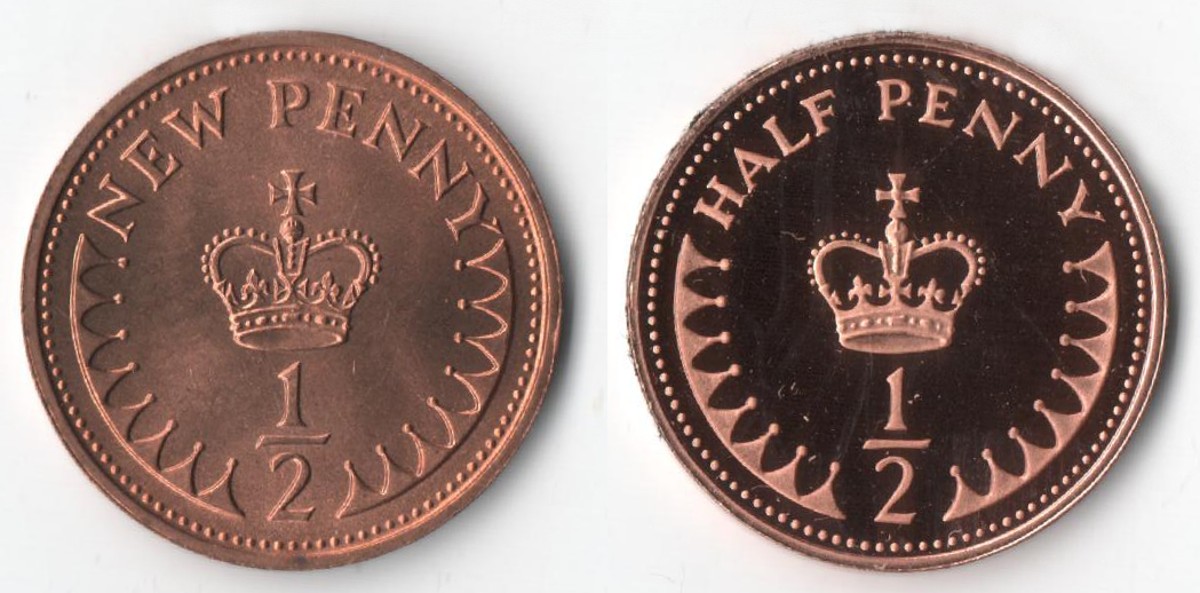
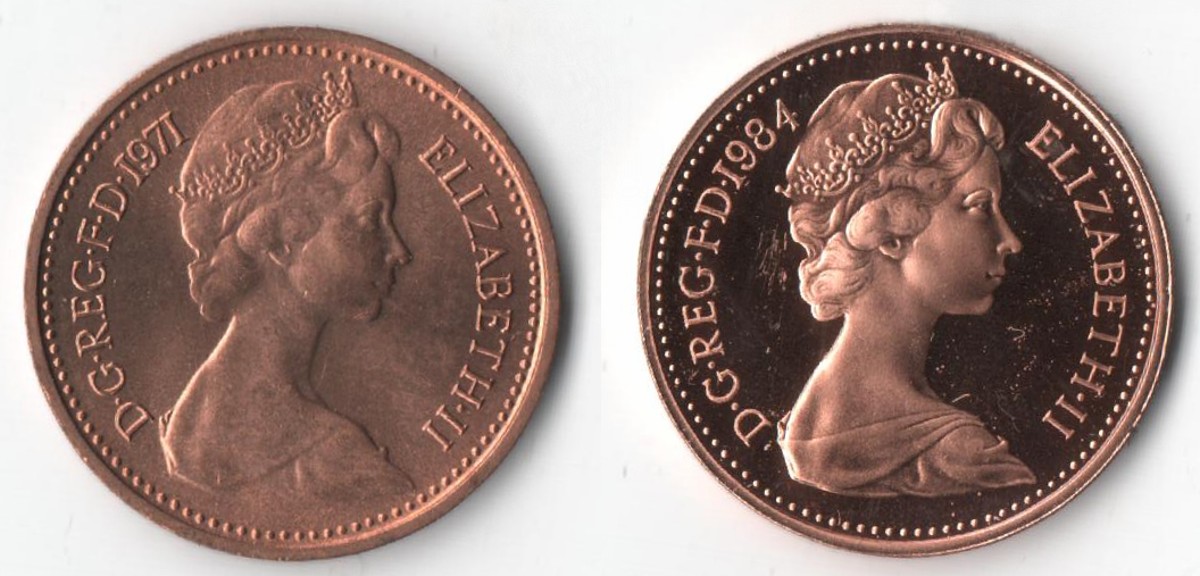
The design of the Royal Crown above the value and 'NEW PENNY' was modified in 1982 to read 'HALF PENNY'. But by then the writing was on the wall. After a mintage of 190,752,000 in 1982, only 7,600,000 were issued in 1983, and the following year the Government announced that the coin would be demonetised from January 1, 1985. Half penny coins dated 1984 were only struck in BU and Proof sets.
What really killed off the halfpenny was not inflation (France and Germany continued minting coins of a similar value for another 15 years), but the adoption of electronic tills and accounting processes by most businesses in the mid-1980s. These could not cope with half a unit! When the coin was withdrawn, there was very little opposition from the public: the coin remained unpopular right to the end.
When the UK first contemplated adopting a decimal system, there were debates about what should be the main unit. Some experts wanted a ten-shilling unit, like the Australian dollar, while others preferred to keep the pound sterling and divide it into smaller units.
The decision was made to retain the pound, as it was a major international trading currency. But should it be divided into 100 or 1000 units?
A unit worth one-thousandth of a pound, worth less than the old farthing (demonetised in January 1961) was considered too small. However, a unit worth one-hundredth of a pound, worth 2.4 old pence, was considered too big to be the smallest coin. So, when the pound was divided into 100 new pence on February 15, 1971, a bronze half new penny was issued.
Although worth slightly more than the popular and useful old penny, the new halfpenny was never popular. It was considered too small and fiddly, and inflation soon robbed it of any spending power. It was also disliked by the banks, who would not permit its use on cheques!
The design of the Royal Crown above the value and 'NEW PENNY' was modified in 1982 to read 'HALF PENNY'. But by then the writing was on the wall. After a mintage of 190,752,000 in 1982, only 7,600,000 were issued in 1983, and the following year the Government announced that the coin would be demonetised from January 1, 1985. Half penny coins dated 1984 were only struck in BU and Proof sets.
What really killed off the halfpenny was not inflation (France and Germany continued minting coins of a similar value for another 15 years), but the adoption of electronic tills and accounting processes by most businesses in the mid-1980s. These could not cope with half a unit! When the coin was withdrawn, there was very little opposition from the public: the coin remained unpopular right to the end.