| Author |
 Replies: 7,432 / Views: 408,290 Replies: 7,432 / Views: 408,290 |
|
|
|
Moderator
  United States
196278 Posts |
Quote:
well dang - that is a long time - I ain't gettin any younger here.. A destiny we all share.  |
|
Moderator
United States
196278 Posts |
Time for the next level!  We Need - 1408 C. E. (A. H. 811)  |
|
Pillar of the Community
Australia
2583 Posts |
The Ox moves slowly, but the Earth is patient.
|
|
Pillar of the Community
Australia
2583 Posts |
a whisper, almost silent, across the open field...... .tdziemia... .tdziemia  The Ox moves slowly, but the Earth is patient.
Edited by ttkoo
04/15/2024 12:47 am
|
|
Pillar of the Community
 United States
8056 Posts |
Apologies for my absence (and thanks to j1m for giving me a heads up)... This is a month of lots of travel, and just returned from 7 days floating down the Rhine. Great for satisfying wanderlust, but less great for internet connectivity (and, honestly, if I spent as much time on coin forums last week on vacation, as I normally do, I think my wife would have thrown my computer into the river). This Polish half groat has been dated to 1408 (Pawlikowski XI, Kop. 359). Still the auction house photos (I have gotten a bit sloppy on this, and can't devote time to make my own right now). 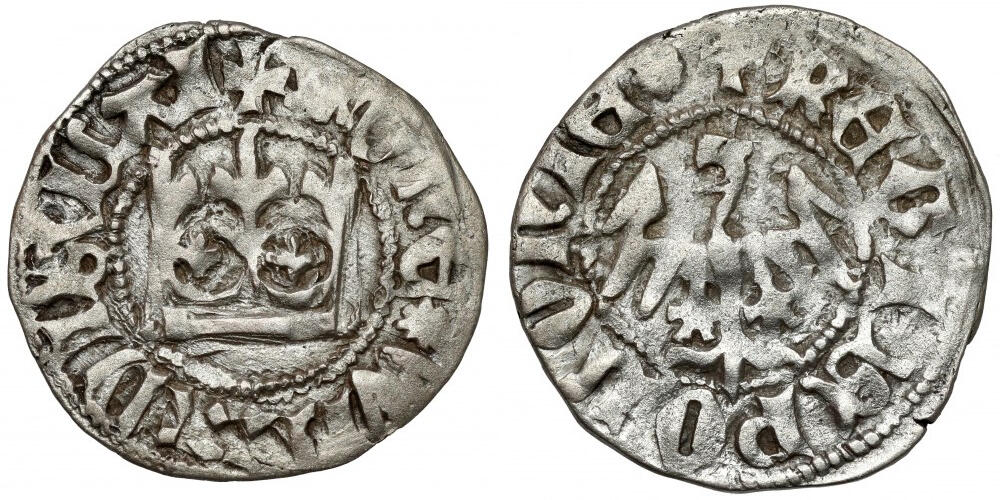 Copyright Gabinet Numizmatyczny Damian Marciniak If you have a half groat of Wladyslaw Jagiello, you may have it attributed with a Kopicki number. More recently Pawlikowski did a new attribution, assigning the subtypes to narrower date ranges. As best I can tell, he assigned the ones with initials (A, n, p, s etc.) to certain mint officials with these intials, whose tenure dates at the Krakow mint were known. He then used things like lettering styles, punctuation types, etc. to assign the ones with no initials to date ranges in between the initials. So, Kopicki type 359 was divided into several subtypes with different date ranges by Pawlikowski (VII, X, XI, XII). There are two other types assigned to a single year: A (Andrzej Czarnyszka) under crown is assigned to 1403 (Pawlikowski V, Kopicki 366); n under crown (Nicolaus Follisfessilowski, Kopicki 361) is split in two date ranges by Pawlikowski, one of which is 1407. Mentioning this because these coins are not so rare ... maybe someone has one in their collection. Edited by tdziemia
04/15/2024 12:05 pm
|
|
Moderator
United States
196278 Posts |
Fantastic!  I will update to title tomorrow. In case another 1408 appears.   |
|
Pillar of the Community
United States
8056 Posts |
Quote:
Quote:
I was surprised to see a specific mintage quoted in Numista. Was this common practice of this era?
I am also suprised to see a mintage figure and I think it is quite unusual to have that for coins from the 15th century. Here it seems records of the mintage were kept and, not least important, have been preserved. The figure (1,226,416) comes from the Vilvoorde mint master's records and is cited in the standard reference work by De Witte. The number was calculated by de WItte from: - the coin specifications (5 deniers, 5 grains purity of the silver alloy, and 58 1/2 coins to a Troyes pound?) - the amount of silver delivered to the mint to make them. The number does not reflect the real precision of this calculation, and probably should have been reported as 1,226,000. The link to a digitized deWitte is here: http://www.numisbel.be/Dewitte_1.pdfEdited by tdziemia
04/16/2024 11:34 am
|
|
Pillar of the Community
United States
8056 Posts |
For 1407, I have another undated Polish half groat of Wladyslaw Jagiello, letter n beneath crown, Kop. 361 and Pawlikowski IX: 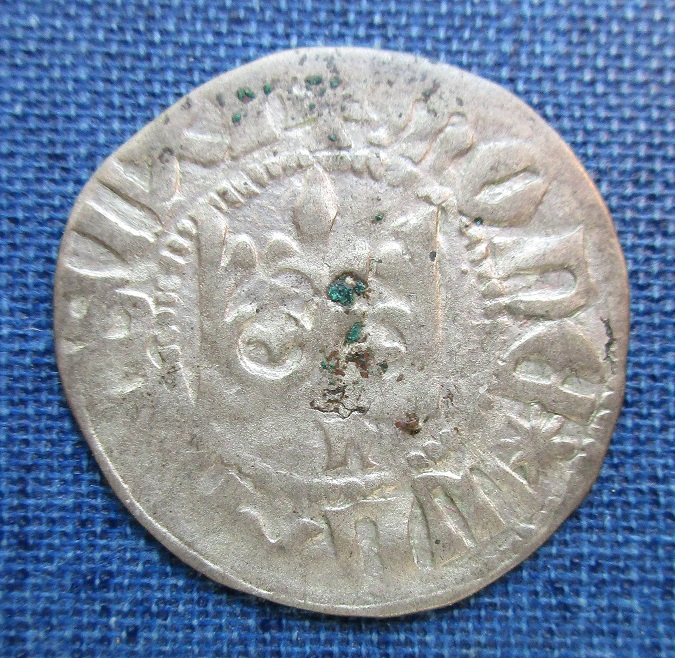 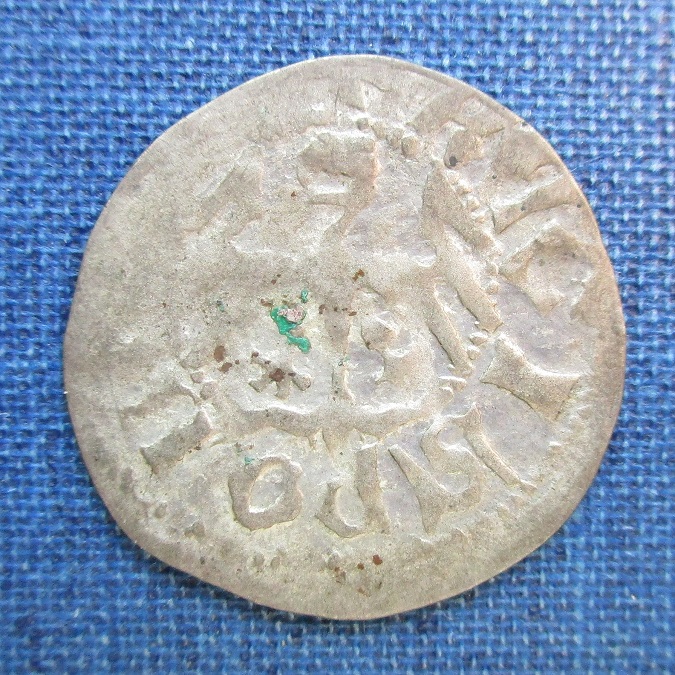 Edited by tdziemia
04/16/2024 6:15 pm
|
|
Moderator
United States
196278 Posts |
Outstanding! |
|
Pillar of the Community
Australia
2583 Posts |
Quote:The number was calculated by de WItte from: - the coin specifications (5 deniers, 5 grains purity of the silver alloy, and 58 1/2 coins to a Troyes pound?) - the amount of silver delivered to the mint to make them. The number does not reflect the real precision of this calculation, and probably should have been reported as 1,226,000. The link to a digitized deWitte is here: http://www.numisbel.be/Dewitte_1.pdf Thanks tdziemia, that is fascinating! More history to fit inside my head. Cheers for the link too The Ox moves slowly, but the Earth is patient.
|
|
Pillar of the Community
Australia
2583 Posts |
For 1406, I have this AH 809 Tanka from the Timurid Empire. The Timurid Empire was a late medieval Turco-Mongol empire that dominated Greater Iran in the early 15th century, comprising modern-day Iran, Iraq, Afghanistan, much of Central Asia, the South Caucasus, as well as parts of contemporary Pakistan, North India and Turkey. It is attributed to Album 2401.1. 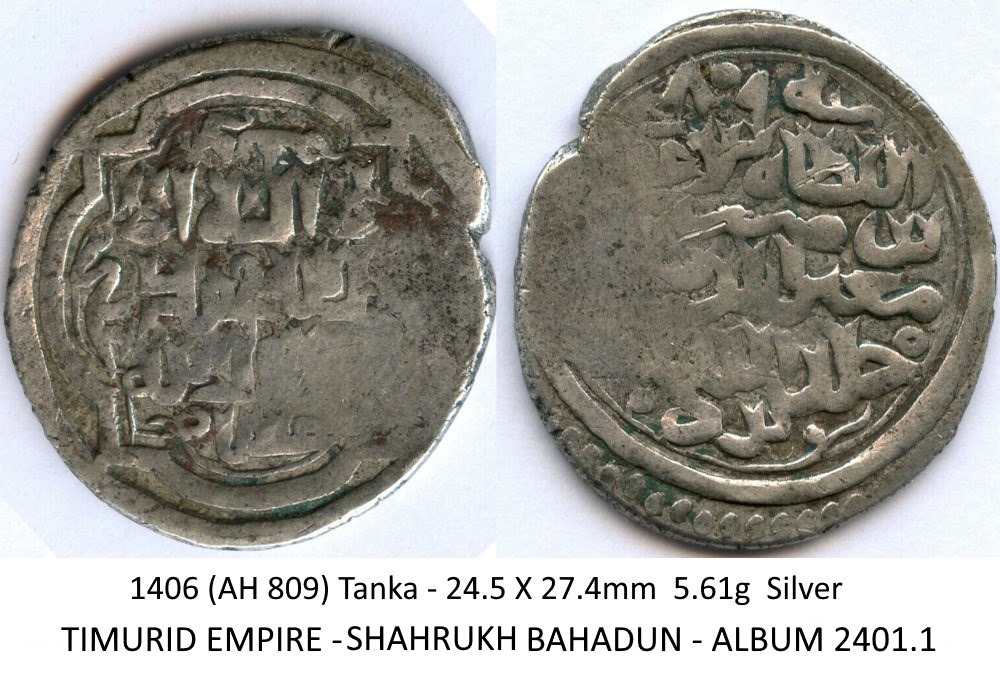 footnote: I have been advised that the figures at the top of the left coin are arabic script, however I saw it as two elephants and now I can't unsee them.
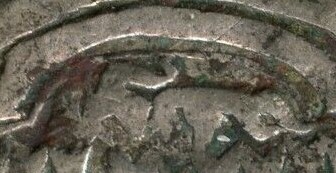
So forever more this coin will be my "elephant's coin".
deal with it....The Ox moves slowly, but the Earth is patient.
Edited by ttkoo
04/18/2024 12:55 am
|
|
Pillar of the Community
United States
8056 Posts |
Nice! Looks like a nice clear date at top of right photo?
|
|
Moderator
United States
196278 Posts |
Quote:
For 1406, I have this AH 809 Tanka from the Timurid Empire. Excellent! We will accept AH 808 coins today and tomorrow. Tomorrow will be for 1405 CE / AH 807. |
|
Pillar of the Community
Australia
2583 Posts |
Quote:
Nice! Looks like a nice clear date at top of right photo? Yes, that's the 809 the elephants are top left.....The Ox moves slowly, but the Earth is patient.
Edited by ttkoo
04/18/2024 12:56 am
|
|
Pillar of the Community
Australia
2583 Posts |
It is mid-afternoon here in southern down-under, and she who must be obeyed and I are out this evening, so I'll post this 1405 (AH807) tanka now, before I forget. The date is at the bottom of the right side image. 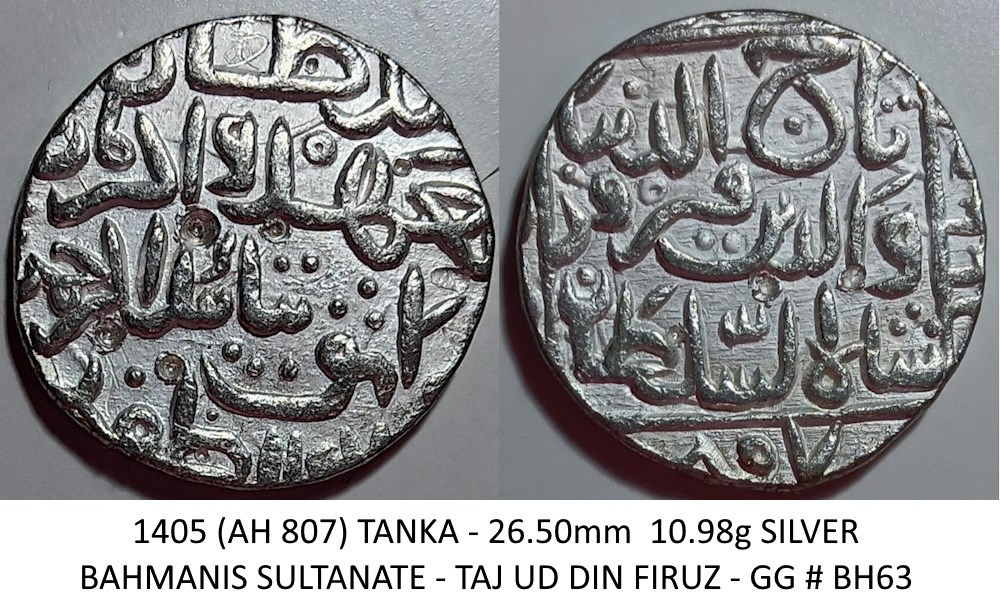 The Ox moves slowly, but the Earth is patient.
|
| |
Replies: 7,432 / Views: 408,290 |






 First Page
 Previous Page


 Posted 04/11/2024 10:11 am





