Kopper Ken You seem to totally misunderstand the concept of mathematically significant digits and then you mix up that discussion with the discussion involving a ratio of comparative thickness where the measurements are of the same order of magnitude. You are mixing apples and oranges and coming up with lemons. Are you aware that thickness of a coin was always a standard slot in old scales used to detect counterfeits in the age of intrinsic coinage?
In relation to my comment on significant figures you say:
Quote:
No I meant you need to switch your calculator out of exponents into decimals.
Where does that come from? I never said that I did. Do you realize that for instance 0.0056 is a figure with only TWO mathematically significant digits? Do you understand the difference between the expressions 0.003 and 0.00300 which are 1 versus 3 significant figures?
I believe you are confusing two completely different mathematical concepts. When I said that you should not express the volume of the coin to four decimal places that was based on the mathematically significant figures that went into the creation of the volume. Since the thickness and diameter were expressed to only
TWO SIGNIFICANT DIGITS you simply can not express the resultant volume to 4 decimal places which is 5 significant figures.
You said:
Quote:
I refined your calculations and the volume of the "good" coin would be 2.5238 cubic centimeters. You need to change out of scientific notation for decimal numbers. I used the formula (V=pie x radius squared x h). for the "counterfeit" coin the volume was 2.6784 cubic inches.
The volume of the good coin is 2.5 cc and the bad one 2.7 cc. Those are the results expressed using significant figures only.
If you were creating a ratio of those two numbers you would hold off rounding until the final step is complete. The ratio would be 2.6784 divided by 2.5238 = 1.0612568 which should be expressed as 1.06. The difference in the areas has a relative magnitude of Six percent using this data. One coin is 6% bigger than the other.
As I indicated earlier a 6% difference in volume traces to a 6% difference in thickness. That alone proves both coins can not be the same alloy if they are similar in weight.
Then you also say:
Quote:
...first you say we should keep it to hundredths...now you say 6/1000 is significant...confusing
That statement indicates you are confusing the concepts involved and you are simply not following what I am saying. The first concept, rounding the volume to 2 significant figures is correct. All digits trailing a 1 decimal answer are insignificant by definition. I decided to use 1.06 as the ratio of size increase even though an answer of 1.1 was justified. I feared that the result indicating a 10% difference in size would be misconstrued.
However, when dealing with the relative thickness of the coin, a 6/1000 (0.006) is highly significant since it is based on direct measurements of 92/1000 (0.092) and 98/1000 (0.098). No calculation is involved. The difference between the thickness of the two coins is a firm 0.006 of an inch. Both measurements are done to thousandths (same order of magnitude) so the relative thickness ratio is significant. You are failing to take into account the relative orders of magnitude of the two expressions. Comparing a 6 thousandths difference in direct measurement has nothing to do with a one decimal estimation of volume based on a mathematical computation. The comparison is Apples and oranges. This concept is high school math but it is critical to understand.
You also say:
Quote:
This coin in no way shows any surgical features of being cast or counterfeited from any other process. It is a worn coin that has been tooled.
Have you any experience at all examining silver counterfeits - say micro-O
Morgan dollars, Spanish 5 Pesetas or even Lima Sols which while beyond all doubt are counterfeit yet they have defied detection in some cases for decades? You are making assumptions in the last statement that are categorically untrue. Die duplication by 1876 could be accomplished which can not be detected by appearance alone even today unless you happen to examine several coins struck from the same forged dies at the same time. (That was the method used to detect the first micro-O dollar). Remember they were rare
VAM varieties for nearly 30 years before they were shown to be counterfeits. Also remember that I knew they were counterfeits in the 1960's because I was told in person by a professional forger who actually made counterfeit
Morgan dollars in the 1930s.
Your very last comments about a modern US cent are not germane. A bronze
token US cent does not create one iota of doubt scientifically in my line of argumentation.
Loruca You are absolutely correct that water volume method (displacement) is far better and more accurate methodology when compared to calculating the volume based on diameter and thickness. However, the relative change in thickness of the coin observed by direct measurement is significant. A 6 percent change in thickness can not be accounted for by wear of the wire rim in this case. In the obverse picture of the coin with the reeded edge the high rim (wire rim) has worn down to the level of the dentil tops around the circumference on both sides. Wear has also reached all of the obverse high points. The same conditions apply to the coin with the FERT edge. So the two coins are indeed 6% different in relative thickness which is all that is necessary to support a decision of counterfeit.
I learned how to identify and authenticate coins scientifically when I was working in Boston in the early 1970's (1971-1973). I have been authenticating coins for over 45 years and I have always used the same procedure. It is accurate.
All of the counter arguments made so far are various combinations of "I just can't believe it because it looks too good" or "I suspect the edge damage somehow distorted the thickness of the coin" although none of the photo evidence supports that at all.
Nothing raised as an issue so far creates the slightest doubt in my mind whatsoever.
I would love to see the coin in hand but even if I did would that convince any of the nay sayers?





 First Page
 Previous Page


 Posted 01/03/2021 04:23 am


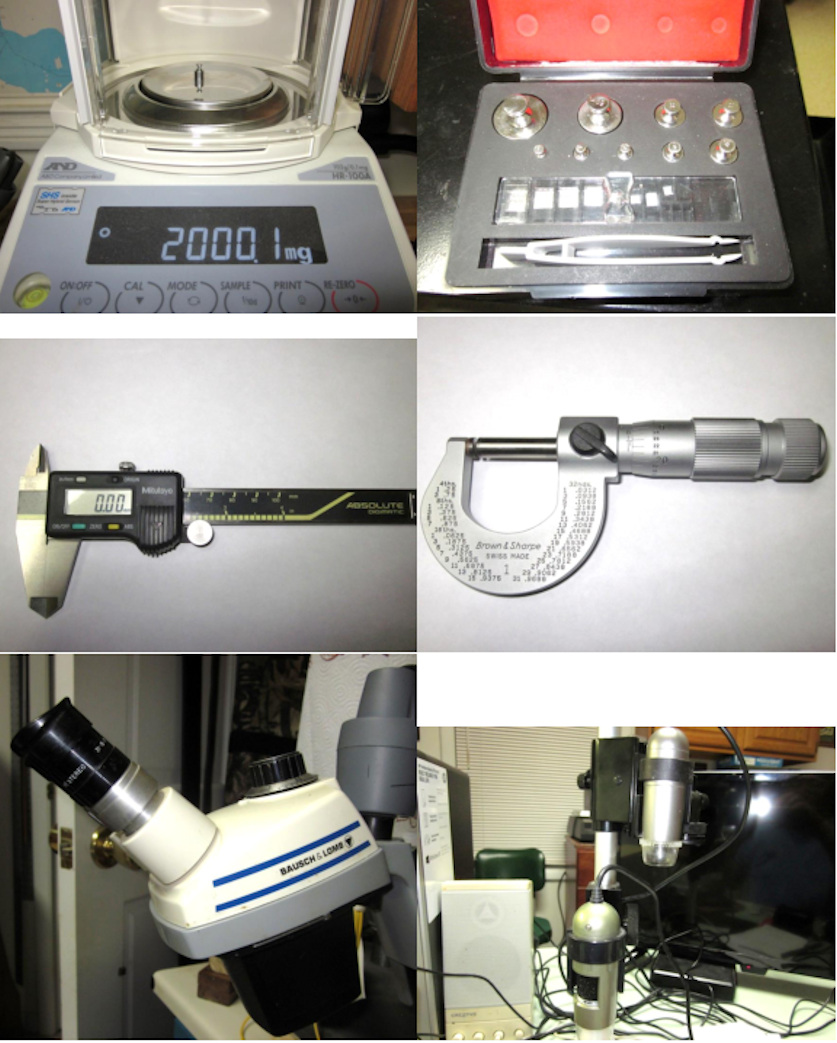

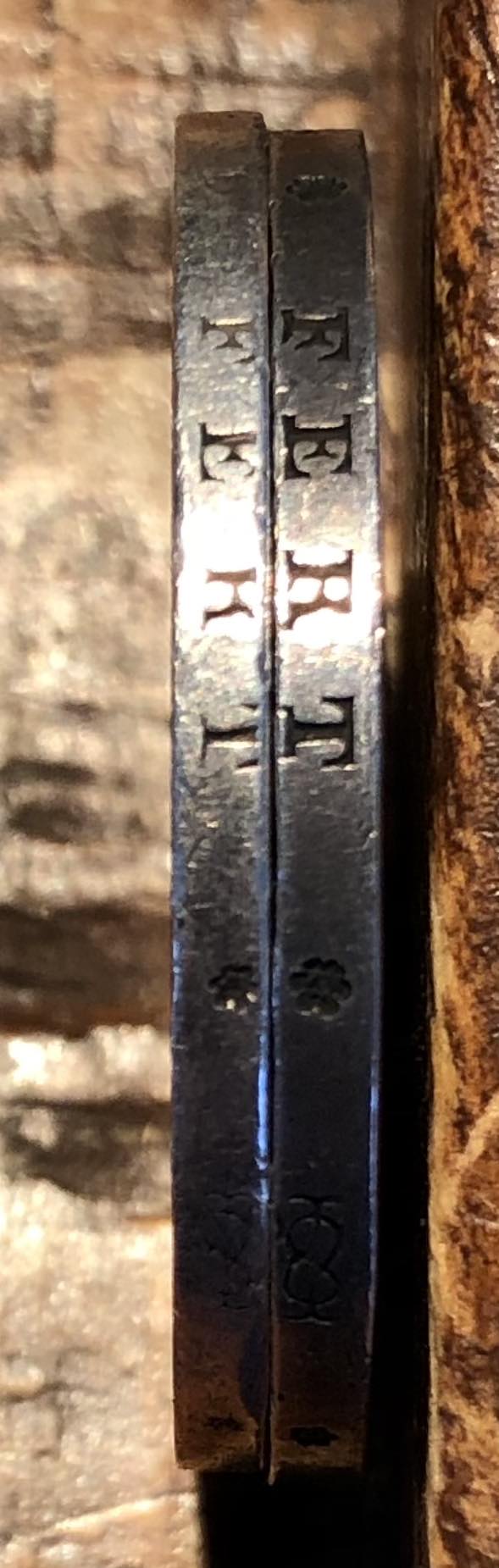

 ...that's wear...look at the photo's just posted by Loruca...that's more than 6/1000's!!