|
This page may contain links that result in small commissions to keep this free site up and running.

Welcome Guest! Registering and/or logging in will remove the anchor (bottom) ads and the security checks. It's Free!
To participate in the forum you must log in or register. | Author |
 Replies: 227 / Views: 25,399 Replies: 227 / Views: 25,399 |
|
|
|
Pillar of the Community
 Canada
2646 Posts |
Quote:
2016 Polymer P 193
Signed G Wheeler -Nice add @Bas S Warwick FALKLAND ISLANDSThe Government of the Falkland Islands (TDLR for the BOE) did not redesign their currency with the QEII profile until 1960. A high grade set of notes from the first series is definitely achievable. 1960-1975 QEII Issue P-7 TEN ShillingsThis brown & beige "10 Bob" is one of the tougher denominations to acquire in high grades. A half £ & the first 'workhorse' what is nice about it is the simple guilloche on the reverse (no text). https://en.numista.com/catalogue/note212055.htmlP-8a,b,c,d,e ONE PoundThis navy blue One Pound also had its share of use plus 5 separate issues (a-1967; b-1974; c-1977; d-01/1982; e-06/1982). There were only 50,000 to 75,000 notes per run. https://en.numista.com/catalogue/note212056.htmlP-9a,b FIVE Pounds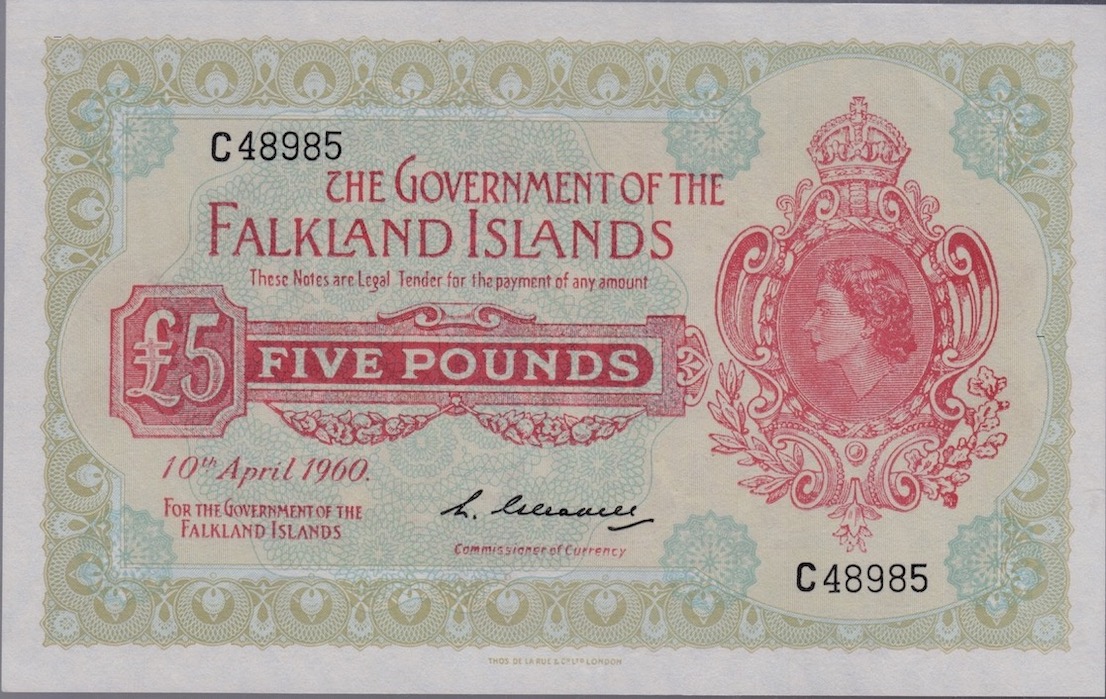 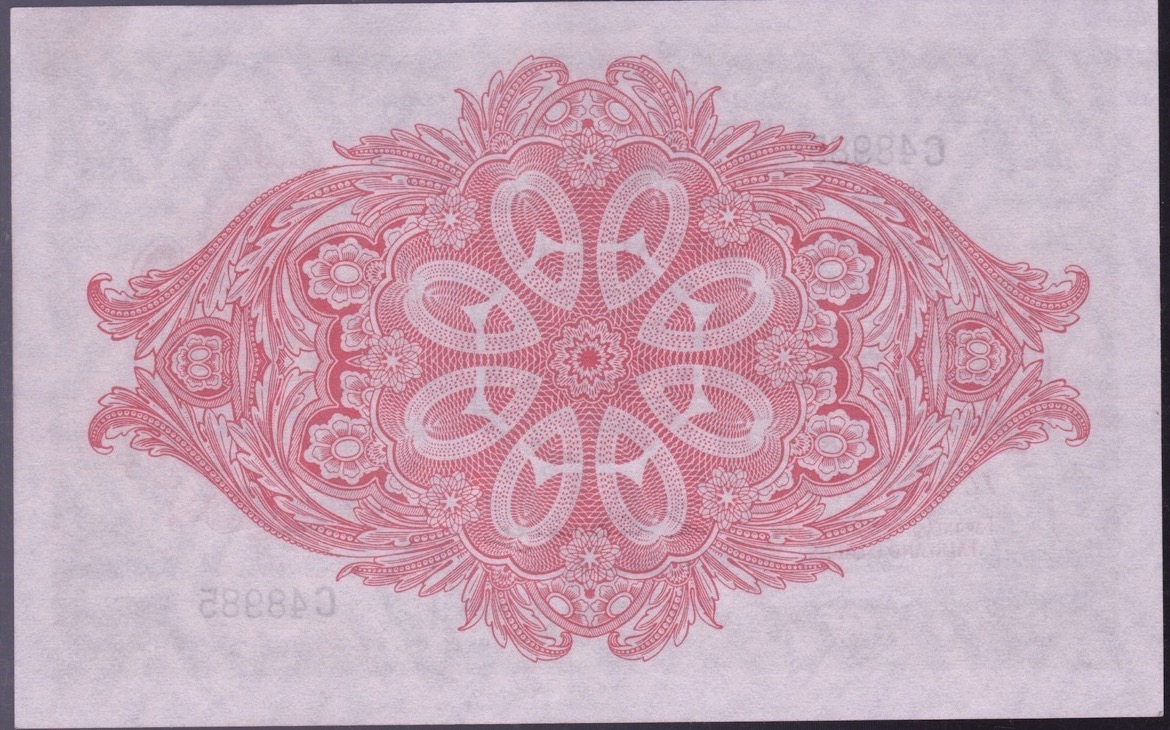 This red Five Pound note had its initial release in 1960 (a) and its second issue in 1975 (b). Like P-7a, P-9a can be tougher to source in high grades. https://en.numista.com/catalogue/note212058.html1969-1982 Issue[One Pound = 100 Pence system] P-10a,b FIFTY PenceThis note has a similar design to the 10 Bob (P-7a) but the brown seems a little darker as does the grey under print as well as the " 50P Fifty Pence"denomination. It was released in 1969 (a) and 1974 (b). 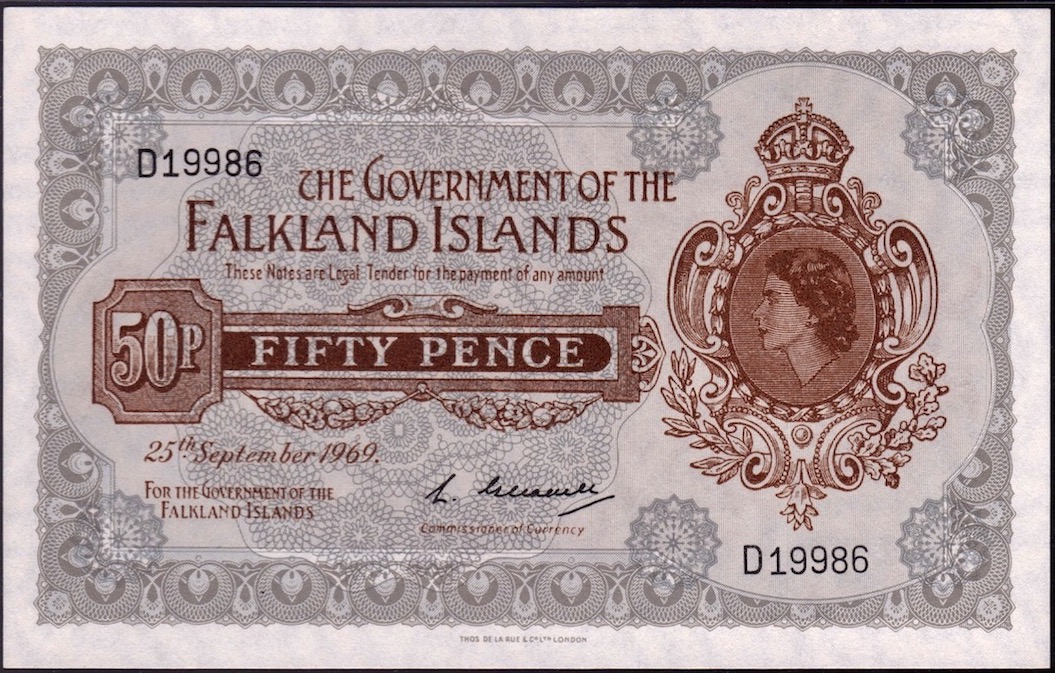 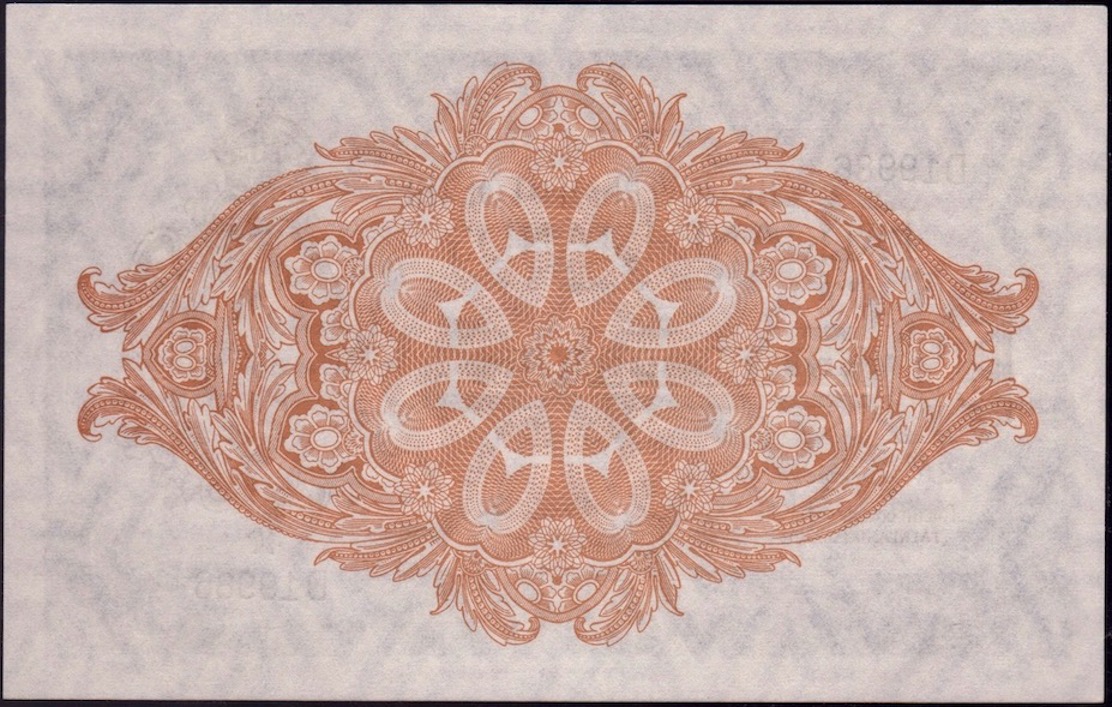 https://en.numista.com/catalogue/note202509.htmlP-11a,b,c TEN Pounds https://en.numista.com/catalogue/note202509.htmlP-11a,b,c TEN PoundsThis dark green with yellow under print top denomination can also be somewhat challenging to acquire in higher grades. Only 50,000 were first released in 1975 (a) & again in January of 1982 (b) with a 62,000 final release 5 months later (c). https://en.numista.com/catalogue/note212060.html1983 Anniversary Issue (150 years)With GB's turf war with Argentina over in 1982, the powers that be must have decided to commemorate British rule in a new design. The size/dimensions of this series becomes stretched out (slightly wider and shorter). P-12 Five Pounds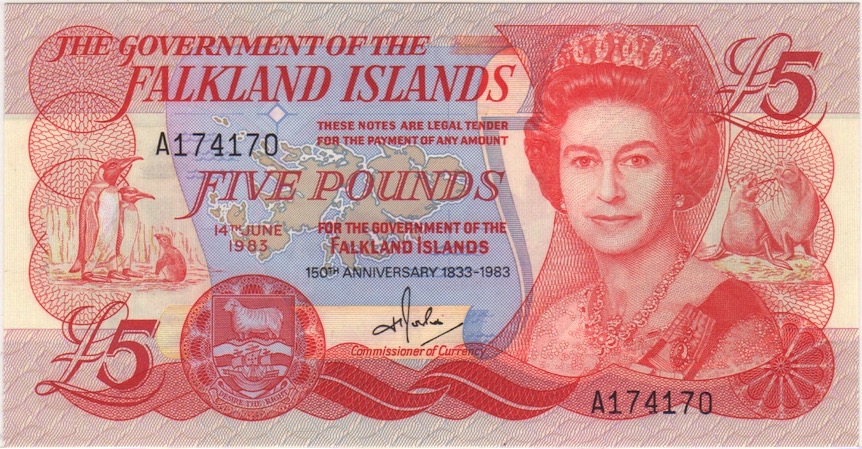 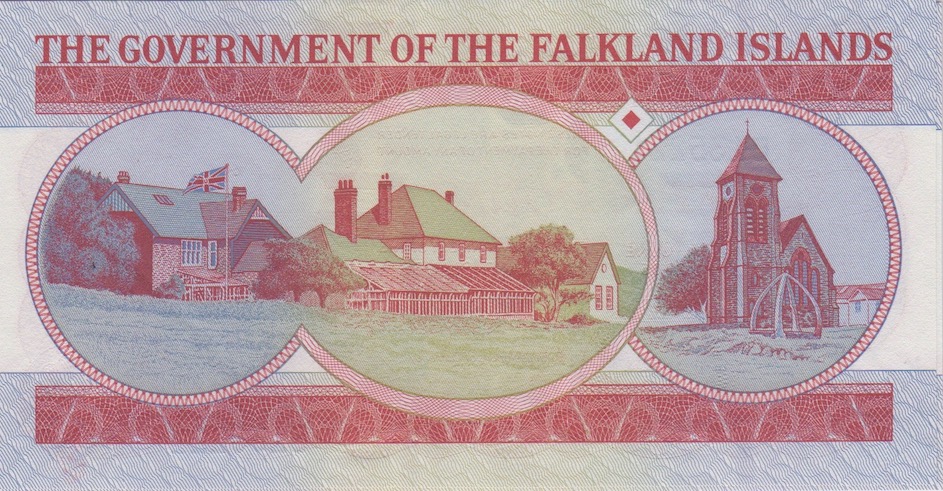 This red note is easy to acquire in high grade though only 200,000 were issued. I think it speaks volumes to the low population (& currency needs) of the Islands. https://en.numista.com/catalogue/note203672.htmlP-13 ONE Pound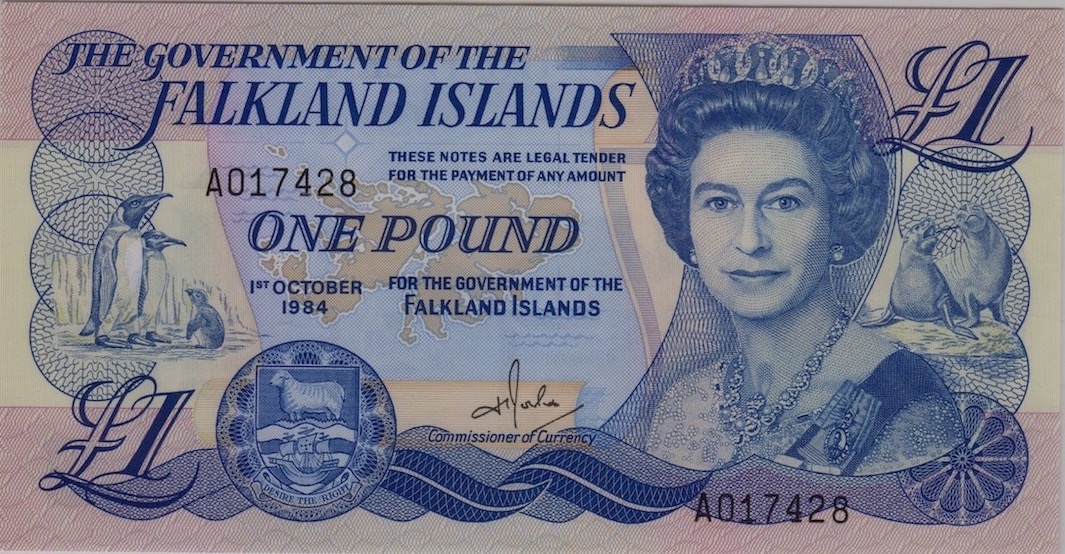 This navy blue £1 appeared a year later with the same design as the Five (P-12) but without the anniversary reference. As a 'workhorse' note it may be slightly tougher to find in higher grades. https://en.numista.com/catalogue/note203663.htmlP-14 TEN PoundsThis 1986 green note also had a short 200,000 release. https://en.numista.com/catalogue/note203666.htmlP-15 TWENTY PoundsThis 1984 brown note is a new denomination which had the same short run as the lower denominations. https://en.numista.com/catalogue/note203668.htmlP-16 FIFTY PoundsThis 1986 muli-colour (mainly purple) highest denomination is quite accessible in high grades. https://en.numista.com/catalogue/note203670.htmlIn 2005, the £5 was re-issued (P-17) but it, the £10 (P-18) & £20 (P-19) are all quite readily available in UNC. |
|
Moderator
 United States
196490 Posts |
Very nice examples!  I seemed to forget that Falkland Islands had its own currency. |
|
Pillar of the Community
Canada
2646 Posts |
Quote:
I seemed to forget that Falkland Islands had its own currency. -That's understandable since, like Guernsey, Jersey, Isle of Man, its still a tiny protected extension of Great Britain. Also, its just P-12 (Commemorative $5) & more recent issues that some world sellers keep stocked. FijiBefore I begin, I would just like to remind readers that the currency, history & cultural background of these tiny islands have been previously covered by another CCF member, @Princetane, here: http://goccf.com/t/402203For this reason, I will try to cover the pre-decimal phase & the immediate change-over to the Dollar system. Check out P-51 to P-57 at the Bank Note Museum: http://www.banknote.ws/COLLECTION/c...20II%20Issue1953-1967 QEII IssueThe six denominations from this series, & the two King George issues, seem to be big hits amongst advanced world collectors with deep pockets. These notes are large format, bold in colours & quite scarce the farther one goes back & the larger one seeks. P-51a,b,c,d,e FIVE ShillingsThe first thing that strikes one when first laying eyes on these low denominations is the size and colour of the 5 & 10 Bobs. This large blue note has the coat of arms in centre, a young QEII at the right & a rainbow (pinkish) under print. They had five different issues & typically the first 3 years are a little tougher than the latter 2. https://en.numista.com/catalogue/note206621.htmlP-52a,b,c,d,e TEN Shillings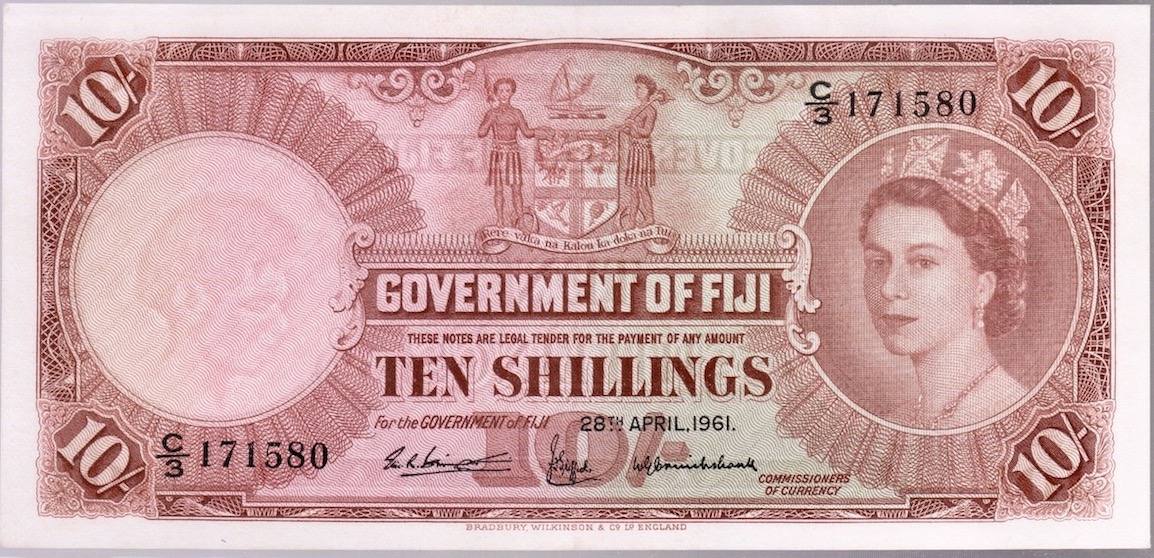 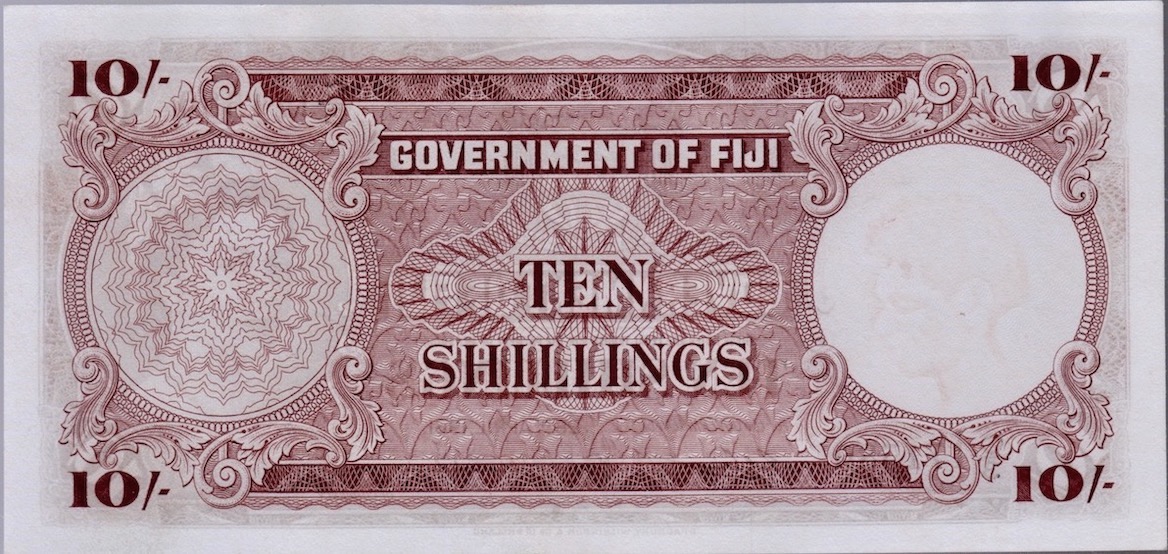 This brown half-pound, while more subtle than P-51, still has a colourful under print. https://en.numista.com/catalogue/note244506.htmlP-53a,b,c,d,e,f,g,h,iThis green £1 had 9 separate issues. It is green with a splash of yellow in the centre of its design. Whenever I see these notes offered they're usually quite circulated & very pricey (even though earlier version a-d are typically tougher than e to I it is not unusual to see them all equally priced high). https://en.numista.com/catalogue/note244509.htmlP-54a,b,c,d,e,f FIVE PoundsThis larger dark purple, light orange mid-denomination is rarely seen up for auction. The last two versions (1964/1967) are the most common notes if you can find one. https://en.numista.com/catalogue/note247035.htmlP-55a,b,c,d,e,f TEN PoundsThis larger dark blue, orange, yellow high denomination is about as tough as P-54. The last two versions (January 1965/1965) are the most difficult notes if you can find one. https://en.numista.com/catalogue/note247037.htmlP-56a,s TWENTY PoundsThis dark blue note, issued in 1953 & likely confused with the TEN Pound (P-55) so often that it had a radical colour scheme change to red the following year. It is so scarce that you would be much more likely to own its punch holed specimen. https://en.numista.com/catalogue/note299493.htmlP-57a,b TWENTY PoundsIn 1954 the £20 was re-issued with a red colour, likely to distinguish it more radically from the lower valued £10. It was issued in 1954 & 1958. I have never seen this note up for auction & the 1954 entry at the Bank Note Museum (& lack of entry for Numista) would suggest that 1958 is very scarce & the chances of acquiring an example are slim to none. Government of Fiji/Dollar SystemThe colonial government of Fiji's currency design undergoes a dramatic transformation in 1969 when they drop the Imperial Shilling/Pound system for the Fijan Dollars. The second 1971 issue has added "Issued by the Currency Board" above the signatures. The 1971 variation also has 2 signature variations (a- Barrett) & (b- Stinson). other than that, the "Government of Fiji" notes are likely just as tough & have the exact same designs, so I've taken the liberty to combine the two issues: P-58/P-64a,b FIFTY cents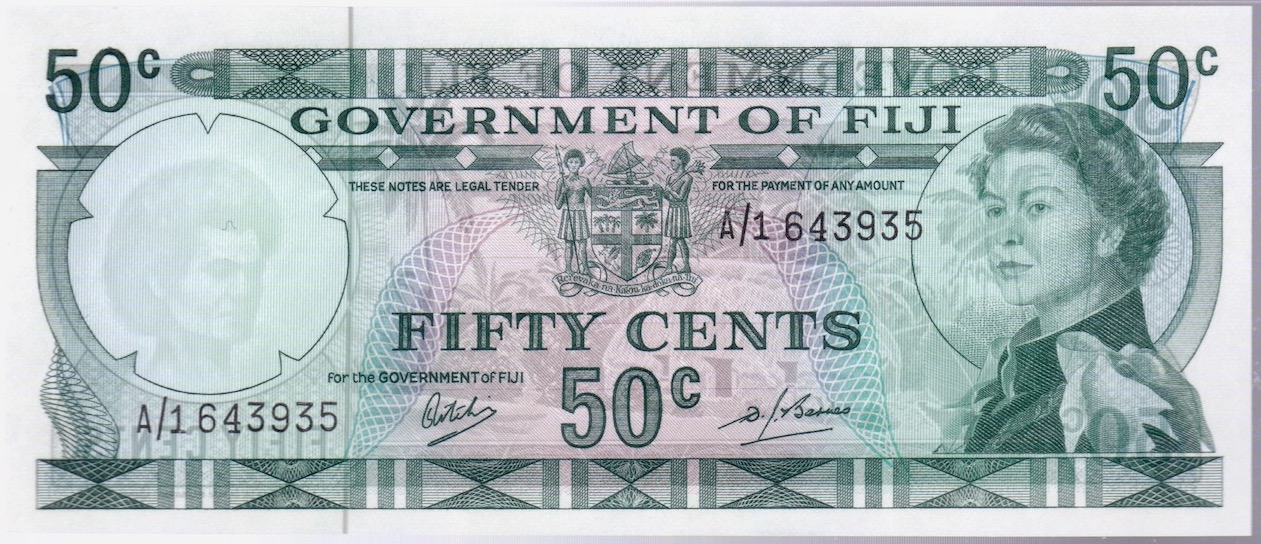 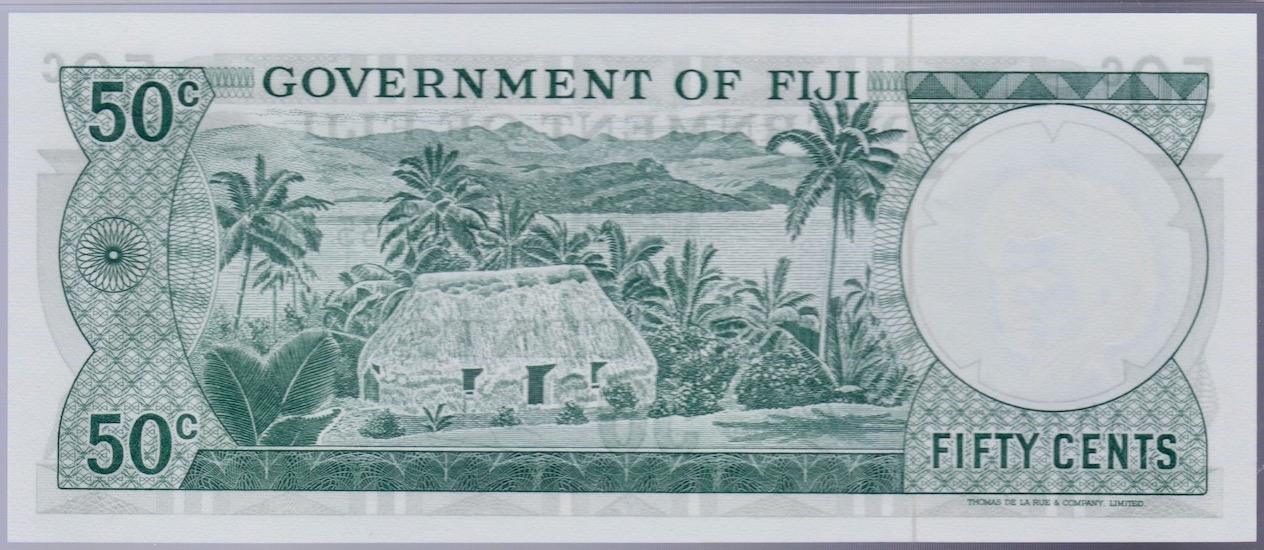 The 1969 issue had the Ritchie/Barnes signatures and A/1 prefixes. https://en.numista.com/catalogue/note206623.htmlIt follows a similar colour scheme as the pre-decimal 5 Shillings (P-51) but has added a more Fijan scene on the reverse. Both are not too difficult to acquire & the FIJI (1974 P-70) was not issued. 1971: https://en.numista.com/catalogue/note284533.htmlP-59/P-65a,b ONE DollarThe brown & white P-59 has the Ritchie-Barnes signatures: https://en.numista.com/catalogue/note224158.htmlThe 1971 (P-65a,b) with the single Barrett or Stinson signatures are also not that difficult to obtain. Unlike their pre-decimal 10Bob predecessors (P-52), these also have a beautiful Fijan landscape on the reverse. P-60/P-66a TWO DollarsThe green & white P-60 has the Ritchie-Barnes signatures. It can be a little tougher than P-66a (which only had the Barrett signature for its brief release). The Two Dollar drops the local scenes that the lower denominations had in favour of a more symbolic guilloche pattern. https://en.numista.com/catalogue/note206631.htmlP-61/P-67a,b FIVE DollarsThe red & white P-61 $5 has the Ritchie-Barnes signatures & can be hard to source. P-61 can be a little tougher than P-67a,b (with Barrett or Stinson signatures). I believe the Stinson (last signature) can be a little harder to come by. Once looking for $5 or higher, the ability to source higher quality notes becomes challenging. P-62/P-68a TEN DollarsThe purple/lilac P-62 has the Ritchie-Barnes signatures. It is a tough note to find in any condition. https://en.numista.com/catalogue/note299585.htmlThe 1971 TEN Dollar P-68a Barrett signature can be a lot tougher than the later P-68b Stinson variety. P-63/P-69a,b TWENTY DollarsThe navy blue, grey P-63 has the Ritchie-Barnes signatures. It is hard to find but not as tough as the initial 1971 P-69a (Barrett signature) version. All of the above notes can be a challenge from the mid to higher denominations (& in higher grades). The green Two Dollar is often overlooked & can be challenging but the Ten & Twenty can be next to impossible. Many collectors satisfy themselves with the next "FIJI" (1974) series. Even it can be tough to fill when it comes to the $20 denomination. Fiji's initial foray into the Dollar system really represents an opportunity for the collector who wishes to complete each of the signature varieties. To get a better feel for it (& to distinguish "The Government of Fiji" from the more accessible 1974 " FIJI" Series ( P-70 to P-75) it would help to look over the Bank Note Museum: http://www.banknote.ws/COLLECTION/c...%20OF%20FIJIEdited by walk2dwater
01/01/2022 09:19 am
|
|
Pillar of the Community
New Zealand
526 Posts |
@walk2dwater
Superb post, information and scans, as always. Many thanks
|
|
Pillar of the Community
Canada
2646 Posts |
Thanks for following & the positive feedback @Bas S Warwick! GIBRALATARThe "Rock" as many call it, has had its own currency since WWI. QEII notes first appeared in 1975 dropping the '10 Bob' & the boxy format for a new wallet-friendly rectangular version. The first QEII also has a new colour scheme. Check out the Bank Note Museum's page for an overview: http://www.banknote.ws/COLLECTION/c...1988%20IssueP-20a,b,c,d,e ONE Pound: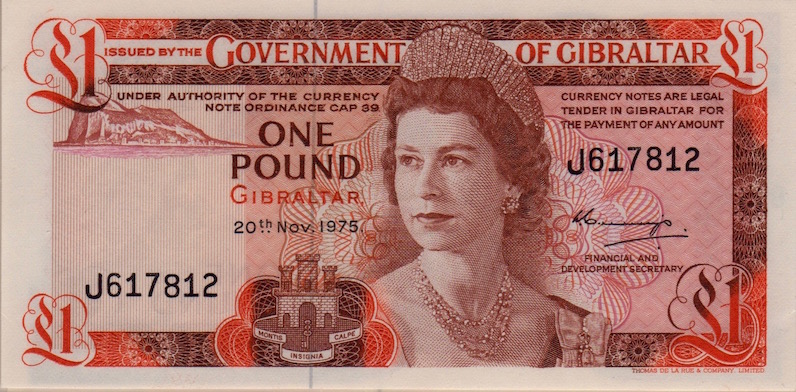 The "Government of Gibraltar" £1 had a low first year (a- 1975) issue with the J prefix. Successive years become much easier with plenty of inexpensive 1988 (e) versions found in hoards. It is small & has various shades of red with the Covenant of Gibraltar building featured on the reverse. https://en.numista.com/catalogue/note202086.htmlP-21a,b FIVE Pounds: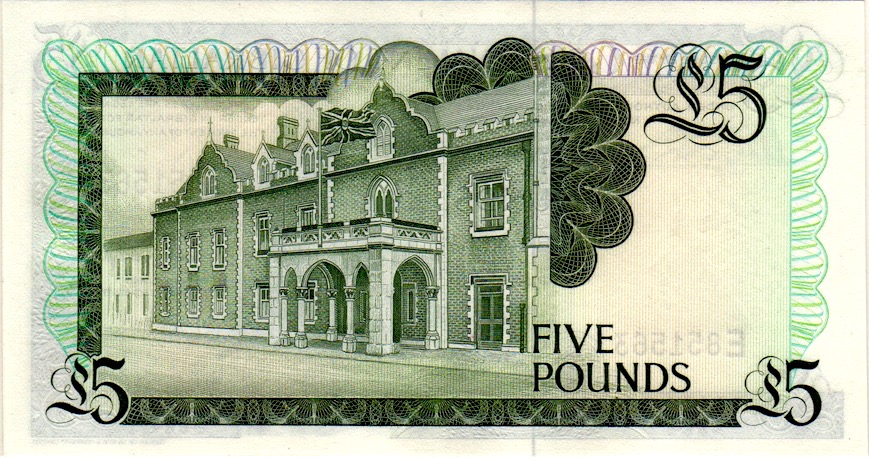 Above is a design of the front facade of Covenant seen on both the £5 & £1. Once again, the 1975 (a) initial signature/year is much tougher than the later 1988 (b) series. https://en.numista.com/catalogue/note214350.htmlP-22a,b TEN Pounds: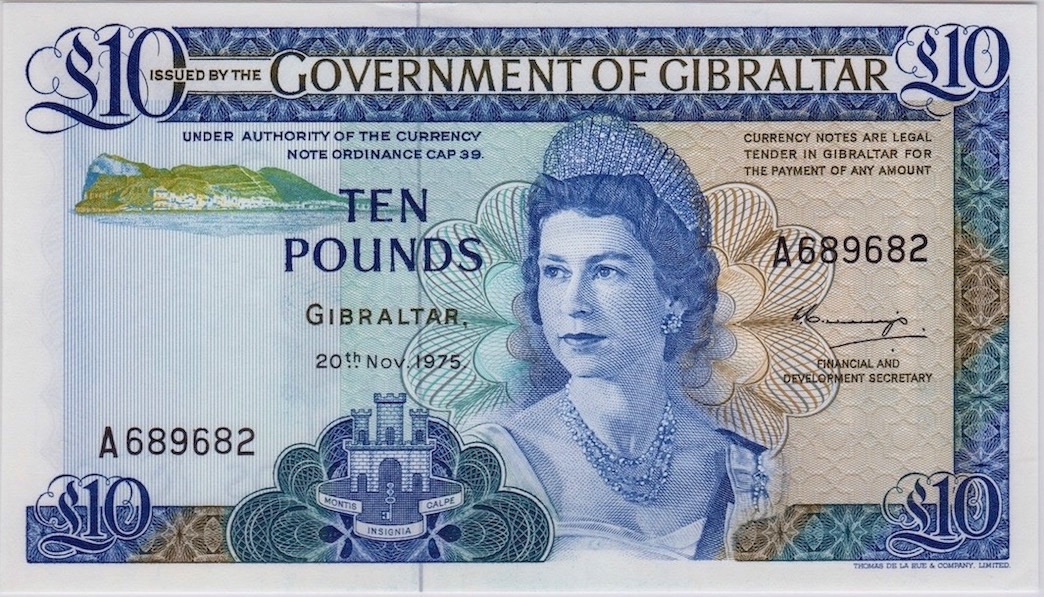 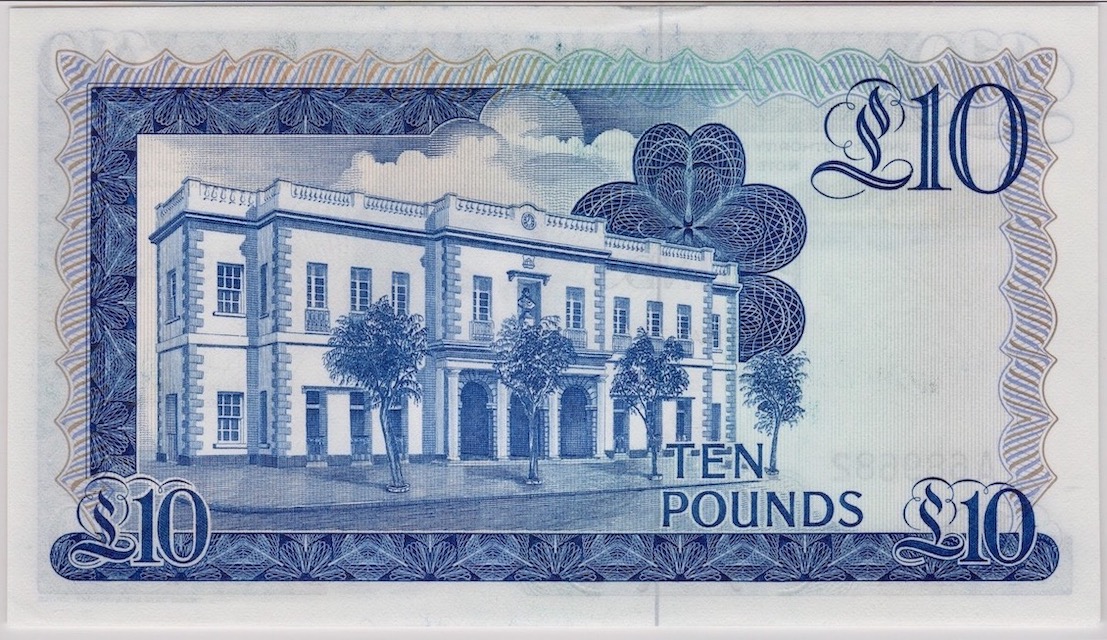 I was very happy to get this initial (a-1975) issue since the early 75 notes are the most challenging. The £10 features the Governor's house on the reverse. https://en.numista.com/catalogue/note223408.htmlP-23a,b,c TWENTY Pounds:The £20 is mostly an orange colour & once again the toughest note is the 1975 (a) initial release. Each larger denomination has a larger format & this note also has the Governor's house on the reverse. https://en.numista.com/catalogue/note223409.htmlP-24 FIFTY Pounds:This colourful highest denomination was introduced in 1986. As such, it can easily be found in Choice to GEM grades. The banknotes from this tiny British outcrop south of Spain, the gateway to the Mediterranean, are fairly easy to come by. In 1995 Pound Sterling issue gets a new design & drops the £1. It introduces past military heroes & new landscapes on the reverse. A Millennium (2000 P-29) £5 also was released as well as a £10 (2002, P-30) & Commemorative £20 ( P-31). All of these different denominations are easy & fun QEII notes to collect. |
|
Moderator
United States
196490 Posts |
Outstanding examples! |
|
Pillar of the Community
Canada
2646 Posts |
Thanks for following @jbuck. I'm afraid my examples for our next country are few & far between. GREAT BRITAINIt makes one wonder why it took years for the queen to make an appearance on her own country's banknotes. The old war time designs persisted with the introduction of the Britannia Five Pound (P-371/372) in 1957 & finally the introduction of new design in 1960. I will just cover these two series & once again welcome any additional input from collectors of GB notes. Check out the Bank Note Museum for an overview: http://www.banknote.ws/COLLECTION/c...967)%20Issue1960-1977 Series C:P-373a,b,c,s TEN Shillings: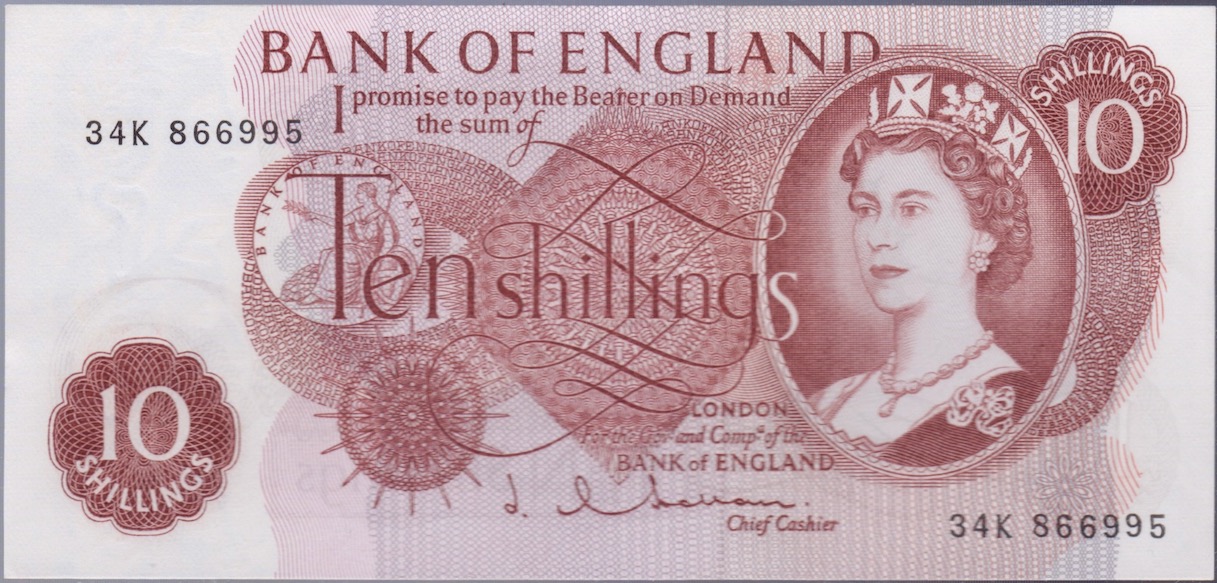 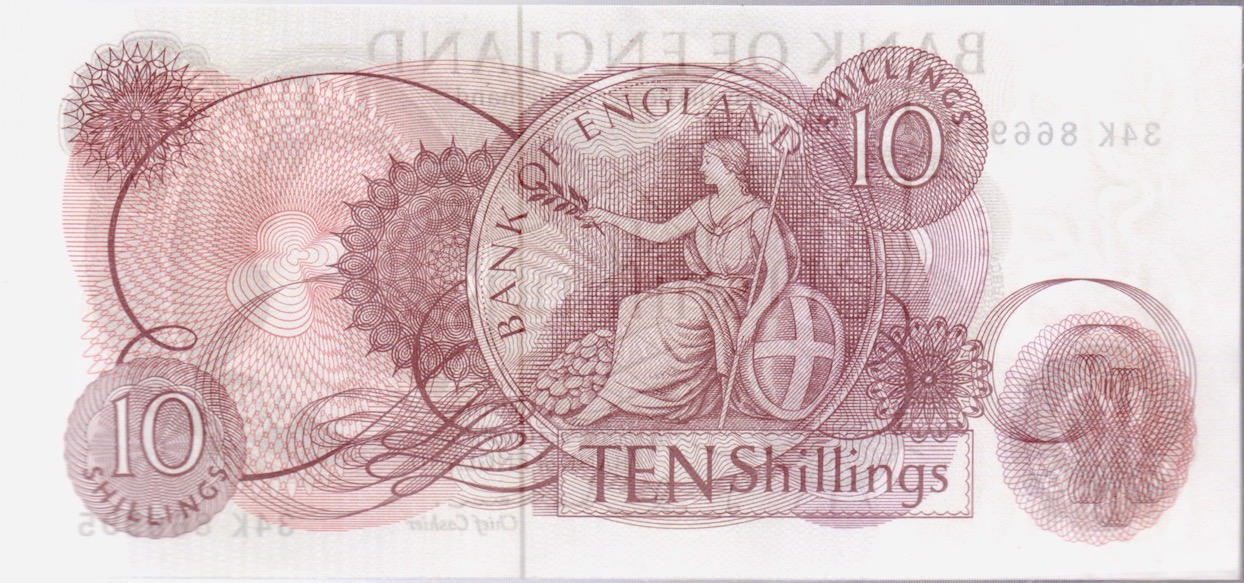 This smaller (140X67) 10 Bob came in 3 signature varieties (a- O'Brien; b- Hollom; c-Fforde). The O'Brien variety lasted only a year & was the tough one to get in higher grade (pictured is the b "Hollom" signature). https://en.numista.com/catalogue/note203302.htmlP-374a,b,c,d,e,f,g,s ONE Pound:This greenish yellow £1 had 7 variations + replacement 'M' prefixes to look out for. If one wasn't searching for the replacement version with the O'Brien signature, one tried to find the WEB-PRESSED 'R' or research P-374b version. Two German printed "G" notes exist P-374d (Hollom) & P-374e (Fforde) are also avidly sought out by collectors. https://en.numista.com/catalogue/note202927.htmlP-375a,b,c,s FIVE Pounds:The blueish £5 did not appear until 1963 due to the Britannia series. It has three versions (a-Hollom; b-Fforde & c-Page) with the last signature often being as tough as the first. https://en.numista.com/catalogue/note203304.htmlP-376a,b,c.s TEN Pounds:The brown £10 had the same signatures as P-375 (released a year later in 1964). It also has a 'M' replacement prefix version like P-374 for the Page signature. https://en.numista.com/catalogue/note203306.html1971-1993 Series D:P-377a,b,s ONE Pound: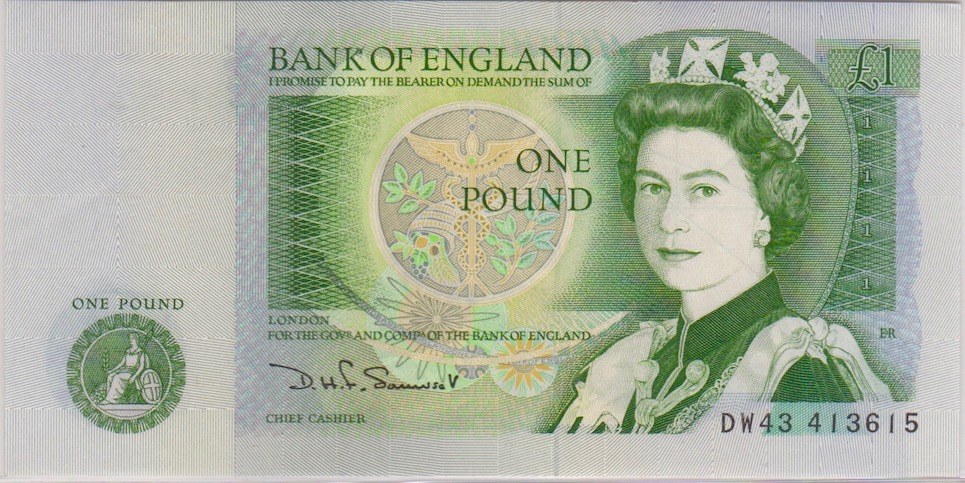 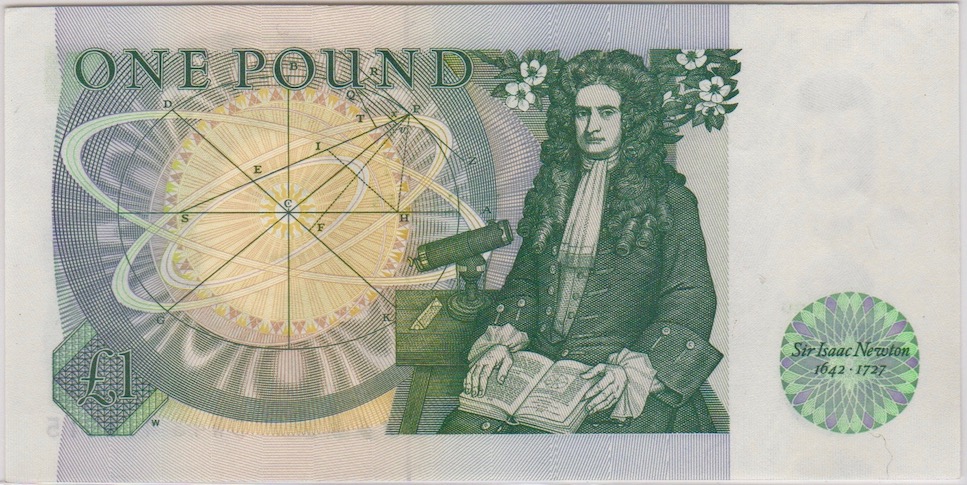 This final £1 note lasted only 6 years splitting the (a) Page & (b) Somerset signature varieties equally. The reverse shows an image of Sir Isaac Newton & each successive denomination features a notable figure. https://en.numista.com/catalogue/note202356.htmlP-378a,b,c,d,e,f FIVE Pounds:The £5, like the £20, was an early entry of this new series & with the introduction of a security strip, has many varieties. P-378b saw a small "L" on the reverse indicating Lithograph printing (Hollom signature). The first Somerset variety ( P-378c) has a thin security strip while P-378d has no signature. The last signature is Gill for P-378f. All of these varieties make this long running denomination fun to collect. https://en.numista.com/catalogue/note202802.htmlP-379a,b,c,d,e,f TEN Pounds:The £10 was introduced a little later than the £5 but follows a similar evolution with the "L" (Lithographed) versions & security strips. P-379a starts unimpeded with the "Page" signature. The Somerset (b & c) varieties start with no "L" & end with the "L" type printing. The "d" has the same signature with a security strip. The last 2 signatures are Gill (e) & Kentfield (f). The 1st (a) 'Page' version also has an "M" prefix replacement. https://en.numista.com/catalogue/note203311.html P-380a,b,c,d,e, TWENTY Pounds:The first "a" Fforde signature version was very brief & as such makes this £20 a tough & desirable note to acquire. P-380b-e (b-Page; c&d-Somerset & e-Gill) have been much easier to attain. https://en.numista.com/catalogue/note203314.htmlP-381a,b,c FIFTY Pounds:The £50 was the last top denomination to be added to the series. It has had an unremarkable/staid release providing few perks for the advanced collector. In 1981, it starts off with the Somerset (a) signature, then we see Gill (b) & it ends with Kentfield (c). Considering how few consumers use this high denomination & how many must have been stashed away in SDB, it is no wonder the interest in these has remained tepid. https://en.numista.com/catalogue/note203317.htmlThere has been a lot of interest in the Web Press P-374b £1 & the various 'M' replacements & lower denominations of both the C & D series over the years. Many collectors also try to obtain change-over or short prefixes, errors & special serial numbers. |
|
Pillar of the Community
New Zealand
526 Posts |
@walk2dwater To add to the QEII GB notes you have scanned I have in my collection 1970-1978 P#374 - sig. J.B.Page also holding prefix EW56 565309 sig. J.B.Page 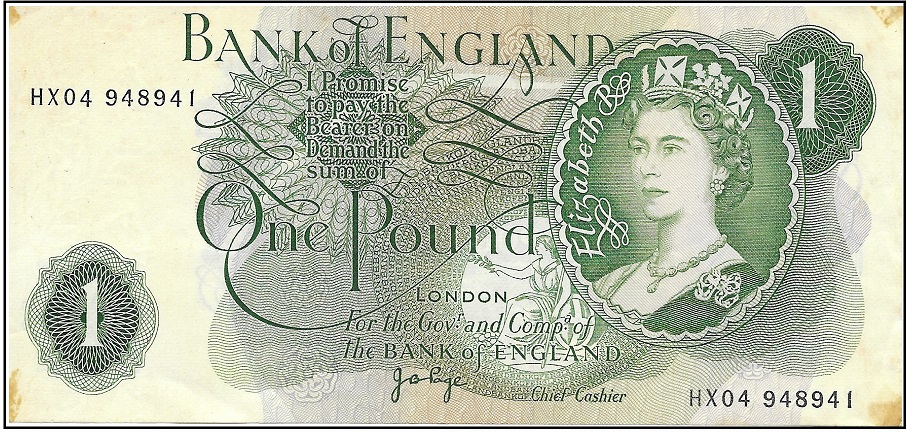 I also have 2 of the P#377 - both sig. J.B. Page Prefix A29 593738 and B31 430918 Edited by Bas S Warwick
01/03/2022 04:04 am
|
|
Moderator
United States
196490 Posts |
Lovely English examples! Quote:
It makes one wonder why it took years for the queen to make an appearance on her own country's banknotes. The old war time designs persisted with the introduction of the Britannia Five Pound (P-371/372) in 1957 & finally the introduction of new design in 1960. That is very interesting. I accept that new note designs require more lead time than coins; however, eight years seems a bit much.  |
|
Pillar of the Community
Canada
2646 Posts |
Quote:
That is very interesting. I accept that new note designs require more lead time than coins; however, eight years seems a bit much. - I'm suspecting it was out of respect for her father (a period of mourning) or something like that. Quote:
To add to the QEII GB notes you have scanned I have in my collection..1970-1978 P#374 - sig. J.B.Page -Great add! There are a few on my "Wish List" & that happens to be one of them. Thanks for the contribution. GUERNSEYSpeaking of taking a while to add QEII to the design of their notes, the States of Guernsey took a glacial age. It wasn't until 1996, 44 years after KGVI death, that her majesty finally appears on the 1994 series. I know very little about this currency & have no note (images) to add. If any collector would like to add some info, it would be greatly appreciated. I have noticed that the initial "Trestain" (a) signature seems to be less available than the later signatures (b & c). To get a better idea of the QEII notes released, take a look at the Bank Note Museum: http://www.banknote.ws/COLLECTION/c...1966%20IssueP-56a,b,c FIVE PoundsThe mature portrait of QEII is featured on this multi-coloured (a splash of blue with more mauve designs). It is a very attractive note with two signatures Trestain (a) & Clark (b) and a solid (b) and segmented (c) security thread. https://en.numista.com/catalogue/note211066.htmlP-57a,b,c,d TEN PoundsThis denomination has the same QEII portrait & the design is equally as elaborate as P-56. Mainly yellow & this denomination had Trestain (a), Clark with the solid (b) & segmented security strips (c) an extra Haines (d) signature. https://en.numista.com/catalogue/note211069.html P-58 TWENTY PoundsThis denomination has the same QEII portrait & the design has more red on yellow. The Trestain (a) signature is followed by Clark with the solid security strips (b) and the Haines (c) signatures. https://en.numista.com/catalogue/note211072.htmlP-59 FIFTY PoundsThis largest brown & green denomination only has the Trestain signature. https://en.numista.com/catalogue/note211073.htmlIn 2000, the BoE issued a commemorative overprint on P-56a for a limited P-60 Millennium £5 series. Twelve years later (2012), a QE prefix & commemorative laurel wreath (initialed 'ER') modified P-58c for a limited Jubilee £20 ( P-61). |
|
Moderator
United States
196490 Posts |
Quote:
- I'm suspecting it was out of respect for her father (a period of mourning) or something like that. That is a good point. |
|
Pillar of the Community
Canada
2646 Posts |
HONG KONG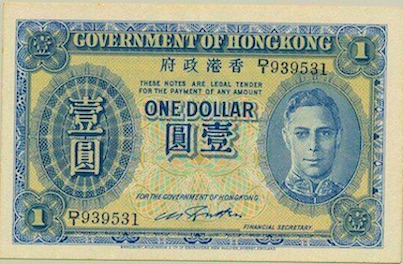 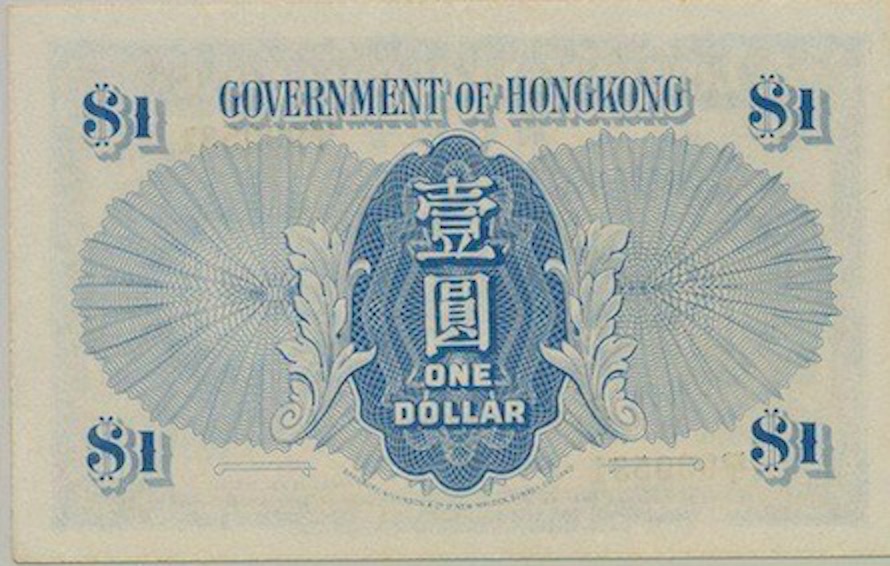 The above P-316 depicts KGVI facing directly. In 1947, Bradbury Wilkinson changed the colour scheme to a green & lighter green (with light yellow under print). Otherwise the later designs are very similar to the note above. QEIIThe Government of Hong Kong issued QEII notes immediately after King George VI passed away in 1952. In this way, they are like Malta's early issues of the monarch. They only issued a ONE Dollar note & 3 Fractional currencies (1 Cent, 5 Cents & 10 Cents). Check out the Bank Note Museum for an overview: http://www.banknote.ws/COLLECTION/c...20VI%20Issue1952-1965 Elizabeth II Issue:P-324Aa,b ONE Dollar:The $1.00 note is basically green & lighter shades of green (yellow under print) & QEII (quarter turn) portrait on the right. There are only 2 versions ( a) & ( b) each with the Arthur Clarke signature. 1952, 1954 & 1955 make up the a version while 1956, 1957, 1958 & 1959 make up the b version. I have been watching this note for some time as I would like to own both the 1947 P-324 KGVI version either year a-1947/b-1952) & the QEII P-324Aa version. The reason I'm keen on the early a version of P-324A is because I seldom see these while I have seen runs & even a bundle of 1959 (b) versions sell very cheaply. https://en.numista.com/catalogue/note204092.htmlP-325a,b,c,d,e 1 Cent:Some collectors like to collect all 5 variations of this brown, tiny (89x41mm), uniface fractional. You would expect that the earlier versions to be tougher to acquire than the later ones & yet the opposite is true ( a issued for 10 years while d & e had short 5 year runs). https://en.numista.com/catalogue/note202116.htmlP-326 5 Cents:The green, slightly larger (95X44mm) uniface 5 cents can be tough to find in any condition. It bears only the first 'Cowperthwaite' signature (which looks a lot more like 'Jessie' or something like that to me). https://en.numista.com/catalogue/note205415.htmlP-327 10 Cents:This larger orange uniface 10 Cent note always seems more readily available in better grades than P-326 (5 Cent). Hoards must have been discovered. https://en.numista.com/catalogue/note205414.htmlConclusion:At the time of the government issues, several chartered banks issued currency too. Many of these banks issued larger formatted notes with eye-catching ornate designs with dragons & other cultural significance. I've seen collectors' posts on other forums that have a dismissive tone towards this smaller short-lived Government series. To me, this spells " opportunity" for the savvy collector. Unfortunately, I have not purchased one (yet) since I have only observed their prices become out of reach (& I have been outbid every time). My SCWPM shows BV of less than $1.00 each P-325, $8.00 for P-326 & $5 for P-327. I have never seen such optimistic prices. The fractionals alone sell for many times BV. I have seen the 1959 P-324Ab sell for as little as $20/note but that was in a run of 3 (or more) & collectors have known these later years are fairly common. Remember that most collectors buy according to the year & prefer the early a years over the later b years.
Edited by walk2dwater
01/04/2022 12:15 pm
|
|
Moderator
United States
196490 Posts |
Very interesting! |
|
Pillar of the Community
Canada
2646 Posts |
ISLE OF MANLike her mother country, the Isle of Man is a "late bloomer" when it comes to the practice of using QEII portraits for the islands banknotes. Maybe not as bad as Guernsey, but late enough. And oddly enough, this tiny island also has a huge collector following. This demand puts their early issues in league with the Caribbean nations (think Bermuda, Bahamas or 1965 $20 Eastern Caribbean States). To get an overview, it would help to check out the Banknote Museum: http://www.banknote.ws/COLLECTION/c...20GOVERNMENTIsle of Man Government[Large format notes] 1961 & 1967:P-24a,b TEN Shillings:This pink, red, grey & white 10/-, with the unique triskellion symbol on the front, the viking ship on the reverse was issued twice (a- Garvey b-Sallard signatures). https://en.numista.com/catalogue/note229092.htmlP-25a,b ONE Pound:The purple & grey larger £1 note has Tynwald Hall on the reverse & the same two years (signatures) as P-24. These notes are just as desirable & can get pricey the higher grade one goes. The first "Garvey" " a" signature seems to be the toughest. https://en.numista.com/catalogue/note229093.htmlP-26a,b FIVE Pounds:Only 250,000 of this green, pink & grey toned £5 were released making either a (Garvery version) or b (Stallard variety) equally difficult. Castle Rushen is seen on the reverse. Such low quantities issued mean that high grades will be super scarce. https://en.numista.com/catalogue/note229094.htmlP-27 FIFTY New PenceThe BOE attempted to decimalize the Pound by dividing the Pound into 100 New Pence. This blue note replaced the red P-24 and only had 679,000 printed. https://en.numista.com/catalogue/note227410.htmlReduced 'Lieutenant Governor' Issue (1972-1991)The large format gets shrunken & a new engraving for QEII. P-28a,b,c FIFTY New PenceThis lighter blue 50 Pence continues with the "Stallard" signature ( a) but then has a short (200,000) long "Paul" signature ( b) & a shorter Paul signature ( c). Needless to say, collectors will go for the b (long 'Paul') variety over all the others. https://en.numista.com/catalogue/note209711.htmlP-29a,b,c,d ONE Pound:The same rule of signatures seen with P-28 applies to the £1. This can still be a tricky note to source in higher grades (particularly the long 'Paul' signature variety) but its not as scarce as P-28 in high grades. https://en.numista.com/catalogue/note229097.html P-30a,b FIVE Pounds:The colourful £5 has just the two Stallard ( a) & Paul ( b) varieties. It can still be a tough note to come by in higher grades (demand often outstrips supply) for each low printed variety. Remember the higher the denomination, the lower the # issued & the price climbs steeply. https://en.numista.com/catalogue/note229101.html P-31a,b TEN Pounds:The first £10 for the Isle of Man, this note has a green triskellion symbol and brown yellow tints. Peel Castle is featured on the reverse. Fewer notes were issued in the higher denominations making them quite a challenge to source. https://en.numista.com/catalogue/note229105.htmlP-32 TWENTY Pounds (Commemorative):You will never see a serial number higher than 5000 for this orange-red commemorative note. On the downside, many were kept & stashed away as souvenirs so one must consider this if one is to purchase it. https://en.numista.com/catalogue/note296473.html Treasurer of the Isle of Man (Dawson)IssueP-33 FIFTY New PenceThese notes were printed between 1979-1988. "Lieutenant Governor" is replaced by "Treasurer." The only treasurer at the time was Dawson. All the notes have his signature and they're not as difficult to source as the earlier versions. https://en.numista.com/catalogue/note205393.htmlP-34 ONE Pound: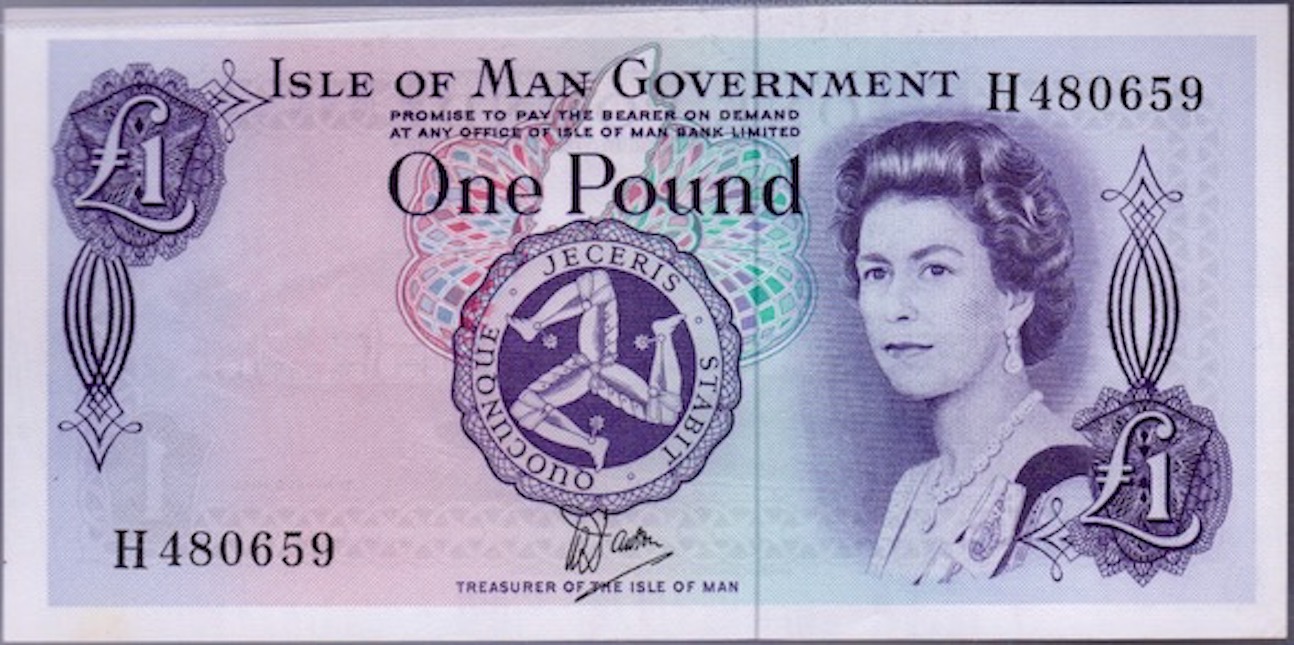 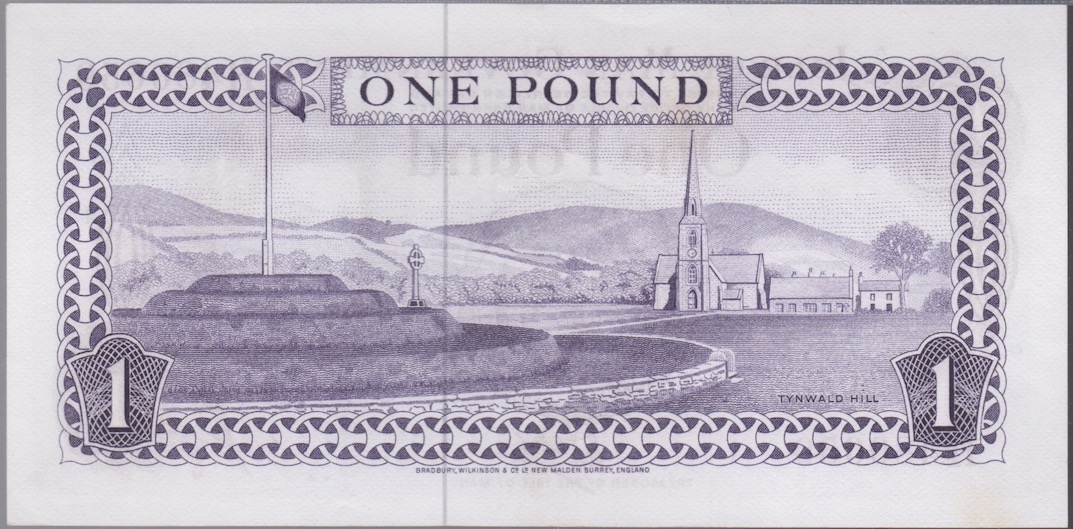 4.5M of these notes were printed & as such, large quantities make this 1979 £1 fairly easy to come by. https://en.numista.com/catalogue/note207258.htmlP-35a,b,35A FIVE Pounds:Large quantities of this £5 were produced making it fairly easy to source. However, like P-28 & P-29 (with the long "Paul" signatures), a short Large 'D' with Serifs was issued making this b variety highly sought after. The last D prefix without serifs are the majority P-35A variety, the most common of the lot. https://en.numista.com/catalogue/note229104.htmlP-36a,b TEN Pounds:The £10 of this series starts off without a prefix letter ( a- no prefix variety) then gets an 'A' prefix ( b variety) in 1987 & a 'B' prefix in 1991 ( c variety). https://en.numista.com/catalogue/note229107.html P-37 TWENTY Pounds:I believe that this £20, printed in 1979, still be a tough one to find in higher grades (unlike the earlier commemorative, this one would have been a "workhorse." https://en.numista.com/catalogue/note229111.htmlP-38 ONE Pound (Tyvek):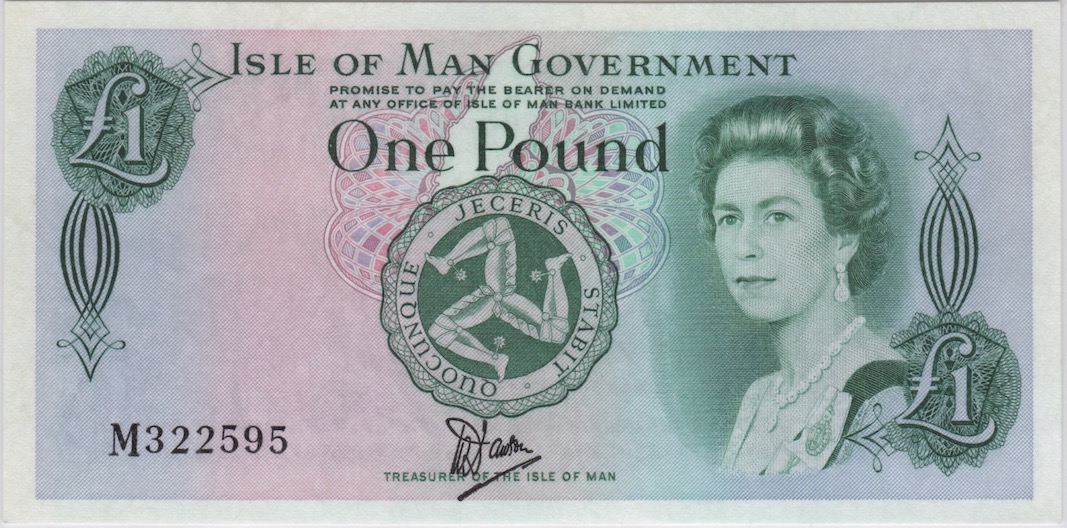 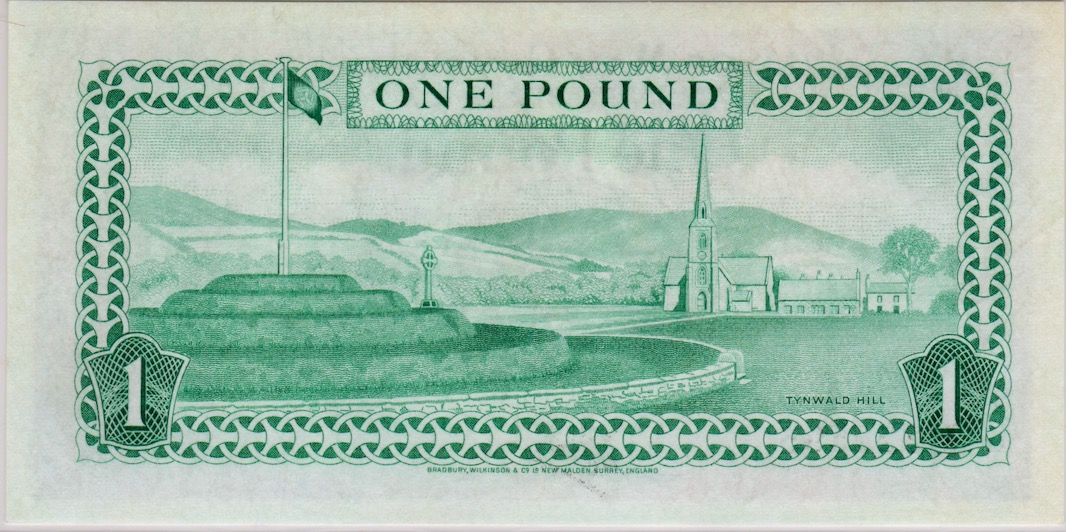 This 1983 foray using Bradvek (also called Tyvek Z) a ploymer hybrid substrate only lasted for prefixes M, N & half (500,000) of P. 2,500,000 notes means that there are plenty around -but again demand outstrips supply & prices can go up for the better grades. https://en.numista.com/catalogue/note205642.html
Edited by walk2dwater
01/05/2022 4:49 pm
|
|
Moderator
United States
196490 Posts |
Lovely examples! |
| |
Replies: 227 / Views: 25,399 |
To participate in the forum you must log in or register.
Disclaimer: While a tremendous amount of effort goes into ensuring the accuracy of the information contained in this site, Coin Community assumes no liability for errors. Copyright 2005 - 2026 Coin Community Family- all rights reserved worldwide. Use of any images or content on this website without prior written permission of Coin Community or the original lender is strictly prohibited.
Contact Us | Advertise Here | Privacy Policy / Terms of Use
|
| Coin Community Forum |
© 2005 - 2026 Coin Community Forums |
| It took 0.75 seconds to rattle this change. |
 |
|
| |
| |







 First Page
 Previous Page


 Posted 12/30/2021 10:48 am


