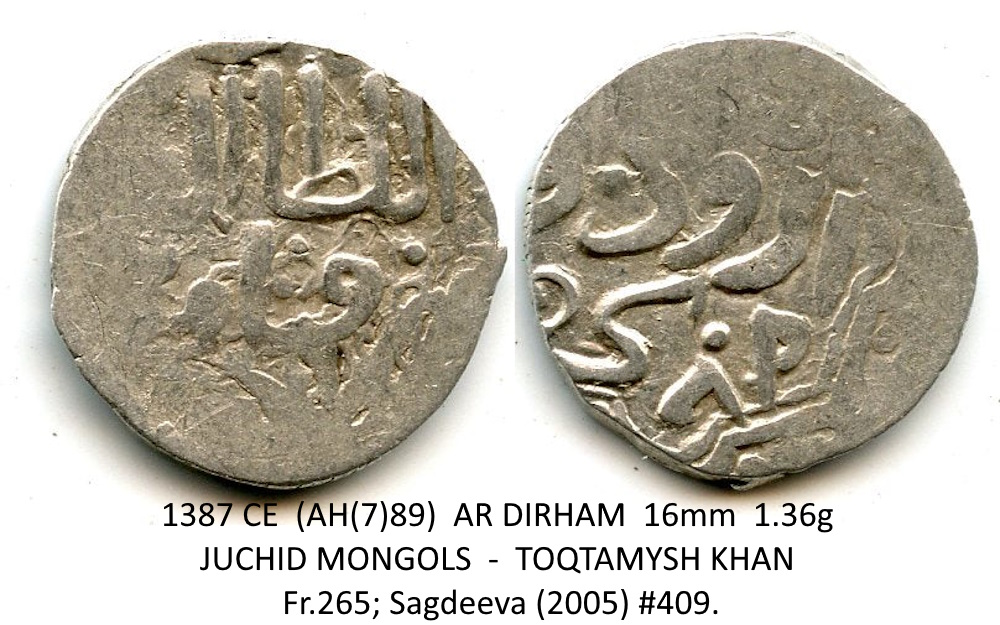
Quote:
Also looking forward to @j1m's Timurid miri for 1387
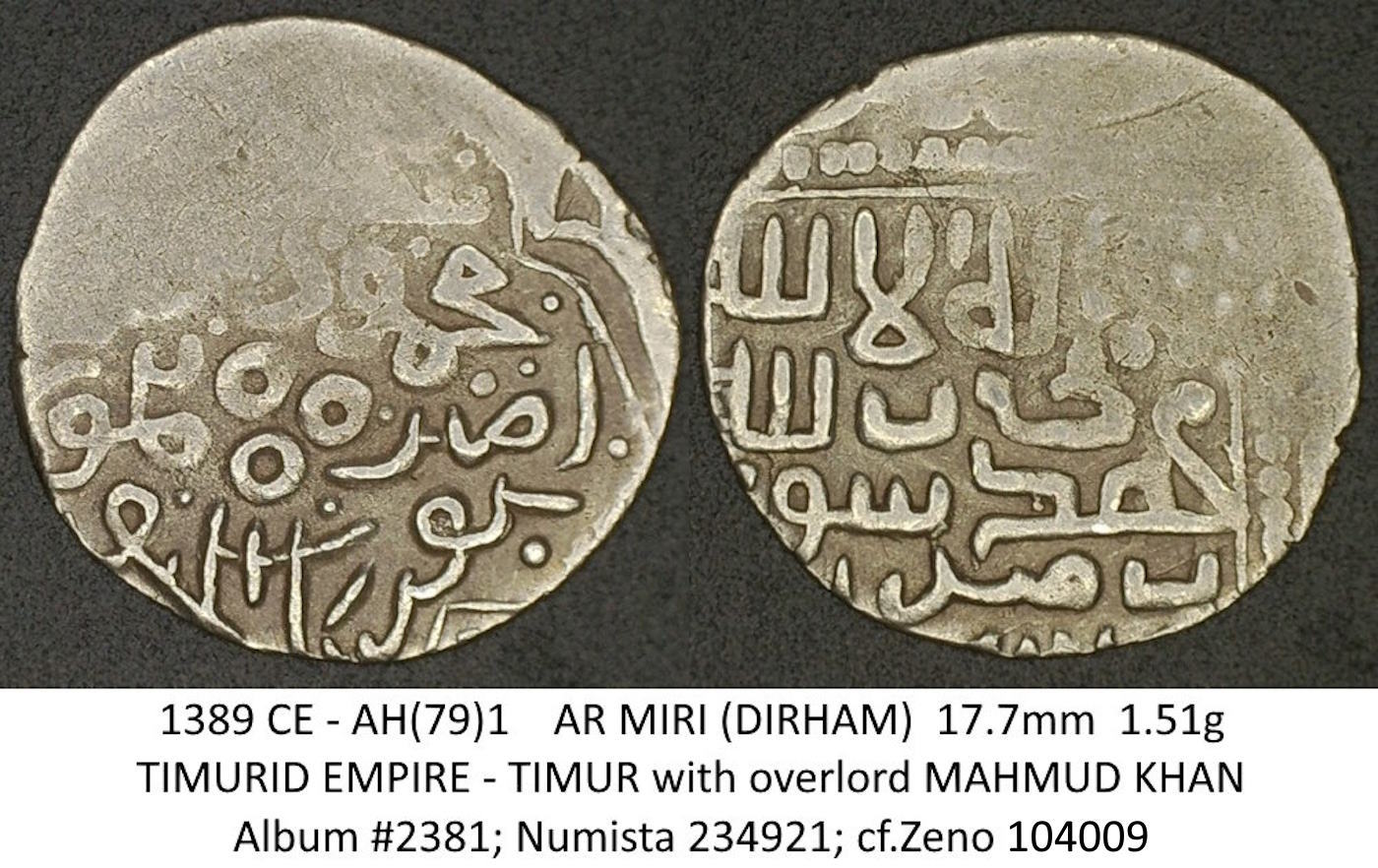
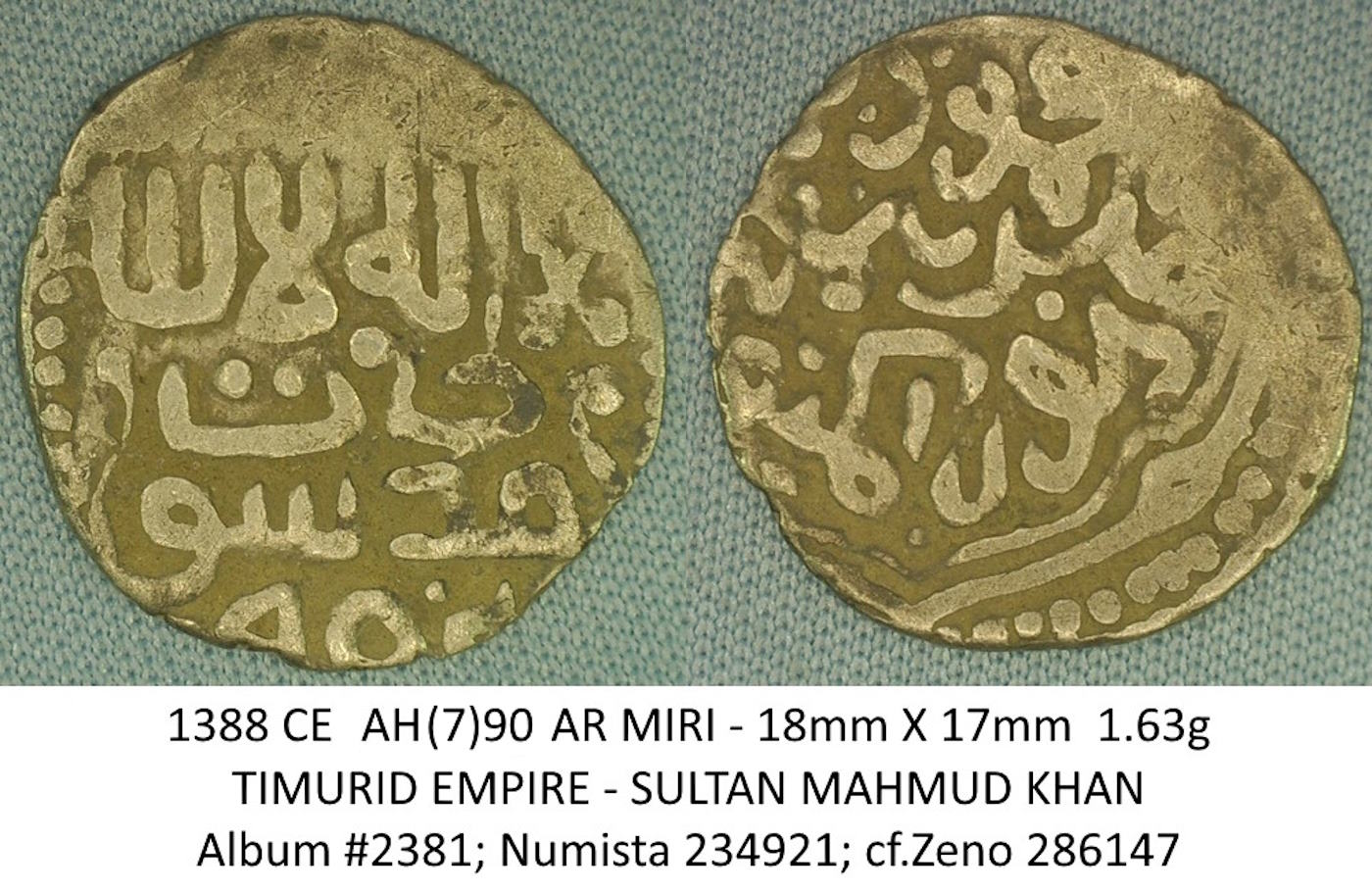
Indeed a Timurid miri. The last two were minted (under Timur) in the name of Sultan Mahmud Khan; this one is in the name of Mahmud's predecessor Suyurghatmish, who died in 1388.
The date on it straightforwardly converts to 1387 (the year 789 AH lasted from January 1387 until January 1388), but the coin must have been issued so late in the year (for chronological reasons) that for a while I wasn't sure if the issuing period was actually in that year! I think it probably mostly was, though.
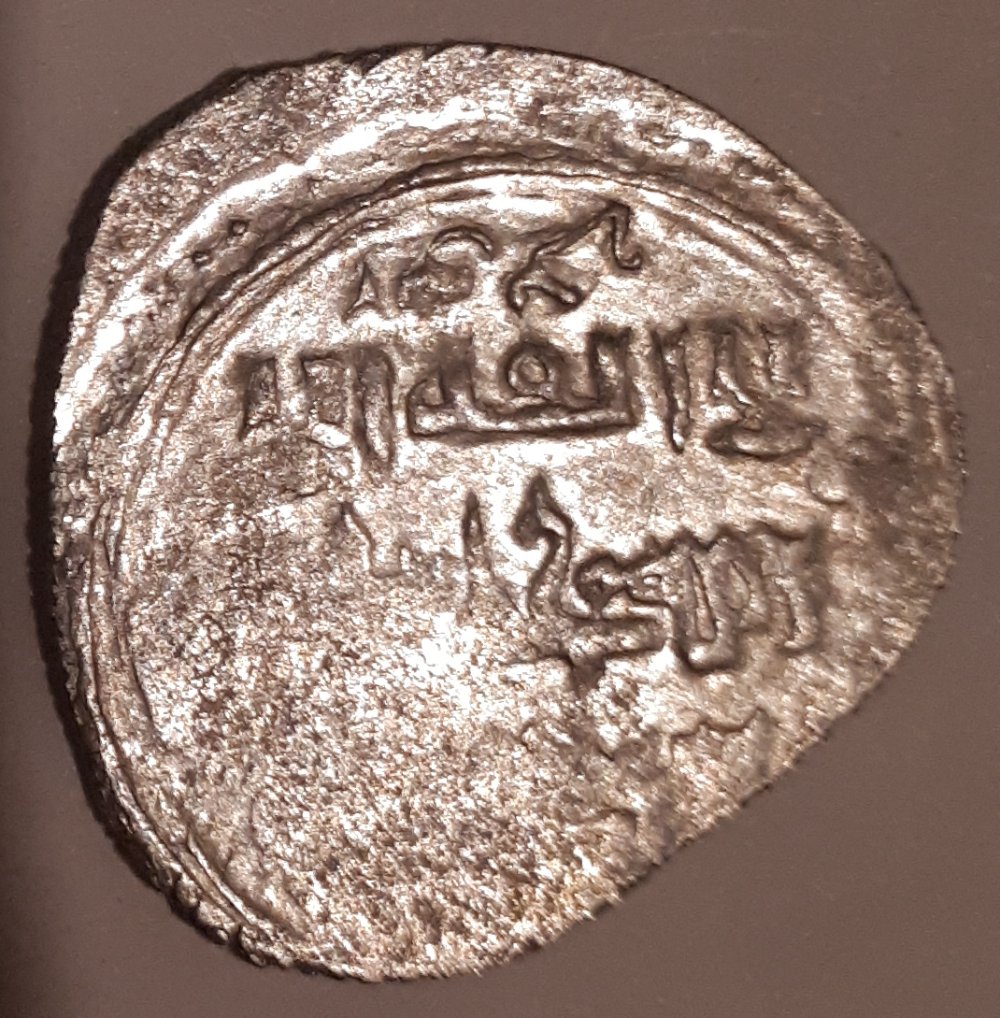
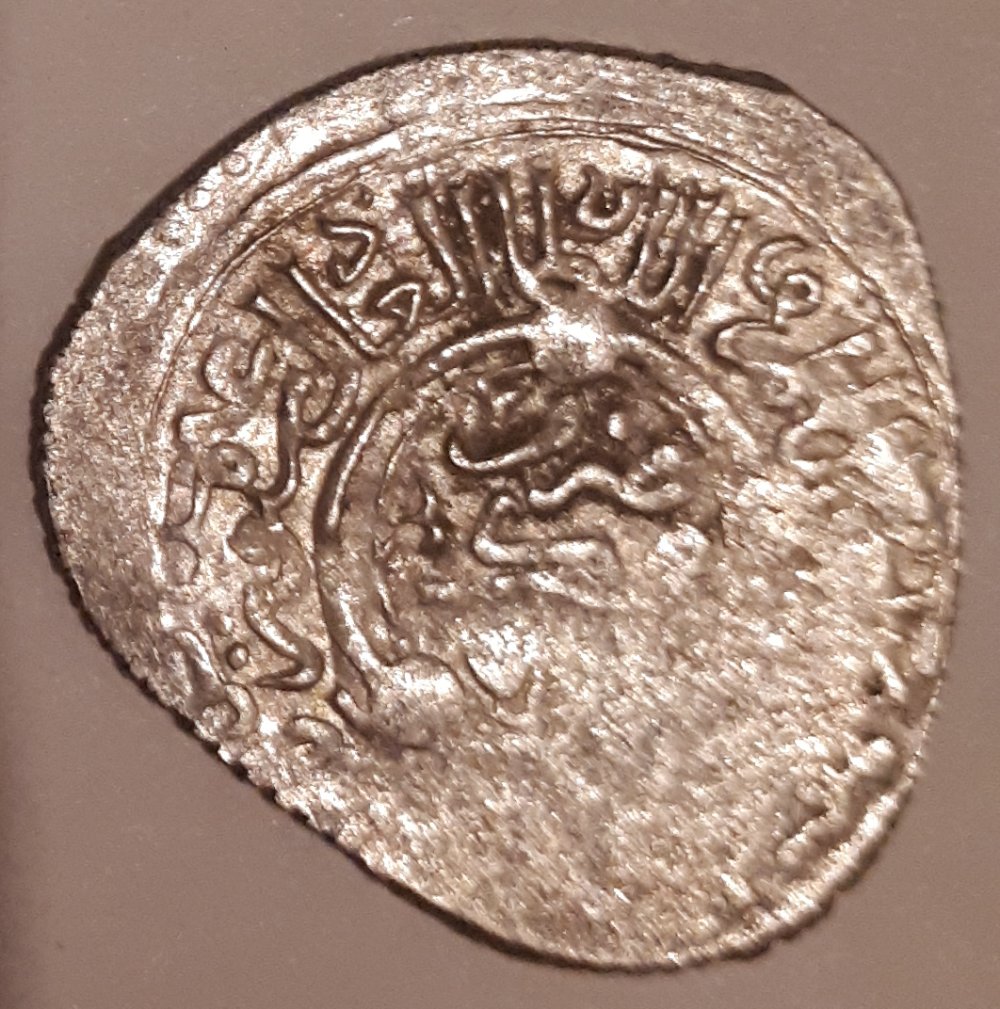
Timurid Empire, first occupation of Iran (1387-8)
(Timur) in the name of Suyurghatmish
AR miri (2 dinars)
Furk (Forg) mint, 789 AH (1387 AD)
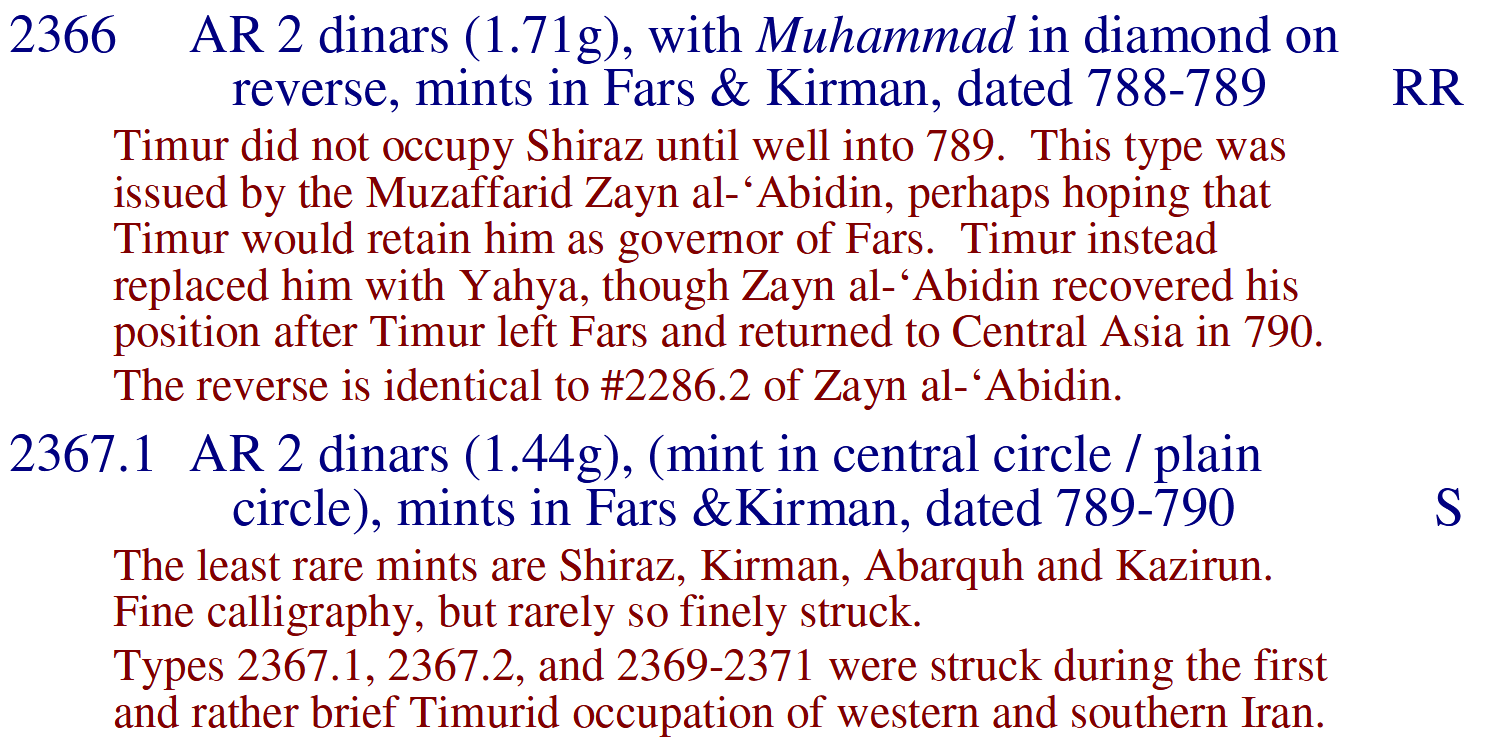
Album 2367.1,
Zeno cat. 6020not on Numista AFAICT
The chronology of the first Timurid occupation of Iran seems to be almost unmentioned in online sources. Isfahan very quickly surrendered and then almost immediately rebelled; the rebellion was harshly put down in November 1387, but the city architecture was mostly preserved.
Timur's army then went south to Shiraz, which ultimately also survived relatively undamaged; chronologically I suspect that the Isfahan rebellion probably took place while the main army was away in Shiraz, but I couldn't quickly find any definite sources one way or another.
Furk is usually identified as (somewhere in) modern
Forg District, southeast of Shiraz. This implies a very late date of occupation, and consequently a very late start of minting; around October 1387 if we assume that the southern occupation happened in parallel to the Isfahan rebellion, closer to December if it only occurred later.
With the year 789 AH ending around January 17th (Gregorian - earlier in Julian) of 1388, it really does look like the timing might be close for the majority being in the wrong year! It probably wasn't
that late, though.
The occupation (indeed "rather brief", as Album says) was eventually interrupted by news from the east: taking advantage of the temporary displacement of the Timurid army, Tokhtamysh (yes, the same as on the other 1387 coin) had invaded Central Asia and was about to march on Samarkand...
Quote:
While Timur remained in Persia, in the winter of 1387-1388, Tokhtamysh overran Central Asia, where part of his forces besieged Sawran, while another crossed Khwarazm to besiege Bukhara. Timur's commanders prepared to defend Samarqand and other towns against the expected continued advance of Tokhtamysh, and Timur himself headed back from Shiraz to Samarqand with his main forces in February 1388.
(quoted from
Wikipedia)
Album claims that the overall type was also issued in 790 AH; I was unable to find an example with that date (or, for that matter, any 790 AH Timurid coin in Suyurghatmish's name at all, though Sultan Mahmud 790 AH coins are plentiful). Out of the 29 examples on Zeno, 11 are undated, and the other 18 have the (variously spelled) 789 AH date.
I'm guessing that he had probably personally seen one (he actively collected Timurid coins), but it's not impossible that he just assumed that the type was probably issued in both years because the occupation lasted into both years (February 1388 was already in 790 AH).
As it turns out, all (six) of the Furk mint examples on Zeno are die matches with each other (easily identified by three lumps on the central circle). My coin is also a die match, so it must have also been dated 789.
(I'm not sure why there seem to be so many of those Furk coins. Album does not list Furk as one of the "least rare" mints for the type. It's possible that a hoard had been found - or, at least, dispersed - after Album's research.)
Indeed, having confirmed the match, I can even show where the date is on those blurry pics of that weak strike...
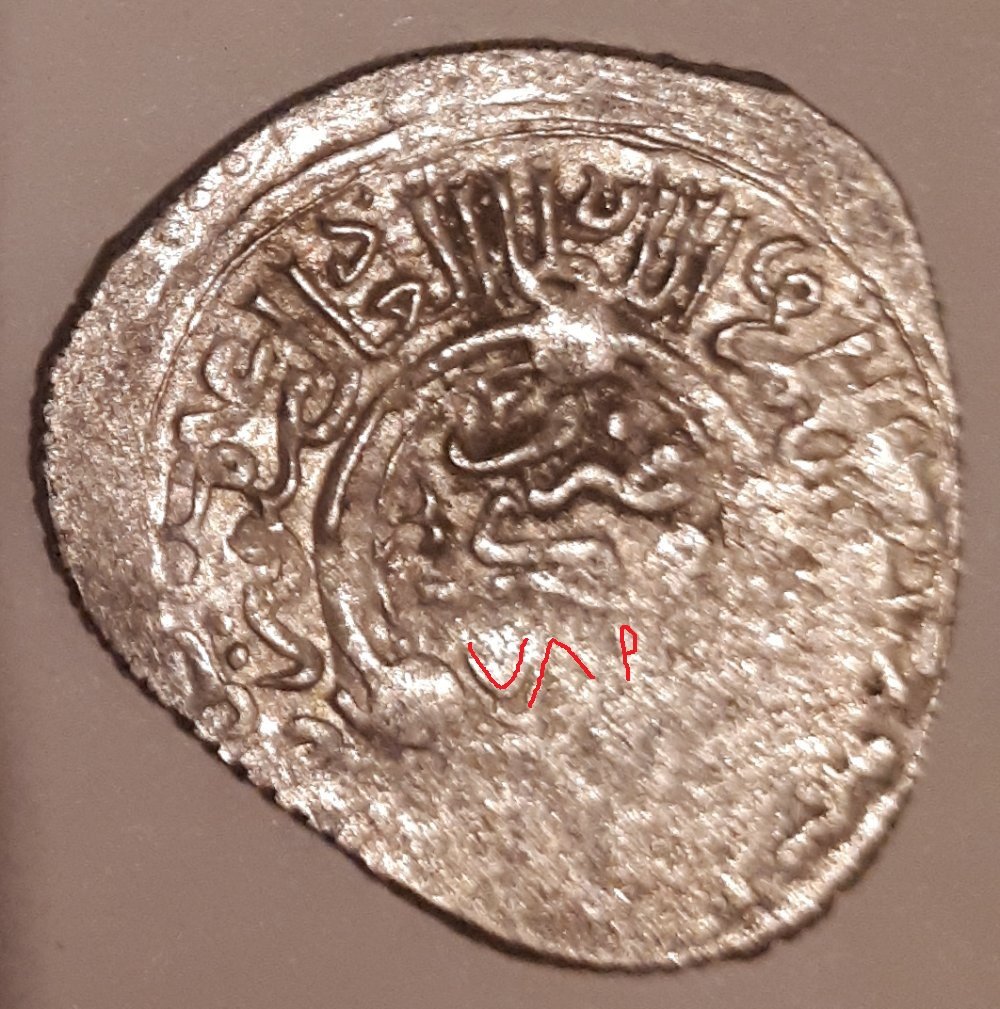
...there is some uncertainty in the 8, but the 7 and the 9 are relatively clear.





 First Page
 Previous Page


 Posted 01/29/2025 03:05 am