| Author |
 Replies: 66 / Views: 4,742 Replies: 66 / Views: 4,742 |
|
|
|
Pillar of the Community
 United States
8066 Posts |
I have a far less extensive numismatic library than some other contributors here, but do have a few books for areas I specialize in (Low Countries, Poland, and Italy). The MEC series is especially good because it covers the history of each city-state and the changes in monetary policy over time, so there is enormaously rich contextual information for the coins. They also cite how howard evidence has allowed for new interpretations (the Pavia/St. Syrus coin had previously been attributed to the Milan mint by most scholars). That's really a lovely Giovanni Dandolo grosso. Just a touch of honest wear, and lovely toning. I will pass on posting my Pietro Gradenigo since we've already seen one, but here is a much later grosso of Francesco Foscari, datable to 1450 (from the sigile mB for Marco Barbarigo who became a mint official in May, 1450). By this time the grosso had lost its standing as the most stable coin of the Venetian Republic, as its weight is down to about 1.6 grams 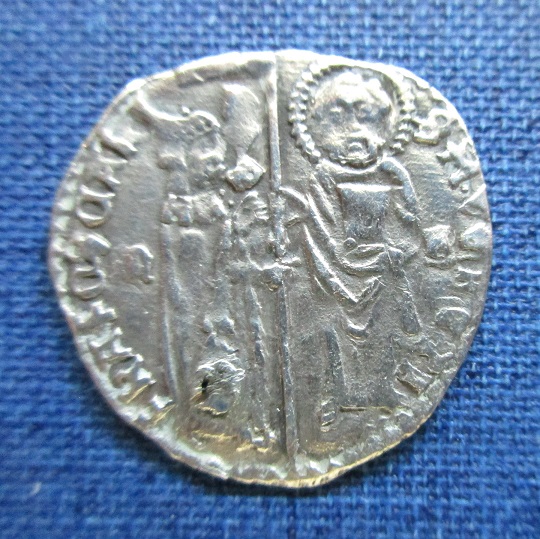 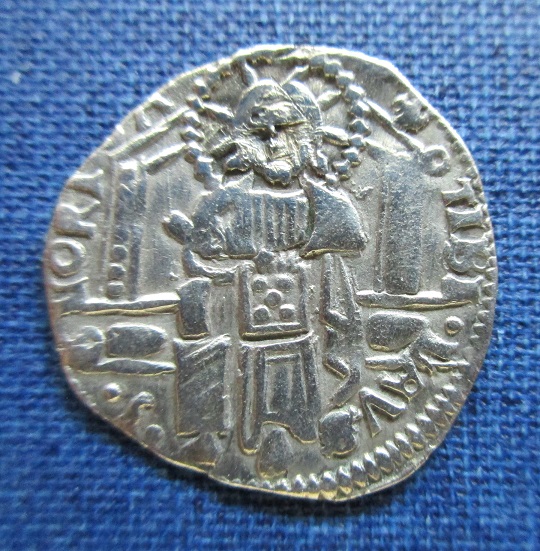 |
|
Valued Member
 United States
106 Posts |
Great stuff! The Foscari is great. I have Enrico, Andrea, & Francesco Dandolo, Foscari, Steno, and Zeno to go. I got a not so real Zeno a few weeks ago I had to send back. Otherwise, after these are bought, maybe a Mule or two and if I have a budget, a higher grade MS. Then I want to just repeat and buy nice examples forever. I really want to recreate Medieval Italian periods in my hands.
Edited by newtraffic2
12/04/2025 1:36 pm
|
|
Pillar of the Community
United States
8066 Posts |
Here is the last of my Milan area grossi, an impulse purchase earlier this year that doesn't fit any of my collecting themes, but that I couldn't resist because of the imagery. Galeazzo Maria Sforza, reform coinage of 1474-1476, grosso of 5 soldi. At first glance it looks like St. Ambrose has been abandoned, but that would be wrong. He's still there  Obv: Three flaming torches with two buckets attached to each. G3 M SF VICECO DVX MLI V (Galeazzo Maria Sforza Visconti 5th Duke of Milan...) Rev: Visconti biscia (serpent wth a human figue in ts mouth). PP ANGLE Q CO AC IANVE D (Count of Pavia and Angera as well as Duke of Genoa) 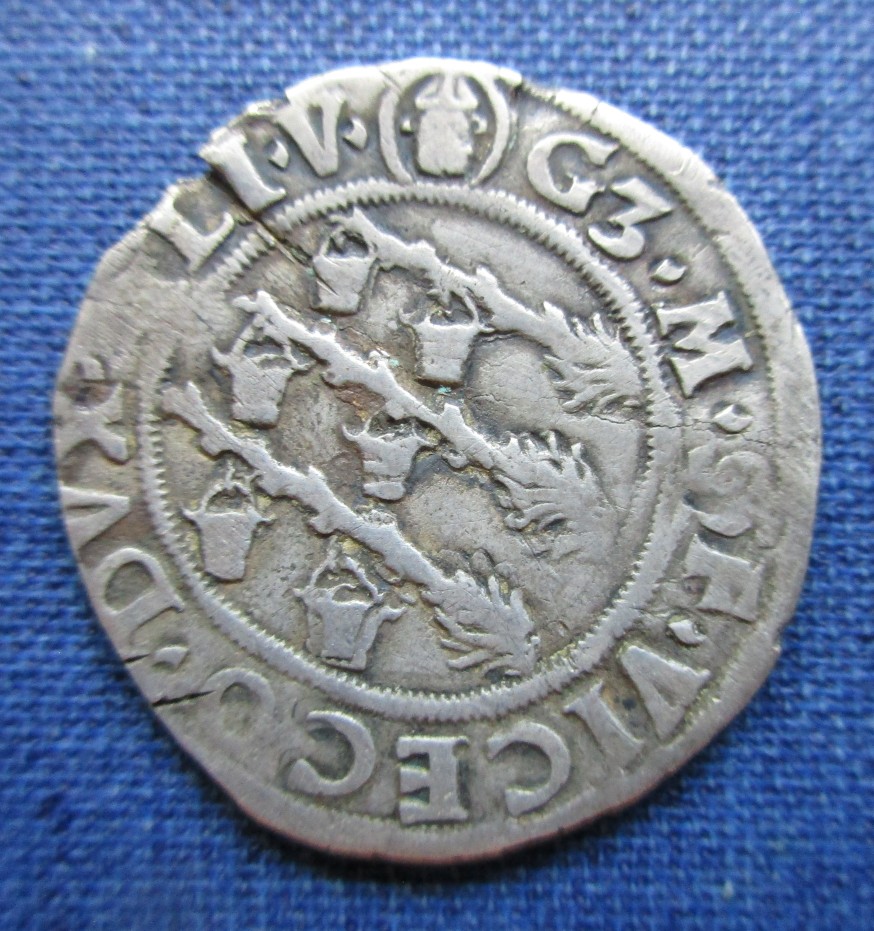 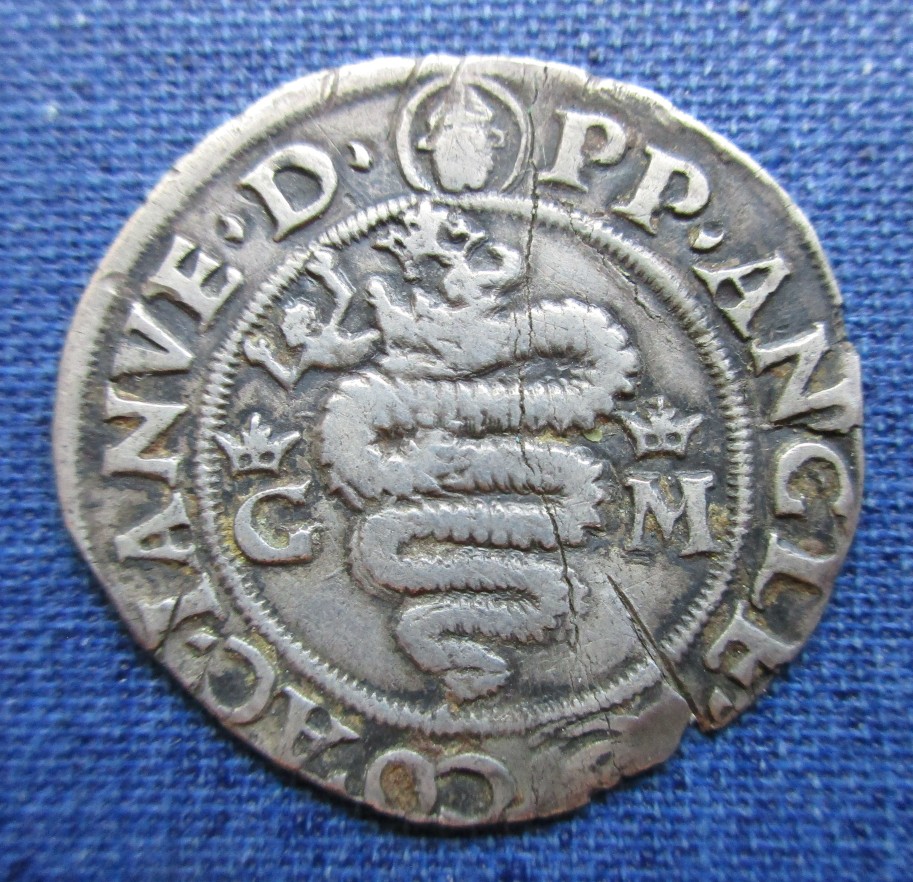 And now, we would be remiss if we don;t move to the third of the four great northern city-states, Florence. Edited by tdziemia
12/06/2025 12:30 pm
|
|
Valued Member
United States
106 Posts |
Florence is getting a lot of love. I do whatnot sales, and everyone wants Florence. Let's buy some! But won't forget Venice.
Edited by newtraffic2
12/06/2025 6:42 pm
|
|
Pillar of the Community
United States
8066 Posts |
Like Milan, Florence did not have a "large" (grosso) silver coin until well into the 13th century. I expect that whenever MEC 13 (Central Italy) is published, we will be treated to the most up-to-date thinking on the chronology of the earliest large silver coins (called fiorino) of Florence. Until then, I can just point out that some types are usually referred to as "before 1260," others 1260-1279, and so on, based on earlier attributions. What the earliest have in common is a weight about 20% lighter than the Venetian grosso (so, about 1.6-1.7 grams), and a standard design with the Florentine lily obverse in a reeded circle, with legend FLORENTIA, and a half-length bust of St. John the Baptist reverse in a reeded circle with legend S' IOHANNE B. This fiorino of 12 denari (OK, more like a soldo than a grosso) is attributed as MIR 40, struck in the 3d quarter of the 13th century (1260-1270s): 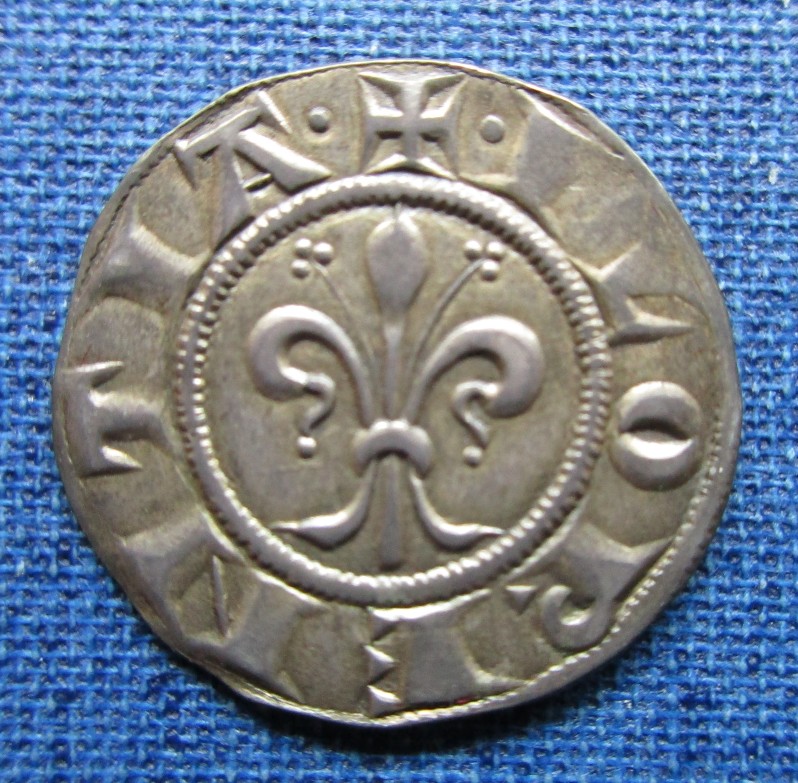 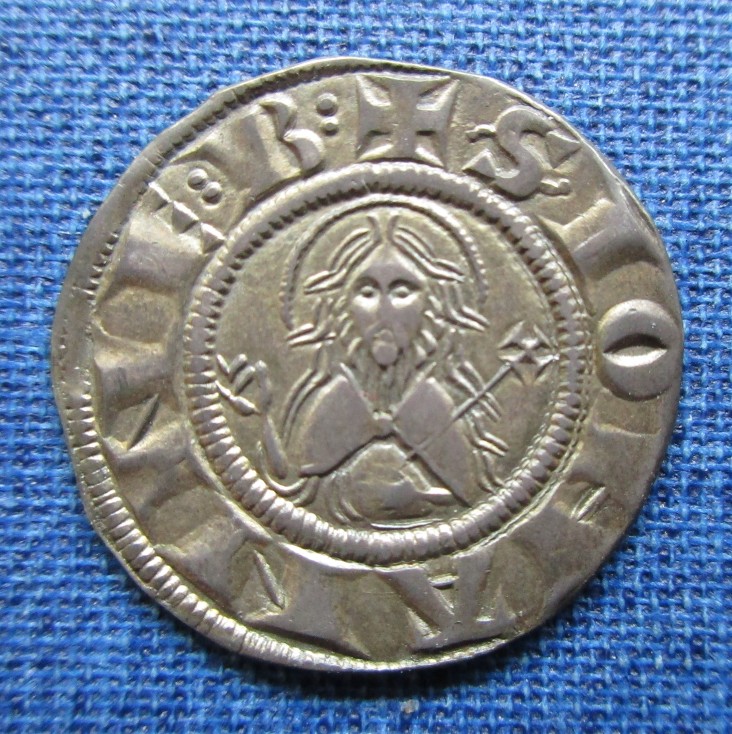 |
|
Valued Member
United States
106 Posts |
Pretty beautiful, although not the same as the Grossos from Venice. Soldo's are my #2 of the times, but I like Milanese and Venetian coins.
|
|
Moderator
 United States
197031 Posts |
Lovely examples!  |
|
Pillar of the Community
United States
8066 Posts |
Quote:
Pretty beautiful, although not the same as the Grossos from Venice. I agree that this earliest "large" Florence silver is still pretty simple ( remember, Renaissance art ideas had not yet taken hold). But as with the Venetian Grosso, it is revolutionary for its day to the extent that neither side features a cross. Maybe they felt that the lily shape was close enough, or maybe (like Venice) ecclesiastic power played a distant second fiddle to the secular authorities? As best I can tell, the first real "grosso" (i.e. coin with a value larger than a soldo) came in the 1290s and appears to have been inspired by the gold florin design with its standing figure of St. John, which was already 4 decades old: https://en.numista.com/307221I doubt I'll ever have one of those.  But before long, Saint John was given a throne (or at least a chair) looking a bit more like Christ on the Venetian (and Byzantine) coins. This style would last for well over a century, from 1314 to 1454 with occasional small modifications. Here is an example of a grosso of 5 soldi and 6 denari struck in 1424 (the mintmaster's symbol at the end of the reverse legend can be used to date them to a 6 month period): 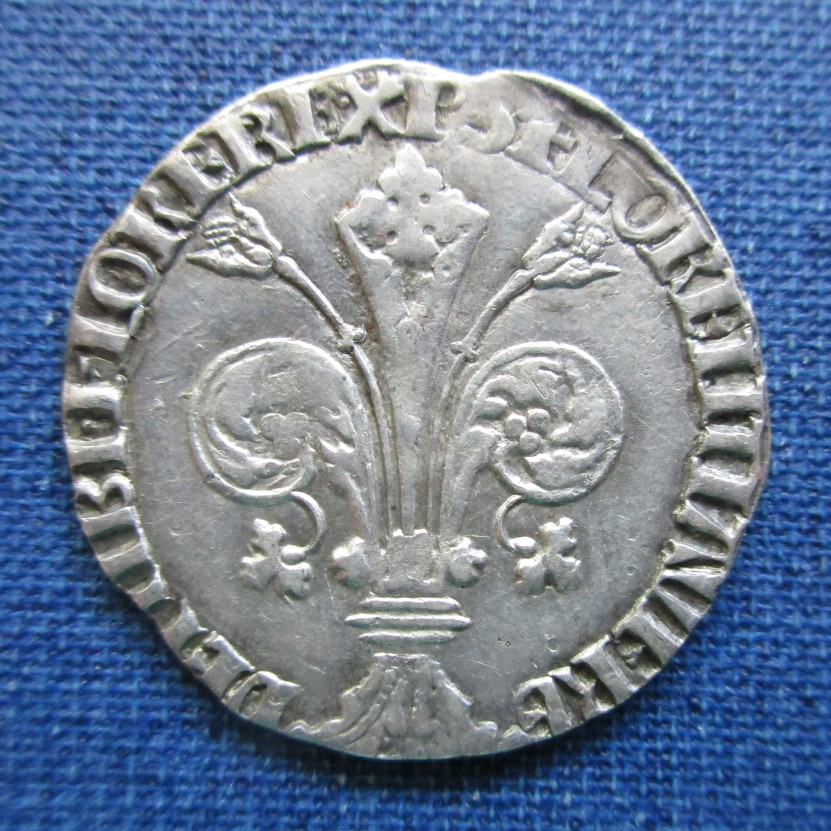 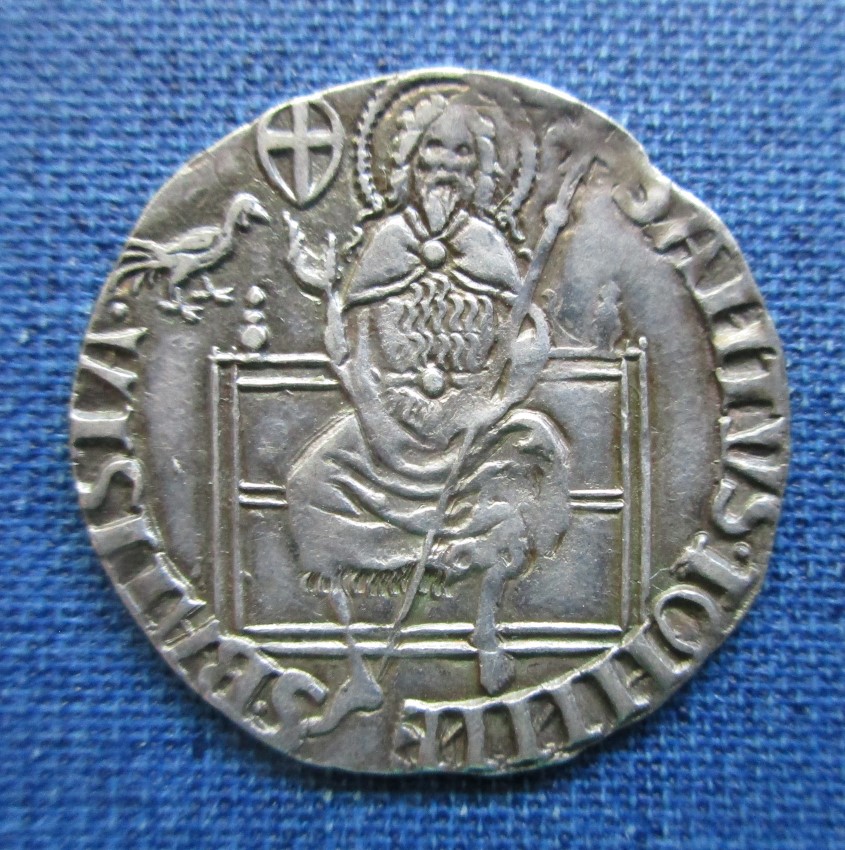 Check out the capon mintmaster's mark for Giovanni di Nico Capponi  Edited by tdziemia
12/09/2025 3:34 pm
|
|
Moderator
United States
197031 Posts |
Impressive! |
|
Valued Member
United States
106 Posts |
Absolutely fascinating. More to come!
|
|
Pillar of the Community
United States
8066 Posts |
The last major design change of the Florentine grosso comes in 1465 when Saint John is again given a standing/walking posture, and his simple vestments are reconfigured to allow the Renaissance engraver to show his stuff (also check out the 3-D halo). With a few variants along the way, this type endures until the end of the Florentine Republic in the 1530s, when it becomes the Grand Duchy of Tuscany under the Medici, and the grosso ceases to exist. Here is an example dateable to the second half of 1487 by the symbol of mintmaster Ludovico di Antoni di Tommaso Masi: 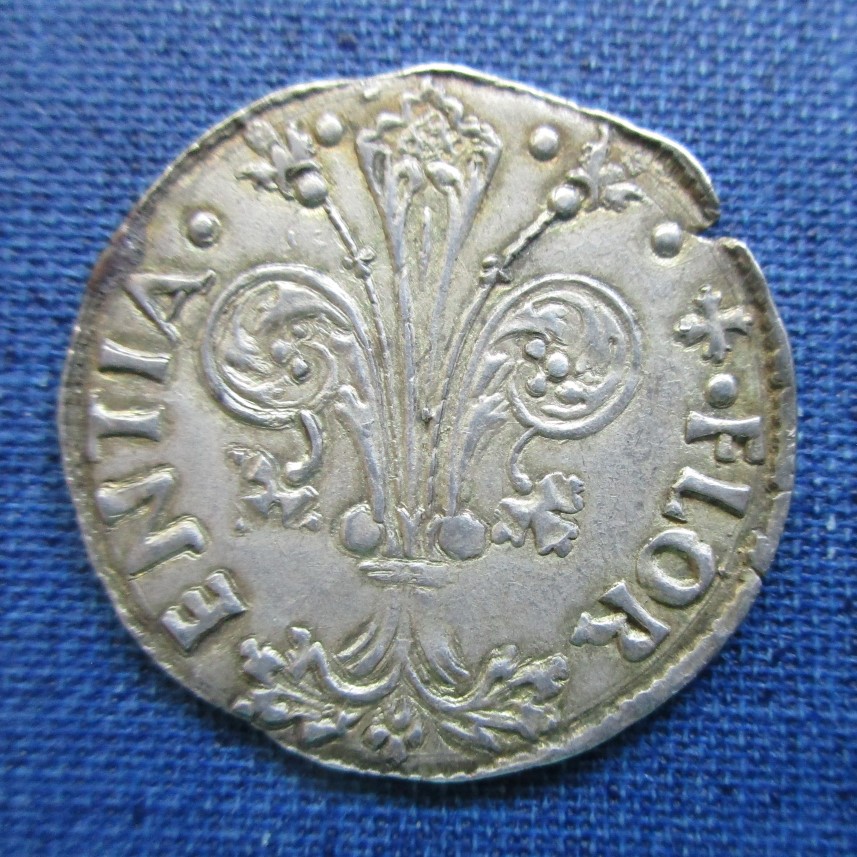 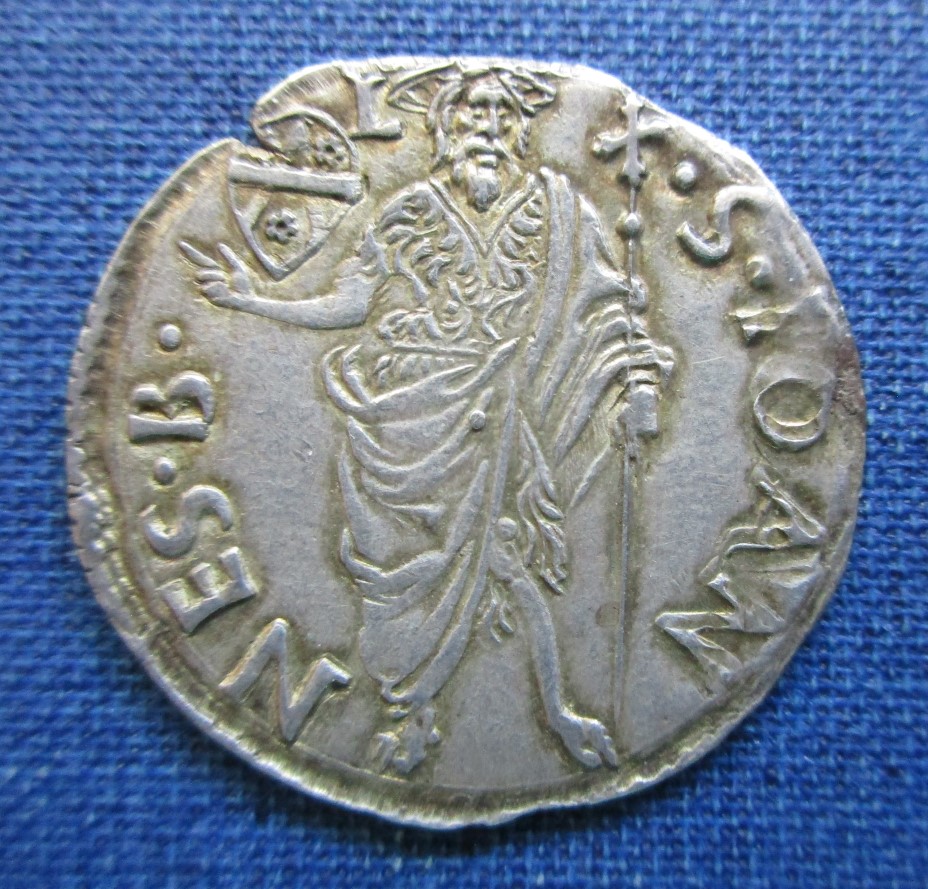 That's it for Florence. Next up: the grosso agontano of the Adriatic cities. Edited by tdziemia
12/10/2025 07:59 am
|
|
Moderator
United States
197031 Posts |
Very nice! Quote:
Next up: the grosso agontano of the Adriatic cities.  |
|
Pillar of the Community
United States
8066 Posts |
Though overshadowed by the more powerful northern Italian republics (Venice, Milan, Florence and Genoa), a number of smaller republics also flourished in a part of Italy that belonged nominally to the papacy, but which operated more or less independently until the Papal States became a major political power on the Italian peninsula toward the end of the medieval era. One of them -- Ancona -- launched its own version of the grosso toward the end of the 13th century, called the grosso agontano. The design most closely resembles the early Milanese grosso. One side has the city's patron saint, usually an early bishop, standing in his miter and robes, holding his crozier. The other side has a cross and the city name: 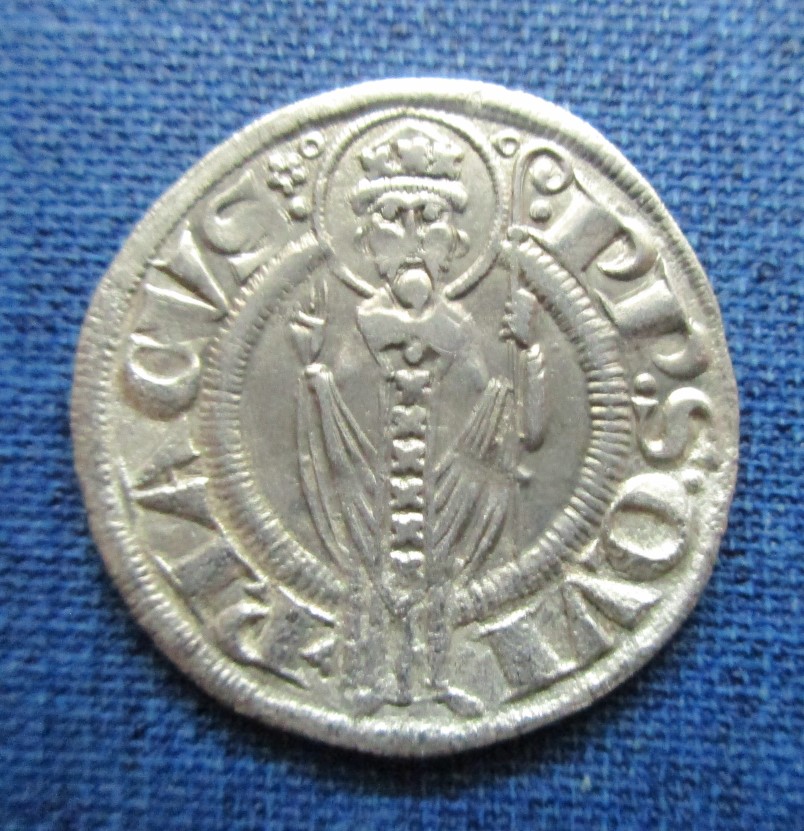 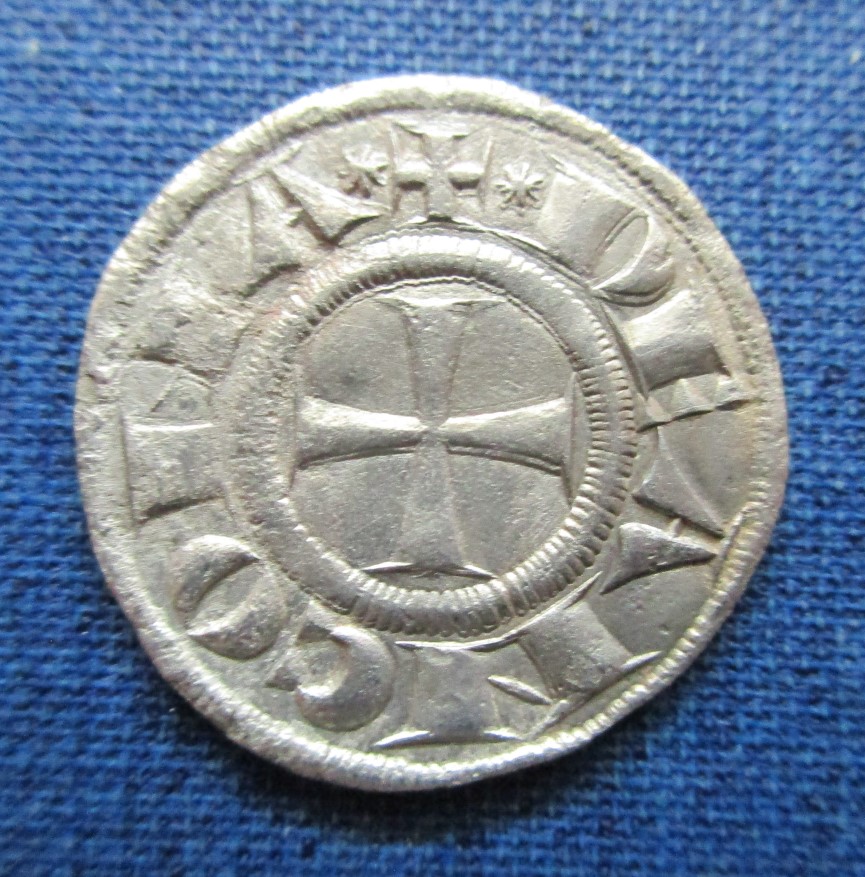 Obv: Saint Quiriacus, nimbate and holding crozeir: PPS QVIRIACVS (patron saint Quiriacus...) Rev: Cross. DE ANCONA ( of Ancona) The earliest agontano was a coin of about 2.4 grams. It was quickly copied by many of the independent cities of Marche and Emilia-Romagna. Edited by tdziemia
12/11/2025 05:47 am
|
|
Moderator
United States
197031 Posts |
A nice example! |
|
Pillar of the Community
United States
8066 Posts |
As mentioned in the last post, the grosso agontano spread through north-central Italy, specifically in territories nominally under Papal control, and to a few places slightly farther west. Volterra issued one with an image of a reigning bishop (not one who had been dead and sainted for a few centuries): https://en.numista.com/432381This map shows the geographic spread. Venice is just off the map 40 miles to the northeast. Rome is about 60 miles south of the lower edge of the map. 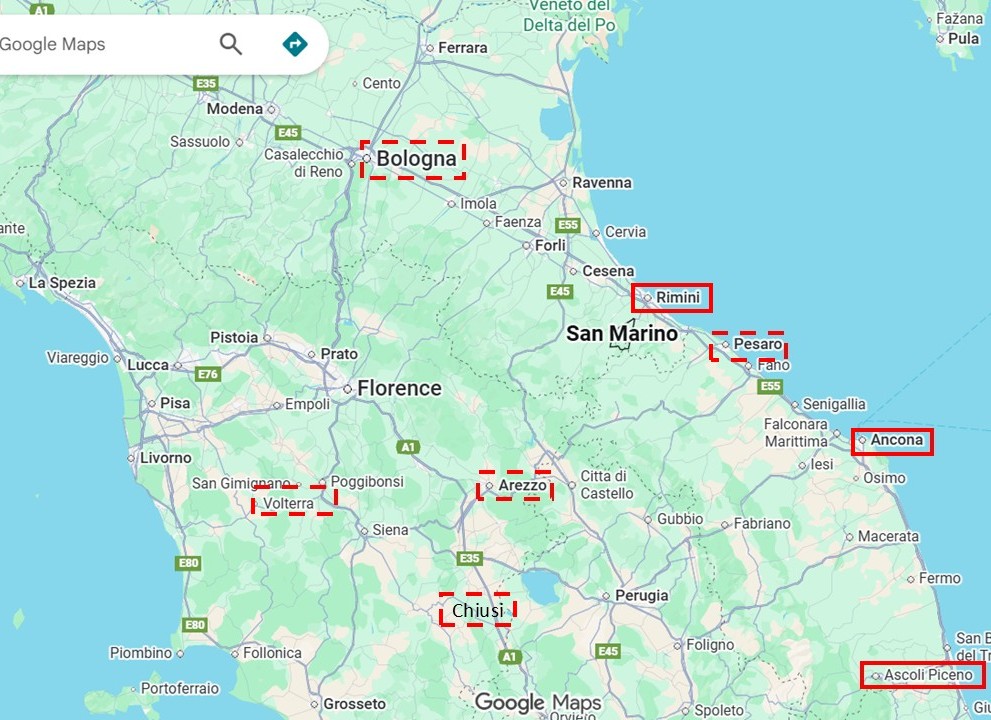 Here is another example, from the city of Rimini, featuring their patron saint, Gaudensius. Yep, THERE REALLY WAS AN EARLIER GUY NAMED ST. GAUDENS WHO FIGURED IN NUMISMATICS !! 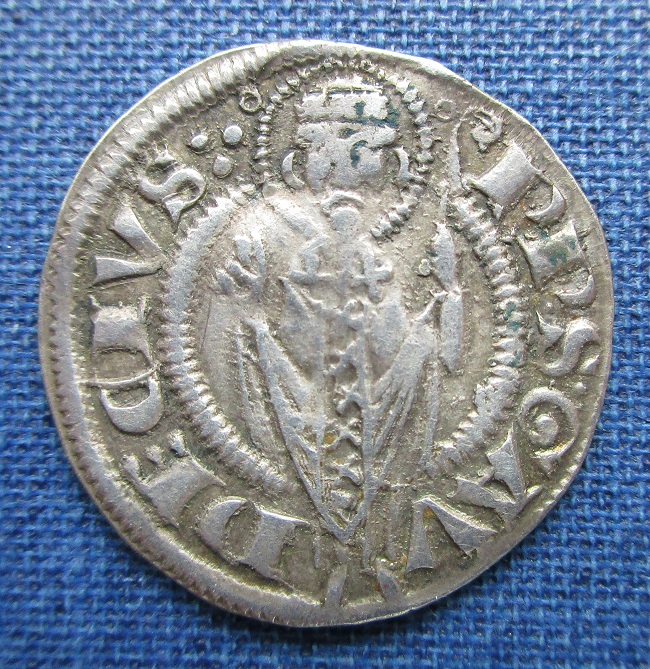 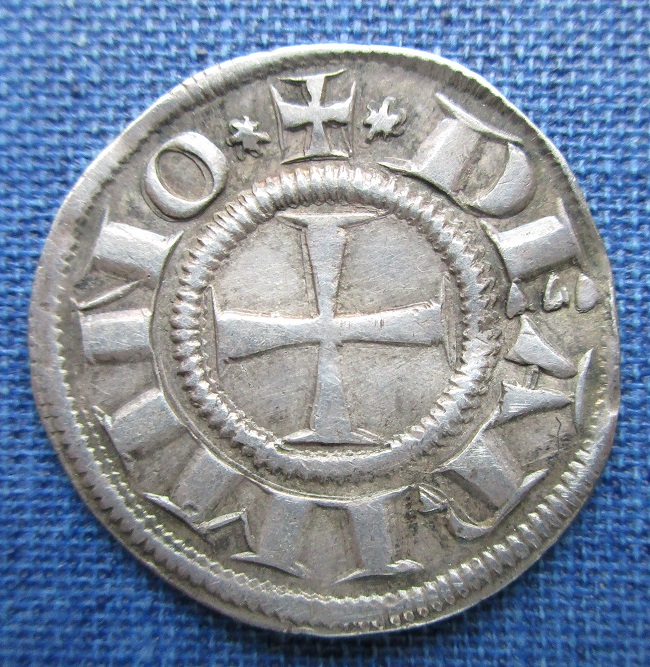 Edited by tdziemia
12/12/2025 4:55 pm
|
| |
Replies: 66 / Views: 4,742 |





 First Page
 Previous Page


 Posted 12/04/2025 1:33 pm


