| Author |
 Replies: 66 / Views: 4,730 Replies: 66 / Views: 4,730 |
|
|
|
Pillar of the Community
 United States
8063 Posts |
My last grosso agontano is from the obscure city of Ascoli, with its patron saint Emidius: 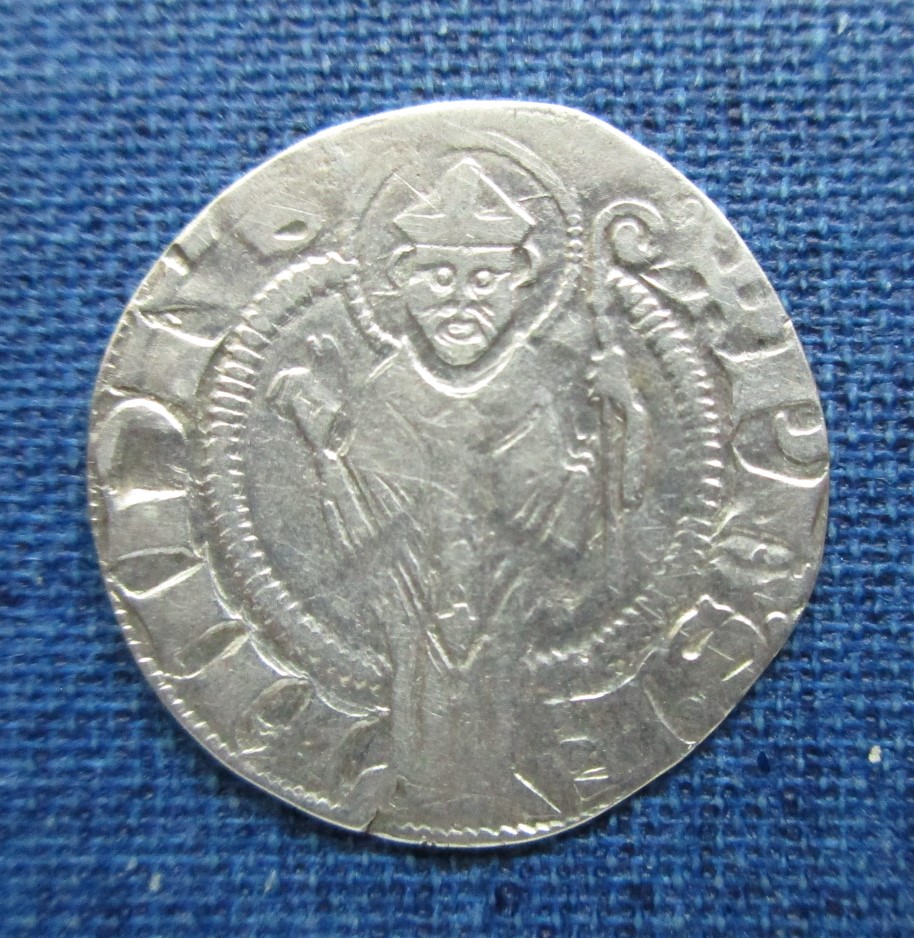 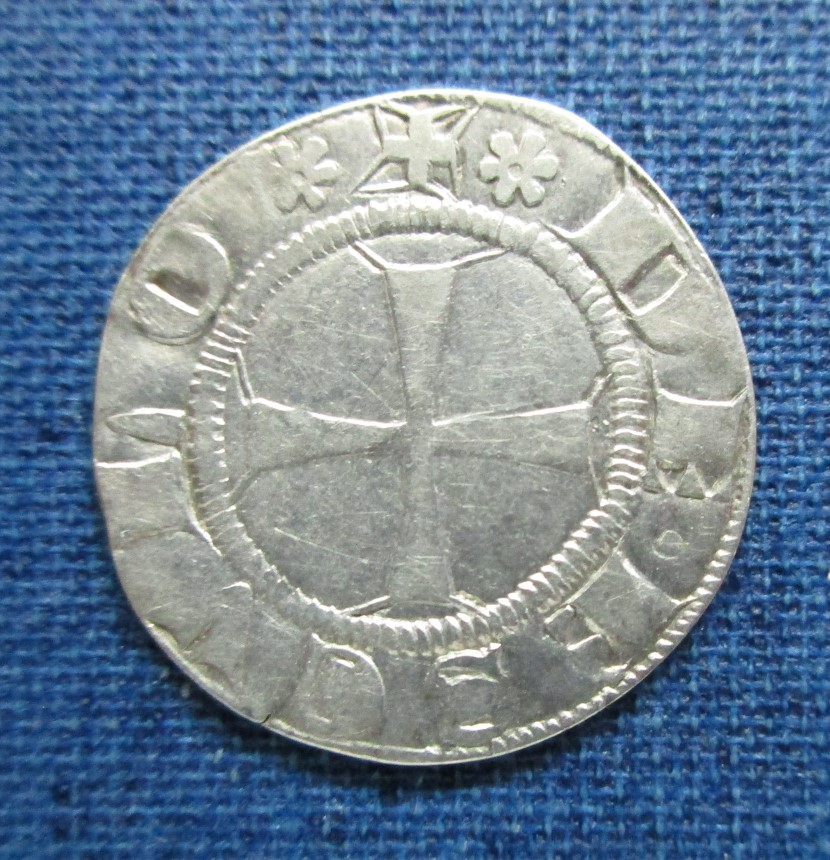 As mentioned upthread, Genoa did not hew to the grosso designs of Venice, Milan, Florence, or Ancona, which featured a patron saint. Instead, they used a representation of a city gate on the obverse and a cross on the other, as well as the name of King Conrad III who granted minting rights to Genoa in 1138 (this part of the design would be "frozen" for four centuries!). This design was first struck on the small silver denaro around 1139, then on small "grosso minore" (valued at less than a soldo) from 1200-1300 (as well as on Genoese gold). Day et al. in MEC 12 point out that this coin matched the size (1.4 gr.) of a half dirham. A larger grosso of about 1.7 grams with the same design as these previous types was introduced around 1217. I don't have one, but for educational purposes: 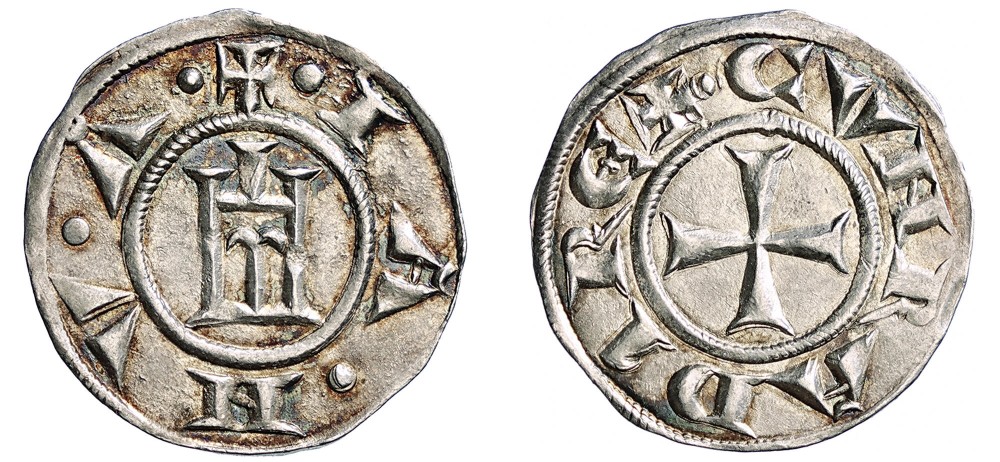 Copyright Numismatica Varesi In a re-design around 1305, the simple inner circle on each side is replaced by a tressure, but otherwise the main devices (gate / cross) remain the same. 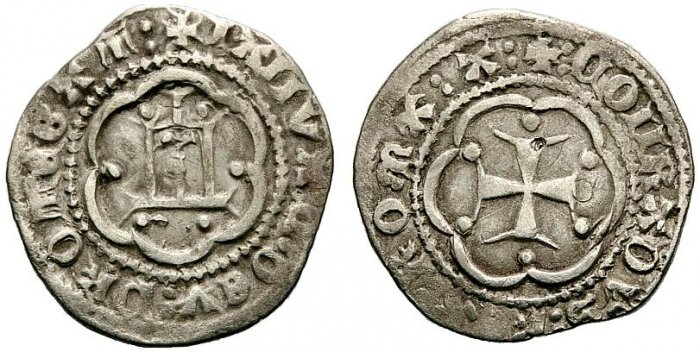 Copyright Numismatica Ranieri Edited by tdziemia
12/14/2025 5:11 pm
|
|
Moderator
 United States
196881 Posts |
Amazing!  |
|
Pillar of the Community
United States
8063 Posts |
I realize it's turned into a monolog, but since we've got " Educational Italian Grosso Thread" in the title, I figured giving the broadest possible treatment to the subject might make it a place where other (future?) members can find info if they need it. Verona is possibly the least known of northern Italy's major medieval mints to modern collectors, because its numismatic independence ended with its brief rule by Milan (1387-1402) followed by its total absorption into the Venetian State a few years later. But two centuries earlier, they were a major monetary center. They, too, succumbed to the need for a larger silver coin by more-or-less scaling up their denaro design (as Genoa did) to a 1.7 gram grosso of fine silver pegged at 20 denari in the 1230s: https://en.numista.com/347383.However, around 1259 a new development in this part of Europe overtook any importance that might have been attributed to the Veronese grosso. To the north, Counts Meinhard II and Albert II of Tyrol began forcing silver traders who passed south through the Alps to convert a portion of their silver bullion into a new silver coin struck in Meran, the grosso aquilino of 1.6 grams and about 5/6 pure, valued at 20 denari like the Verona grosso (hence, also called a "zwainziger"). According to Day. et al. in MEC 12, though this action was undertaken as part of a struggle for power against the Bishops of Trento (Trent), the collateral damage was the Verona mint. Hoard statistics show the Veronese grosso vanishing and being replaced by the aquilino. Always the practical ones in economic matters, the northeastern Italian mints (Verona, Vicenza, Treviso, Padua, Mantua among others) adopted a "if you can't beat 'em, join 'em" strategy, and from around 1300 struck their own copies of the aquilino design. The Tyrol prototype struck by Meinhard II and Albert II 1259-1271: 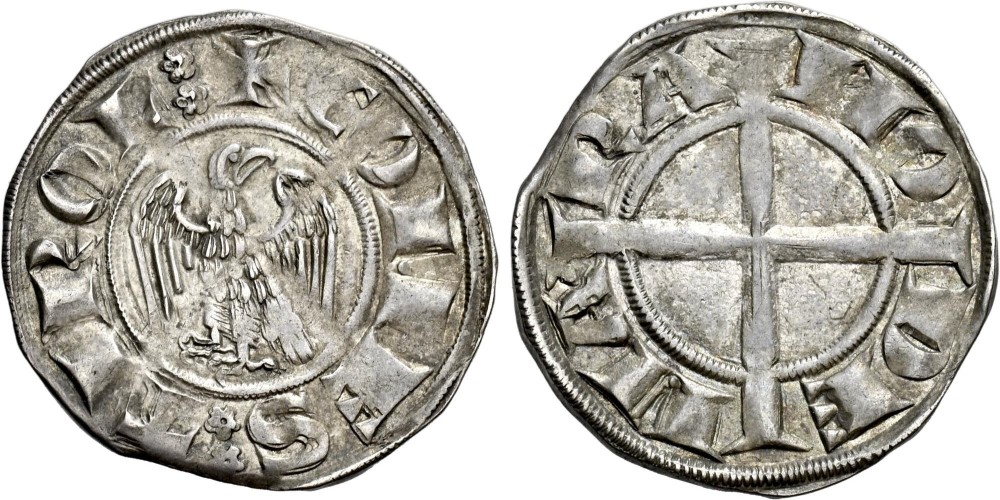 Copyright Numismatica Ars Classica A Padua imitator, c. 1320s: 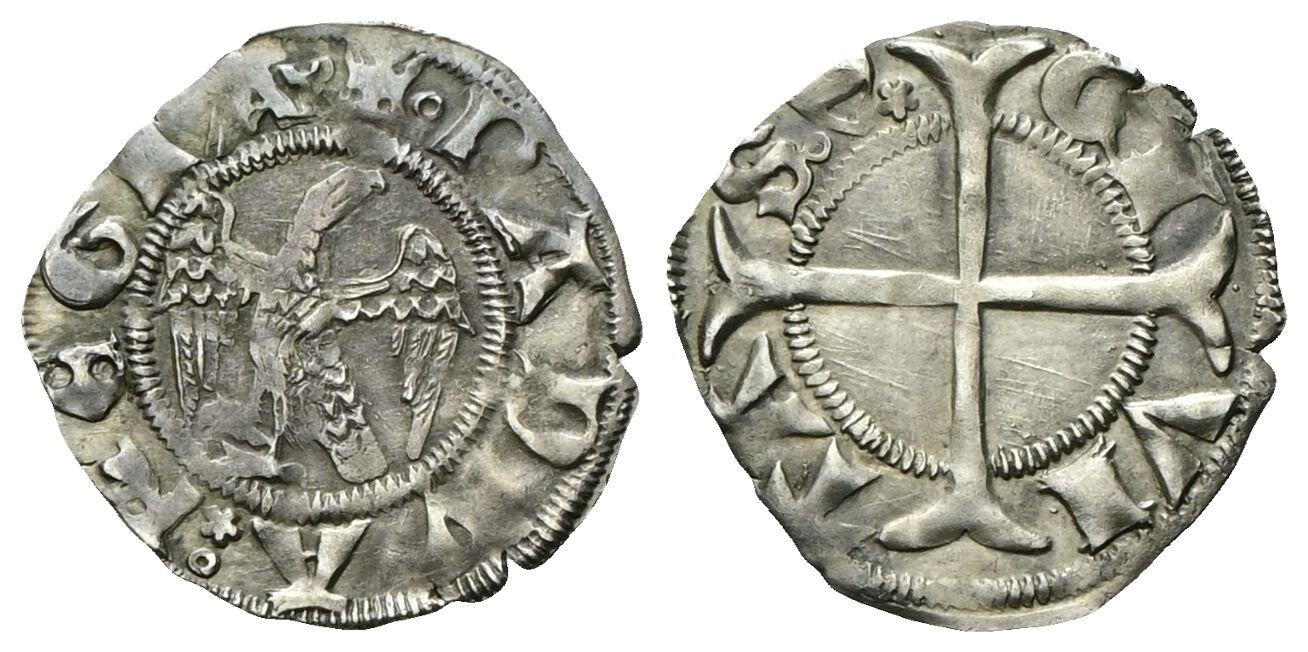 Copyright Numismatica Ranieri Edited by tdziemia
12/15/2025 10:20 am
|
|
Moderator
United States
196881 Posts |
Quote:
I realize it's turned into a monolog, but since we've got "Educational Italian Grosso Thread" in the title, I figured giving the broadest possible treatment to the subject might make it a place where other (future?) members can find info if they need it... Good idea and nice examples! |
|
Pillar of the Community
United States
8063 Posts |
At this point we've covered these main styles and places for the medieval Italian grosso*, based on characteristics like (a) innovation, (b) staying power, or (c) broad distribution: 1. Venice (c.1194-1471). Initially valued around 24 denari (2 soldi). Saint Mark & Doge / Christ. Inspired by Byzantine aspron trachy design 2. Milan (c. 1254-1468). Initially valued at 18 denari terzoli, some examples rising to 5 soldi by 15th c. Saint Ambrose / Cross or heraldry. 3. Florence (1296 - 1531). Initially valued at 2 soldi (24 denari), rising to as many as 7 soldi by 1500. Lily / Saint John the Baptist 4. Grosso Agontano (c.1280-1400). Struck in communes/republics of Marche, Emilia-Romagna and eastern Tuscany. Patron saint / cross. 5. Grosso Aquilino (1319- c.1400). Imitation of the Tyrol adlergroschen/zwainziger. Initially valued at 20 denari. Eagle / cross. * for purposes of this discussion, a coin valued at over 12 local denari. There were other "grossos" that were multiples of the denaro, but of lower value. That doesn't mean there aren't more interesting grosso types to talk about! The city of Lucca already had a mint in Roman times, and continued to be one of the most important mints on the Italian peninsula in the Carolingian and Kingdom of Italy eras. In the first decade or two of the 1200s, Lucca struck it first coin larger than a denaro, with an innovative design that combined the face of their famous holy relic, the Volto Santo one side, and an Ottonian monogram reminiscent of the Genoese gate, with an "immobilized" ruler's name (OTTO) on the other side (also a la Genoa). The first grosso sized coin with this design, valued at 2 soldi (24 denari) was struck a few decades later, around 1270: 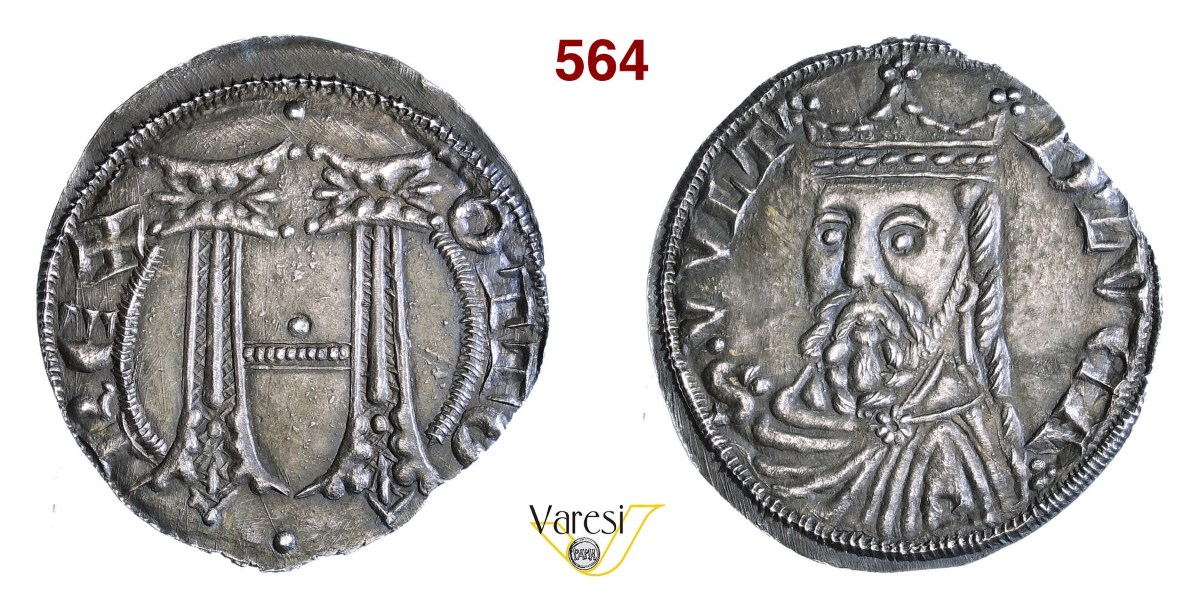 (NOT my coin, though this type is on my want list) Edited by tdziemia
12/18/2025 10:29 am
|
|
Moderator
United States
196881 Posts |
Very interesting! |
|
Pillar of the Community
United States
8063 Posts |
I forgot to mention ... the use of the "Volto Santo" on one side of the Lucca grosso would persist for 500 years! (though the monogram design on the other side would be gone by 1400). No ... we're still not done with all the individualistic expressions of the medieval grosso (no wonder newtraffic2 and I enjoy it so much!)... Pisa was a nearby medieval rival of Lucca, and moved in lockstep with other Tuscan mints in the introduction of larger silver coins in the 13th century. Around 1220 they introduced a grosso of 12 denari (like Florence and Lucca), then in 1269 a large grosso of 2 soldi with a new design featuring an imperial eagle on one side and a madonna on the other: 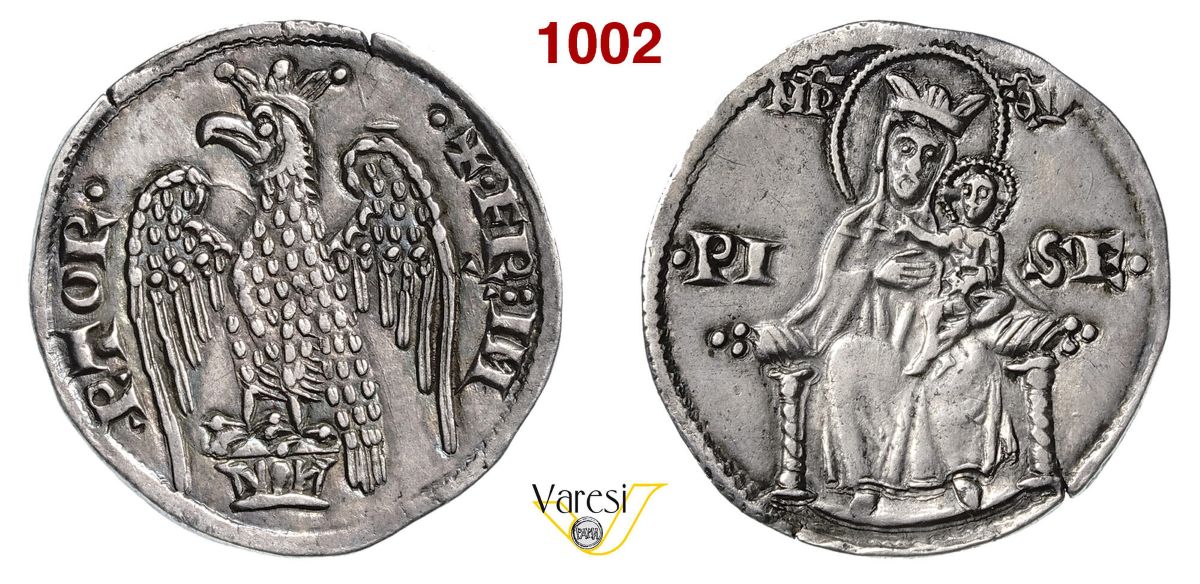 Copyright Numismatica Varesi The eagle with FR IMPTOR honored Frederick I who had granted Pisa broad mercantile freedoms in the 1160s (just as Genoa's and Lucca's coins paid homage to Conrad III, and Otto IV respectively for centuries after their deaths). A version of that eagle had appeared on the famous Sicilian Augustalis Frederick II struck from 1231 https://en.numista.com/141302 ... and on the Tyrol adlergroschen (struck from 1259) posted upthread. Not clear which one (if either) was the inspiration, but either way it was a symbol of Pisa's enduring allegiance to the HRE in the guelph-ghibbeline squabbles that pitted the Italian city-states against each other in late medieval times. The madonna (and especially the Greek legend at the top) is inspired by Byzantine coins. Edited by tdziemia
12/21/2025 1:14 pm
|
|
Pillar of the Community
United States
8063 Posts |
Meanwhile, far to the south ... The ambitious and ruthless Charles I of Anjou (youngest son of Louis VIII of France), already also Count of Provence, secured a seat on the Roman Senate (1263), and the title King of Sicily (1266) following a power struggle on the death of Frederick II Hohenstaufen. It was the beginning of nearly 2 centuries of French rule in the south of Italy. In a 1278 monetary reform, Charles closed the established mints at Brindisi and Messina, and consolidated their activities in Naples. At the same time he launched a series of new coins, incuding the silver carlino of 3.34 grams and 0.929 fine valued at a half gold tari (this was one of the few parts of western Europe that never embraced the penny-shilling-pound system as best I can tell). Yet another innovative design, it featured Charles' coat of arms and titles obverse, and a scene of the Annunciation reverse (kinda timely for Christmas  ). Today the coin is more commonly called a saluto d'argento. For me, the most remarkable 13th century silver coin of Italy for its reverse imagery. Here is a saluto d'argento struck by his successor, Charles II 1285-1302 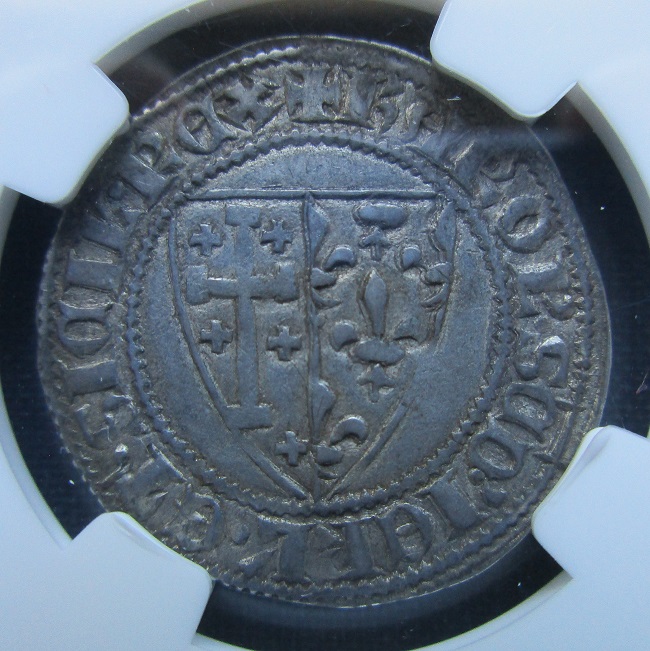 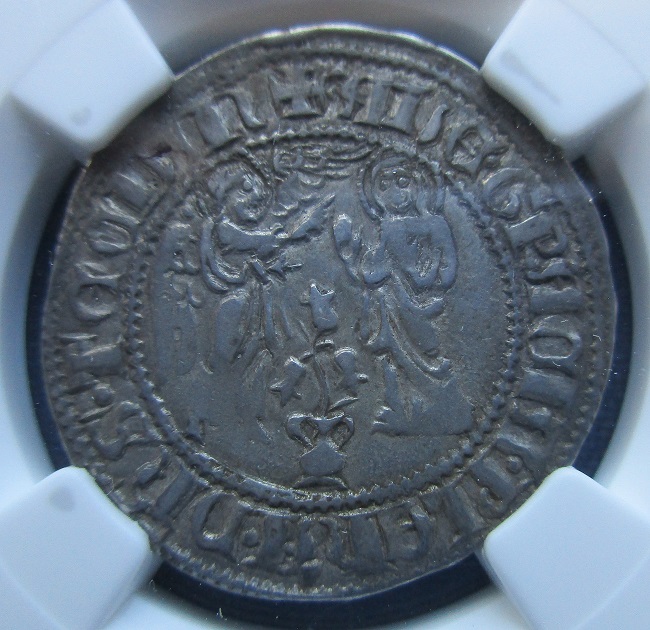 Edited by tdziemia
12/23/2025 08:03 am
|
|
Moderator
United States
196881 Posts |
Very nice! |
|
Valued Member
United States
227 Posts |
If I had more time, I'd get into medieval Italian coins.
Fantastic thread, everyone :)
|
|
Pillar of the Community
United States
8063 Posts |
In addition to the coins and their designs, there are some interesting patterns I'm not sure I can explain (more reading would help).
The most enduring designs are those of Venice (always St. Mark and the doge on one side, Christ on the other) and Genoa (always the gateway and a cross). Florence is next closest with the lily and St. John, though the representation of John changes several times on the grosso (standing > seated > standing) unlike on the florin.
Some of the things those places had in commmon:
- they were long-lived Republics (rather than autocracies)
- their economies were dependent on international trade (I think especially for Venice and Genoa, maybe a bit less for Florence?)
The most obvious connection would be something like trustworthiness of the currency = consistency of design. But maybe that's too simple.
Edited by tdziemia
12/25/2025 07:52 am
|
|
Pillar of the Community
Portugal
740 Posts |
Italian cities pioneered the good silver coins, the grosso was their influential innovation in the catholic west. But not the gold issues.
The return to gold of western catholic kingdoms started in the frontier where gold from muslim controlled Africa was available in quantity. The king of Leon, Ferdinand II, was the first monarch to issue a gold coin that was not just an imitation of those of the islamic states. It was based on the weight standard of the debased dinar of the late Almoravids and first taifa kingdoms but it depicted the king and had no arabic legends.
The counts of Barcelona, who were not kings, had preceded him in coining gold coins for the Mediterranean trade. Barcelona was for a short time relevant in Mediterranean trade and banking. Before Genoa took over the position. Ramon Berenguer gained large parias in gold from the almoravid taifas and struck large numbers of coins under his own name. But those looked similar to the almoravid coinage. Like later the Almohad dirhams were copied in Barcelona and other cities. I call those imitation coinage.
In Italy Frederick II also beat Genoa to gold coinage with his augustale in 1229.
|
|
Pillar of the Community
United States
8063 Posts |
Quote:
In Italy Frederick II also beat Genoa to gold coinage with his augustale in 1229. Yes, also in Sicily there was a large (c. 2.5 gr.) silver coin earlier than the Venetian grosso: the ducalis of Roger II struck from 1140 which is remarkably similar to the Venetian grosso (both having taken their inspiration from Byzantine types): 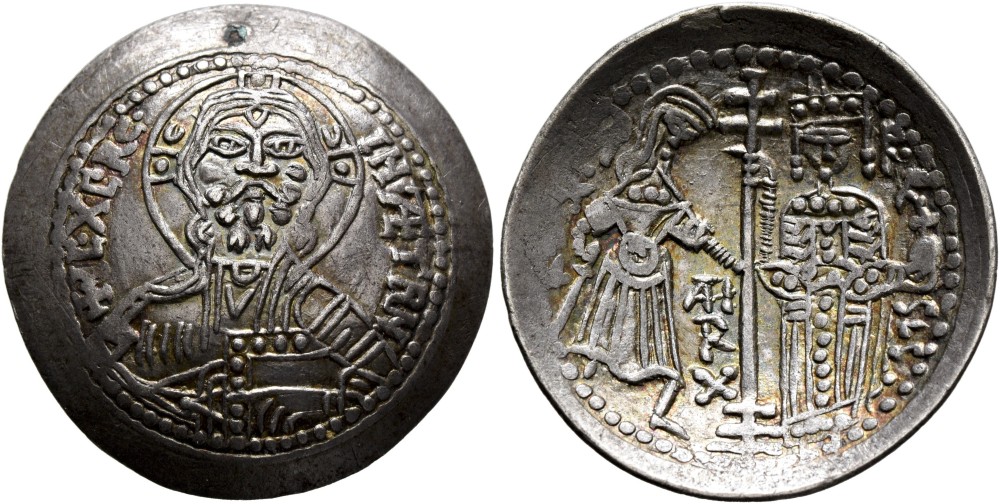 Copyright Leu Numismatik Both the ducalis and augustale tend to be ignored a bit in the history of European numismatics, I think because they did not exist within the "penny- shilling-pound" system of Western Europe but were tied to the units of account in the Islamic currency system ( the ducalis was estimated to have been pegged at 1/3 of a Sicilian tari; the augustale at 7.5 taris, or close to the gold Byzantine solidus ). Maybe more importantly, neither of them endured after their initial issue. And thanks for the comments on gold in Spain. I need to learn more! Edited by tdziemia
12/25/2025 2:47 pm
|
|
Pillar of the Community
Portugal
740 Posts |
Nice. That is a bowl shaped coin inspired on the byzantine ones?
It would be natural for Sicily to be influenced by the Fatimid coinage because it was held by them for a century and was in the middle of the north-south and east-west Mediterranean trade routes. I am not much into medieval numismatics because there are so many coins. Learning is intimidating. And Italy with all ins statelets has endless varieties. Makes it very interesting but it also scares beginners
But it is historically rewarding to learn the details. If it takes a lifetime. The the southern shore of the Mediterranean has another series of kingdoms and empires that soon broke with the middle east caliphate and its coinage standards. For the Almohads we know their reasoning for changing the weights. For others not so much. They may be very old echoes. Some weight systems used in the Iberian Peninsula until the nineteenth century matched the old Assyrian system exactly. Other regions used multiples of the Babylonian system. Coincidence or influence? It was not just the phoenicians who traveled and influenced standards across the Mediterranean in antiquity. Numismatics, the weight standards of coinage, could give some clues about those ancient influences.
|
|
Pillar of the Community
United States
5029 Posts |
great information and some beautiful examples.
|
| |
Replies: 66 / Views: 4,730 |




 First Page
 Previous Page


 Posted 12/14/2025 12:35 pm





