| Author |
 Replies: 18 / Views: 4,362 Replies: 18 / Views: 4,362 |
Page 2 of 2
|
|
|
|
Valued Member
Australia
370 Posts |
I think all the confusion comes from people wanting to change things. 30 or 40 years ago it was almost unc,extremely fine, and brilliant uncirculated. Now it seems to be about unc, extra fine and choice uncirculated. Us old fogies will stick to the terms we were brought up with. But it's personal preference and either way is correct. All part of this fascinating hobby.
|
|
Bedrock of the Community
 Canada
10743 Posts |
Quote:
All part of this fascinating hobby.  ..  |
|
Pillar of the Community
1119 Posts |
i took it to be a variance in grade between the 2 sides, a gvf I take to be in good in the obverse and vf on the reverse, but maybe that should be g.vf, to distinguish between the 2 sides?
|
|
Pillar of the Community
Australia
4411 Posts |
I doubt you would ever get a coin with such a large discrepancy between sides. The difference between G and VF are huge even between G and F. That amount of difference would almost certainly have been caused by artificial wear. Where I have seen split grades such as the reverse aUNC and obverse UNC I have seen them in the format of aUNC/UNC or aUNC-UNC.
|
|
Moderator
 Australia
17025 Posts |
Quote:
i took it to be a variance in grade between the 2 sides, a gvf I take to be in good in the obverse and vf on the reverse, but maybe that should be g.vf, to distinguish between the 2 sides? Here's where Capital Letters come in handy: "good Very Fine", that is, better than VF but not as good as EF, is written "gVF". Good/Very Fine, where one side is Good and the other is Very Fine, would be written G/VF. Quote:
I doubt you would ever get a coin with such a large discrepancy between sides. The difference between G and VF are huge even between G and F. That amount of difference would almost certainly have been caused by artificial wear. Yes, I wouldn't have said it were possible to get a G/VF coin under normal circumstances. It could be caused by adverse storage or environmental conditions, where one side was exposed to something nasty (such as a fire) with the other side protected. Don't say "infinitely" when you mean "very"; otherwise, you'll have no word left when you want to talk about something really infinite. - C. S. Lewis
|
|
Bedrock of the Community
Australia
21794 Posts |
I notice that if American coins have different grades obverse / reverse, that the lower graded side is that adopted for the coin.
Australian practice is to grade each side, IF there is a difference in grade, and describe the coin grade wise, as such.
Foe example, a coin could be graded 'VF / gVF', which means the obverse grades Very Fine, and the reverse grades good Very fine.
|
|
Valued Member
Australia
428 Posts |
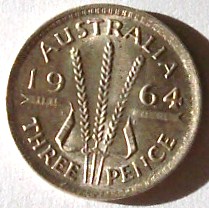
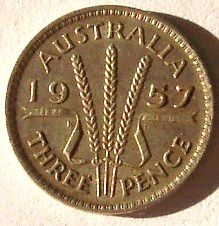
is this one worthy of a grading please .. ,, kel ,, 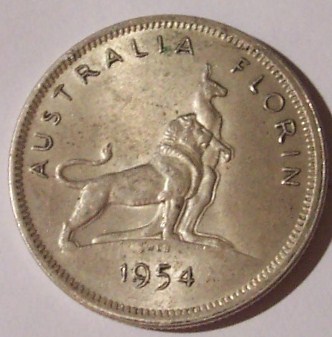 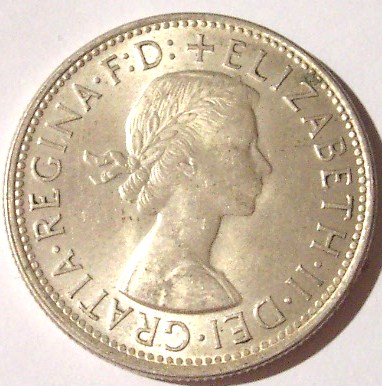 |
|
Valued Member
Australia
428 Posts |
also ,would it be ok to use a little bit of acetone to clean it up a bit or better to leave it alone .. ,, kel ,,
|
|
Valued Member
Australia
428 Posts |
|
|
Valued Member
Australia
428 Posts |
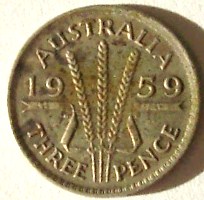
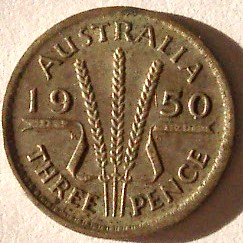
these 2 are the follow up of the one above .. ,, kel ,, 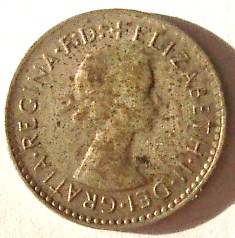 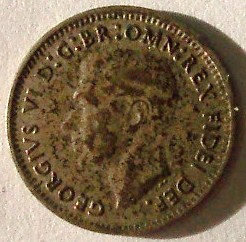 |
|
Pillar of the Community
Australia
4411 Posts |
For grading do you mean sending to PCGS or NGC?
Acetone will not have any negative effects on the coins. As long as you dont rub the acetone, just bathe the coins in it then it should be fine. Its not considered a form of inproper cleaning.
Your 54 florin looks nice but they are very common grades similar to what you have.
|
|
Valued Member
Australia
428 Posts |
yea matt , not for big dollars or caseing just for mucking around with them and see what happens , I have never used ACETONE before and I just would like to try it , I bought a bottle of it at the chemist today ... ,, kel ,,
|
|
Valued Member
Australia
428 Posts |
question , when I put them in it , how long do I leave them in it and when I get them out , what do I do with them ? do I just wash with water or do I use a cloth of some thing and whipe them dry ..? ,, kel ,,
|
|
Pillar of the Community
Australia
4411 Posts |
You can leave them in as long as you want, until you see results, if any I suppose. I do not rinse with water because it is nasty for coins and sort of defeats the purpose of the acetone. I also dont use a cloth to dry them. Acetone is very easily evaporated and if left out should be completely dry in less than 60 seconds.
|
|
Moderator
Australia
17025 Posts |
The problem with acetone is that it does dry quick. If the acetone has pulled anything off the coin (or pulled any oils off your fingers), whatever it pulled off will be left behind on the coin after the acetone dries. So after an acetone bath, rinse them either in fresh acetone or distilled/deionized water - not tap water. Fresh acetone is preferred, but expensive. If you use water, you'll need to dry the coins in as gentle-yet-thorough a manner as possible. When I wash coins in water, I usually put them on tissue paper and place them in a very cool oven (60 deg C or so) to dry for a half-hour.
Don't say "infinitely" when you mean "very"; otherwise, you'll have no word left when you want to talk about something really infinite. - C. S. Lewis
|
|
Page 2 of 2
|
Replies: 18 / Views: 4,362 |
Page 2 of 2
|




 First Page

 Posted 12/14/2012 4:42 pm