| Author |
 Replies: 63 / Views: 9,020 Replies: 63 / Views: 9,020 |
|
|
|
|
Pillar of the Community
United States
1314 Posts |
I'm a bit curious about this topic, and due to time constraints, haven't been able to participate.
But I would like to know if this topic has a thread at VAMworld, or any where else. Guilty of lurking, but hope to add a bit in time. Thanks.
|
|
Valued Member
 United States
332 Posts |
|
|
Pillar of the Community
743 Posts |
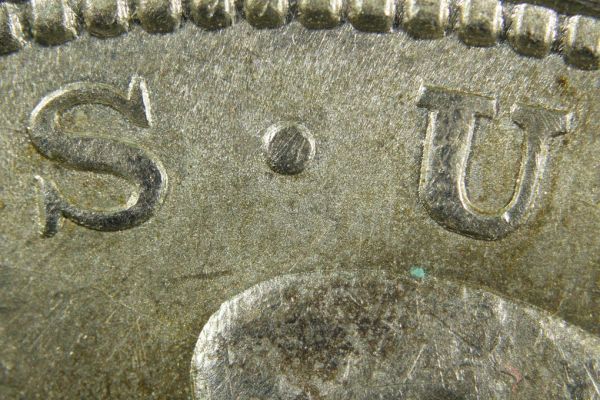
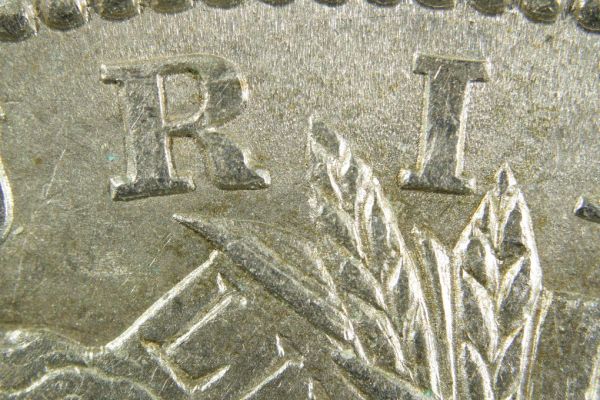
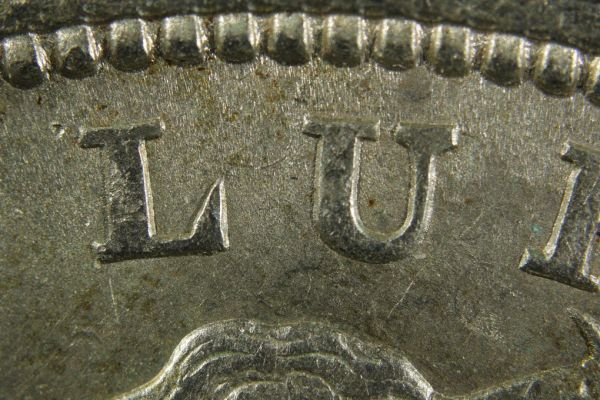
Is there doubling on the bottom of S in PLURIBUS?
|
|
Pillar of the Community
743 Posts |
I might be onto something with the doubling of the S. Please check and see if there is any other doubling and see if it might be an earlier die state of VAM 61 http://www.vamworld.com/1921-P+VAM-61 I don't think the die cracks are exactly right but they are really close. Edited by 7TF
01/23/2014 02:31 am
|
|
Valued Member
Canada
129 Posts |
|
|
Valued Member
United States
332 Posts |
7TF, that one is close but the crack on my S is lower.
Edited by amnight
01/23/2014 10:40 am
|
|
Moderator
 United States
23522 Posts |
|
|
Pillar of the Community
United States
1314 Posts |
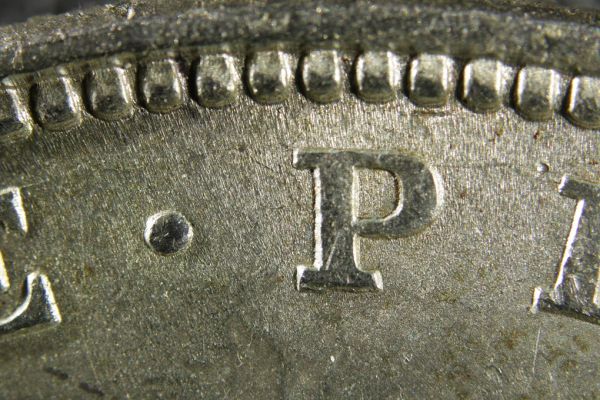
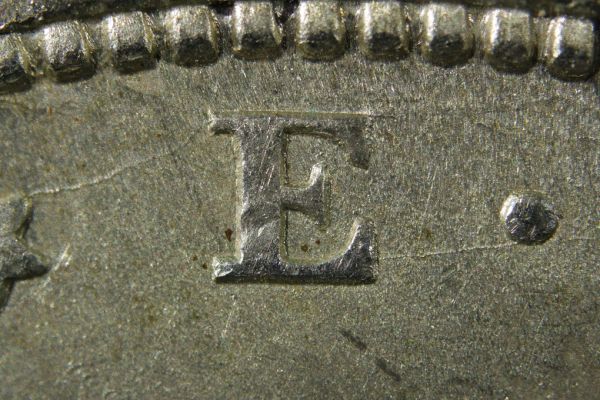
Casual observations... I pulled all 20 1921 P coins from my bullion hoard. Only one VAM attributed. And made a cursory statistical observation. Four coins were 16 berry reverses with no dot on the top berry. Sixteen were 17 berry reverses. One, inconclusive due to wear and wire whizzing, but the other 15 had the distinctive "berry dot." Hub supportive. Some had similar berry dots on the left side of the wreath. At least one had 3 berry dots. So... Amnight, I don't know what VAM you have. That is an entirely different, and equally valid question. But I am curious about the berry dot question you have raised. I question the hardness test theory. I have a very limited experience with hardness testing, and would appreciate input from others. But my limited experience with the Brinell system for hardness testing of hardened steels does not support this theory. First, the impact tool is diamond tipped, not round. The results are easier to measure. Second, the steel is tested on flat surfaces, not curved. The results are easier to measure. Third, it is usually done in the same place each time to eliminate variables. Hardness tests are not meant to be hidden, their priority is to be informative. Putting them inside berries might be counter productive. With a 1902-O example, I would consider the berry dots as a mechanical process. And for lack of a better idea, maybe they were punched into the dies to refresh worn berries. Just thoughts thrown out for others to improve upon. |
|
Moderator
United States
23522 Posts |
We've pretty much discounted the "hardness test" theory, and Leroy has opined that they're not really worth a bunch of work as an explanation is probably not forthcoming. That's why we call him "wise."  It's essentially just something I can't let go of. Knowing now that they're not limited to 1921's - although the 1921 dots on fields have additional interest - they're all the more fascinating. I was looking at 1921 scribbles and musing about them months before they became any kind of known issue, and I regret not making my thoughts public sooner as it would have gotten the ball rolling all the more quickly. Those are still a fascination to me as well. These dots have become a similar goal. I'm moving to Philadelphia in a couple of months. The National Archives there house all Mint records, and I intend to hit that place like a runaway train. If there's any data regarding either scribbles or dots in that place, I'll find it. |
|
Pillar of the Community
743 Posts |
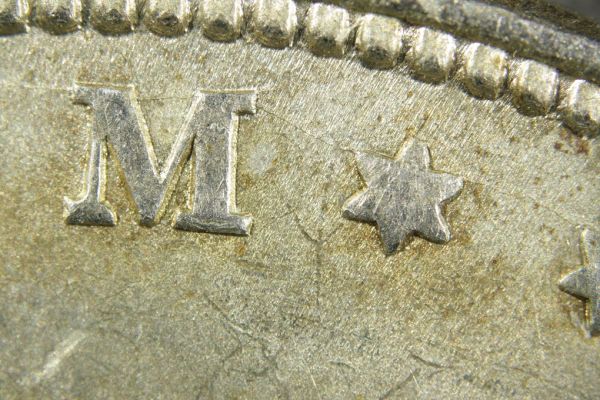
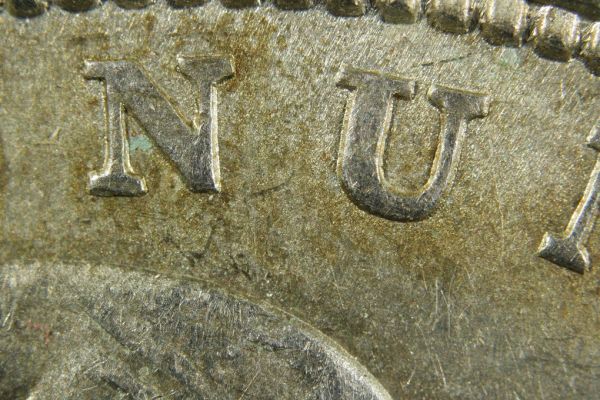
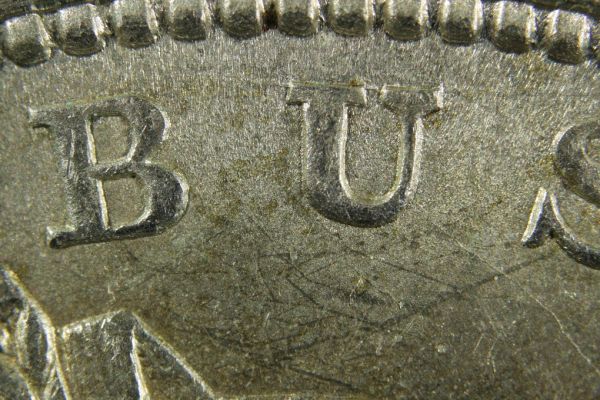
It sure looks like the Motto is doubled. What else stands out? I am bored tonight and have nothing better to do but help others attribute their VAMs.
Kris
Edited by 7TF
01/25/2014 01:33 am
|
|
Valued Member
United States
332 Posts |
|
|
Moderator
United States
23522 Posts |
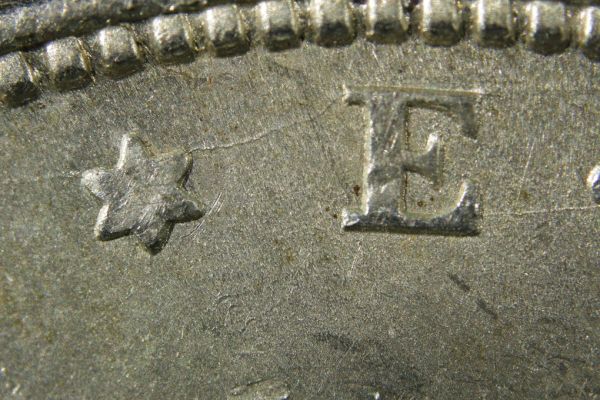
Amnight, the highest-magnification images in that set really should have been stacked - I was losing sufficient depth of field to show the whole detail at that magnification - but that would have added exponentially to the time involved. There just wasn't enough time. So I attempted to strike a compromise with the focal points to at least suggest relevant detail.
Even so, yours is about as completely-imaged as any Morgan ever has been. Doesn't do a whole lot of good as a standalone coin, but this is the direction it has to go and as more and more individual VAMs are imaged in such detail it will become more useful.
|
|
Pillar of the Community
743 Posts |
Another possibility is that it is just the VAM 1 unless you find something to match up with another VAM that is what I would call it.Your best bet at IDing it will be with the scribbling die scratches on the reverse and even if it is one of those listings I don't think they really add any value. My suggestion is to just put it away with a VAM 1? label on it. You can always come back to it later on again. I would move onto another Morgan or Peace dollar to attribute (Pre 1921 is all I really mess with unless I see major gouges, clashes, die breaks etc.. on a 1921.) I should not have lead you to believe it is a new VAM because for it to be a cataloged VAM there has to be something on the coin that is unique to the set of dies that made it. Kris |
|
Valued Member
United States
332 Posts |
It's not your fault 7TF. It is my ignorance in posting that. I will put it away like you said and see if anything ever pops up. Also, thank you for the help in trying to ID the coin. |
|
Pillar of the Community
743 Posts |
Your post on VAMworld is fine and I understand why you were wondering but there are many other years with VAMs still waiting to be discovered. Even if it is a new 1921, it would probably be considered a scribbling die scratch variety and there are very few people that even collect or care about them, so it would not be the best first VAM, something like a die break or clashed letter would be more cool of a first. It is really just too hard to tell if it is a new one without a lot of studying by someone who really knows them. Just a warning about VAMworld though, they might get on you about pictures being oversized. The scribbling scratches photo would be the most important one to many of those that look for a match. Most of the guys there could probably attibute it with one of the regular obv. & rev. pictures plus the close up of the scribbling scratches. Some people have really slow computers and the more pictures the longer it takes to load a page and many will back out before seeing your post. In 1921 they used what seems like thousands of different die pairs in different combinations to make the coins. It was the biggest production year for Morgan dollars ever. The key to identifying them seems to be in the scribbling scratches unless something else pops out, like a die break, doubled die, die gouge, etc.. 1921 is a very difficult year to attribute without some serious knowledge. If you really want to know the VAM # Messydesk over on VAMworld has a business called VARslab and he will attribute any Morgan or Peace dollar for $6 plus postage. It may be worth sending to him along with any other coins you can't figure out later down the road, to save on shipping. The slab won't add to the value of the coin but it might help you understand how to attribute them better by seeing what he comes up with. Have fun hunting for your next coin. Keep an eye out for die gouges, letter clashes, die breaks, doubling, etc.. Look at some 1878-P coins to really have some fun. Kris |
|
|
Replies: 63 / Views: 9,020 |
|







 First Page
 Previous Page

 Posted 01/22/2014 12:30 pm