| Author |
 Replies: 19 / Views: 17,198 Replies: 19 / Views: 17,198 |
Page 2 of 2
|
|
|
|
Pillar of the Community
United States
2764 Posts |
Gary talk about "reprocessed coins" - how does that work and what will that do to the collect-ability values of the coin? How do you distinguish the two? Which would value more?
I went to a coins show yesterday and one seller tried to sell me a 43 pennies and said that it's "original, not reprocessed"; however, I saw there are some reddish at the inner edge of the rim....
Thanks.
|
|
Bedrock of the Community
United States
17884 Posts |
The white "residue" is zinc oxide where the zinc corroded to keep the steel from corroding. About the best you can do for those coins might be a drop of fine machine oil. It sholud make the zinc oxide less noticeable and the oil will helpto protect the metal from further corrosion.
|
|
Member
United States
3242 Posts |
Transmission fluid works on steel coin
|
|
Pillar of the Community
United States
1952 Posts |
a repossessed coin will always look like a double die when it is actually just the plating. if you don't see what looks like a double die look at it under your loupe. it will look bumpy. a nice ms coin will be smooth a plated will look bumpy
Gary
|
|
Valued Member
United States
144 Posts |
I've got a steel cent that I think was reprocessed. It's shiny, no scratches or lines, but the details are smoothed over (kind of like the 65, 66 SMS cents, but thicker looking).
My guess is that it was actually re-plated with a new thin layer of zinc. I would be easy to do.
|
|
Valued Member
United States
346 Posts |
If you want to have some fun (you can also use this method for other
steel with rust) instead of using rust removal chemicals that are
dangerous and fumey etc. use an electrolytic rust remover. You can make one yourself at no cost and it works great. I do a little gun smithing work on the side and found this to work great on even small
parts. Works real fast and is safe if you follow the correct directions correctly. I will not post the items or directions as the method involves the use of electricity. You should have the knowledge
to apply this method safely. Of course you should always be supervised
by an experienced adult if you try this method.
|
|
Bedrock of the Community
United States
20753 Posts |
As noted the greyish stuff is Zinc Oxide. The intent was back then, in 1943, was to Zinc coat the cents to stop the steel, not iron, from rusting. Iron is pure Iron and these cents were made of steel. Steel is in reality a mixture of metals, not a compound. This also means that unless the mixture process is not done well the composition can vary meaning some will rust more than others. Regardless, although Stainless steel was known at the time, it was just not economical to use this so they just coated the steel with Zinc. Zinc,like Aluminum and some other metals, when Oxydized holds the Oxide to the metal to a fairly good degree. Entire Buildings in Chicago were constructed with Steel like this and the steel is on the outside of the structures and still looks like the day the built them. This means that the greyish coating on your coins is ment to be there and removing it would start the process of Oxydation all over again plus since the layer of Zinc is minor, you may end up exposing the Steel to Oxygen which will form the reddish material called Iron Oxide. Also, pending on the amount of Iron present in the Steel and the amount of Oxygen present, there are two different forulae for the end results.
In summation of this boring thread I would suggest you do nothing to any of the coins that only show greyish discolorations. If I were you I would sort these out and put them in plastic type rolls.
The ones with actual RUST has already lost much of the protective Zinc, so as some have noted the best thing now is a little Oil. Any type at all will suffice. WD-40 would clean them up a little and leave a coating to some degree. You must remember there is not a really big value on most of the 43 Steel Cents since many were made, no one is interested in them, most look like yours and some still turn up in change.
|
|
Valued Member
United States
314 Posts |
I found an away to clean the rust and junk from those penny's. Its makes them look real nice afterwards. Dont do this to the nice coins or bu coins.
1. Go to Home depot and buy Muriatic acid . Its pool cleaner or concrete cleaner. Don't smell the fumes it will burn you lungs. Its strong stuff that cleans the oil from drive aways and stuff.
2. Poor some in small container and use pliers to dip the coins for less than minute each or until clean. Rinse the coins with water afterwards real good.
3. When completed the coins look like dull grey not like brand new. The only way to make them look new is to re zinc them again. It does make them decent to install them in books becides heavy rusted or junk looking Penny's. I don't do it to those toned or decent looking old steels.
|
|
Valued Member
United States
314 Posts |
I forgot add an warning label to my post .
Always wear Safety Glasses to cover your eyes and use Rubber gloves using this acid I am talking about. Its bad stuff for sure and will burn you if you get on your skin. If under 18 get your parents to help you dip the pennys in acid like I am talking about. The more the acid is diluted with water the stuff is safer for sure.
This acid will not eat plastic since you need an plastic containtor to put acid in an containor. Dont use an metal containor it will ruin it. I use spray paint containor tops to dip my pennys. Reason it has an small insert in there. If spilled it will stay inside the plastic containor.
Just be safe with stuff for sure.
Regards Chevrolet454ss
|
|
Bedrock of the Community
United States
62064 Posts |
The acid mention seem to harsh for coins. The thought makes me shudder.
|
|
Bedrock of the Community
United States
17884 Posts |
Muratic acid is very powerful stuff and fairly concentrated. It is not something to play around with quote:
The more the acid is diluted with water the stuff is safer for sure.
If you do experiment with muratic acid and you want to dilute it always remember this safety rule. Always add acid to water, Never add water to acid. The reason is adding water and acid often releases heat and can cause the mixture to pop and "spit" giving off a shower of droplets. If you add acid to water the droplets will be mostly water, but if you add water to acid the droplets will be concentrated acid. |
|
Bedrock of the Community
United States
12437 Posts |
Muriatic acid also goes by the proper chemical name of HYDROCHLORIC ACID- for your own personal safety, do not use this on any coins!! It is a very nasty mineral acid that will leave serious burns if misused- this is some of the worst advice I have ever seen  |
|
Valued Member
 United States
65 Posts |
So I've made up groups of coins and am trying a variety of things to clean this group of badly damaged coins.
The results so far;
Soaked in warm soapy water - This didn't seem to do any good.
Soaked in acetone - This didn't do much of anything one way or another.
Soaked in olive oil. - The coins are still soaking. No obvious difference yet.
Ultrasonic cleaning - Believe it or not, this has made a huge improvement in the coins appearance. The ultrasonic waves (tiny bubbles) removed most (if not all) of the "zinc dust" and even some of the underlying rust. The problem is that it took thirty minutes to clean 15 pennies! I don't think I have the patientce to do the few hundred I now have.
|
|
Pillar of the Community
United States
4870 Posts |
I recommend leaving the coins as they are. Just say no to cleaning.
|
|
Valued Member
United States
144 Posts |
Here's is what hydrochloric acid does to zinc. This is a modern cent, with two small spots filed off to expose the zinc. 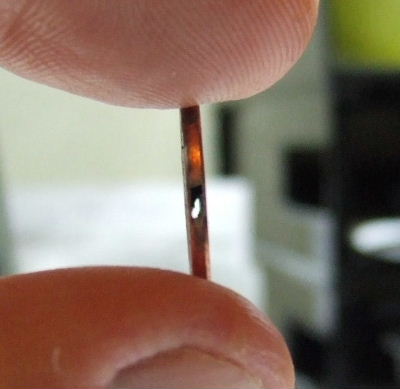 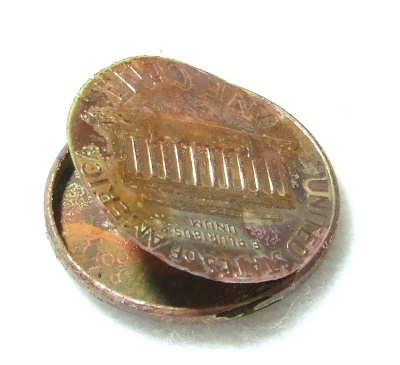 |
|
Page 2 of 2
|
Replies: 19 / Views: 17,198 |
Page 2 of 2
|








 First Page


 Posted 11/14/2007 10:30 pm


