







 First Page


 Posted 05/17/2015 02:47 am


TJsCoins The math is simple. Specific Gravity is the weight of the coin expressed in grams divided by the volume of the coin expressed in cubic centimeters.
The volume of the coin in cubic centimeters is equal to the buoyancy of the coin suspended in water. Any object suspended in water is acted upon by a force (buoyancy) that is equal to the volume of water the object displaces. Fresh water weighs exactly 1 gram per cubic centimeter. So the volume of the object equals the loss of weight.
The weight of the coin in air minus the weight of the coin suspended in water is the the volume of the coin. Divide the weight of the coin in air by the loss of weight (buoyancy) and you have the SG.
That is IT as far as the mathematics goes.
The scale however needs to be accurate. This is where you need to follow the rules of science and mathematics. The bare minimum accuracy needed to classify a forgery requires a density reading that is accurate to ONE DECIMAL POINT. To determine SG expressed to 0.1 you need a scale that accurately weighs to 1/100th of a gram. Most inexpensive digital scales (under $500.00 or so) are NOT accurate enough to produce any more than that. The cheaper ones are actually only good for +/- 0.5g. A shift of 0.1 in SG equates to about 6% in silver content. An SG of 10.0 is just about 720 fine so any SG below 10.0 is a Class 1 Counterfeit by definition.
10.2 is 840 fine and 10.1 is 780 fine. So a reading over 10.1 falls into Class 2. An SG of 10.3 is either genuine or Class 2. Some of these will be identifiable as Class 2 by an XRF test that finds too little trace gold contamination.
wonghinghi The production dates for Class 2 coins are generally between 1830 and 1930, however, the ability of UK authorities to make a Class 2 coin start as early as about 1796. They could use the dies intended for Sheffield Plate coins (the 1796 War effort) to make silver counterfeits. The profit margin in 1796 is low but adequate at 4% but by 1811 it sat at a profitable 10% and it rose steadily after that to 26%. When did some enterprising merchants decide they needed a few extra pennies on the dollar?
One factor I used to establish the date of 1830 was the start of the period of time when electrodeposition transfer images first came into use. It is not a hard and fast date - it is just an estimate of when the production of exact copies started in large numbers. There are some coins made from casting individual details and using those letter by letter casts to create counterfeit die making tools. The coin I used on the covers of my book is one of a number of Sheffield Plate Class 1 counterfeits that fall into this close to correct group. A similar coin struck in good silver and worn to VF would be difficult to identify other than production errors like an incorrect edge.
I still think it is probably a Class 2 coin.
The volume of the coin in cubic centimeters is equal to the buoyancy of the coin suspended in water. Any object suspended in water is acted upon by a force (buoyancy) that is equal to the volume of water the object displaces. Fresh water weighs exactly 1 gram per cubic centimeter. So the volume of the object equals the loss of weight.
The weight of the coin in air minus the weight of the coin suspended in water is the the volume of the coin. Divide the weight of the coin in air by the loss of weight (buoyancy) and you have the SG.
That is IT as far as the mathematics goes.
The scale however needs to be accurate. This is where you need to follow the rules of science and mathematics. The bare minimum accuracy needed to classify a forgery requires a density reading that is accurate to ONE DECIMAL POINT. To determine SG expressed to 0.1 you need a scale that accurately weighs to 1/100th of a gram. Most inexpensive digital scales (under $500.00 or so) are NOT accurate enough to produce any more than that. The cheaper ones are actually only good for +/- 0.5g. A shift of 0.1 in SG equates to about 6% in silver content. An SG of 10.0 is just about 720 fine so any SG below 10.0 is a Class 1 Counterfeit by definition.
10.2 is 840 fine and 10.1 is 780 fine. So a reading over 10.1 falls into Class 2. An SG of 10.3 is either genuine or Class 2. Some of these will be identifiable as Class 2 by an XRF test that finds too little trace gold contamination.
wonghinghi The production dates for Class 2 coins are generally between 1830 and 1930, however, the ability of UK authorities to make a Class 2 coin start as early as about 1796. They could use the dies intended for Sheffield Plate coins (the 1796 War effort) to make silver counterfeits. The profit margin in 1796 is low but adequate at 4% but by 1811 it sat at a profitable 10% and it rose steadily after that to 26%. When did some enterprising merchants decide they needed a few extra pennies on the dollar?
One factor I used to establish the date of 1830 was the start of the period of time when electrodeposition transfer images first came into use. It is not a hard and fast date - it is just an estimate of when the production of exact copies started in large numbers. There are some coins made from casting individual details and using those letter by letter casts to create counterfeit die making tools. The coin I used on the covers of my book is one of a number of Sheffield Plate Class 1 counterfeits that fall into this close to correct group. A similar coin struck in good silver and worn to VF would be difficult to identify other than production errors like an incorrect edge.
I still think it is probably a Class 2 coin.

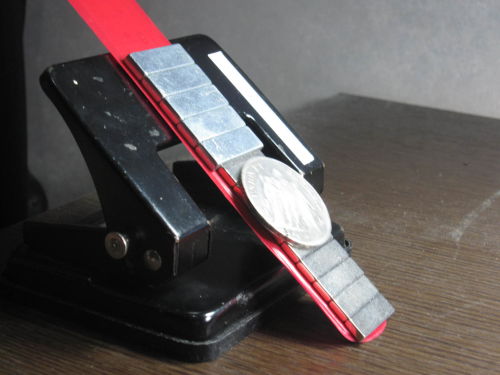

 The shop was busy and was not charging me for testing so I did not ask. I think they would have tested for more trace elements but I did not know what else to ask for (I should have asked about gold)...anyhow I think this result makes it a Class 2, yes?


