| Author |
 Replies: 18 / Views: 3,953 Replies: 18 / Views: 3,953 |
Page 2 of 2
|
|
|
|
New Member
 United States
8 Posts |
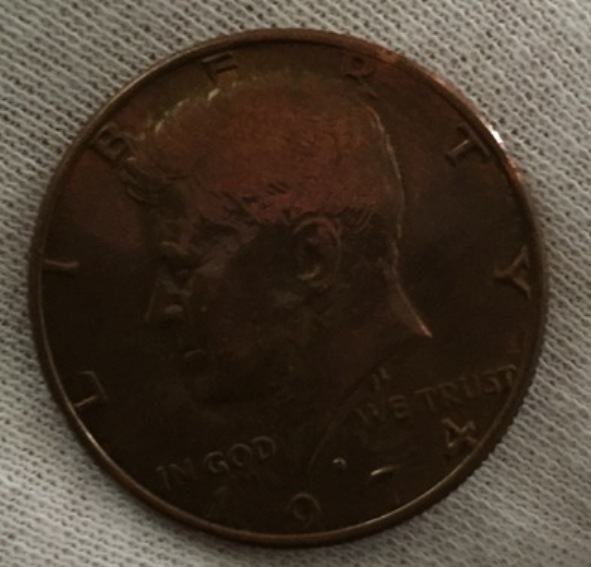
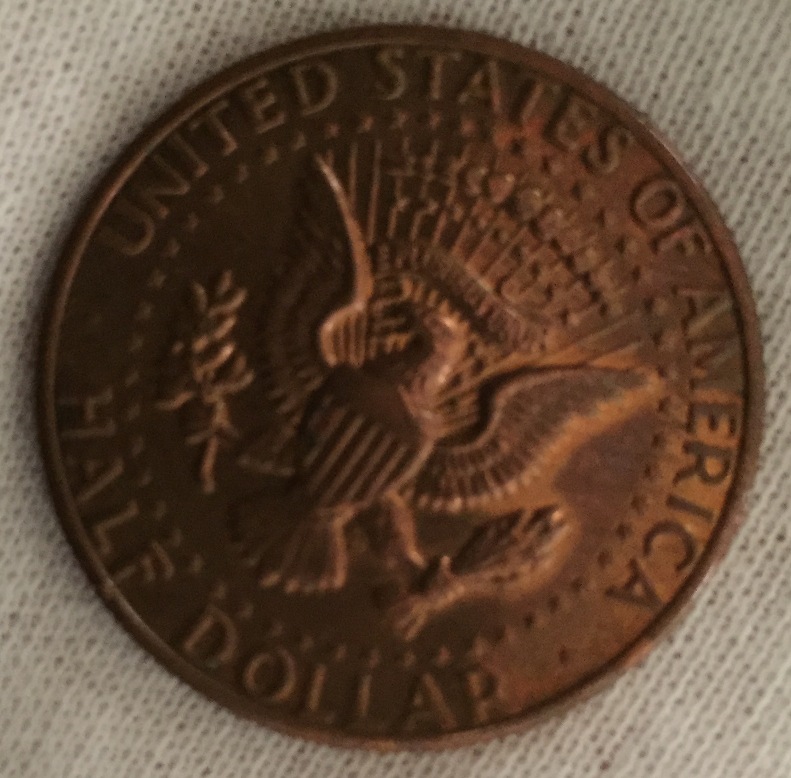
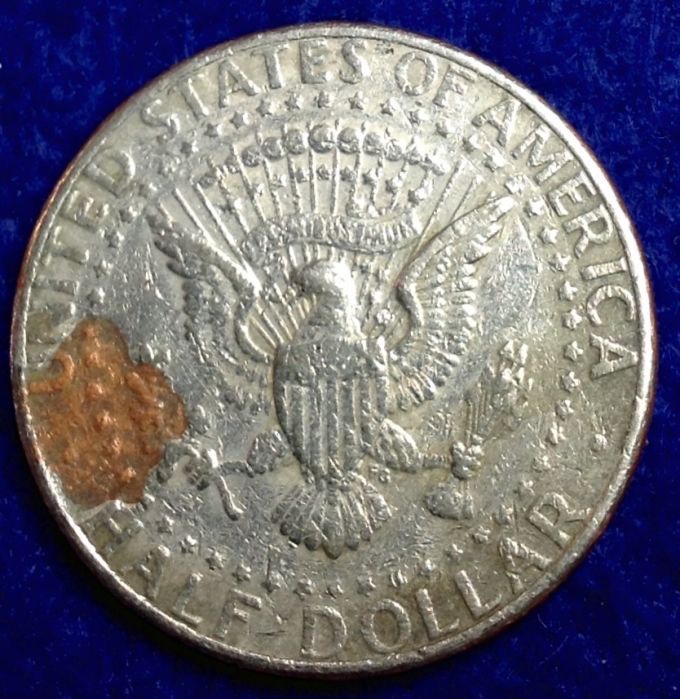
Over here on the Dark Side, which works better, a scan or a photo? The above pictures are 600dpi scans, as stamp photos really are not of much use when checking fine details.
|
|
Pillar of the Community
United States
4897 Posts |
 Quote:
I need one for some of the colonial-era items yes, please....  |
|
Bedrock of the Community
United States
62064 Posts |
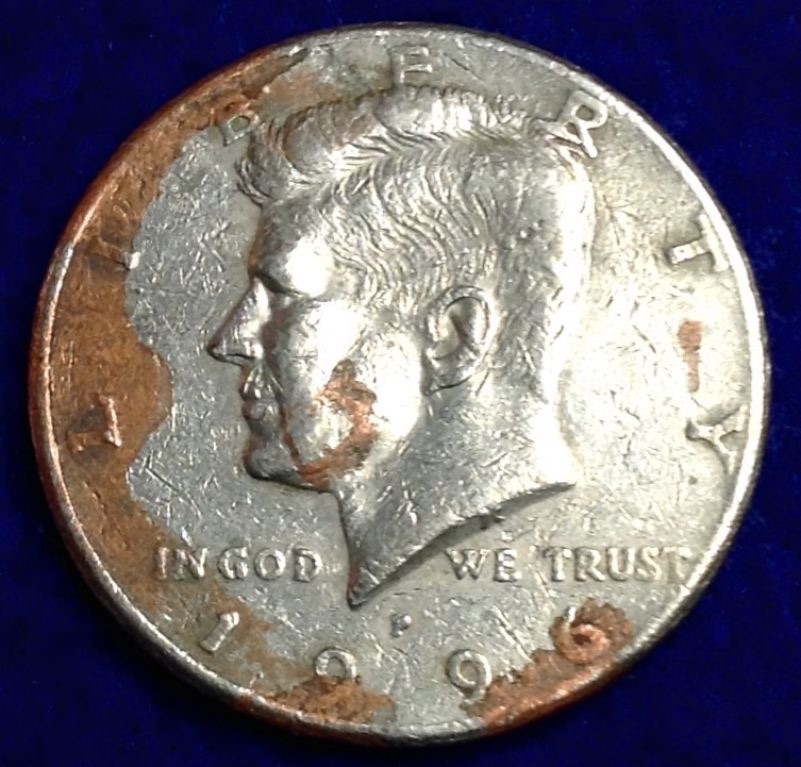
In the image it looks like either light or silver showing on some devices? Any evidence of silver at all on your coin? I notice also that there is an all over weakness on the coin on the high spots. So I was wondering if the cladding was removed or just weakness of the strike because of the lack of cladding. Here are a couple images of a partial cladding and part of what fell/partially removed after the strike: 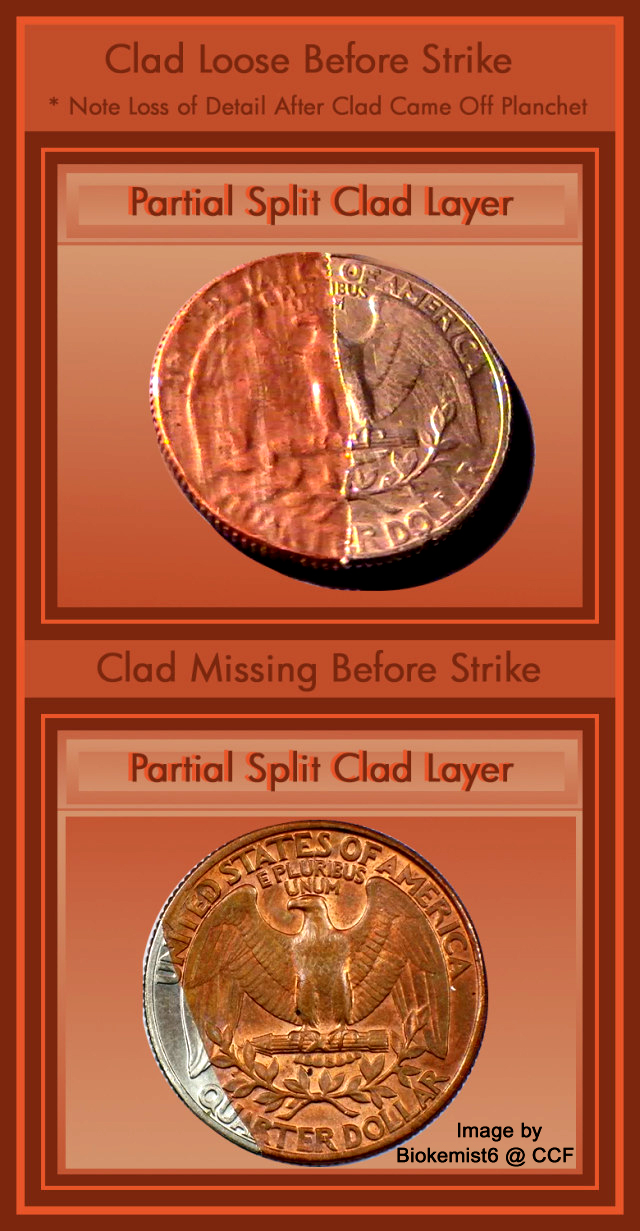 Yours doesn't look as weak as the split off after the strike. But yet not as strong as the missing cladding before the strike. I have an image of acid dipped cents, but there is also one that had the cladding removed possibly by acid at the bottom of it. 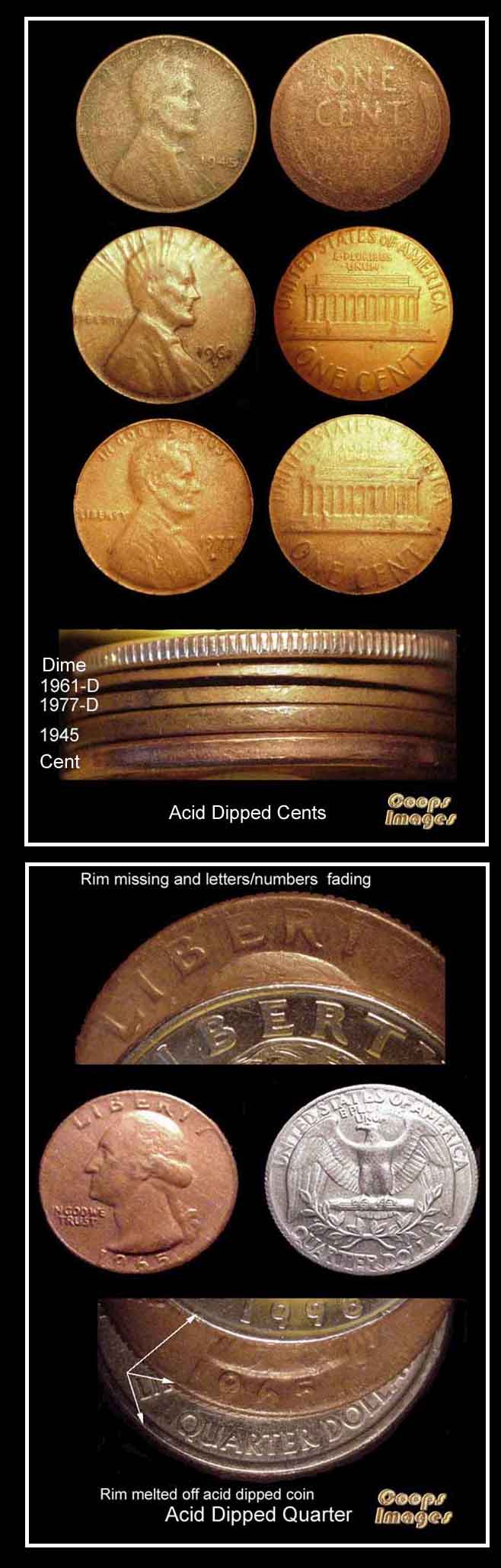 So I'm wondering if your coin was dipped in acid and it removed the cladding. (most acids remove the copper more than the cladding, but I'm not familiar with what acid that might be) But notice the weakness on the obverse of the quarter in the lower part of that image. |
|
New Member
United States
8 Posts |
This coin weighs in at 11.5g
|
|
New Member
United States
8 Posts |
|
|
New Member
United States
8 Posts |
It doe not appear to be a case of a clad lost after the strike. There is too much detail as compared to examples on this forum and elsewhere.
Looking forward to hearing opinions on the acid-dip possibility. I don't know enough to tell if the weight is off and certainly no idea as to what telltale signs I should look for. The fine details in Kennedy's hair and the eagle's feathers are clear to the eye. I was unable to see any trace of non-brown coloring under my 30x loupe.
|
|
Valued Member
United States
214 Posts |
Weight should be 11.34 grams. There is some variation allowed but if the outer layers were stripped off, it should be less.
|
|
Valued Member
United States
214 Posts |
My guess would be copper plating, but the only test I know for that is the scratch test.
|
|
Bedrock of the Community
United States
62064 Posts |
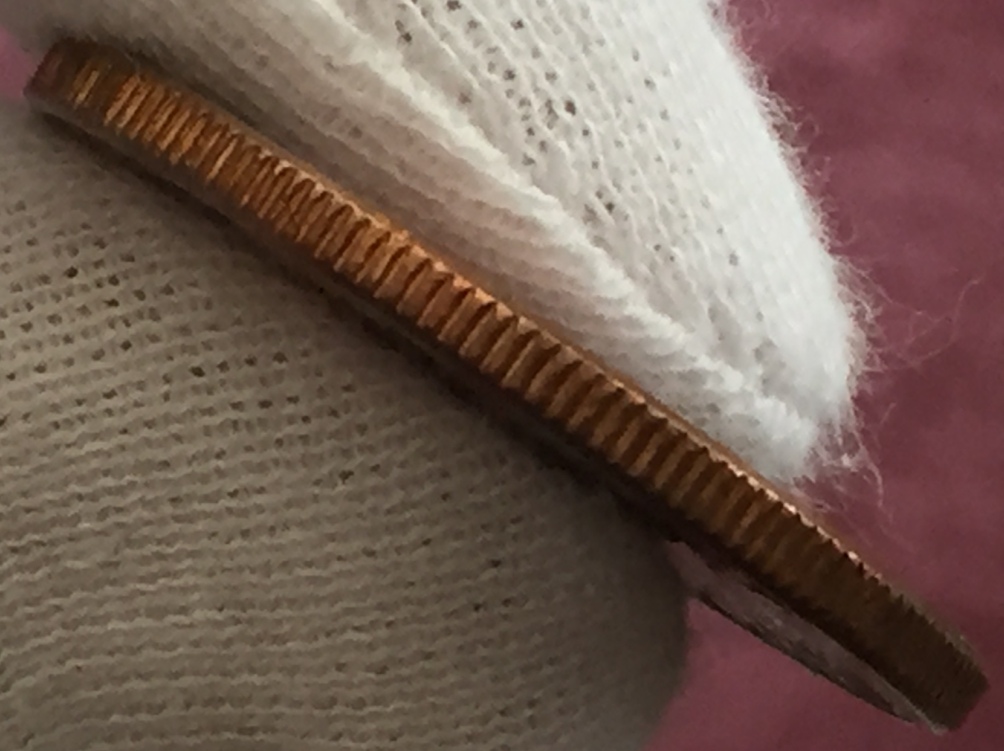
You could make a scratch in the reeding to see if it has been plated without ruining the surface of the coin. The line should show the silver/copper/silver color there. 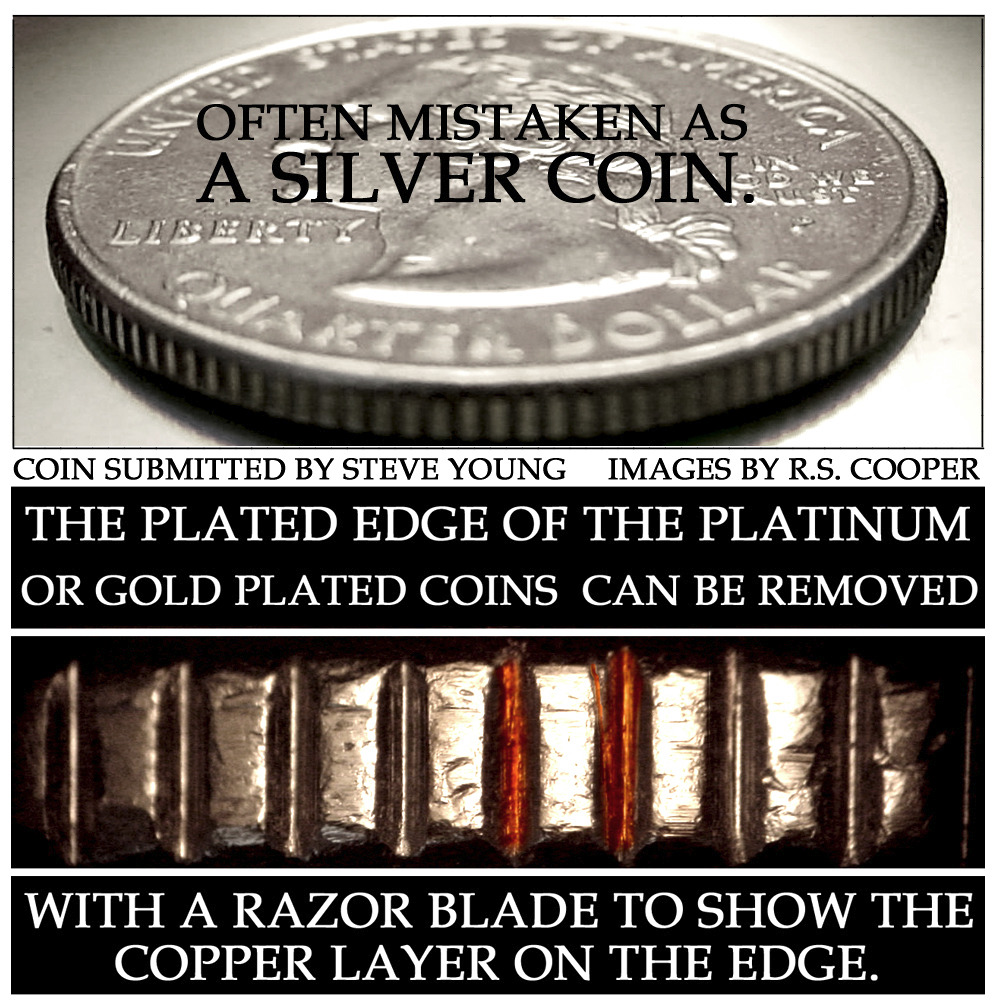 |
|
Pillar of the Community
United States
2752 Posts |
The two most likely possibilities are an improperly annealed planchet or a normal half dollar that was plated with copper outside the Mint. An off-metal counterfeit is also a possibility.
Error coin writer and researcher.
|
|
New Member
United States
8 Posts |
I will give the reeding a scratch test when I get home tonight. I did check the calibration of my scale and it is spot-on at 100g, 250g and 500g. As this one comes in overweight, I am expecting to see some silver show up. Thanks to all and I will post results tonight (unless stuck in Detroit late...)
|
|
Pillar of the Community
United States
616 Posts |
|
|
Pillar of the Community
Canada
5342 Posts |
Go to a large coin or bullion dealer with an XRF, ask nicely to have it xrayed, you will have your answer.
|
|
Bedrock of the Community
United Kingdom
18965 Posts |
I think this Kennedy half has been buried in the ground and later dug up with a metal detector - cupro-nickel coins usually go this color. I've only once dug a modern US clad coin in the UK - a Roosevelt dime - and it was a similar color to this half. |
|
New Member
United States
8 Posts |
I did not get out of Detroit before rush hour so will post the scratch and other results tomorrow. There is an excellent coin dealer in my area and will see if an xray is possible.
|
|
Page 2 of 2
|
Replies: 18 / Views: 3,953 |
Page 2 of 2
|





 First Page


 Posted 09/14/2015 11:41 am