| Author |
 Replies: 26 / Views: 2,885 Replies: 26 / Views: 2,885 |
Page 2 of 2
|
|
|
|
Bedrock of the Community
Canada
11922 Posts |
I was thinking it might make VG-10.
|
|
Pillar of the Community
United States
3185 Posts |
I think $75 would be too much to pay for this coin.
|
|
Pillar of the Community
United States
6370 Posts |
VG-08 or so. I think the odd color is due to the seller's lighting. Notice how the coin is angled towards the overhead light. In hand, I would expect it to be a very dark brown. I do not think this coin is cleaned.
|
|
Bedrock of the Community
United States
37206 Posts |
|
|
Pillar of the Community
United States
6447 Posts |
VG details seems right. If I wanted this date (and I kinda do, come to think of it!) I would save up to splurge on a higher-grade, problem-free example. The questionable surfaces on this one would always bother me.
|
|
Pillar of the Community
United States
1499 Posts |
VG details, but it has a polished and retoned look to it. For example Ms. Liberty and the fields around her look too smooth. There should be at least some circulation marks in those areas.
Edited by billjones
12/24/2016 2:10 pm
|
|
Bedrock of the Community
United States
11980 Posts |
One weird thing about this coin is that all of the star points closest to the rim are all elongated all the way into the rim. None of the examples I have seen online show that. As a coin exhibits circulation, the stars fade, but the do not change shape uniformly all around the rim. This leads me to think that this coin is either fake, or the metal has been made to move pretty substantially. Neither of these two scenarios bode well for the originality of this coin.  Just my opinion. If real it appears to be the Newcomb-2 variety. 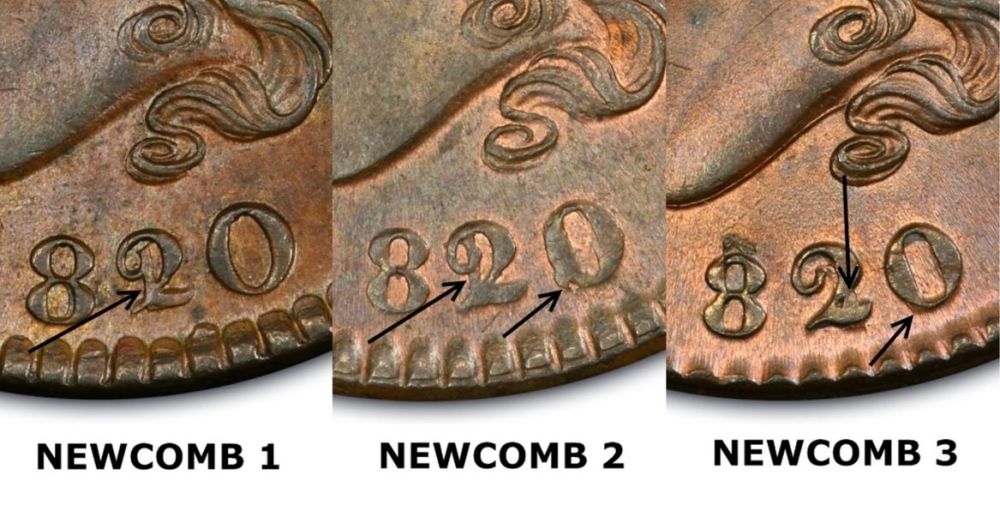 IN NECESSARIIS UNITAS - IN DUBIIS LIBERTAS - IN OMNIBUS CARITAS THE MAN IN THE ARENA, Theodore Roosevelt at the Sorbonne Paris on April 23, 1910: " It is not the critic who counts; not the man who points out how the strong man stumbles or where the doer of deeds could have done better. The credit belongs to the man who is actually in the arena, whose face is marred by dust and sweat and blood, who strives valiantly, who errs and comes up short again and again, because there is no effort without error or shortcoming, but who knows the great enthusiasms, the great devotions, who spends himself in a worthy cause; who, at the best, knows, in the end, the triumph of high achievement, and who, at the worst, if he fails, at least he fails while daring greatly, so that his place shall never be with those cold and timid souls who knew neither victory nor defeat." My coin website: https://fairfaxcoins.comEdited by numismatic student
12/24/2016 3:57 pm
|
|
Bedrock of the Community
United States
11980 Posts |
Wasn't able to find information about star points elongating as a coins collects wear. But I saw an article on grading written by Jason Poe that had these pictures: 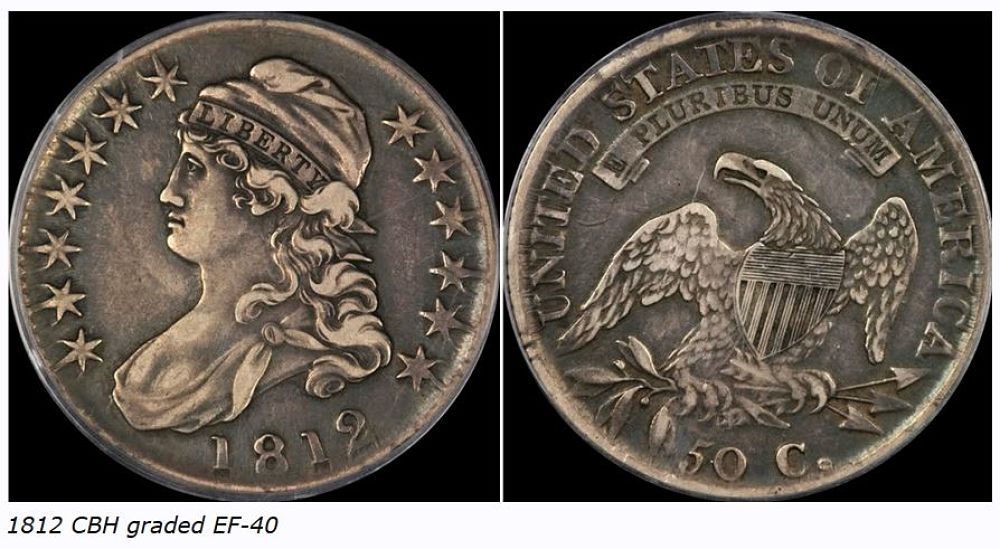 Although he doesn't address it in the article, the 1812 CBH he shows in this picture shows elongated star points all along the rim. And it appears the coin is genuine. As I result, I will take back my assessment of this being a fake coin and go back to "I don't know." I would like to learn about how these star points become so elongated all along the rim, so that they look like they are getting longer with wear. Can't find how this happens in the usual sources. Thanks in advance for any info. IN NECESSARIIS UNITAS - IN DUBIIS LIBERTAS - IN OMNIBUS CARITAS THE MAN IN THE ARENA, Theodore Roosevelt at the Sorbonne Paris on April 23, 1910: " It is not the critic who counts; not the man who points out how the strong man stumbles or where the doer of deeds could have done better. The credit belongs to the man who is actually in the arena, whose face is marred by dust and sweat and blood, who strives valiantly, who errs and comes up short again and again, because there is no effort without error or shortcoming, but who knows the great enthusiasms, the great devotions, who spends himself in a worthy cause; who, at the best, knows, in the end, the triumph of high achievement, and who, at the worst, if he fails, at least he fails while daring greatly, so that his place shall never be with those cold and timid souls who knew neither victory nor defeat." My coin website: https://fairfaxcoins.comEdited by numismatic student
12/24/2016 4:17 pm
|
|
Pillar of the Community
 United States
5720 Posts |
The flow of metal from the stars and letters to the rim indicates a very late die state. I would agree with VG details on the coin.
|
|
Bedrock of the Community
United States
11980 Posts |
Zurie, would you be able to explain how worn late state dies cause elongation of star points toward the rims? On the CBH, even nearby points are shifted toward the rim. It seems unlikely to be from rub because it is uniform across all stars and those star points nearest the rim are protected by the raised rim.
IN NECESSARIIS UNITAS - IN DUBIIS LIBERTAS - IN OMNIBUS CARITAS THE MAN IN THE ARENA, Theodore Roosevelt at the Sorbonne Paris on April 23, 1910: " It is not the critic who counts; not the man who points out how the strong man stumbles or where the doer of deeds could have done better. The credit belongs to the man who is actually in the arena, whose face is marred by dust and sweat and blood, who strives valiantly, who errs and comes up short again and again, because there is no effort without error or shortcoming, but who knows the great enthusiasms, the great devotions, who spends himself in a worthy cause; who, at the best, knows, in the end, the triumph of high achievement, and who, at the worst, if he fails, at least he fails while daring greatly, so that his place shall never be with those cold and timid souls who knew neither victory nor defeat." My coin website: https://fairfaxcoins.comEdited by numismatic student
12/24/2016 5:00 pm
|
|
Pillar of the Community
United States
5720 Posts |
|
|
Bedrock of the Community
United States
11980 Posts |
Thanks Zurie. I read the article and the pictures illustrated beautifully. However I was at a loss as to how the obverse very late state die (VLDS) could fail precisely at all of the stars. Understand that dies were expensive and were used until they were completely unusable, but still hard to understand this precise pattern of die damage. Seems difficult to arrive at randomly without a specific cause.
IN NECESSARIIS UNITAS - IN DUBIIS LIBERTAS - IN OMNIBUS CARITAS THE MAN IN THE ARENA, Theodore Roosevelt at the Sorbonne Paris on April 23, 1910: " It is not the critic who counts; not the man who points out how the strong man stumbles or where the doer of deeds could have done better. The credit belongs to the man who is actually in the arena, whose face is marred by dust and sweat and blood, who strives valiantly, who errs and comes up short again and again, because there is no effort without error or shortcoming, but who knows the great enthusiasms, the great devotions, who spends himself in a worthy cause; who, at the best, knows, in the end, the triumph of high achievement, and who, at the worst, if he fails, at least he fails while daring greatly, so that his place shall never be with those cold and timid souls who knew neither victory nor defeat." My coin website: https://fairfaxcoins.com |
|
Pillar of the Community
United States
5720 Posts |
My understanding is that the pattern of metal flow during the striking of a coin causes more Die Deterioration on the rim side of the devices. Perhaps that's because the flow of metal into the large central portrait causes less pressure and wear on the inside parts of the stars. Anyway, the die wear doesn't look completely symmetric--there is less wear on star 3 than star 7 of the OP's coin. Sorry for digressing from the OP's original question.... |
|
Pillar of the Community
United States
7379 Posts |
Jerry was the only one who addressed the price, and I agree, $75 is too much. I'm thinking half that much, these are fairly common in low grades.
|
|
Bedrock of the Community
United States
18940 Posts |
VG details. cleaned and corroded
|
|
Page 2 of 2
|
Replies: 26 / Views: 2,885 |
Page 2 of 2
|






 First Page

 Posted 12/22/2016 01:04 am





