| Author |
 Replies: 24 / Views: 5,069 Replies: 24 / Views: 5,069 |
Page 2 of 2
|
|
|
|
Pillar of the Community
United States
4883 Posts |
Excellent photographs.
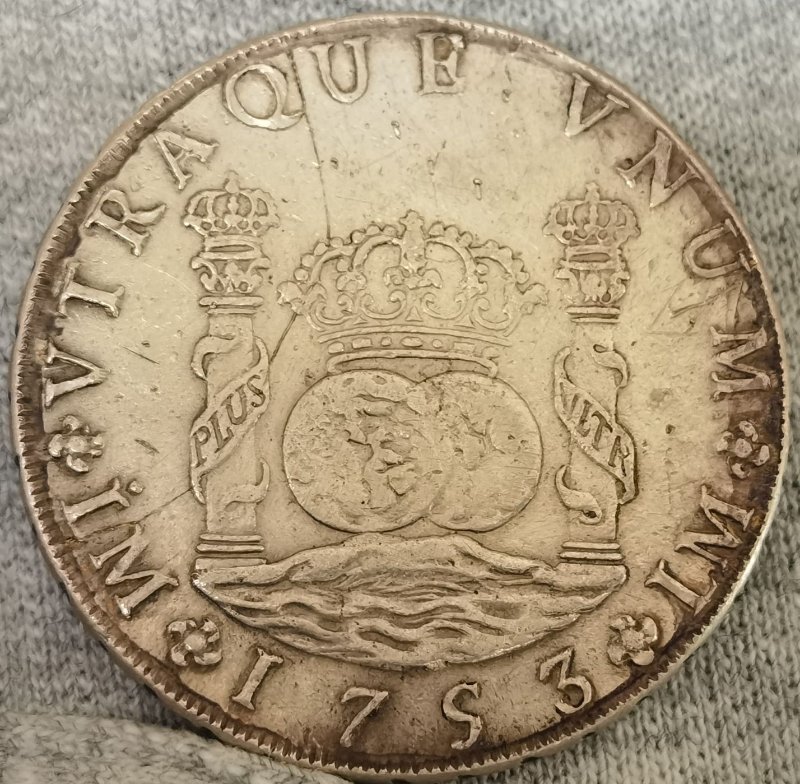
I certainly see details on the reverse that I deem worrisome.
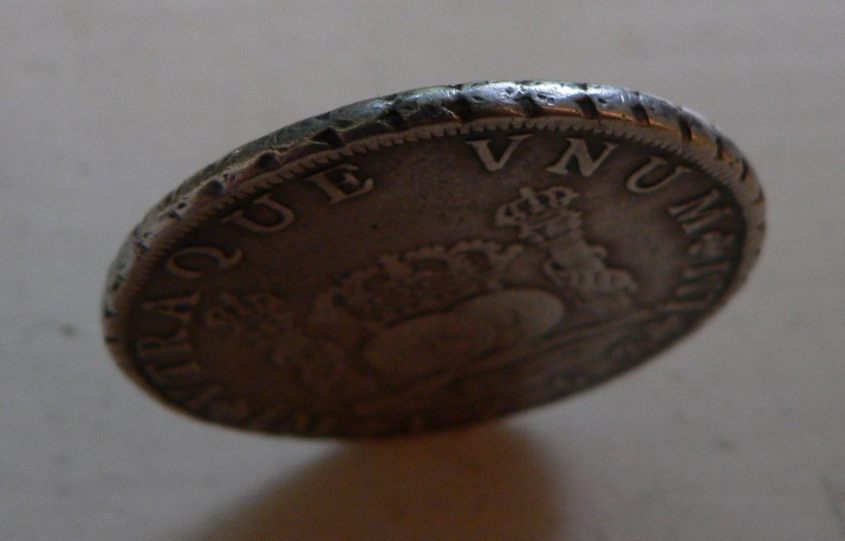
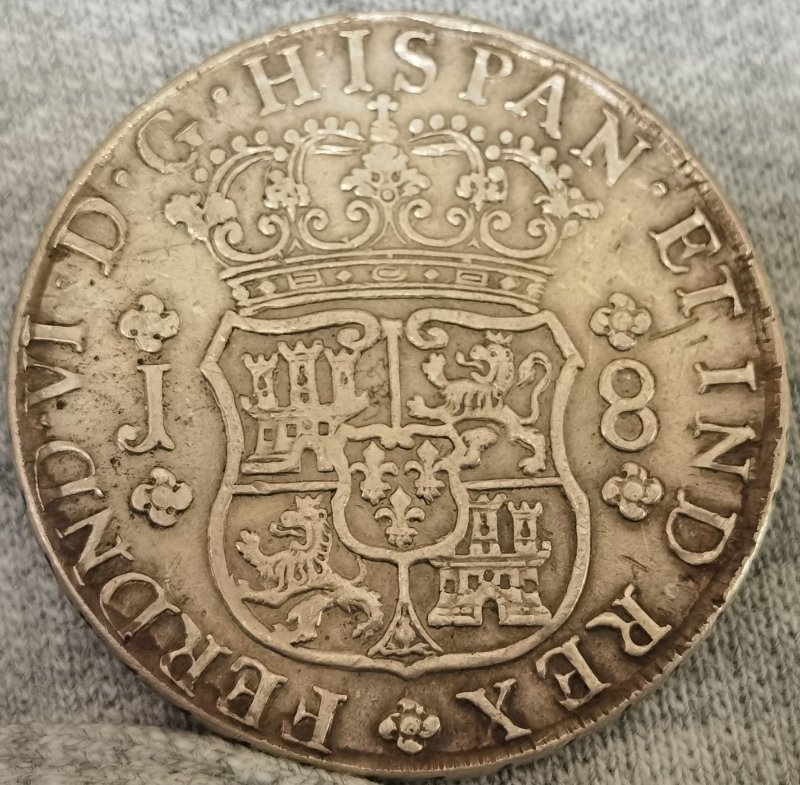
Even allowing for some of the crudity that could occur with Spanish colonial issues of this era, the dentils are overall just awful. The transition from the "H" to the "I" is clearly off. There's a lump below the bar in the "A" that looks wrong. If I were presented this coin raw, I'd have reservations to a point where I'd probably pass on it. That's not to say there's no chance it's genuine, just that these as a genre are notoriously iffy.
What might be definitive in identifying this as a phony would be an analysis via xray fluorescence (XRF), which could also quite possibly distinguish between a modern numismatic forgery and a contemporary counterfeit.
Colligo ergo sum
|
|
New Member
 New Zealand
7 Posts |
Edited by Robinson Crusoe
08/17/2017 12:30 am
|
|
New Member
New Zealand
7 Posts |
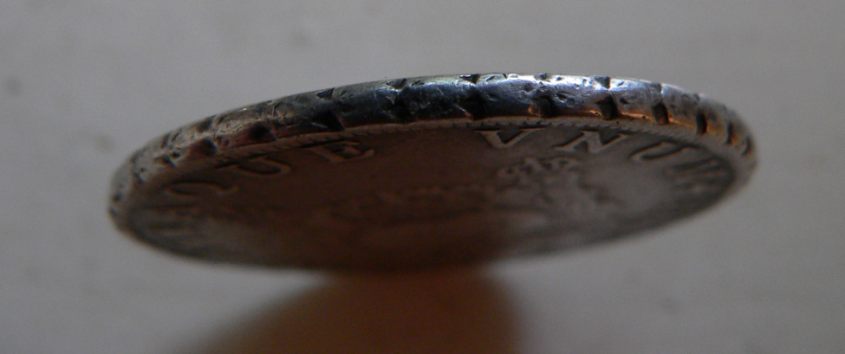
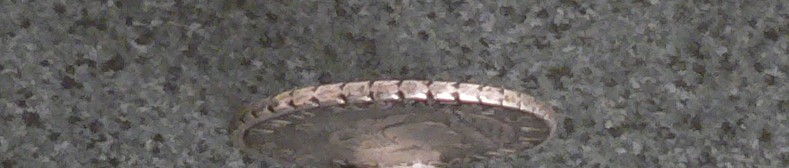
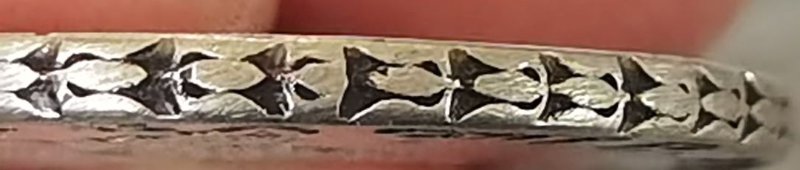
here is a view of the edge
|
|
Pillar of the Community
United States
5362 Posts |
A weight of 26.2 grams is fine for the type. These coins, as were most circulating silver coins based on intrinsic metal value, were made to wear quickly so that a loss of about 5% of total weight would be nearly slick (Fair to Poor using US terms).
When worn - at times the letters can look very slightly thicker due to the shape of a typical punch used to make the working dies. The sides do taper to keep the punches from jamming. Only rarely will this taper be visible without magnification. Here the limit may have been exceeded.
I too am bothered by the way the dentils have worn in. Not enough to condemn the coin but enough to be extremely cautious before making a decision.
I suggest starting with a density confirmation. The coin should have a density of 10.31 if the alloy is correct. You need to get access to an analytical balance accurate to better than 0.01 grams. A range of as much as 0.1 means the coin is very unlikely to be genuine.
Regarding XRF - test a spot that has very little toning or any discoloration. Again, a laboratory test is required to determine the trace contaminants present. Specifically look for gold and arsenic as trace contaminants.
One final issue that causes me to suspect the coin are the raised "lumps" in the fields and the odd discoloration seen on the final edge picture. An origin that can only be traced back 20 years is NOT adequate to preclude a modern forgery. I have run into forgeries of this date as far back as 1990 and they were of similar appearance and were silver.
|
|
Pillar of the Community
United States
1962 Posts |
This whole thread...........  |
|
New Member
New Zealand
7 Posts |
Thank you swamperbob for your comments , it makes me wonder if there any real ones out there ! especially learning that they were forging them in England in the 1790's. 200 years of forgeries kind of ruins the pleasure in collecting these anymore.
|
|
Pillar of the Community
United States
1801 Posts |
Here is another one to check out. Has damage from filled chop marks but weight is good and edge is good. Similar odd H-I lineup as the original post but with the normal mintmark with the bar in the bottom right of the "M". Mine has sat in my safe since 1989, the filled chopmarks were not visible when I bought it but the coin began to tone oddly about 10 years after purchase and the problems became obvious. 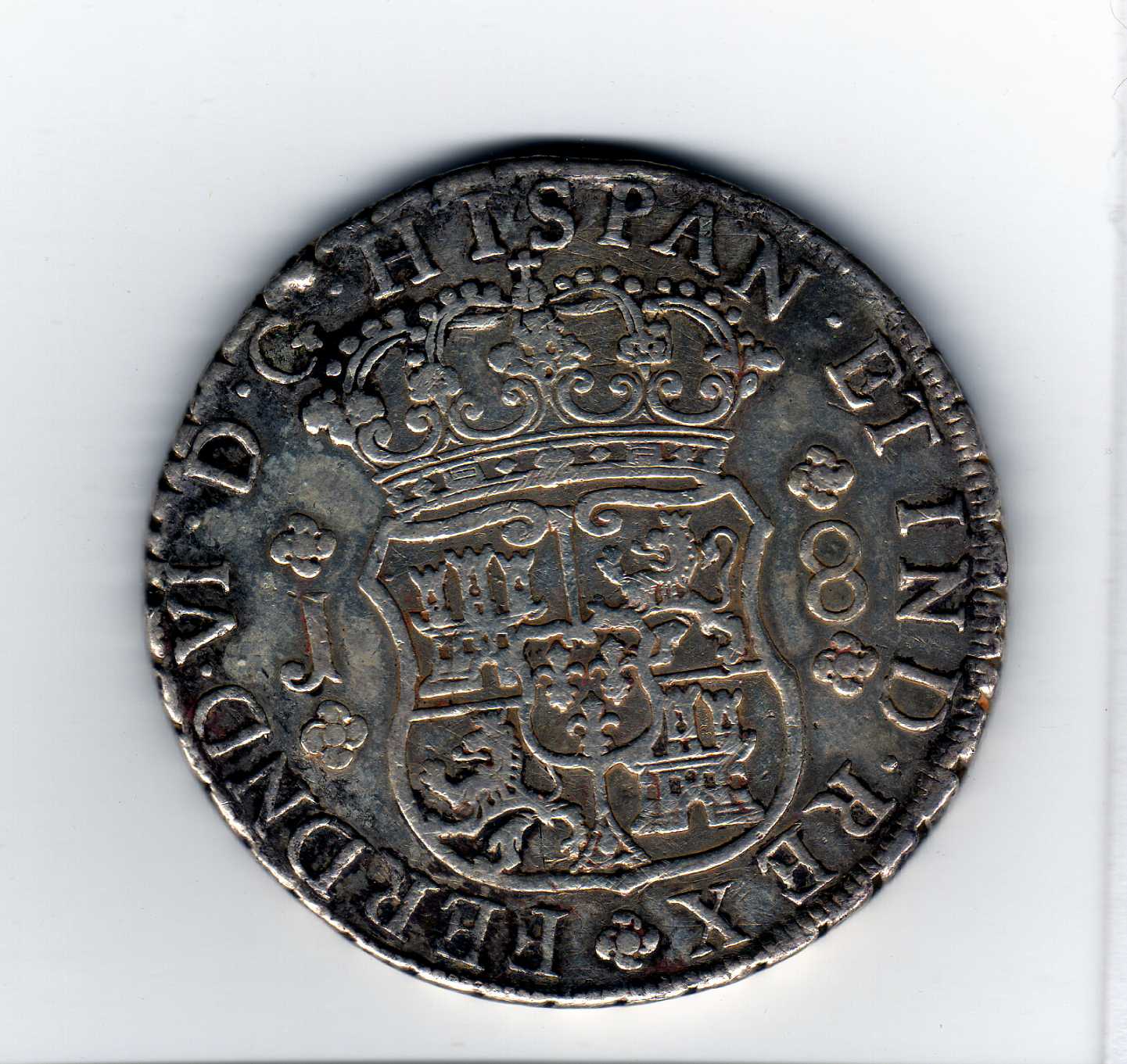 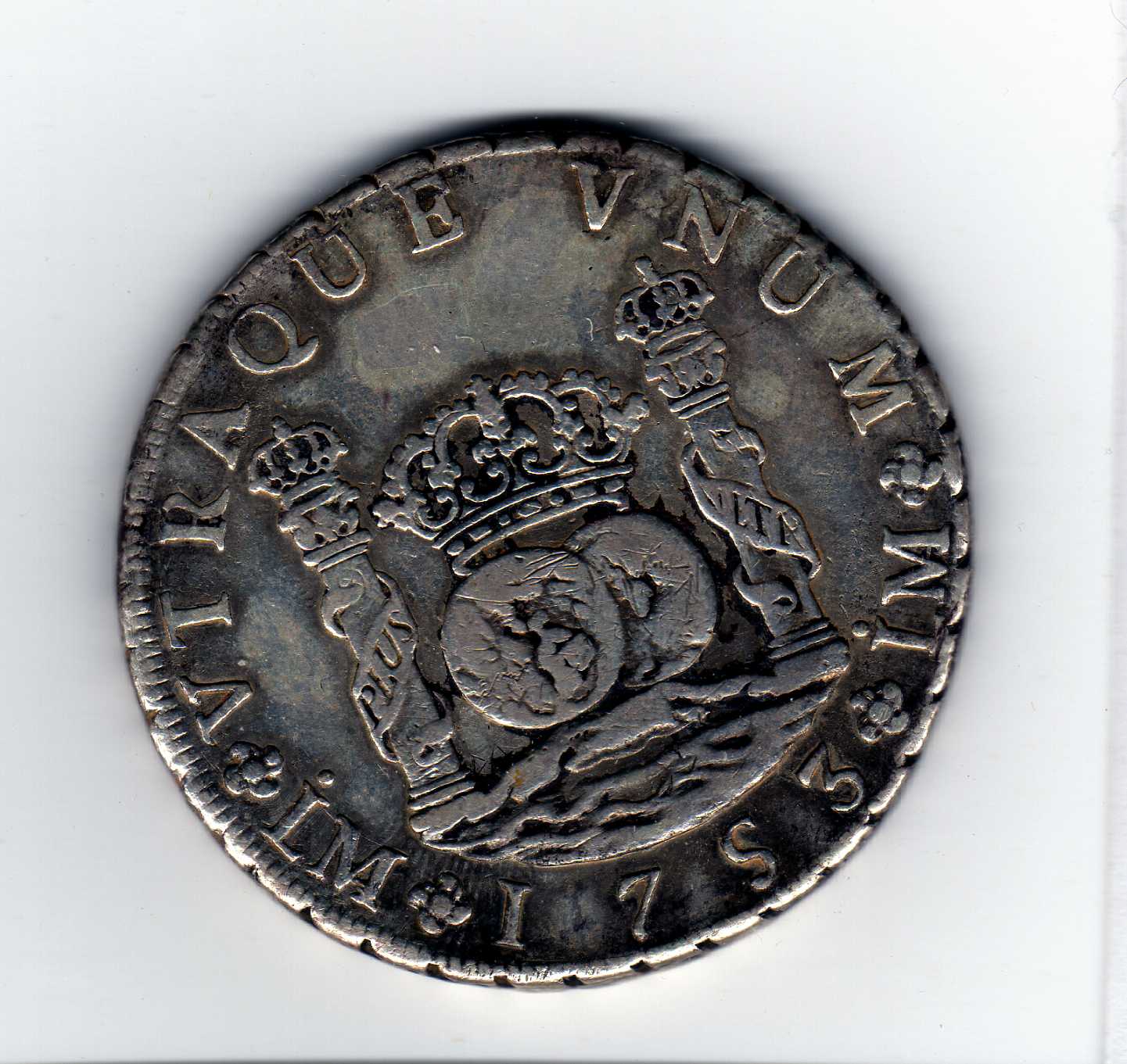 |
|
New Member
Romania
3 Posts |
Hi guys, I come on this forum and topic while trying to educate myself about the correct edge pattern for the Colonial 8 Reales as I bought a lot in good faith in the beginning and now when I need to sell them I cannot sell fakes. Could one of the members photo the edge of a surely authentic piece from that year? I attach the pics of my coin and edge pattern asking if there are different tulips in different years considering I met at least 2 different models and logically one should be fake... Thank you in advance for your support. Only experts are invited to reply or at least people owning this 1753 Lima 8 Reales in good original state. I am unabkle to upload the relevant pics of my coin's edge after many many tries, I apologies.
|
|
Pillar of the Community
United States
5362 Posts |
ancientiques Hello and  Unfortunately, without photos of the edge it is impossible to assess your coin.
|
|
Moderator
 United States
34447 Posts |
@ancient, first welcome to CCF. Second, I'm sorry to hear of your difficulties with uploading pics. It does take a little getting used to, although it seems like oftentimes it is due to the pics being too large. Here is a link to the tutorial: https://www.coincommunity.com/forum...g-images.aspI look forward to seeing what you have, although I will be a lurker as this isn't my area of expertise. "If you climb a good tree, you get a push."
-----Ghanaian proverb
"The danger we all now face is distinguishing between what is authentic and what is performed."
-----King Adz
|
|
New Member
Romania
3 Posts |
|
|
Moderator
United States
190118 Posts |
ancientiques, to the Community! |
|
Pillar of the Community
United States
5362 Posts |
ancientiques The pictures are perfect for authentication.
Unfortunately, the coin is without any doubt what so ever a Numismatic Forgery made sometime in the last 50 years using very modern methods.
In my opinion the coin is a Centrifugal Casting which was edged post creation using an incorrect Lotus design.
There are clear grinding marks on the edge which are simply incorrect.
There is a very interesting break (Mold fracture) visible on the left side of the obverse.
I believe the coin is worth melt value of the metal plus a small amount ($5 to $15 US) as a modern collectable replica.
|
|
New Member
Romania
3 Posts |
Thank you for your knowledgeable opinion, however, I just realised that all the fake columnarios I saw even in international auctions have a very clear sign of forgery...the pillars crowns are identical not different as it should be in an original one. Am I on something?
|
|
Pillar of the Community
United States
5362 Posts |
ancientiques The column capitals are a subject by themselves. In Lima in 1753 the Capitals were nearly if not exactly identical. At other mints and dates the variation can be quite drastic.
Many Modern Forgers are using actual genuine coins to create their dies and molds. In this case I believe that is what happened for both coin faces. The edge dies were not accurately copied and neither were the borders.
|
|
Page 2 of 2
|
Replies: 24 / Views: 5,069 |
Page 2 of 2
|






 First Page

 Posted 08/16/2017 11:35 pm