| Author |
 Replies: 185 / Views: 15,576 Replies: 185 / Views: 15,576 |
|
|
|
|
Pillar of the Community
 United States
8060 Posts |
For the 24 months before the introduction of the coin (June 1985-May 1987) the monthly inflation rate in Canada was pretty consistent, ranging between 3.8-4.7%.
It remained in this same range for the first 23 months after the coin was introduced (and the rate of introduction was highest in the first few months).
This also makes a causality argument (new coin -> inflation) problematic.
|
|
Moderator
 United States
196424 Posts |
Quote:
However, the switch did cause the average Joe to lose more of their own earnings to buy the same things they had been buying beforehand, and costs of services increased when volumes of change were associated with the service. Negative. No one I know in Canada lost more of their earnings or any other such nonsense when the dollar and two dollar coins were introduced. Budgets were not busted because they had to buy things with coins instead of notes. It is absolute rubbish to suggest such nonsense. |
|
Pillar of the Community
Canada
849 Posts |
Quote:
However, the switch did cause the average Joe to lose more of their own earnings to buy the same things they had been buying beforehand, and costs of services increased when volumes of change were associated with the service. I don't really get this quote either. If a million dollars in paper currency is withdrawn and a million dollars in coin replaces it, there is no increase in the money supply and no inflation because of it (just like the government replacing old worn bills with new ones). Yes there is a cost to make the new coins but they last many times more than the cost of having to replace worn bills so no increased costs there either. I live in Canada and was an adult when the one and two dollar bills were replaced. Some people liked it, some did not, most seemed neutral, but I don't recall anyone complaining about losing more of their earnings. Most transactions are done by debit cards, credit cards, automatic withdrawals, a few cheques, and very little cash is used anyways. Edited by punman
02/25/2019 11:41 am
|
|
Moderator
Canada
10477 Posts |
Frankly, as Canadian who was an adult in 1987, when the dollar coins was introduced, and already financially astute in 1996, when the two dollar was introduced, I cannot believe the amount of unfounded rubbish, when reading your arguments Earle42. Quote:
Also, a huge amount of people use electronic means (even more convenient) and so its only the old timers who are qualified to really say, from experience, which is better. That is merely your opinion, not fact... when I read that, this is what I see.  Quote:
The cited study (admittedly I only skimmed it to find out what it was about) applies to what causes inflation "proper" in society over a period of time. Only skimmed it? Seriously, if you are trying to prove a hypothesis, I would expect not only fully reading a study, but reading many studies. Do you really expect me to believe you fully understand the complexity of inflation in any given society in any period of time, by "skimming a study"? Quote:
People who do not research tend to do this very thing. But I did the homework and posted it here asking for help in finding my errors. If I had personally not downloaded and dissected/read the governmental (US) report, crunched the numbers they included (and also forgot to include), and especially not had first hand experience with this kind of switch years ago, then it would be foolish for me to post concerning this issue.
Oh, I know research. I know exactly what that word means, as a researcher myself. Please cite your sources, and show us exactly what numbers you crunched, to support your argument.... then have it validated by peer review by experts in this field. If you are one of those experts, what degrees and publications do you have in economics and financial analyses that supports your expertise? Then, prove to us that you are not falling into the statistical number trap of correlation versus causation, specially when it comes to the economy of Canada, versus net income of the "average Joe" Canadian. Frankly - no matter what I write, your mind is already made up... so what I will provide is my perspective, my opinion, from an "Average Joe" Canadian, who still uses cash as well as plastic. The impact the change of $1 and $2 bills to coins, in Canada, has had a ZERO impact on me, and any of my "average Joe" Canadian friends. If anything, the opposite has occurred. This encouraged me, and many of my friends, to save money. Almost every one of my friends has a story where they bought an RRSP by simply cashing in change jars that contained $1 and $2 coins. Financially, in the long run, they are in a better place with those change-funded RRSPs... "Discovery follows discovery, each both raising and answering questions, each ending a long search, and each providing the new instruments for a new search." -- J. Robert OppenheimerContent of this post is licensed under a Creative Commons Attribution-NonCommercial 3.0 Unported License. See: http://creativecommons.org/licenses...0/deed.en_USMy eBay store
|
|
Valued Member
United States
411 Posts |
I found a website that gives production estimates of the $1 and $2 Canadian coins through 2017
So that is roughly 2.3 billion Canadian coins vs 100 billion $1 USA banknotes. Even accounting for a 9X difference in population, the coins have to be cheaper.
36,309,000 population
1,381,206,441 1 Dollar coin 38.04 per inhabitant
914,316,500 2 Dollar coin 25.18 per inhabitant
2,295,522,941
USA $1 banknote
8,755,200,000 2013 series
9,017,600,000 2009 series
9,632,000,000 2006 series
7,776,000,000 2003A series
7,155,200,000 2003 series
4,921,600,000 2001 series
10,131,200,000 1999 series
18,585,600,000 1995 series
4,601,600,000 1993 series
15,084,800,000 1988A series
3,964,800,000 1988 series
99,625,600,000 total $1 banknotes
a few billion $2 banknotes
Edited by PacoMartin
02/25/2019 3:48 pm
|
|
Bedrock of the Community
United States
10065 Posts |
Quote:Quote:
Quote:
However, the switch did cause the average Joe to lose more of their own earnings to buy the same things they had been buying beforehand, and costs of services increased when volumes of change were associated with the service. Negative. No one I know in Canada lost more of their earnings or any other such nonsense when the dollar and two dollar coins were introduced. Budgets were not busted because they had to buy things with coins instead of notes. It is absolute rubbish to suggest such nonsense. The "nonsense" was first pointed out to me in a discussion with a Canadian Bank manager the year the Sacagawea dollar program had been announced in the US. Sorry I made a mistake in my former posts saying the initial conversation was when the Presidential dollars were announced. Here is the first place this happened. A bank I frequented back then: 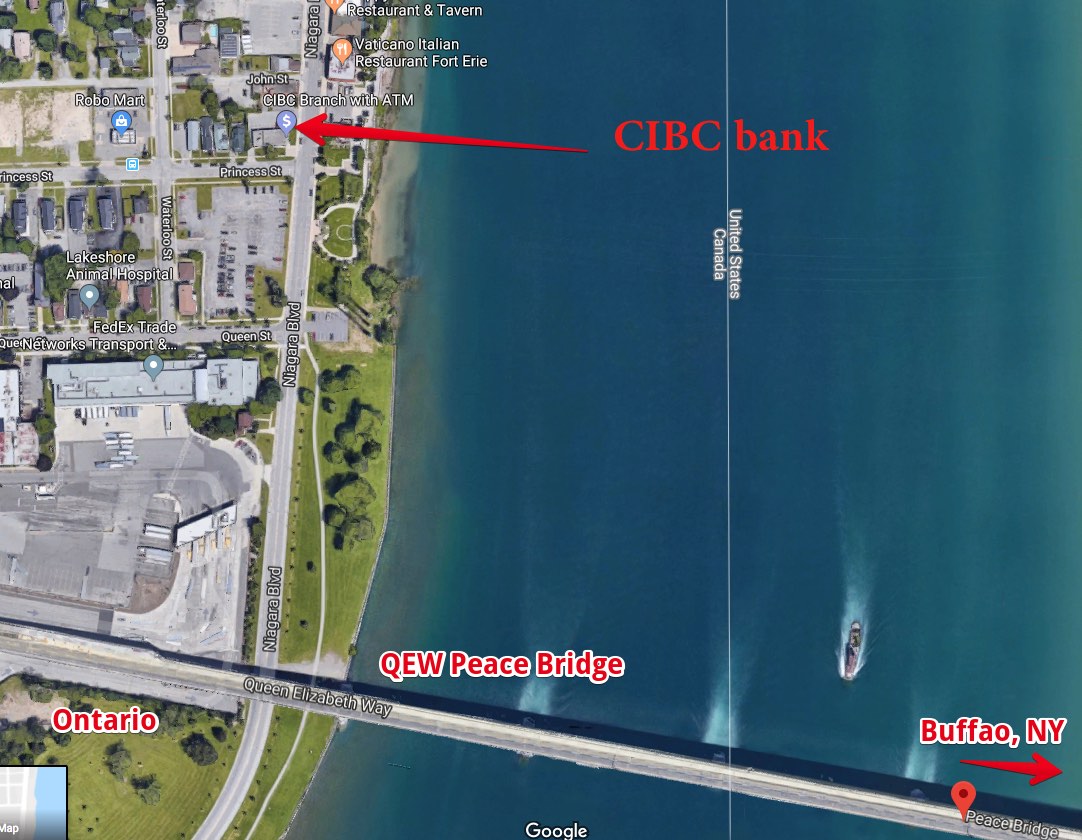 I did not feel qualified to doubt the bank manager's "nonsense" she was telling me when she said the switchover had increased prices b/c operating costs were passed onto consumers as a direct result of the Looney: Her: I cannot believe the US is going to make the same stupid mistake we did in switching to dollar coins. Me: (surprised - we had been talking halves and clad Canada dollars) What do you mean? Her: (I do not have the exact words as this was awhile ago, but the gist of the reply was three points) 1. We banks don't like to take the coins in bulk b/c it costs us so much more to ship, let's say, a million dollars of metal instead of paper to exchange lower denominations for higher ones. 2. We have had to pass the added costs onto businesses who pass it onto consumers. 3. We had to raise our prices for the average consumer to also cover our new costs to handle them coins. Being of curious nature I questioned a bank manager in Chippewa, Ontario concerning their opinions of the new US dollars and got the same results. As is my habit, I was careful to ask a non-leading question something to the affect of, "So what do you think of the US implementing the new dollar coins? The question was also proffered to a bank manager at the (now Starbucks) bank (Scotiabank at one time I think?) sitting at the Clifton Hill Rd. and Victoria Ave. intersection in Niagara Falls, Ontario. I got the same reply. Overall costs had increased because of the implementation. So the "nonsense" idea I got from three professional Canadian financial institutions at the time also led me to what seemed an "aha! moment." I now knew why the typical items I always bought in Canada had an unusual uptick in price not long after the new (and I thought cool!) Looney had been introduced. Inflation:BTW - I am going to try to not use the word "inflation" so it will not continually be being mistaken as a reference to the official inflation rates as seen over time. I did mention I made a mistake in using that specific word b/c I did not foresee how it could mislead into a separate subject. Think of it this way. Represent normal economic inflation as the affects of a wave pattern, caused by a small and continual wind, hitting the bank of a small pond. Someone throws a rock into the pond (switching to Looney-only) and the action generates its own small waves. The rock's waves (one time Looney-only economic impact) will still hit the same shore (price increases). But the rock's waves are not an actual part of the wind-system-waves (normal, annual economic rate of price increases caused by repetitive circumstances). Busted Budgets:Quote:
Budgets were not busted because they had to buy things with coins instead of notes. It is absolute rubbish to suggest such nonsense. It is also rubbish *** offensive statement and image removed by the staff ***. I made neither statement. Please stay rational for the sake of good debate. You have once again introduced sensationalism - maybe (I have no idea) thinking it adds affect to your post? I never said anything about budgets being busted, people losing earnings on a massive scale, Canada being ruined (previous use of sensationalism), or for that matter, the end of the world (just in case  ). I did say prices went up as a result of the switch. I gave the source from which I first heard of the issue as being a bank in Canada who went through the change (no pun intended, but I like it ). I stated the bank's information was the first time I heard the ("nonsense") explained to me as to why they thought the US should learn from their mistake (their concept) in eliminating $1.00 bills b/c it brought higher costs to everything. I have now also shared that more than one bank shared the same "nonsense" with me as a direct result of their financial dealings and experiences. I grew up crossing the border and shopping in Canada as well as frequenting the banks for roll searching, currency exchange and collecting the clad dollar coins and halves. For some strange reason (not really) neither coin circulated to the point I ended up asking for managers b/c the tellers had no clue there were such coins made. A manager typically would say, "We might have a few back in the vault, let me check," and return with very few coins in hand saying they rarely ever see or get either denomination. It was one of those times that led to my first discussion with them concerning the US implementing Sacs. I also don't think calling the issues nonsense will ever bring back to me the extra money I ended up spending at the time due to the situation. Facts, unfortunately, are not subject to emotional desires or whims. Quote:
I don't really get this quote either. If a million dollars in paper currency is withdrawn and a million dollars in coin replaces it, there is no increase in the money supply and no inflation because of it (just like the government replacing old worn bills with new ones). I will reiterate. Typical inflation rates are not affected, a one time price increase resulted As stated, the banks are the ones who told me there were large costs increases to them and other businesses who handled volumes of money. The bank manager(s) told me the costs of moving/shipping large amounts of $1 of metal vs. $1 pieces of paper is where a main problem making the difference existed. Explanation: One Looney - originally 6.988 grams - means 1,000,000 1987 coins was 7.7 US tons. One million 1986 issue Canadian paper $1 bills would weigh just over 1.1 US tons (approximated using US dollar bill weight since finding the weight of the 1896 series Canadian bills proved elusive online- yet the Canada bills are .5 square inches larger - hence more mass when dealing with such a large number). Bringing this home. 490 bills = 1 pound 56 dollar coins = 1 pound Toting and shipping can become weighty/expensive quickly. Do the math for shipping and handling costs as well as for other things we don't generally think about such as equipment needed to move large amounts. Personal example: in the past I got a small hand cart for roll searching four $500.00 boxes of on a regular basis. But carrying the 2K to pay for the boxes, even if it was in $1.00 bills, could easily be done on person without physical strain (~4 pounds of paper vs ~100 lbs. of halves). Quote:
Most transactions are done by debit cards, credit cards, automatic withdrawals, a few cheques, and very little cash is used anyways. Nowadays yes - we are talking about 1987. In fact, come to think of it...I would think our past history of rejecting dollar coins in the US implies an elimination of bills would just drive more people to use their credit/debit cards for even more smaller purchases. The coins, as before (and before, and before), would not circulate and we get all our small purchases being recorded somewhere.    How much squash could a Sasquatch squash if a Sasquatch would squash squash? Download and read: Grading the graders Costly TPG ineptitude and No FG Kennedy halveshttps://ln5.sync.com/dl/7ca91bdd0/w...i3b-rbj9fir2 |
|
Moderator
United States
196424 Posts |
Quote:
I never said anything about budgets being busted, people losing earnings on a massive scale But you did say this... Quote:
However, the switch did cause the average Joe to lose more of their own earnings to buy the same things they had been buying beforehand, and costs of services increased when volumes of change were associated with the service. To me this implies a ruined budget and if earnings were not massive then why make the change to coins out to be a huge mistake? Regardless, the fact is that three Canadians have now commented and none support your claims. |
|
Valued Member
United States
466 Posts |
The argument that the government will save unit manufacturing costs by issuing $1 and $2 coins and eliminating corresponding bills seems irrefutable if the analysis ends there.
But actions can have unforeseen consequences. Earle42 has raised one relating to increased transport costs for banks and others who move large amounts of money. Maybe there are others, maybe not, I don't know. But I do know I won't use the dollar coins because I never carry change. Ever. Haven't in 40 years. If they come to me, they are going out of circulation and into the coin jar. Just like pennies.
Has anyone done a study or made projections about whether other people will do the same thing? If others are like me, then the mint will have to make billions of dollar coins a year just to replace those being stashed away as a matter of convenience or personal preference. I've never heard of anyone hoarding dollar bills.
I don't know. I just wonder. At the end of the day there will be some amount of inconvenience, and the value question is "is it worth it?
|
|
Bedrock of the Community
United States
10065 Posts |
Quote:
To me this implies a ruined budget and if earnings were not massive then why make the change to coins out to be a huge mistake? The banks are the ones that gave me the first inclination it was even a point to be considered. I will stand by what I was told by these institutions who, I assume, would be considered (at the time in question) a lot more knowledgeable about the overall finances in their own country during this time period. Since the issue is now 0ver thirty years in the past, and the people who I would assume being the experts on finances back then alerted me to this, which then correlated with what I had personally experienced, I wlll still put more faith in those 1987 contemporary authorities and on my own personal experiences. Most people don't necessarily log every price increase for everything they buy, yet I noticed all of the items I specifically went to Canada to buy all had an unusual price hike over s shorter period of time. I assumed the hike was something to do with the economy and politics. The banks explained it. I assume banks know something more about finances and considered them a credible source - especially since three independent ones told the same story. Was the extra money my trips to Canada cost me, on a regular basis and to buy the same Canadian items, imaginary? It was all written in our house budget. The numbers went up. My wife is beyond meticulous in tracking down every cent. What ww aownt in Canada for the same items did take a jump unlike it had been doing just with the normal passage of time. Should I have asked more banks so the current thread would be more palatable to coin-only viewpont? I doubt that would make a difference. This topic is likely a typical example of why we keep repeating historic mistakes. "Being human" and clinhing to desires gets in the way. |
|
Valued Member
United States
411 Posts |
Quote:
Has anyone done a study or made projections about whether other people will do the same thing? If others are like me, then the mint will have to make billions of dollar coins a year just to replace those being stashed away as a matter of convenience or personal preference. I've never heard of anyone hoarding dollar bills. Sharkman I think this point is logical and demonstratable, Statistics from Canada (assume present day population of 36,309,000) up through end of 2017. 1,381,206,441 1 Dollar coin 38.04 per inhabitant 914,316,500 2 Dollar coin 25.18 per inhabitant 2,295,522,941 total The USA has printed over 100 billion banknotes during that time period, but at the end of 2017 the Fed reports a count of notes that have been issued but not destroyed $12.1 billion, $1 notes $2.4 billion, $2 notes Now obviously billions of the $1 banknotes are lost, eaten by dogs, and inadvertently thrown in the trash. To a much lower degree so are the Canadian coins. But we have to ignore this statistic since it is difficult to measure and it doesn't affect the outcome very much. I am going to ignore the USA $2 banknotes since they are all in drawers somewhere. But as of the end of 2017 circulation figures are: 1 Dollar coin 38 per inhabitant in Canada 2 Dollar coin 25 per inhabitant in Canada 1 Dollar banknote 38 per inhabitant in USA 2 Dollar banknote 7 per inhabitant in USA That seems to indicate you need more coins than banknotes, presumably because people don't hoard dollar bills. We see a similar pattern in Scandinavia where the 20kr (between $2 and $3) is a banknotes in Sweden, and a coin in Norway and Denmark. The banknotes are circulating at a much lower rate than the banknotes. Another source of data is from casinos. Profit margins soared when casinos stopped accepting real coins and installed noisemakers that sound like coins dropping into a bin. |
|
Pillar of the Community
United States
8060 Posts |
It may be true that certain costs increased with the replacement of paper bills with coins, and other costs decreased.
It may be true that some people liked the change and others disliked it (it is hard to see why any bank employee would like it).
But inflation is measured and reported, and its causes are reasonably well understood. It has nothing to do with incremental costs of making more or fewer coins denominations, because, as corectly pointed out by others, when those prices get spread across large economies like Canada or the United States, they are insignificant in moving big macroeconomic numbers like the inflation rate.
I have not seen any economist writing on the systematic spikes in inflation when denominations of coins are added or removed in the modern era.
For good reason.
|
|
Moderator
United States
196424 Posts |
|
|
Valued Member
United States
411 Posts |
Quote:
I have not seen any economist writing on the systematic spikes in inflation when denominations of coins are added or removed in the modern era. I agree with you, but as I said earlier, the belief is actually very widespread. There is a true cost of doing business with the extra weight. Casino profitability went way up when they stopped carting cans of quarters and switched to tickets. |
|
Moderator
United States
196424 Posts |
|
|
Valued Member
United States
411 Posts |
Quote:
Supporters of the new law, however, say that not accepting cash hurts poorer residents who may not be able to afford or qualify for a credit card or who want to avoid fees that come with changing cash into a prepaid debit card. I don't know how many poor people are going to shop in an Amazon Go store. Right now Amazon may have to institute a new lower cost membership than Amazon Prime in order to operate the stores. Quote:
Additionally, privacy advocates say that being forced to use a digital form of payment to buy things is a de facto requirement to share records of their purchases with third-party companies. There is a demand for Central Bank Digital Currencies (CBDC) which will allow people the flexibility of electronic payments without the additional layers of having a credit card. A CBDC payment would not have the option of disputing a charge like a credit card, but would be final like cash. On the plus side hopefully there would be no fees that prevent stores from accepting credit cards for small payment, Sweden may issue the first CBDC this year. Inevitably any talk of cashlessness goes hand and hand with discussions massive banking crisis. Sweden had a terrible crisis in 1992 Quote:
Stopping a Financial Crisis, the Swedish Way
By CARTER DOUGHERTYSEPT. 22, 2008
New York Times
A banking system in crisis after the collapse of a housing bubble. An economy hemorrhaging jobs. A market-oriented government struggling to stem the panic. Sound familiar?
It does to Sweden. The country was so far in the hole in 1992 — after years of imprudent regulation, short-sighted economic policy and the end of its property boom — that its banking system was, for all practical purposes, insolvent.
But Sweden took a different course than the one now being proposed by the United States Treasury. And Swedish officials say there are lessons from their own nightmare that Washington may be missing.
Sweden did not just bail out its financial institutions by having the government take over the bad debts. It extracted pounds of flesh from bank shareholders before writing checks. Banks had to write down losses and issue warrants to the government.
That strategy held banks responsible and turned the government into an owner. When distressed assets were sold, the profits flowed to taxpayers, and the government was able to recoup more money later by selling its shares in the companies as well.
"If I go into a bank," said Bo Lundgren, who was Sweden's minister for fiscal and financial affairs at the time, "I'd rather get equity so that there is some upside for the taxpayer."
Sweden spent 4 percent of its gross domestic product, or 65 billion kronor, the equivalent of $11.7 billion at the time, or $18.3 billion in today's dollars, to rescue ailing banks. That is slightly less, proportionate to the national economy, than the $700 billion, or roughly 5 percent of gross domestic product, that the Bush administration estimates its own move will cost in the United States.
But the final cost to Sweden ended up being less than 2 percent of its G.D.P. Some officials say they believe it was closer to zero, depending on how certain rates of return are calculated.
The tumultuous events of the last few weeks have produced a lot of tight-lipped nods in Stockholm. Mr. Lundgren even made the rounds in New York in early September, explaining what the country did in the early 1990s.
A few American commentators have proposed that the United States government extract equity from banks as a price for their rescue. But it does not seem to be under serious consideration yet in the Bush administration or Congress.
The reason is not quite clear. The government has already swapped its sovereign guarantee for equity in Fannie Mae and Freddie Mac, the mortgage finance institutions, and the American International Group, the global insurance giant.
Putting taxpayers on the hook without anything in return could be a mistake, said Urban Backstrom, a senior Swedish finance ministry official at the time. "The public will not support a plan if you leave the former shareholders with anything," he said.
Bo Lundgren, minister for fiscal and financial affairs during the 1992 crisis. Credit Swedish National Debt Office
The Swedish crisis had strikingly similar origins to the American one, and its neighbors, Norway and Finland, were hobbled to the point of needing a government bailout to escape the morass as well.
Financial deregulation in the 1980s fed a frenzy of real estate lending by Sweden's banks, which did not worry enough about whether the value of their collateral might evaporate in tougher times.
Property prices imploded. The bubble deflated fast in 1991 and 1992. A vain effort to defend Sweden's currency, the krona, caused overnight interest rates to spike at one point to 500 percent. The Swedish economy contracted for two consecutive years after a long expansion, and unemployment, at 3 percent in 1990, quadrupled in three years.
Newsletter Sign UpContinue reading the main story
Sign up for the all-new DealBook newsletter
Our columnist Andrew Ross Sorkin and his Times colleagues help you make sense of major business and policy headlines — and the power-brokers who shape them.
After a series of bank failures and ad hoc solutions, the moment of truth arrived in September 1992, when the government of Prime Minister Carl Bildt decided it was time to clear the decks.
Standing shoulder-to-shoulder with the opposition center-left, Mr. Bildt's conservative government announced that the Swedish state would guarantee all bank deposits and creditors of the nation's 114 banks. Sweden formed a new agency to supervise institutions that needed recapitalization, and another that sold off the assets, mainly real estate, that the banks held as collateral.
Sweden told its banks to write down their losses promptly before coming to the state for recapitalization. Facing its own problem later in the decade, Japan made the mistake of dragging this process out, delaying a solution for years.
Then came the imperative to bleed shareholders first. Mr. Lundgren recalls a conversation with Peter Wallenberg, at the time chairman of SEB, Sweden's largest bank. Mr. Wallenberg, the scion of the country's most famous family and steward of large chunks of its economy, heard that there would be no sacred cows.
The Wallenbergs turned around and arranged a recapitalization on their own, obviating the need for a bailout. SEB turned a profit the following year, 1993.
"For every krona we put into the bank, we wanted the same influence," Mr. Lundgren said. "That ensured that we did not have to go into certain banks at all."
By the end of the crisis, the Swedish government had seized a vast portion of the banking sector, and the agency had mostly fulfilled its hard-nosed mandate to drain share capital before injecting cash. When markets stabilized, the Swedish state then reaped the benefits by taking the banks public again.
More money may yet come into official coffers. The government still owns 19.9 percent of Nordea, a Stockholm bank that was fully nationalized and is now a highly regarded giant in Scandinavia and the Baltic Sea region.
The politics of Sweden's crisis management were similarly tough-minded, though much quieter.
Soon after the plan was announced, the Swedish government found that international confidence returned more quickly than expected, easing pressure on its currency and bringing money back into the country. The center-left opposition, while wary that the government might yet let the banks off the hook, made its points about penalizing shareholders privately.
"The only thing that held back an avalanche was the hope that the system was holding," said Leif Pagrotzky, a senior member of the opposition at the time. "In public we stuck together 100 percent, but we fought behind the scenes."
|
|
|
Replies: 185 / Views: 15,576 |
|
To participate in the forum you must log in or register.
Disclaimer: While a tremendous amount of effort goes into ensuring the accuracy of the information contained in this site, Coin Community assumes no liability for errors. Copyright 2005 - 2026 Coin Community Family- all rights reserved worldwide. Use of any images or content on this website without prior written permission of Coin Community or the original lender is strictly prohibited.
Contact Us | Advertise Here | Privacy Policy / Terms of Use
|
| Coin Community Forum |
© 2005 - 2026 Coin Community Forums |
| It took 0.61 seconds to rattle this change. |
 |
|







 First Page
 Previous Page


 Posted 02/25/2019 09:42 am


