| Author |
 Replies: 24 / Views: 4,676 Replies: 24 / Views: 4,676 |
Page 2 of 2
|
|
|
|
Pillar of the Community
 United States
787 Posts |
Interesting replies so far. I have to confess that I finally asked this question because of some older posts regarding brand spankin' new but circulated US coins. I got two 2020 nickles in change yesterday and tried not to touch the faces of them, but that is pretty much impossible once they hit my pocket! And I seem to have rather "harsh" fingers......... the original leather steering wheel in my 1998 Crown Vic totally degraded! When we replaced it with a nice used one, I regularly cleaned it with a leather treatment JUST because of my evil fingers! This also makes me careful with my ephemera and photo collections... ANYHOO, wouldn't a NEW coin be RUINED by that first fingerprint? Reading here, it sounds like YES and also NO! Hence, more confusion on my part... Hmmmmmmmmmmmmm... |
|
Bedrock of the Community
Australia
21794 Posts |
@ Nells250:
As an aside to this thread: colored canuba wax on the leather steering wheel cover should work fine! (I have three old classic cars).
Incidentally, museums sometimes use Renwax on ancient bronze coins, to help preserve them.
|
|
Valued Member
United States
171 Posts |
What amazes me is that NGC and PCGS graders don't use gloves to handle coins! They say it's so that they won't drop them because cotton gloves don't have good grip, but why can't they use nitrile gloves instead? They're the absolute best for coins.
If I'm going to handle circulated coins, I don't usually use gloves; I just hold them by the edge. But if the coin is mint state, I would use nitrile gloves for added protection.
If I were sending a coin worth over $100,000 dollars to NGC, I think I would be a bit nervous knowing that it was going to be handled with bare hands! The people who mount the coins in the holders also don't wear gloves!
|
|
Pillar of the Community
 United States
8946 Posts |
@morgannerd, I've handled raw coins worth well over six figures before. Just don't be stupid about it and there's no risk. Gloves also have chemicals in them that can be harmful to coins.
|
|
Pillar of the Community
United States
5906 Posts |
Good answers from all, I wish more collectors get the chance to read this subject outside of CCF, especially some of those coin sellers on ebay. |
|
Valued Member
United States
191 Posts |
On the other hand, at the rare book library that I frequently consult, the practice was to use gloves but they then discontinued it. They currently consider the actual feel of the page against the bare skin is safer than through gloves. They do require well-washed hands. For example, I've handled Isaac Newton's Principia Mathematica, as well as other rare books, with my bare hands. Thus I understand the TPGs handling of rare coins with their bare hands.
|
|
Pillar of the Community
United States
593 Posts |
Here's my Two Cents: It's important to distinguish between CLEANING and CONSERVING a coin. Conserving a coin involves the removal of foreign substances on the coin's surface that are actually causing damage to the coin. It could be fingerprint oil, dirt, bubble gum, or any number of other substances. The thing to remember is that these substances are chemically reacting with the metal of the coin in a way that is aesthetically and structurally detrimental to the coin. By using chemicals that don't react with the metal to remove the substances you are actually preventing further damage to the coin. It sometimes doesn't make the coin look much better, (sometimes it does), but the coin is better because future damage has been slowed or prevented. Cleaning a coin, however, involves the alteration of the original surface metal to improve the appearance of the coin. Sometimes this is done through mechanical means such as buffing or polishing. Sometimes its done through chemical means with acids or strong bases. Most jewelry cleaners and many products labeled as "coin cleaners" are really just weak acids that work by removing a very thin layer of the metal on the coin. Of course, that thin layer contains most of the "dirt" on the coin, so superficially it looks better, but that layer also contains microscopic lines in the metal that give a coin it's luster and beauty. Those lines give the coin the "cartwheel" effect you see in so many high grade coins and once that layer of metal, sometimes literally only microns thick, has been removed, it can never be replaced. In short, a perfect coin is one that exists exactly as it did the second it came out from between the dies. Conserving a coin doesn't get you closer to that state, but it stops your coin from moving further away from it. Cleaning a coin, on the other hand, by removing metal from the surface of the coin, takes you further from that desired just minted state and thus makes your coin less desirable and/or valuable. Sorry for the length of the post. (Steps off his soapbox . . . ) |
|
Pillar of the Community
United States
790 Posts |
What I'm taking from all this is: 1) with higher value coins that need some attention, have them expertly CONSERVED. 2) with lower-value coins that you still might want to resell, use an acetone bath and if that doesn't do it (has done so thus far for me), come back here to have someone talk you thru using Xylene. 3) with "cheap" coins... do whatever you like. My uncle had a Liberty nickel he didn't think was worth anything. I guess he was a decent shot. 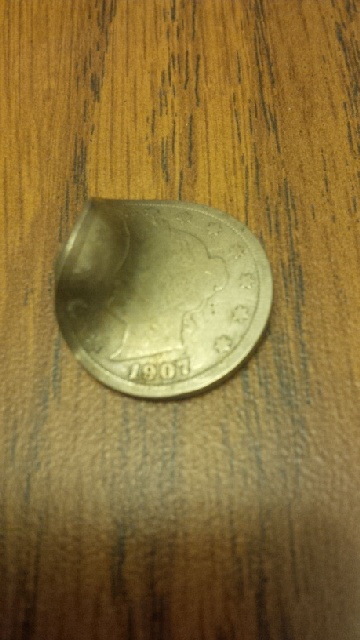 Edited by twslisa
10/26/2020 2:26 pm
|
|
Moderator
 Australia
17016 Posts |
Cleaning is bad because of the Second Law of Thermodynamics: the Law of Entropy. You can't un-scramble eggs, and you can't un-clean a coin. Quote:
Coins are metal. Metal corrodes. Why is a coin WITH corrosion ok? Because physical cleaning effects the coin's impression? Corroded metal is still metal; every atom of metal in the coin before it became corroded is still there in the corroded coin, it's just been oxidized or otherwise turned into something nonmetallic. Removing the corrosion removes the corroded metal. This not only "erases the history", but exposes the underlying fresh metal to further corrosion, requiring you to (eventually) want to clean it again. Quote:
Like silver coins... don't they tarnish? If so, wouldn't a dulled coin be worth less than one that has somehow or other retained it's "shiny allure"? The "shininess" of a coin is technically known as "lustre" - spelled "luster" in America. It is a physical property of the piece of metal and is caused by microscopic grooves and ridges on the surface that act like tiny mirrors, reflecting incoming light at different angles. Most forms of physical or chemical cleaning disrupt and destroy this lustre, and it cannot be genuinely put pack once the cleaning is complete. A "cleaned coin" looks dull and "lifeless", because the lustre has been exterminated. There are things you can do to a coin that are "acceptable cleaning". If a coin has foreign matter stuck to it - sticky-tape residue, paint, glue, that sort of thing - then solvents like water, alcohol, acetone or xylene can be used to get rid of it. Such solvents do not affect the corrosion/tarnish/toning and to not remove any of the metal - only the foreign matter. It's probably best for a novice collector and/or someone unfamiliar with the chemistry of whatever solvent they plan to use, to refrain form cleaning a coin - or at least, to grab some unwanted, inexpensive coins to practice on first. A fingerprint is a good example. It is comprised of oils and fatty acids, and as such is "foreign matter" on a coin that can safely be rinsed off with acetone or alcohol solvent. However, if the print is left there for more than a few hours (espicially for copper and silver based coins), the acidic oils will react with the metal, causing corrosion/tarnish/toning, and while the remaining oils can be removed with acetone, the fingerprint-shaped corrosion stain on the coin will not come off - it is now permanently part of the coin and cannot come off without using "bad" chemicals such as tarnish remover. In other words, a fingerprint can only be "safely" removed while it's invisible. Of course, there are exceptions to the "don't clean coins" rule. For example, ancient bronze coins that have been buried underground for a couple of thousand years come out of the ground looking like little green rocks - they have a "corrosion layer" that is quite thick. Such coins need cleaning; taking such a coin and making it collectable, or even identifiable, is an art not too dissimilar to fossil excavation, as it can be difficult to tell where the "dirt" ends and the "coin" begins. Another example of a coin that "must be cleaned" is a coin afflicted with bronze disease. This is a powdery form of corrosion that actually spreads rapidly on exposure to moisture in the air. If not treated, a coin with bronze disease will become more and more damaged over time until there's nothing left but an aquamarine mess. A coin treated to cure bronze disease is still a "cleaned coin", but "cleaned" is better than "destroyed completely". Again, the treatments needed to eliminate the bronze disease but keep the rest of the coin as intact a possible is a tricky art, that needs lots of practice on unwanted, value-less coins, so it's still best to tell the novices "don't clean coins". Quote:
What if it is a GOLD coin? Or is the gold too soft and will scratch or something? Gold is indeed soft and scratches easily, but gold coins shouldn't need cleaning as they won't corrode under normal Earth-like conditions. It's been said that if the dinosaurs had made gold coins, we'd be digging them up and they'd still be just as shiny today as they were 65 million years ago. Ancient gold coins (for the fortunate few who find them) only need the dirt washed off them with water (carefully, so as not to create surface scratches), and they're good as new. Don't say "infinitely" when you mean "very"; otherwise, you'll have no word left when you want to talk about something really infinite. - C. S. Lewis
|
|
Pillar of the Community
United States
787 Posts |
OK, I want one of those dinosaur coins!! ;-) More good answers. The non-coin suggestion about WAX onto a leather steering wheel is now filed in my memory-bank (my current Crown Vic is a police-package with standard steering wheel... my hands seem to still be effecting it!). It is sometimes confusing to have interests in different hobbies, due to different collector "demands and standards". Mentioned here was the use of cotton gloves with old documents, books, etc. I have a modest "paper" collection and I don't use gloves at all. The only time I worry (with my corrosive hands) is if something is gloss-printed, especially black ink. I learned years ago that fingerprints turn RED on some of those items! And so the latest posts have me asking an additional question: Is it bad to get a fingerprint on a run-of-the-mill circulated 2020 US coin? I mean, is it like HOT WHEELS: a mint in package 1969 Hot Wheel car is RARE because no one kept them mint. Now EVERYONE (well, adults like me) keep them in the package. Therefore a modern car most likely will never have the value of a mint '69 car. Does everyone and their sister-in-law keep newly issued circulated coins "perfect", thus they will never have value? Or is it still worth keeping an eye out for clean modern US coins? |
|
Moderator
Australia
17016 Posts |
Quote:Is it bad to get a fingerprint on a run-of-the-mill circulated 2020 US coin? I mean, is it like HOT WHEELS: a mint in package 1969 Hot Wheel car is RARE because no one kept them mint. Now EVERYONE (well, adults like me) keep them in the package. Therefore a modern car most likely will never have the value of a mint '69 car. Does everyone and their sister-in-law keep newly issued circulated coins "perfect", thus they will never have value? Or is it still worth keeping an eye out for clean modern US coins? The main difference between coins and toy cars is that there's a lot more coins than cars out there. If it's a coin you personally intend to keep, yes, fingerprints are bad; you want the coins in your collection to be as pristine as possible. But you're not under any obligation to your fellow collectors to treat every coin you receive as a collector's item, in case some hypothetical future coin collector receives it. Coins are tools, intended to be used, just as Hot Wheels cars are intended to be played with by children. Collectors have their own ways of obtaining fingerprint-free coins so you don't need to worry too much about keeping all the coins you handle as pristine as possible. Coins these days, particularly in America where most coins have little monetary value, rarely "circulate" in the same sense that coins used to circulate 50 years ago. Most people see coins as an inconvenience and toss any coins they get into a jar and (eventually) deposit the jar at a local Coinstar or whatever; only a tiny minority of people still carry around coins with them wherever they go, with the intent of spending them in everyday transactions. The net result is that very few current-millennium coins get "worn" to the same extent that they used to in previous millennia. The 1 cent coin is even worse; these are almost "single-use" objects, with many people simply throwing them away, and the high corrosion rate of copper-plated-zinc means they self-destruct if the copper plating breaks and the coin is lost or stored for a prolonged period. Finding a "circulated" zinc cent is difficult, as they basically don't exist between "Almost Uncirculated" and "Corrosion-damaged". Don't say "infinitely" when you mean "very"; otherwise, you'll have no word left when you want to talk about something really infinite. - C. S. Lewis
|
|
Pillar of the Community
United States
787 Posts |
Interesting info on the use of modern US coins! Being old fashion, I try to use cash whenever possible, so I never thought about the fact so many people DO NOT use coins. This reminds me of the fact that postally used modern stamps will very possibly become more desirable in the future compared to mint ones. Especially commemoratives not necessarily used by a collector on their mail, but a standard piece of mail. I agree about the metal-quality of the newer pennies making used ones rather ugly. I just went through a bunch of spare change and the older ones have such a nice variety of copper tones... 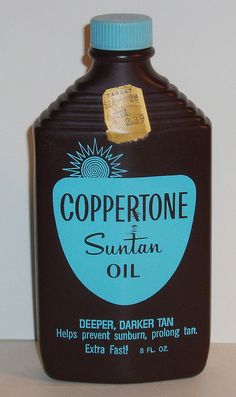 (sorry... HAD to do that...) |
|
Valued Member
United States
292 Posts |
Do products such as Goddard's Silver Dip ruin the luster of a coin? I know it removes dirt and tarnish (toning) but other than that does it actually damage the surface of the coin if its used briefly? What "propreitary" substances do the grading services use to "clean" coins?
|
|
Bedrock of the Community
United States
20061 Posts |
I just posted this in the modern section:
I'd rather have a carefully cleaned coin than a worthless, unreadable slug.
Lincoln Cent Lover!VERDI-CARE™ INVENTOR https://verdi.care/
|
|
Moderator
United States
197031 Posts |
Quote:
I'd rather have a carefully cleaned coin than a worthless, unreadable slug. I agree. Given two those two choices, one is an obvious no! |
|
Page 2 of 2
|
Replies: 24 / Views: 4,676 |
Page 2 of 2
|
To participate in the forum you must log in or register.
Disclaimer: While a tremendous amount of effort goes into ensuring the accuracy of the information contained in this site, Coin Community assumes no liability for errors. Copyright 2005 - 2026 Coin Community Family- all rights reserved worldwide. Use of any images or content on this website without prior written permission of Coin Community or the original lender is strictly prohibited.
Contact Us | Advertise Here | Privacy Policy / Terms of Use
|
| Coin Community Forum |
© 2005 - 2026 Coin Community Forums |
| It took 0.43 seconds to rattle this change. |
 |
|





 First Page


 Posted 10/25/2020 10:39 pm


