| Author |
 Replies: 20 / Views: 1,942 Replies: 20 / Views: 1,942 |
Page 2 of 2
|
|
|
|
Moderator
 United States
56855 Posts |
I think it is die abrasion/polishing. John1  |
|
Valued Member
  United States
450 Posts |
Thanks everyone. I think I agree die abrasion/polishing is the most likely cause.
|
|
Pillar of the Community
United States
593 Posts |
Some interesting trail lines on the reverse around States Of America which clearly supports the die polishing theory.
Don't see this one listed on Traildies.com, so if they're taking submissions they might like to see your photos.
|
|
Moderator
United States
56855 Posts |
Good catch on the trail lines, I missed that. John1 |
|
Pillar of the Community
United States
9038 Posts |
Looks like an extreme die scrape, very cool looking! LINK https://www.error-ref.com/die-scrapes/ Noticed the trails too, very extreme at the "F" but feel the two are unrelated, just coincidence in my opinion. -makecents-
|
|
Pillar of the Community
United States
3224 Posts |
Quote:
Some interesting trail lines on the reverse Yes, good catch HGK3! |
|
Moderator
United States
108833 Posts |
Quote:Looks like an extreme die scrape, very cool looking! LINK https://www.error-ref.com/die-scrapes/ Thanks Makecents, I think so too Die scrapes created by the feeder fingers (*which was my first thought up above) The following quote is taken directly from Error-ref: Quote:
Definition: Die scrapes are a form of die damage generally caused by the feeder/ejector scraping across the die face. While the anvil die is most commonly affected, |
|
Pillar of the Community
United States
9038 Posts |
Dearborn, I could be wrong but do not think this is feeder fingers damage. Not the typical direction.
-makecents-
|
|
Moderator
United States
108833 Posts |
No it is not the usual direction but I have seen it this way. The quote I put up was taken directly from your reference and clearly identifies FFD in it
|
|
Valued Member
United States
450 Posts |
Funny, I just did an internet search for this and came across a different coin forum where they are discussing very similar areas on Mercury dimes and having the same back and forth: Feeder finger damage/die abrasion that is polished off, vs die clash marks that are polished off. They don't appear to come to a conclusion. Then I went to look at Jefferson nickel die clashes and found this, which shows a clash mark right at the same location. And it is on a 1966 SMS. Interesting! http://www.maddieclashes.com/adc-5c-1966-01sms/ |
|
Pillar of the Community
United States
9038 Posts |
|
|
Moderator
United States
108833 Posts |
You bring up a good point Data, (however) if the clash was so bad that if it had to be polished so deeply it that spot, where is the rest of the clash that 'should' also be evident on this coin? (Also) I have never seen polishing lines that were done by a mint worker that had such perfect perpendicular scratches on the die. Take a good close look at the very first image.
|
|
Valued Member
United States
450 Posts |
@Dearborn, that's true, there seems no evidence of a clash elsewhere on the coin. It is just that the location lined up so well with this picture of the nickel on maddieclashes.com. If you've seen feeder finger die scrapes/abrasions with vertical lines like the ones on my nickel, then I am thinking that is it. Here's a snippet of the maddieclashes nickel and of the Mercury dime with a similar spot with vertical lines within it. 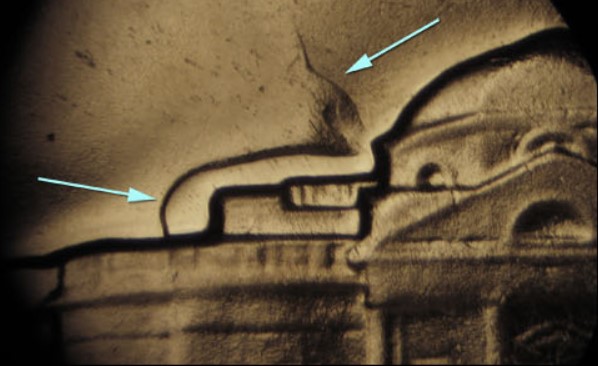 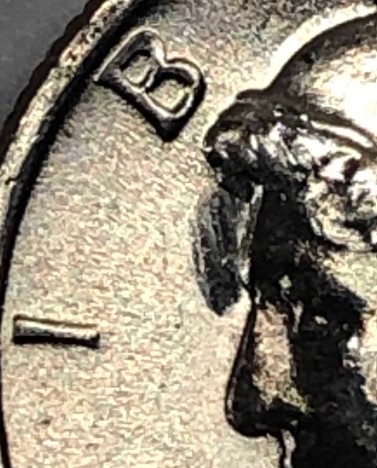 |
|
Moderator
United States
108833 Posts |
Normally we will see FFD at an angle in regards to the orientation of the coin being struck, but sometimes we see them straight vertical and horizontal. I found an old topic from Coop (back in 2019) that shows FFD from many different angles (including from straight down too. http://goccf.com/t/336856 |
|
Pillar of the Community
United States
7601 Posts |
I agree with the die abrasion.
|
|
Page 2 of 2
|
Replies: 20 / Views: 1,942 |
Page 2 of 2
|




 First Page


 Posted 04/26/2023 1:38 pm





