| Author |
 Replies: 17 / Views: 2,777 Replies: 17 / Views: 2,777 |
|
New Member
United States
14 Posts |
Its below the chin. Ever heard of this 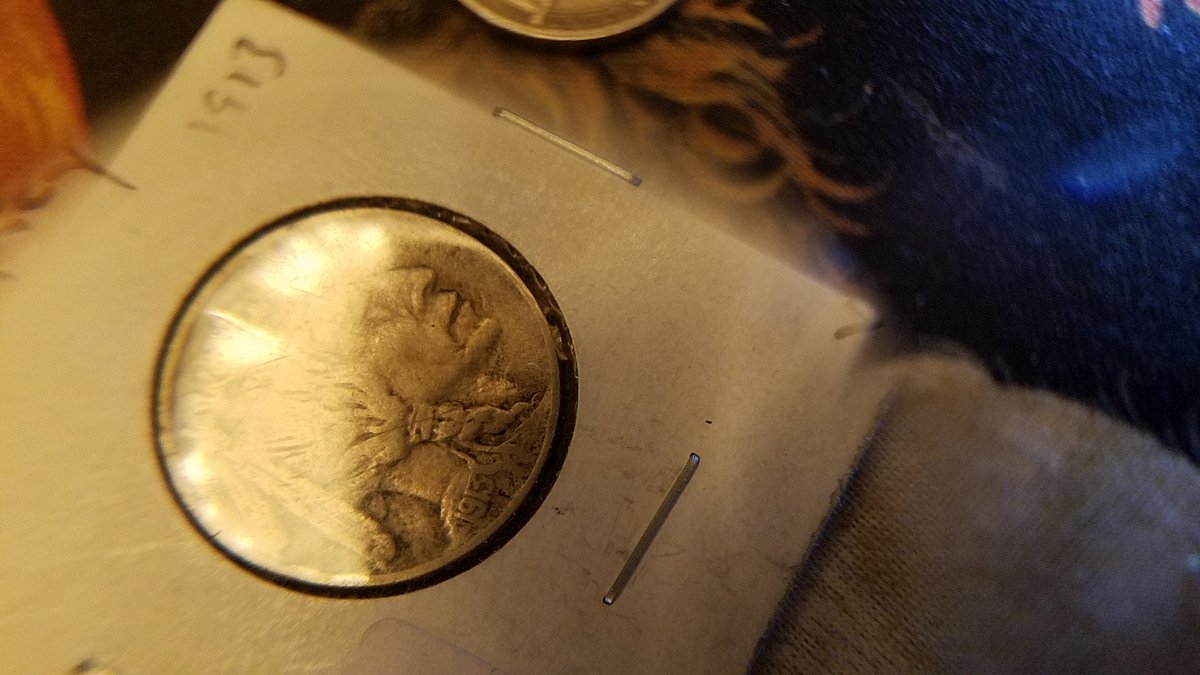 *** Moved by Staff moved to a more appropriate forum. *** *** Moved by Staff moved to a more appropriate forum. *** |
|
|
|
Pillar of the Community
United States
5196 Posts |
 , better pictures of obverse and reverse outside of the holder will be needed. |
|
Bedrock of the Community
United States
79759 Posts |
|
|
Moderator
 United States
14463 Posts |
A Buffalo nickel is a Classic coin, so I moved your post to the appropriate section for the proper attention.  |
|
Moderator
United States
34564 Posts |
Perhaps a little PMD? Hard to tell from this pic, despite enhancing it. 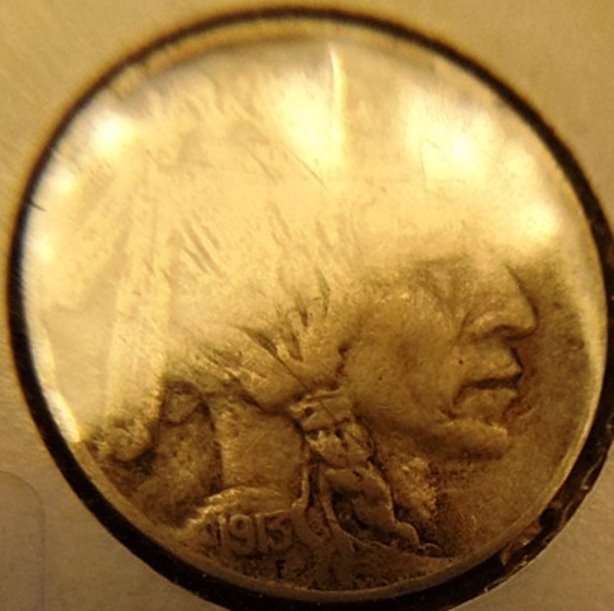 "If you climb a good tree, you get a push."
-----Ghanaian proverb
"The danger we all now face is distinguishing between what is authentic and what is performed."
-----King Adz
|
|
New Member
 United States
14 Posts |
Ill try to get a better picture later.
|
|
Pillar of the Community
United States
4433 Posts |
to the CCF Absent better pics, I'm guessing that what appears to be the striking of a different coin is, in actuality, a clashed die. This was a common occurrence on nickels dated 1913 and 1914. This happened on withs of other years, too, but not with as much frequency as the first two years of issue. The most commonly seen die clashing appears beneath the chin, tiny letters. Given that location, these have commonly been dubbed as "whiskers." In actuality it's a reversed impression of "E PLURIBUS UNUM." When absent a planchet in the press, the two dies clashed, leaving impressions on the obverse die. Then, when subsequent coins were struck, the impaired obverse reflected that impression. Just an educated guess, mind you, without seeing more pics. |
|
Pillar of the Community
United States
7734 Posts |
 You are seeing the results of "E Pluribis Unum" being clashed onto the obverse die during a previous striking process and then being transferred to a coin that was struck with the damaged clashed dies. Buffalo nickels are notorious for this. |
|
Pillar of the Community
United States
4433 Posts |
Then too, the shadow of the bison's tail sometimes shows in the field facing the Indian.
|
|
Pillar of the Community
United States
8535 Posts |
Are you seeing something like this ? 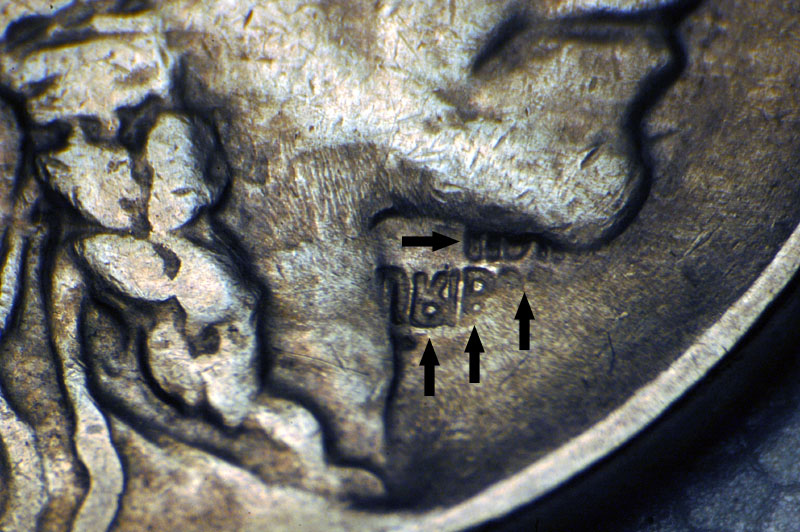 Oregon coin geek.....*** GO BEAVS ! ! ! ***
|
|
Formerly coinlover1899
 United States
3058 Posts |
Quote:
The most commonly seen die clashing appears beneath the chin, tiny letters. Given that location, these have commonly been dubbed as "whiskers." In actuality it's a reversed impression of "E PLURIBUS UNUM." When absent a planchet in the press, the two dies clashed, leaving impressions on the obverse die. Then, when subsequent coins were struck, the impaired obverse reflected that impression. Yep. Exoguy is correct, it is a clash. www.InGodWeTrustCoins.com
|
|
Rest in Peace
10197 Posts |
Very nice clash, even extended into the design depth which is unusual, a very hard clash! 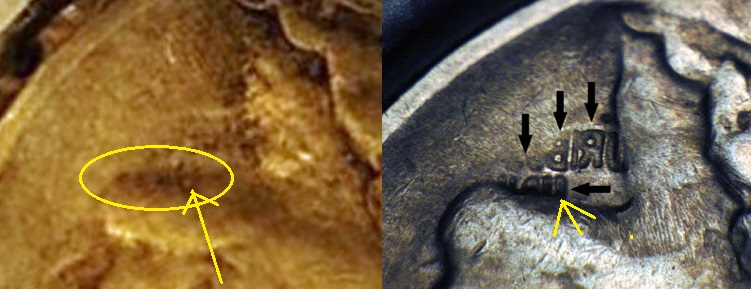 |
|
Bedrock of the Community
United States
94367 Posts |
Dangranite - Excellent example, and - to the CCF! |
|
New Member
United States
14 Posts |
Thank you. Are they worth much
|
|
Bedrock of the Community
United States
79759 Posts |
Very nice find and congratulations! That's a good Die Clash!
Errers and Varietys.
|
|
Bedrock of the Community
United States
17884 Posts |
|
| |
Replies: 17 / Views: 2,777 |




 Posted 08/06/2018 11:34 pm





