| Author |
 Replies: 10 / Views: 6,861 Replies: 10 / Views: 6,861 |
|
|
Valued Member
United States
147 Posts |
Hello! I am a collector of hammered and early milled English/British coinage. My father on the other hand is a collector of shipwreck coinage and "New World" coinage or that of the colonial Spanish colonies of North America. He has a few "pieces of eight" that I thought were intriguing. I also happened to discover that these coins were also countermarked by Great Britain as emergency issue dollars and these pieces of eight were part of the prize captured by Admiral Anson in the 1740's when he captured the Manila Galleon. So I think its pretty cool to have a piece of eight that my 1746 Lima sixpence could have been made from (though this coin is dated 1805, there is still some connection.) So I decided to pick one up for myself. I would like to know a little more about these coins and any insight would be appreciated. What are some things to look for when purchasing these particular coins? I would also like some help on the grade and possibly the value. Thanks! Obverse : Laureate, armored and draped bust, facing right; "CAROLUS·IIII·DEI·GRATIA"; (date) below, between dots. Reverse : Crowned Arms between pillars; "HISPAN·ET IND·REX·"; ·o over M (monogram)· ·8 R· at left and ·T·H· above left Diameter: 39mm Weight: 27.07 grams Metal: 89.6% silver Mint: Méjico Assayer Mark: TH Assayer Name: Tomás Butrón y Miranda - Henrique Buenaventura Azorín 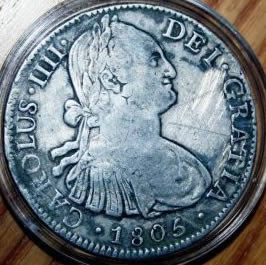 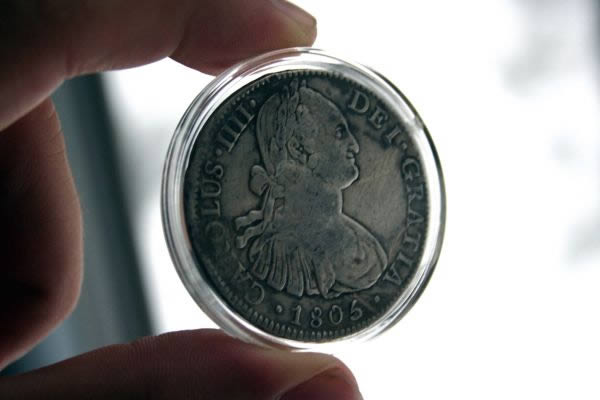 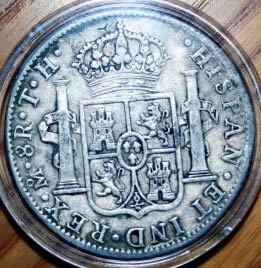 Edited by EarlyMilledCoins
12/22/2011 9:05 pm
|
|
|
|
Pillar of the Community
United States
1801 Posts |
Welcome to the land of the 8 reales. You will find many of us collect these and enjoy discussing them. Could you please take your example out of the holder and snap a few photos of the edge? It is a very important feature on these coins. What you have is known as a "Portrait Dollar". Spanish colonial 8 reales come in various styles. Pre 1732 (including some 1733's) are known as "Cobs", some 1733 and 1734 are known as "Klippes", some 1732, 33, and 34 as well as all 1735-1771 Mo mint coins are known as "Pillar Dollars" (these would include the coins captured at Vigo Bay), 1772-1821 (later at some other mints) are known as "Portrait Dollars". The entire 8 reales series is a treasure trove of varieties, overdates, errors and counterfeits. So join in and have some fun.
|
|
Pillar of the Community
France
1591 Posts |
Those coins are great to collect, but alas also highly faked.
Could you post bigger / closer pictures of this one ? there are some stuffs that may not be correct on it (the look of the coin near CAR on the face side, and the overall look which seems mushy)
You should also always check the rim of those coins, if you can post pictures it would be great :)
There should be two overlaps in the pattern of the rim, at the exact opposite.
Look for posts by Swamperbob, he explains all of this better than a book !
|
|
Pillar of the Community
United States
689 Posts |
All things being equal, fine condition, though the chop at 11:45 on the obverse detracts. Value, as I've recently learned is subjective. I'd say $75, but if you bought it for $55 it would be a good deal.
On my example of this coin, the loop on the 5 is more closed.
Anyone know if this is a wide date or narrow date?
|
|
Pillar of the Community
United States
689 Posts |
The denticles on the bust side from 9-12 look odd.
|
|
New Member
United States
2 Posts |
Hi. I also have a coin similar to this but cannot find one like it anywhere. I cannot tell if it is real or faked. I inherited this coin and it seems to be gold or gold clad and all the ones I can find look silver. Does anyone know about this one? 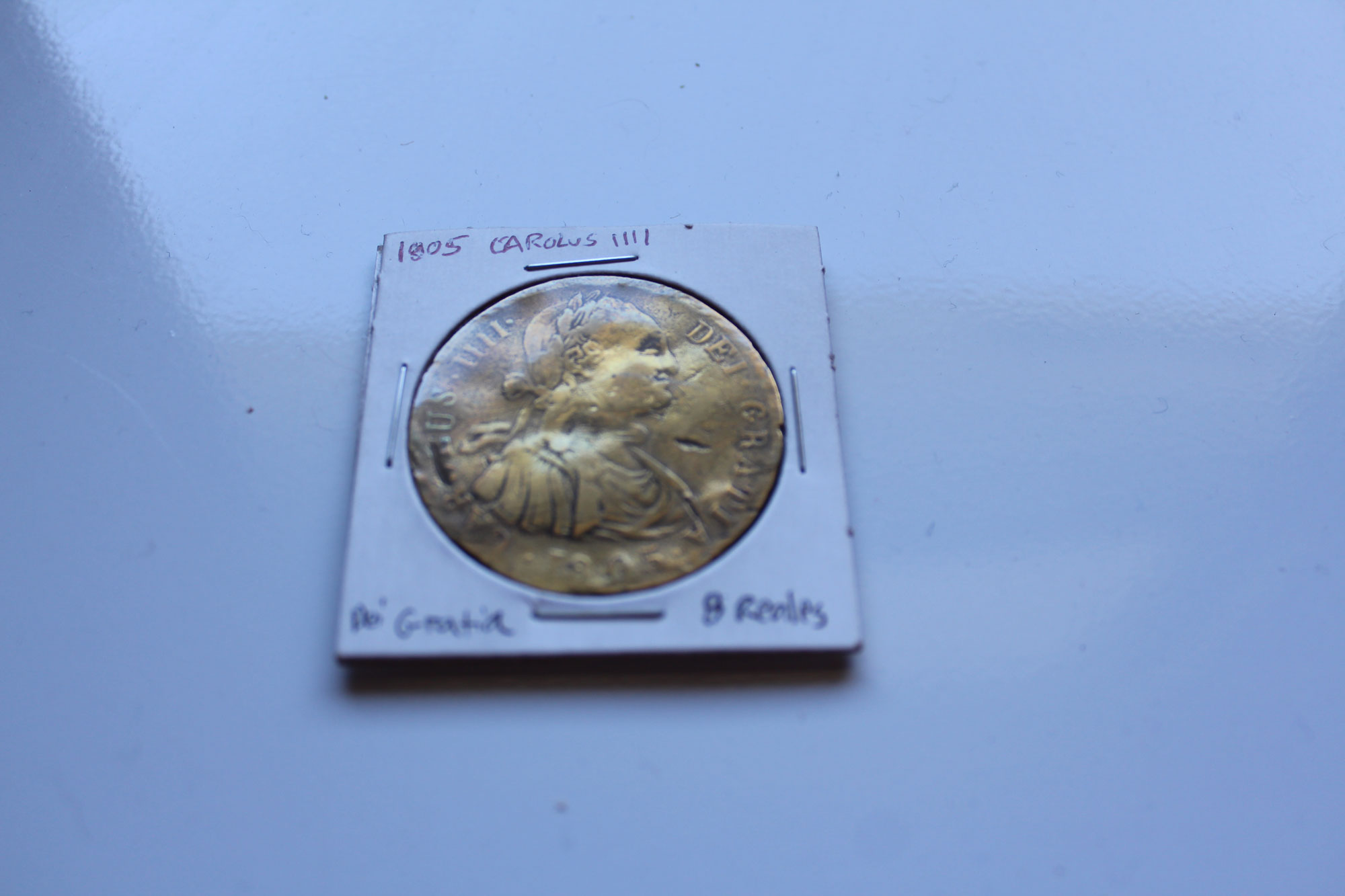 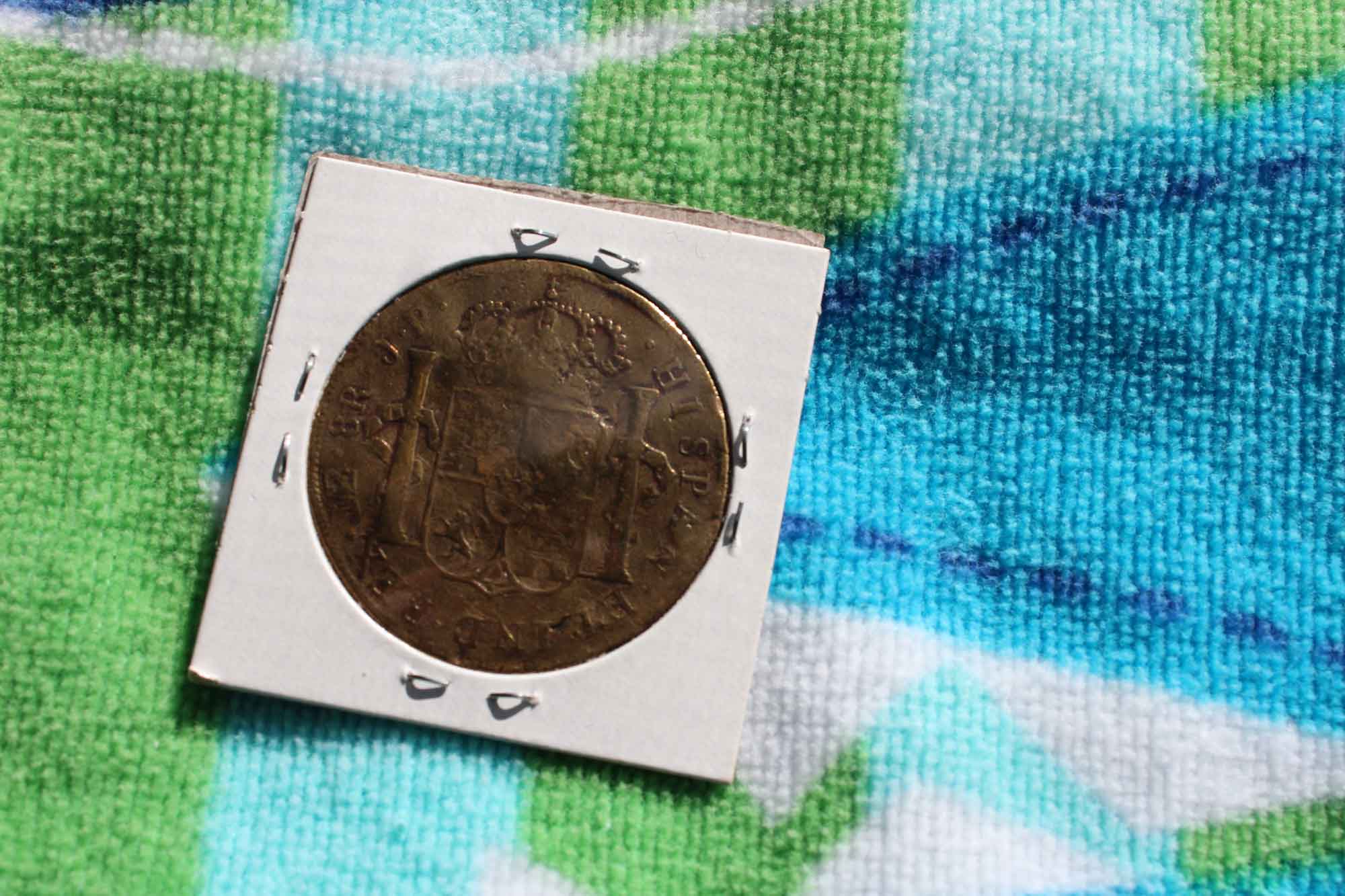 |
|
Pillar of the Community
France
1591 Posts |
Hi armydude31 - it seems you have a fake (plated seems odd, I would bet on bronze with some shine)
|
|
Valued Member
United States
309 Posts |
I think the silver captured by Anson at Lima, which was melted to make English crowns, half crowns and six-pence would have been cobs and bars of Philip V, Assayer Jose de Vargas y Flor "V" and prior, all dated before 1744, rather than milled dollars. It is tricky trying to get one that was with Anson since most of those were melted. You might find an example that was missed by Anson, to put with your Lima six-pence, as a sample of the type of coins involved. The second image is a brass counterfeit. For honest cobs for which you want a specific and legitimate example, check out Dan Sedgewick's periodic On-line Treasure Auctions. A Lima Mint, Philip V, early 1740s-dated cob of two reales would most closely match your six-pence for the "before and after" picture.
|
|
Pillar of the Community
United States
5362 Posts |
armydude31 The 1805 coin you posted is actually a military button. These started as legitimate items made not to look genuine. They were also considerably underweight (under 20 grams). But many had a second life after the loop was removed. They were silvered various ways and passed as genuine. I classify the type as Class 4 Other.
|
|
New Member
United States
2 Posts |
The image I uploaded does not have the correct lighting. It does not look bronze at all, just in the picture. It is completely gold and shiny. I know the reales are silver. What can I do to tell if it is a fake or a military button? It seems rather large to be a button of any sort. It is about the size of a silver dollar. Thanks for all the replies.
|
|
Pillar of the Community
United States
5362 Posts |
The military buttons I am referring to are 38-40 mm in diameter - the size of a silver dollar or a shade larger. There are dozens of varieties and yours does match a known variety. The weight of the item should be between 20 and 22 grams. The plating may be gold but I doubt it. Typically they were a bright burnished brass, copper or bronze.
|
| |
Replies: 10 / Views: 6,861 |
|










 Posted 12/23/2011 01:17 am


