| Author |
 Replies: 10 / Views: 2,639 Replies: 10 / Views: 2,639 |
|
|
New Member
Canada
16 Posts |
Hi, I need help identifying these errors and I'd like to know if they are worth keeping. #1 - 25 cents 2011: 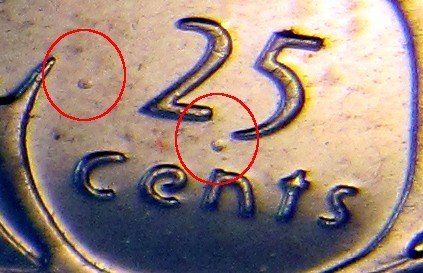 #2 - 25 cents 2011: 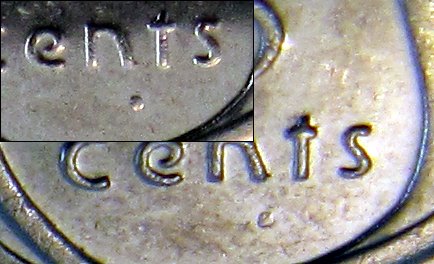 #3 - 25 cents 2011: 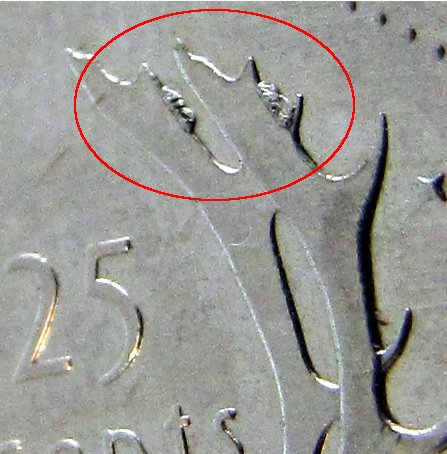 #4 - 25 cents 2006: 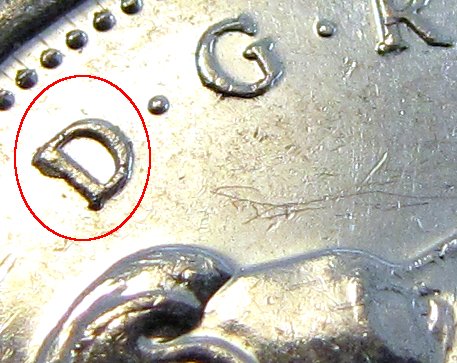 #5 - 25 cents 2011: 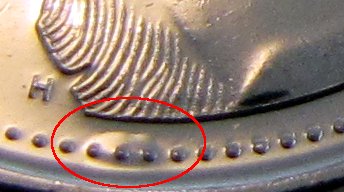 Thanks! |
|
|
|
Pillar of the Community
Canada
1733 Posts |
I don't see anything I'd identify as a die chip, most of the look like plating errors caused by incorrect planchet cleaning. Unfortunately the margin of error they are working with now is enormous. The lowest image features a bubble that occurred post strike, I'd like to sample those in a lab someday.
|
|
Valued Member
Canada
284 Posts |
The first two are dots, maybe the 1st one is worth a small something because it almost look like 2.5cents, some people like that.
|
|
Pillar of the Community
Canada
2785 Posts |
dont mean to hijack your thread (neat find btw, that has a lot going on), but is there some sort of official guideline as to what constitutes an "error"? or at least seperates errors from imperfections? i see coins on ebay listed as "major error" and all they have is a microscopic bit of extra metal. its like if it isn't ms65 its a "major error" (imperfection maybe, but error?). I know some of these sellers are just using buzz words but I think it confuses new collectors. and the prices some of these guys are asking is crazy which leads the new collector to list for a crazy high amount also (sort of creating a false inflation of category of coins that arent really all that rare). wade |
|
Pillar of the Community
Canada
1733 Posts |
It's a matter of opinion. Some errors like brockages are easy to diagnose and carry a premium because they are wanted. Minor plating errors however are very common and don't attract much of a market.
Anything less than perfection could be argued to be an error, but the reality is some errors are uncommon and sought after, others are common and not sought after.
As to prices you can ask for as much as you want, it's much more a matter of what you actually get. I don't buy errors but lots of guys do, there is a market.
Edit spelling
Edited by Ugly
01/09/2012 10:52 am
|
|
Valued Member
Canada
284 Posts |
As ugly says, many things are considered errors and they are, but they're also minor and worthless. The error market is a bit of a jungle, since there is so many and there isn't as many references as there is for ordinary coins. It's important to do your research before you buy, and also know what you care for. For instance, I like errors in general, but I have a strong inclination toward die clashes. It's very hard to collect all types, you tend to get scatered. And when you just want to sell, you need to research to sell at a proper price, or else you might not get what you could.
|
|
Rest in Peace
United States
9104 Posts |
Alan Herbert has written extensively on errors, as have a couple ccf posters.
|
|
New Member
 Canada
16 Posts |
Thanks for the information.
What about #3 looks like a metal accumulation. Is it a common error, any idea what is causing these?
Thanks again!
|
|
Pillar of the Community
Canada
695 Posts |
Quote:
What about #3 looks like a metal accumulation. Is it a common error, any idea what is causing these? It looks like Die Deterioration. Die Deterioration is fairly common - I have never noticed this exact type with deterioration in the antlers. It's interesting, but I doubt many collectors would pay a premium for it. |
|
Rest in Peace
United States
9104 Posts |
 , patsass! There's no such thing as metal "accumulation", or "extra" metal. If there is raised metal on a coin, it's usually because the die was missing a chip, was cracked, etc. |
|
New Member
Canada
4 Posts |
"There's no such thing as metal "accumulation", or "extra" metal. If there is raised metal on a coin, it's usually because the die was missing a chip, was cracked, etc."
Plated coins are known to blister and that's what I believe is what you see in picts 1 and 2. Picts 3, 4 and 5 look like die chips.
|
| |
Replies: 10 / Views: 2,639 |
|







 Posted 01/08/2012 7:18 pm





