











 Posted 01/14/2012 11:43 pm


Explanation:
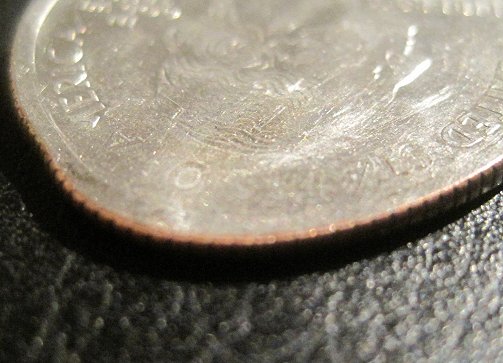
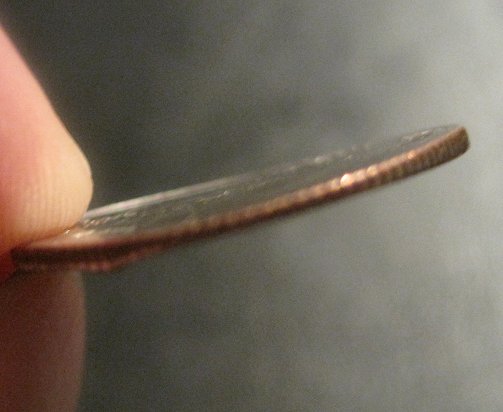
The lines, or reeding, along the edge of the coin were placed there by a circular retaining collar during the strike. Basically when you mash a disc of metal with 40,000 pounds of force, it will pancake outward like a ball of mud under a truck tire. The collar holds the coin in-shape; round. It also places those lines (the reeding) on the edge of the coin.
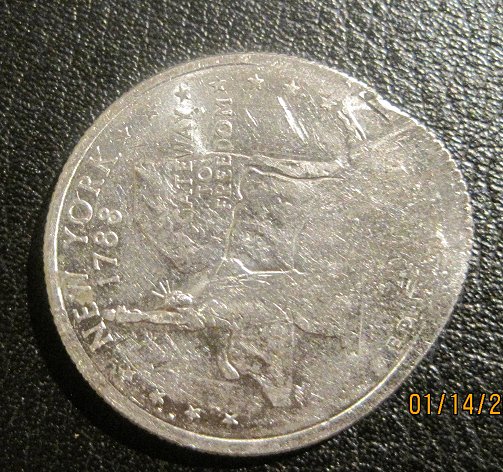
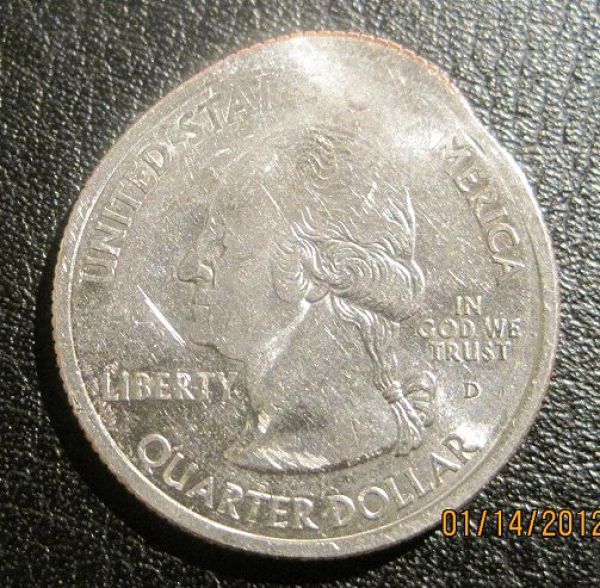
Since your coin has the reeding all the way around, and the coin is not perfectly round, it HAD to have been smashed with something AFTER it left the coining press - thus it had to have happened after the strike.
Looks like someone took a very heavy weight and smashed the coin.
The lines, or reeding, along the edge of the coin were placed there by a circular retaining collar during the strike. Basically when you mash a disc of metal with 40,000 pounds of force, it will pancake outward like a ball of mud under a truck tire. The collar holds the coin in-shape; round. It also places those lines (the reeding) on the edge of the coin.
Since your coin has the reeding all the way around, and the coin is not perfectly round, it HAD to have been smashed with something AFTER it left the coining press - thus it had to have happened after the strike.
Looks like someone took a very heavy weight and smashed the coin.


