| Author |
 Replies: 16 / Views: 4,559 Replies: 16 / Views: 4,559 |
|
Valued Member
Australia
55 Posts |
I'm thinking about unc. Is that optimistic or about right. What do You all think? All feedback welcome. Still trying to just get a rough idea of the grading system. 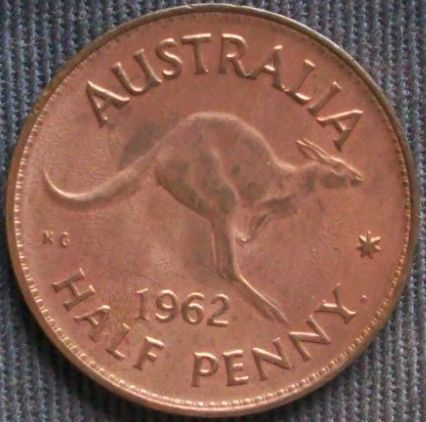 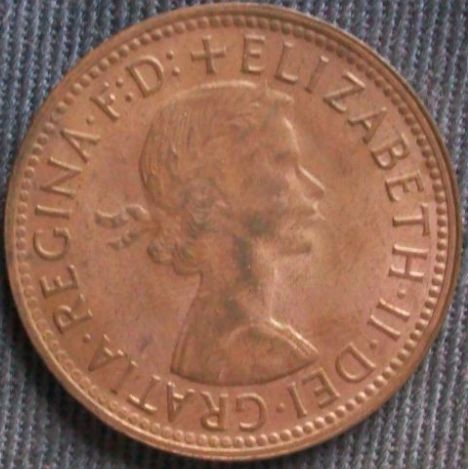 |
|
|
|
Valued Member
Canada
111 Posts |
I compare to canadian coin. I would by the observe it would be a good AU.
|
|
Valued Member
 Australia
55 Posts |
Thank you for your input Pimpim
|
|
Pillar of the Community
Australia
1607 Posts |
Yes,the coin is UNC but has a little bit of RUB from being in a loosely rolled roll,the coins either side have rubbed it a little.
|
|
Pillar of the Community
Australia
4411 Posts |
a good aUNC example. I thnk the rubbing detracts a bit for it to be UNC.
|
|
Pillar of the Community
Australia
7096 Posts |
Au
could be cleaned, Hard to tell without the coin in hand
With the typical weak strike on the obverse
|
|
Valued Member
Australia
55 Posts |
Thanks guys, looks like I'm on the right track then.
|
|
Valued Member
Australia
55 Posts |
Now just to make it a bit trickier then. Where would it fit in these sub gradings. I'm thinking AU-55? AU-50 This is for "About Uncirculated" (the grade) and "50" (the numerical designation of that grade). Also called "Almost Uncirculated-50." This is the lowest of the four AU grades, with the others being AU53, AU55, and AU58. Between 50% and 100% of the surfaces will exhibit luster disturbances, and perhaps the only luster still in evidence will be in the protected areas. The high points of the coin will have wear that is easily visible to the naked eye. Look at examples of AU-50 coins on ebayAU-53 This is for "About Uncirculated" (the grade) and "53" (the numerical designation of that grade). Also called "Almost Uncirculated-53." There is obvious wear on the high points with light friction covering 50-75% of the fields. There are noticeable luster breaks, with most of the luster still intact in the protected areas. Look at examples of AU-53 coins on ebayAU-55 This is for "About Uncirculated" (the grade) and "55" (the numerical designation of that grade). Also called "Almost Uncirculated-55." There is slight wear on the high points with minor friction in the fields. Luster can range from almost nonexistent to virtually full, but it will be missing from the high points. The grade of "Choice AU" equates to AU55. Look at examples of AU-55 coins on ebayAU-58 This is for "About Uncirculated" (the grade) and "58" (the numerical designation of that grade). Also called "Almost Uncirculated-58." There is the slightest wear on the high points, even though it may be necessary to tilt the coin towards the light source to see the friction. In many cases the reverse of an AU58 coin will be fully Mint State. Less than 10% of the surface area will show luster breaks. The grade of "Borderline Unc" equates to AU58. Look at examples of AU-58 coins on ebay |
|
Pillar of the Community
Australia
4411 Posts |
I have never bothered with all the numbered gradings. I disagree with the description to each grade provided. For an Australian coin to be the lowest grade of aUNC it should have no wear to the high points and quite a bit of lustre. If a KGV coin had only 6 full pearls with faded 7and 8th pearls then there is no way it would get an aUNC grading.
I think reduced lustre, friction rubbing and a few light scratches is all that should be on an aUNC coin keeping it from reaching UNC, not actual wear to high points.
If I'm wrong I've undergraded many of my coins.
Edited by enworb
02/11/2012 05:45 am
|
|
Pillar of the Community
Australia
7096 Posts |
You aint wrong enwarb  Good call |
|
Pillar of the Community
1119 Posts |
i also wonder about the grading to "the naked eye" as I've learnt, yet I judge many of my coins from images 10 or 20 times there size.
another thing is the variations of distinction between books, what is written as aunc50^ is what I cal vf to ef.
|
|
Pillar of the Community
Australia
4411 Posts |
All this number stuff is American and it is widely accepted they are lenient when grading. Sap has mentioned in several posts that TPG companies dont used magnification when they grade and I think this goes to show unless your eyes absolutely need it its better to grade it with the naked eye. |
|
Pillar of the Community
Australia
7096 Posts |
The naked eye will not pick out a good fake coin, a good loupe is necessary to pick out the detail of a coin,eg spacing of dates and thickness of the lettering and style and other pertinent details not obvious to the naked eye
|
|
Valued Member
Australia
55 Posts |
Ok, now this seems a bit confusing.
Firstly, is there a published standard for grades/grading. If so, where do I find it please?
Second, Are we saying that forensic examination, ie. to check for fakes is ok but grading should be done with the naked eye?
|
|
Pillar of the Community
Australia
4411 Posts |
1. As far as I know there is no gospel for coin grading.
2. Trout is right - it is handy to have a loupe to check for errors, mint marks, fakes and varieties. I generally don't grade with a loupe but I do use one to thoroughly examine coins for different reasons.
|
|
Pillar of the Community
Australia
7096 Posts |
Lostnfound I'm sorry for confusing you but coin grading is a bit of an art form. After a while you get a sense for a coin photographic or in hand is the best. I an no way an expert in the field of grading but I do know the basics and I am hard on my own coins. Until you get a BU or proof coin in hand then grade backwards from that for the same coin and grade it accordingly you can't understand. A lot of pple grade from the bottom up eg, aGood to BU, I tend to grade from the top down. It works for me |
| |
Replies: 16 / Views: 4,559 |





 Posted 02/11/2012 02:25 am





