| Author |
 Replies: 10 / Views: 1,336 Replies: 10 / Views: 1,336 |
|
|
Valued Member
United States
214 Posts |
This is another coin I got this the Large Cent I haven't research alot yet. After scanning it to show you people I noticed its a Double Die coin. Any ideas on if its fake also. Isn't magnetic, show aounr silver on the detector and but looks possibly casted. Image:  1714Daubloom2.jpg 1714Daubloom2.jpg46.33 KB Image: 1714Daubloom1.jpg50.72 KB |
|
|
|
Moderator
 Australia
16957 Posts |
The "doubloon" is the Spanish colonial gold coin - the silver one is the eight reales, or "piece of eight". That is curious doubling, there - and if it's a cast fake, that may have resulted from a double-press of the coin into the mould. Is there any sign of a seam around the edge? This was found in the same lot as the dubious Half Cent? I'd be suspicious, but I'll be interested in hearing Swamperbob's opinion of this one. Don't say "infinitely" when you mean "very"; otherwise, you'll have no word left when you want to talk about something really infinite. - C. S. Lewis
|
|
Valued Member
 United States
214 Posts |
There appears to be a seam around the edges and thats why I suspected it to be fake. With all the authenic coins, token and commems in this lot I am surprised this person had these coins. Especially the way he had them protected when they came. The reale, large cent and morgans were all wrapped in foam paper triple sealed. Can't imagine him going threw this trouble on fakes.
|
|
Pillar of the Community
United States
7629 Posts |
No such thing as a doubled die from that far back. In order for a die to have hub doubling, it would have to be hubbed in the first place. Even the United States didn't start hubbing dies until the 19th century.
|
|
Forum Mom
United States
5877 Posts |
Just what I was going to say, Coppercoins.  Sorry, but there's no way that I can see that this coin could be genuine. It's an interesting design though. |
|
Pillar of the Community
United States
7123 Posts |
Interesting coin and interesting question .
I think I will stir the pot a bit and post a what if !!
what If the hand held die bounced or was shifted slightly between blows ?
Metalman
|
|
Valued Member
United States
214 Posts |
Basically that was my first response also. Never thought of them having a die with a ribs on it back them. I figured they were more like the old candle wax seals and would have been hammered out by hand. That's not saying I don;t feel this is a fake coin anyway. Did see one of ebay that was similar to this one in most features. Wasn't the word "COPY" to be used on copies? Seems to me any coin produced in likeness of a real coin would be concidered counterfeit other wise. |
|
Moderator
Australia
16957 Posts |
According to your "Hobby Protection Act", it's true - any fake coin made, sold or imported in the USA (incl. Puerto Rico) should be stamped as "COPY", otherwise the person doing so is guilty of counterfeiting. This rule, however, is widely ignored, either though ignorance, apathy or criminal deception. And, of course, it can't be applied retrospectively to coins sitting in collections - any fakes made and sold before 1973 wouldn't have had to be stamped. Of course, the law applies now - if you were to sell it now, you're supposed to stamp COPY on it first. Don't say "infinitely" when you mean "very"; otherwise, you'll have no word left when you want to talk about something really infinite. - C. S. Lewis
|
|
Moderator
Australia
16957 Posts |
quote:
Metalman said:
what If the hand held die bounced or was shifted slightly between blows ?
You'd end up with a coin that looked sort-of similar, but you could probably tell the difference. Specifically, the traces of the first strike would be patchy, more visible in the protected areas where the pressure of the second strike would be lower. I've got an ancient Roman Provincial coin where a double-striking like this happened: 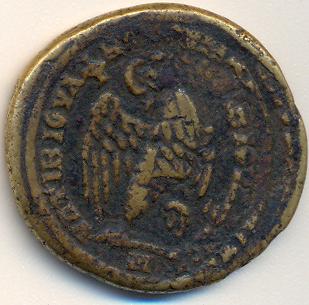 In this case, the coin (or the die) was rotated nearly 180 degrees before it was struck again. The second strike obliterated most of the first, except in the "high points" of the coin (which are low points on the die), which protected the first strike details somewhat. Here, you can see the legend on the left side reproduced superimposed on top of the eagle's wing on the right side. Spanish "cob coins" probably weren't normally dignified with a second whack of the hammer, anyway. The object of the Spanish colonial mint was speed, not quality - if the first strike "didn't take", who would have cared? It would have been tossed in the box with the rest, rather than struck again. Don't say "infinitely" when you mean "very"; otherwise, you'll have no word left when you want to talk about something really infinite. - C. S. Lewis
|
|
Pillar of the Community
United States
7123 Posts |
ordirtdevil
What do think the coin is made of ? its very hard to tell from the pics .
Sap I appreciate your expertise with these coins ,, reading your posts is always a pleasure.
Susan sent me a spanish cob coin ,, it may have sparked a small interest in hammered coins !! If you can believe that ?
Metalman
|
|
Valued Member
United States
214 Posts |
MetalMan, well it isn't of any magnetic materials. I checked that first to see if it was attracted to a magnet. Not heavy enough to be gold and to heavy to be aluminum or a light weight metal. Its just a little smaller then a Franklin half dollar. I weighed them both on my digital scale. The franklin came in about 12.2 Grams and the 1717 at 11.2 grams. |
| |
Replies: 10 / Views: 1,336 |
|










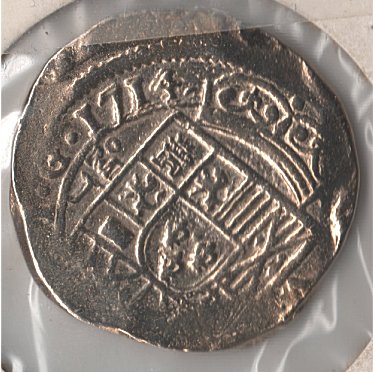 1714Daubloom2.jpg
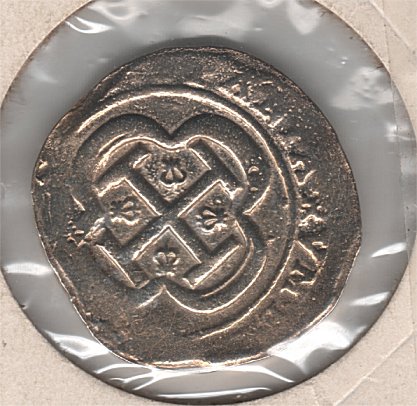 1714Daubloom1.jpg

 Posted 01/27/2007 09:37 am


