| Author |
 Replies: 19 / Views: 4,179 Replies: 19 / Views: 4,179 |
|
Pillar of the Community
Australia
7096 Posts |
I found this in a bunch of old silver. It weighs 5.2g and a worn silver coin weighs 5.5g. You can see the silver plating degrading on the coin. This is my first counterfeit Australian shilling that I have found. 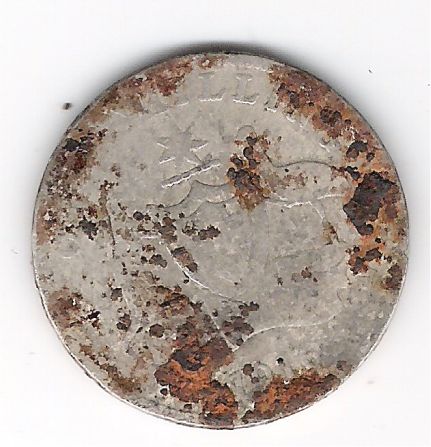 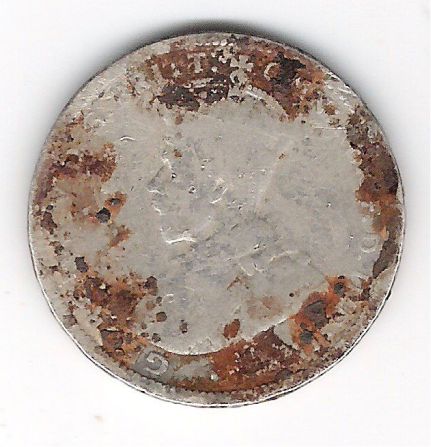 |
|
|
|
Pillar of the Community
Australia
1048 Posts |
My Father used to tell me about Florin & Shilling fakes but that is the first one I've seen.
|
|
Pillar of the Community
 Australia
7096 Posts |
I'll bet THIS one wasn't made in China  |
|
Moderator
 Australia
17032 Posts |
It sticks to a magnet, I assume?
Curious. Most fake predecimal coins I've seen have been made of lead or pewter or something similar, not plated steel.
Don't say "infinitely" when you mean "very"; otherwise, you'll have no word left when you want to talk about something really infinite. - C. S. Lewis
|
|
Pillar of the Community
Australia
7096 Posts |
Quote:
It sticks to a magnet, I assume?
I can't believe I didn't check it with a magnet. It is non magnetic  It is covered in rust and the plating is peeling so I just assumed it was steel. 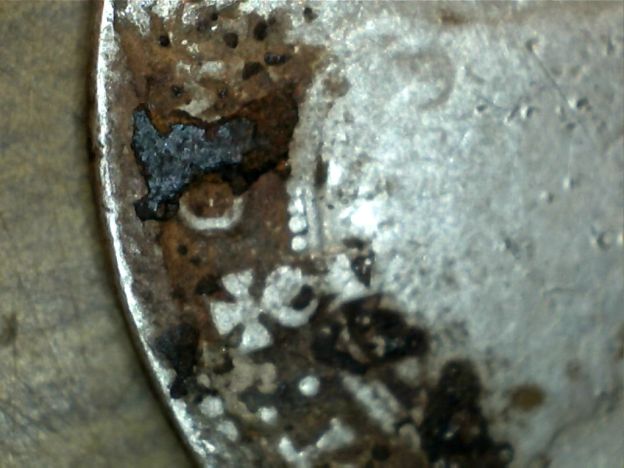 |
|
Valued Member
Australia
428 Posts |
hi all I have 2 x US 1943 coins
in my collection , I have heard they are made from steel in that year as the other materal was needed for making shells for bullets , any info welcomed on these please . keldaw ..
Edited by keldaw2222
03/25/2012 7:29 pm
|
|
Pillar of the Community
Australia
7096 Posts |
the 43-45 nickles were made of 35% silver because the nickle was needed for use in armour plating is all I know about them
|
|
Pillar of the Community
Australia
2830 Posts |
I have a counterfeit florin: appears to be made of lead.
And a 1937 Crown, made of nickel (magnetic)
I've seen British silver coins, counterfeited in brass and bronze, and coated in mercury foe silver appearance.
I wonder what the "silver" coating on Trout's shilling is ?
|
|
Moderator
Australia
17032 Posts |
Quote:It is non magnetic It is covered in rust and the plating is peeling so I just assumed it was steel. While non-magnetic steels exist, they're pretty exotic, tend to be rust-resistant (the outer ring on bimetallic $5 coins is non-magnetic steel) and would not have been in common use back when a 1916 shilling would have been inconspicuous in change. It's presumably some kind of cheap'n'nasty copper-based alloy. Quote:
I wonder what the "silver" coating on Trout's shilling is ? It's peeling away in layers, so it's not mercury. Mercury "soaks into" the coin's surface. The colour to me looks right for silver, so it's probably actual silver plating, either electroplated or "Sheffield plate", depending on the thickness of the silver layer. Quote:
hi all I have 2 x US 1943 coins in my collection, I have heard they are made from steel in that year as the other materal was needed for making shells for bullets, any info welcomed on these please . keldaw ..
the 43-45 nickles were made of 35% silver because the nickle was needed for use in armour plating is all I know about themYou didn't say which denomination of US coins you had. Only 1 cent coins were made of steel in 1943; all other denominations (yes, including "nickels" at the time) were made of silver alloy. The switch was made because both copper and nickel were strategic resources needed for the war effort. And unlike trout's bogus shilling, 1943 "steel cents" will stick to a magnet. We do have a US Coins section on the forum you can ask about your American coins.  Don't say "infinitely" when you mean "very"; otherwise, you'll have no word left when you want to talk about something really infinite. - C. S. Lewis
|
|
Pillar of the Community
Australia
4411 Posts |
Its hard to make out the year. Is it 1916?
|
|
Pillar of the Community
Australia
552 Posts |
Interesting specimen trout
Could be copper in coin corroding
|
|
Pillar of the Community
Australia
1048 Posts |
I'm not sure how they were made or aged but they copied old silver coins that did not have much detail,my Father said they used melted down cutlery to make them,not sure if that was just the plating or the whole coin.
|
|
Bedrock of the Community
Australia
21794 Posts |
I have seen coins that have been buried is tin cans that have rusted. I suspect that some of the silver at the contact points with the rusting steel forms a complex double ferro silver salt, where most of what you see is ferro oxides (rust).
I would think that those rust looking flakes could be removed to reveal slight corrosion to the silver surface underneath, in the region where a double ferro silver salt has formed at the contact points.
With a shilling as worn as this one, the deleterious effects of burial in a rusting steel tin would have little influence on the value of the coin, which would not be much above bullion value anyway.
|
|
Valued Member
Australia
370 Posts |
 with sel. Most probably genuine. Small variations in weight are pretty normal and can be caused by slightly thinner planchets(hard to detect with the naked eye).This is often noticed in rolls of 1c coins, where it seems like the roll is shorter and missing a coin. If you have a few thinner planchet coins in a roll this will cause the appearance of a short roll. Also bits peeling off can reduce weight by fractions of a gram. Needs further analysis for me. Dropping the coin on a desk and listening for a jingle is a crude and basic start. Definitely not foolproof but if it thuds then it's probably a clad lead copy. |
|
Valued Member
Australia
428 Posts |
sap , thanks for the help with that coin ,, I cent steel 1943
i went to that link and looks like they are not worth much as to many were made , my mistake I thought they were a little bit rare . keldaw ..
|
|
Pillar of the Community
Australia
4411 Posts |
The copper 1943 cent is rare and pretty valuable.
|
| |
Replies: 19 / Views: 4,179 |




 Posted 03/25/2012 6:36 pm





