| Author |
 Replies: 28 / Views: 4,349 Replies: 28 / Views: 4,349 |
|
|
|
Pillar of the Community
United States
652 Posts |
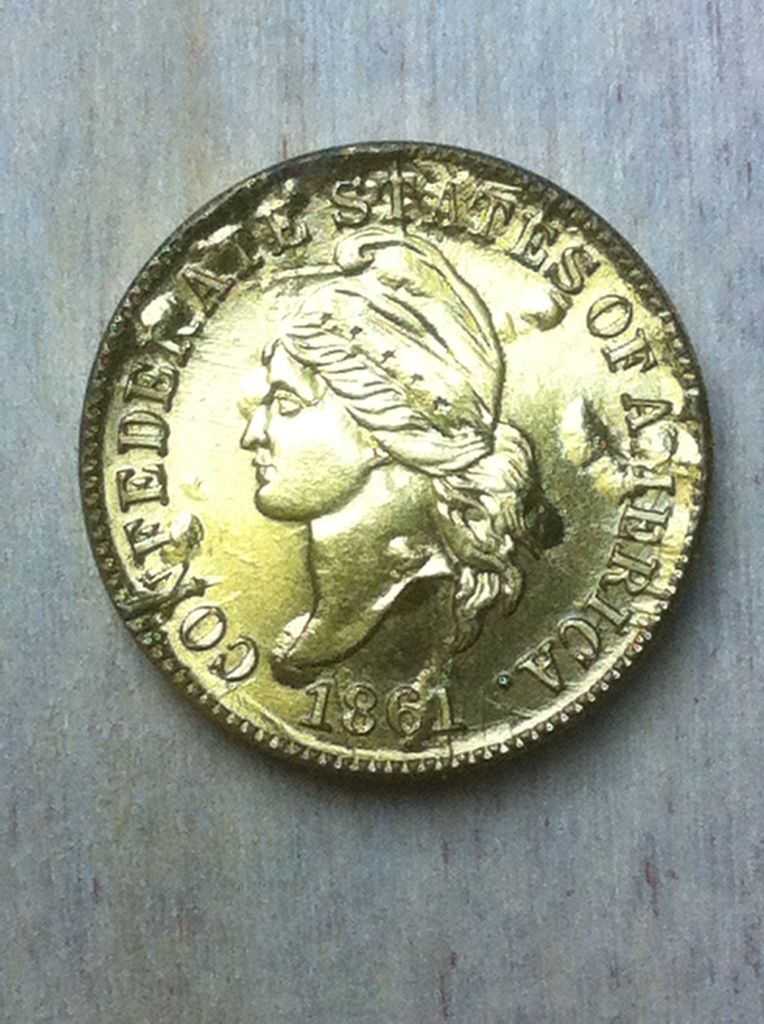
Here's my 1861-O confederate half dollar - from the last batch minted by the CSA before the mint was closed down to further coinage. First post on this page: https://goccf.com/t/115376&whichpage=8I think it was 1879 when the New Orleans mint started minting coins again for a few more years. Edited by mackwork
05/09/2012 4:33 pm
|
|
Bedrock of the Community
 13014 Posts |
mack that really is a beautiful design on that coin
|
|
Bedrock of the Community
United States
20753 Posts |
Quote:
As a civil war buff I have always toyed with the idea of collecting coins from the period. Just out of curiousity, what other civil war stuff do you collect. Was a recent post about what else do you collect in the main forum. |
|
Pillar of the Community
United States
1716 Posts |
I just decided to upgrade the half in my 7070 to a CSA half - this will be a fun hunt!
|
|
Bedrock of the Community
13014 Posts |
Quote:
Just out of curiousity, what other civil war stuff do you collect. Was a recent post about what else do you collect in the main forum. I dont have a whole lot as the opportunity has never really presented itself to me at least, but I do have a book with a complete collection of newspaper articles that were run during the war about the war. Dose a collection of all the civil war themed movies count lol |
|
Valued Member
United States
179 Posts |
Robert Bashlow was a very interesting eccentric coin buff/dealer who among other "adventures" enjoyed recreating famous coins of the past. For the Confederate "restrikes" he had AG Frank and Company in Philadelphia create transfer die copies from both the cent and half. The cent dies were cancelled with chisel strikes and badly rust pitted when Bashlow obtained them. The transfer dies are very very accurate down to die cracks on the original dies. Some work was done to clean and smooth the pitting. Though we see the copper, silver and Goldine (brass) pieces he also done very small quantities in platinum, gold, tin, hard paper etc. Splashers and strikes in blocks of copper also exist. For the record, these are no more "Confederate" than a kids kepi bought in a tourist shop. They are what they are and fully Collectable. Despite these facts, Heritage has now decided to list them "confederate" in search terms. The cents are piedfort, double thickness, and none were struck on copper nickel planchets, as we're the 12 (or 13 or 14) originals. As for the Half Dollars, four original coins exist. These four and only these four were struck in New Orleans by Confederate Authorities using a screw press They felt the design was too "high relief" for the lower pressure steam press. Jefferson Davis carried one as a pocket piece and when his party was captured at wars end it was found in his wife's luggage. Restrikes occurred in 1879 and are still being done. The restrikes were made by planing off the reverse of struck halves and padding the obverse with leather. All have a somewhat flattened obverse and are somewhat available today, though expensive. The Scott token was made at this time using a white metal planchet and different obverse. While the four half dollars ARE the only actual designed and struck Reb coins, they were in control of the Sputhern Mjnts for a short time and 1861 D gold dollars and $5 liberty gold was actually "confederate".
|
|
Valued Member
United States
179 Posts |
|
|
Valued Member
United States
179 Posts |
For more reading on CSA coins I suggest Hill and Levi " Robert Lovett A Confederate Story" and John J Fords writing on the CSA coinage and his astonishing collection in Stacks Ford Collection Volume 1 Lovett borrowed the basic design from his 1860 store card, which was also struck in various metals including this example done on an identical copper nickel flan as the originals. 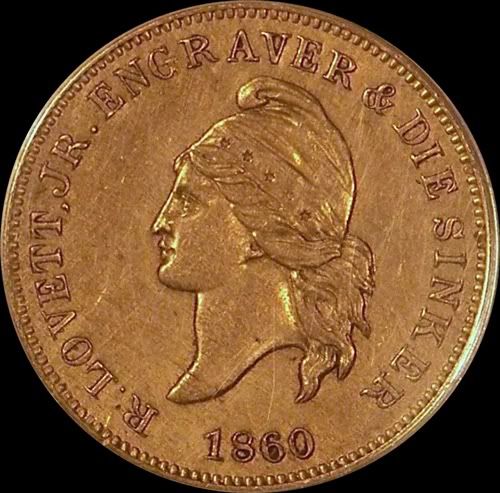 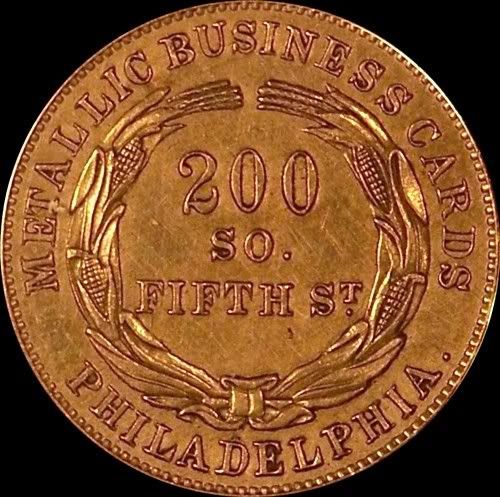 |
|
Bedrock of the Community
United States
17884 Posts |
Quote:
Robert Bashlow was a very interesting eccentric coin buff/dealer who among other "adventures" enjoyed recreating famous coins of the past. For the Confederate "restrikes" he had AG Frank and Company in Philadelphia create transfer die copies from both the cent and half. Quote:
Restrikes occurred in 1879 and are still being done. The restrikes were made by planing off the reverse of struck halves and padding the obverse with leather. Bashlow never did restrikes of the half dollar, only Scott did that. And there have been no restrikes from either the Confederate half die or transfer dies since Scott finished in 1879. All of the later Confederate half copies, fakes, fantasies etc have been from dies created for the purpose. The 1861 D gold dollars ARE Confederate, the Union never struck any gold dollars in 1861 in Dahlonega. Both the Union and the Confederacy struck half eagles but there is as yet no way to tell them apart. |
|
Valued Member
United States
179 Posts |
Here's the Bashlow CSA half Restrike 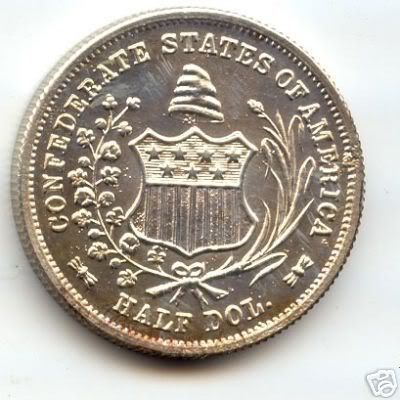 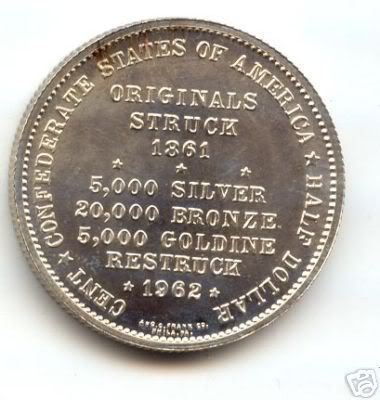 |
|
Valued Member
United States
331 Posts |
As someone else mentioned, you might also consider notes. Fractional (I.E.<$1) notes are readily available in U.S., Confederate, and Confederate States issues. I' ve been collecting these notes for a while now and because they aren't as popular as Confederate issues they are reasonably priced even for rare issues.
|
|
Bedrock of the Community
United States
17884 Posts |
Well apparently I was wrong about Bashlow making Confederate half restrikes. I do notice something interesting on that restrike. Doing a little searching on this I found references that state the Confederate die has not been seen since the 1920's. But that Bashlow restrike shows die rust above the ER in America, and in the leftmost stripe of the shield. Pictures of the Scott Restrikes show die rust, but not as extensive, in the same locations. If Bashlow had new dies made I would not have expected him to copy the die rust (Transfer dies would reproduce the rust) Maybe somehow Bashlow DID manage to get his hands on the original die! I wonder where it is now? The Bashlow Confederate cent dies and the transfer dies were I believe donated to the Smithsonian. Did he do the same with the half dollar?
|
|
Valued Member
United States
179 Posts |
According to JJ Ford the die was defaced by a single chisel strike by Scott in 1879. In 1893 the die was sold to the Chapman Brothers. It was then sold to Judson Brenner who also owned the CSA cent die. The die then passed to Sanford Saltis who presented it to the Louisina Historical Society. The present location (at Fords writing) is unknown. So.... It would appear Bashlows due was created from a Restrike Coin rather than the original dies.  |
| |
Replies: 28 / Views: 4,349 |




 First Page


 Posted 05/10/2012 8:35 pm