| Author |
 Replies: 11 / Views: 1,904 Replies: 11 / Views: 1,904 |
|
|
Pillar of the Community
Sweden
729 Posts |
So I'm in contact with a seller who claims he has an 1860-O half struck in aluminuim.  Did some serious googling and come to the conclusion that it might be a civil war identification tag. But then it would have some text or specifics that distinguish it as an ID token besides weight. all the other ID tags I've looked at hade something that told if it was a yankee or confed tag. anyone else got some more info on these sort of "coins"? Or the specific coin. asked for more pictures and specifics (weight, diameter etc) 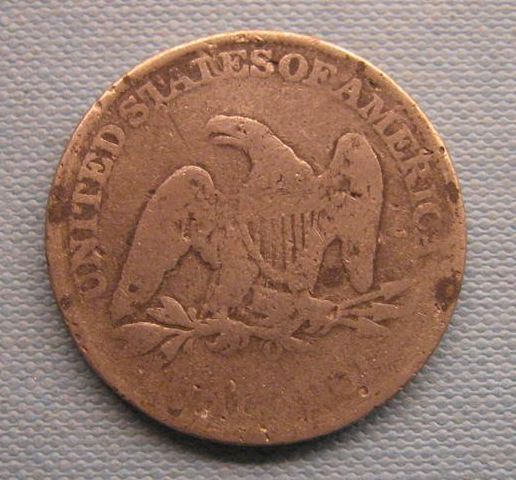 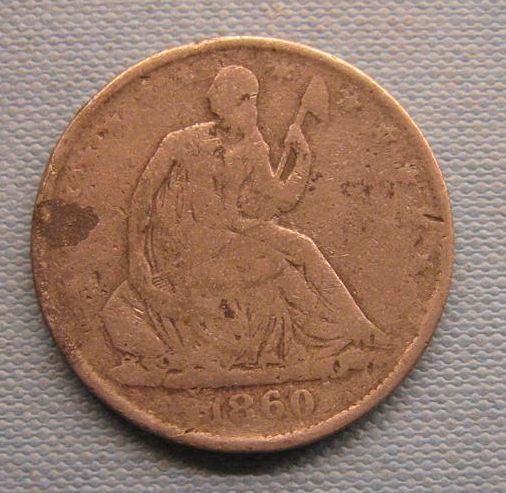 |
|
|
|
Bedrock of the Community
United States
12437 Posts |
Considering that aluminum was worth much more than gold in the mid-1800s, it is highly doubtful that he has a Seated Liberty half dollar in an aluminum composition. The only coinage use for aluminum in that time frame would have been a few rare pattern strikes with very limited mintages and those were minted in Philadelphia, not a branch mint like New Orleans. |
|
Pillar of the Community
 Sweden
729 Posts |
That was actually the exact words he used: USA pattern half dollar.
Oh well, an interesting piece nevertheless. It seems wierd though to make a fake US pattern.
Anyone got some more info on the subject?
|
|
Pillar of the Community
Sweden
729 Posts |
hmm, here it states that Anthony C. Paquet did alot of patterns, including som "S" types. Those weren't half dollar patterns though, but still proof that not only philadelphia patterns were made.. http://uspatterns.com/anthonycpaquet.html |
|
Pillar of the Community
United States
1796 Posts |
If it's in aluminum, it's most likely a modern forgery. This looks like a job for a TPG to sort out. |
|
Bedrock of the Community
United States
17884 Posts |
Quote:
Considering that aluminum was worth much more than gold in the mid-1800s, Aluminum wasn't that valuable, more on a par with silver. Looks like is might be a contemporary countefeit in tin or white metal. First use of aluminum at the mint for patterns was 1863. |
|
Bedrock of the Community
United States
12437 Posts |
Quote:
Anthony C. Paquet did alot of patterns, including som "S" types. That would be a reference to the 1861-S Paquet Reverse Double Eagle. It was not a pattern, it was design modification to business strikes and almost 20,000 were minted at San Francisco. Philadelphia Mint officials were not satisfied with the results of the design modification and ordered its discontinuation after the brief striking. |
|
Pillar of the Community
United States
5854 Posts |
The appearance does look a lot like a contemporary counterfeit. Do you think you could get the weight of the coin?
|
|
Pillar of the Community
United States
3294 Posts |
Actually, aluminum was more valuable then gold until later, like the 1870s and 1880s when it came down to silver price.
|
|
Pillar of the Community
United States
6431 Posts |
A worn silver half should weigh around 12 grams. An aluminum version would probably weigh less than 4 grams. A contemporary counterfeit in tin, white metal, or German silver would probably weigh around 9 grams. Please check the weight on a decent scale and let us know the result!
|
|
Pillar of the Community
Sweden
729 Posts |
Got some more info from the seller. It weighs 9,6 grams, so it's not aluminium.
Not a real pattern then.
Thanks all for your help
|
|
Bedrock of the Community
United States
17884 Posts |
In the 1840's aluminum was more valuable than gold, but by the late 1850's it had fallen to under $2 an oz. By the mid 1880's it was down to $1 an oz. It's next big drop in price came in 1886 and by 1893 it was 65 cents a pound. By 1914 it was down to $0.01 an oz.
From the 9.6 gram weight this is definitely a tin or white metal contemporary counterfeit. And rather desirable to those of us who like contemporary counterfeits.
|
| |
Replies: 11 / Views: 1,904 |
|










 Posted 06/06/2012 3:06 pm


