| Author |
 Replies: 11 / Views: 2,637 Replies: 11 / Views: 2,637 |
|
|
Valued Member
United States
73 Posts |
Edited by 1inamillion15
06/13/2012 8:43 pm
|
|
|
|
Pillar of the Community
United States
1691 Posts |
|
|
Pillar of the Community
Canada
1411 Posts |
A groat (fuppence) is an old British coin that was worth four pence (English).
There was also a Scottish variety that originally was worth the same as the English but was raised in value later (don't know the date).
Thats all I know...
|
|
Valued Member
 United States
73 Posts |
not much but thanks you gave me a bit to look up
|
|
Pillar of the Community
Australia
3306 Posts |
|
|
Valued Member
United Kingdom
348 Posts |
The Hammered groats ? I presume these are the ones you are talking about ? have a long cross on the reverse so they could be cut to give change
|
|
Pillar of the Community
France
1591 Posts |
|
|
Moderator
 Australia
17006 Posts |
As explained on the Tony Clayton site linked to earlier, there are basically three classes of groats.
"Early" circulation types were introduced in 1279, and from 1351 they became the primary silver coin of England. They continued to be issued, gradually reducing in size, until the reign of Elizabeth I when they were replaced by the threepence and sixpence.
"Maundy money" groats form part of the four-coin series of coins especially given away by the monarch on Maundy Thursday (the day before Good Friday). The Maundy ceremony continues to this day and 4 pence coins of the traditional design are still made for that purpose. Originally given away to the poor, the earlier Maundy types would have circulated as real money alongside the "normal" coins, but from the time of George III they would have been an uncommon sight in change.
"Later" circulation groats were not usually known as "groats", but fourpenny bits, or the nickname "joeys" after the British politician who successfully lobbied for their introduction. Like the American 3 cent piece, they were introduced to serve a specific function (in the case of the joey, to pay a cab fare) and were generally unpopular. An exception was British Guiana (now known as Guyana), a former Dutch colony in South America where 4 pence was reckoned by the locals at a quarter of the old Dutch guilder. 4d coins continued to be issued specifically for that colony up until WWII.
Don't say "infinitely" when you mean "very"; otherwise, you'll have no word left when you want to talk about something really infinite. - C. S. Lewis
|
|
Pillar of the Community
United Kingdom
709 Posts |
The reference I have (printed 1959) states that the last 4d coin for British Guiana was minted in 1945. Anyway, here are pics of the groats in my collection, for your enjoyment: 1831 William IV Maundy 4d ( 17.6mm 1.9g ) 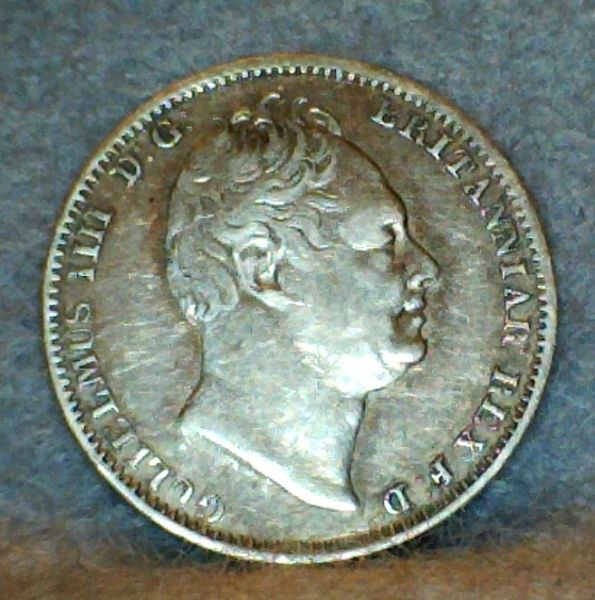 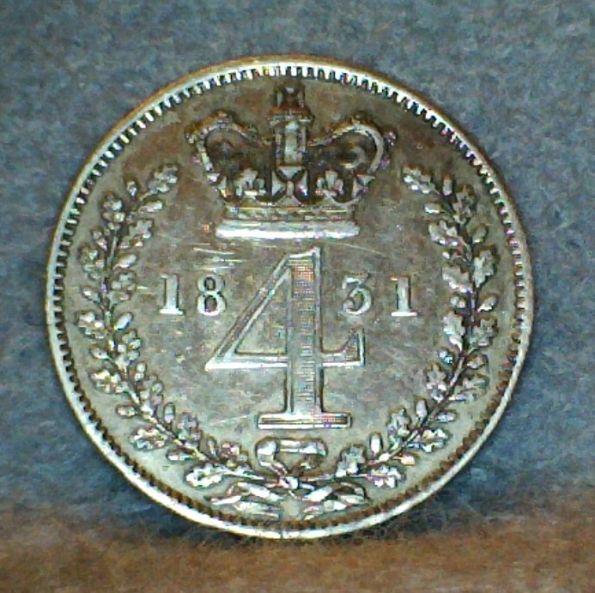 1843 Victoria 4d ( 16.4mm 1.9g ) ( Looks like the poor thing was savagely "cleaned" in its past ). 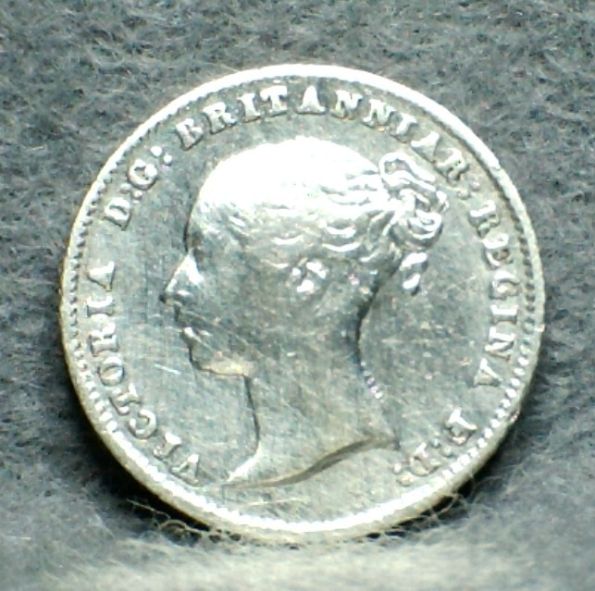  1888 Victoria 4d with "jubilee head" obverse, ( dimensions same as above )   |
|
Valued Member
United Kingdom
348 Posts |
nice coins we detect quite a few over here
|
|
Valued Member
United States
73 Posts |
Thanks guys, but anyone got a pic of a hammered groat?
|
|
Moderator
Australia
17006 Posts |
There are several on the website bryan10au linked to. But here's my Edward III groat, from my Gallery: 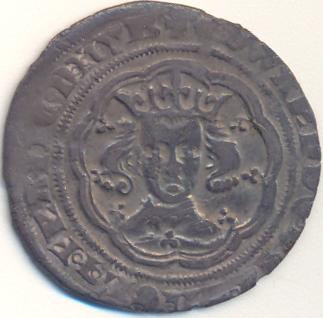 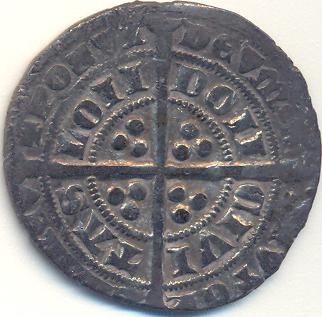 My other hammered English groats are of Henry VII, Henry VIII and Mary, but I don;t have any ready-to-go pics of them right now. Don't say "infinitely" when you mean "very"; otherwise, you'll have no word left when you want to talk about something really infinite. - C. S. Lewis
|
| |
Replies: 11 / Views: 2,637 |
|









 and I was wondering if anyone could explain to me what they are?
 I thank you for taking the time to help me.


 Posted 06/13/2012 6:58 pm


