| Author |
 Replies: 14 / Views: 2,728 Replies: 14 / Views: 2,728 |
|
|
Pillar of the Community
United States
2624 Posts |
Please note the difference.First shot is of a "normal" 2012, the second shows doubling. 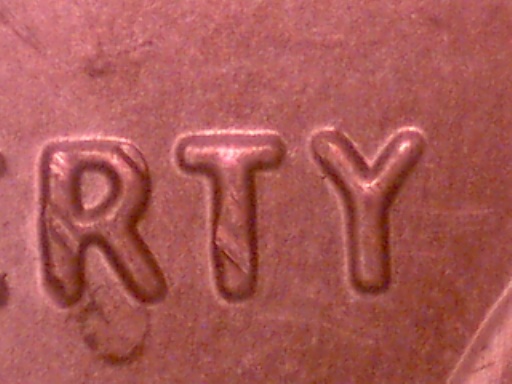 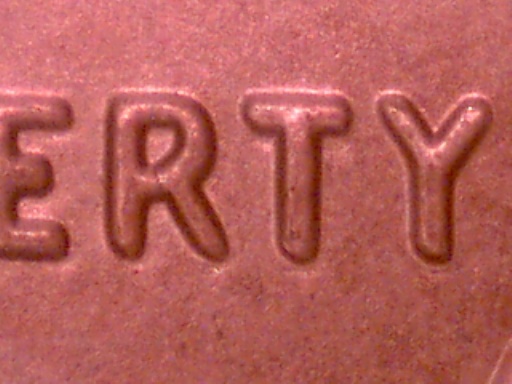 Edited by DrDon
07/12/2012 7:41 pm
|
|
|
|
Valued Member
Canada
321 Posts |
Unless my eyes are deceiving me ( which at 22 years old with perfect vision as confirmed yesterday by a dr ) I don't see any doubling..
|
|
Moderator
 United States
14463 Posts |
 and with the way dies are made now, doubling is almost impossible. |
|
Pillar of the Community
United States
2651 Posts |
I see what you are refering to...the bottoms of the T and the Y are slanted and the right part of the "Y" is a little thicker than the other side. It could be a very very mild DD...
|
|
Pillar of the Community
United States
2651 Posts |
Fuzzy...please explain how it is almost impossible to have a doubled die on newer coins...There are a couple nice ones for 2010 and 2011 cents...and how about the Duke Ellington Quarter?
|
|
Pillar of the Community
United States
4132 Posts |
This looks to me clearly like a minor doubled die. The notching isn't subtle.
|
|
Moderator
United States
14463 Posts |
I thought new dies are made with a lathe that grinds out the design from a blank. It makes one pass for the design, so unless the grinder was specifically programmed to make a pass for the date again, doubles would be almost impossible.  |
|
Valued Member
494 Posts |
Nice find DrDon! That's the first 2012 I've seen - QUESTION - how many 2012's did you go through until you found this one.
I have several rolls that I've been putting off going through, but I think I've found my inspiration!
|
|
Pillar of the Community
United States
4132 Posts |
Nope, that's only how master hubs are made. Master dies, working hubs, and working dies are made by hubbing in a press. In the past, doubled dies occurred because hubbing required multiple passes to make a full impression, and in between passes, the die had to be removed from the press and softened in an annealing oven. Around '96-'97, the mint started using a new process that only required a single squeeze, but it actually didn't stop the doubled dies from occurring. In fact, there may be more minor doubled dies now. It seems that they're caused by a shift occurring during the hubbing process. There have been countless very minor doubled dies during the single-squeeze era - think of all the doubled column bars or statue knees on LMCs, or all the central design doubling on 2009 cent reverses. There have been a handful State Quarters with central doubling on the reverse as well, the DC quarter most notably. The 2005 "Ocean in View" nickel had a number of very minor examples of central doubling on the reverse, and there is a fairly strong doubled die for the obverse of the 2004-P "Peace Medal" nickel. There have also been some strong DDOs on cents in 2006 and 2011 and some more minor ones in other years as well. |
|
Moderator
United States
14463 Posts |
Thanks CaptainFwiffo, learned something new  |
|
Pillar of the Community
 United States
2624 Posts |
Lonz: I got a Brinks box last Friday(18% copper),I have three of these out of that box.Maybe 100-150 2012's.
|
|
Pillar of the Community
United States
3592 Posts |
Looks similar to the one Bob Piazza found in April...but not exactly the same. He said it wasn't strong enough to list. Good eye DrDon
|
|
Pillar of the Community
United States
7629 Posts |
I see what might be a doubled die - but to me it's too minor.
|
|
Valued Member
United States
131 Posts |
|
|
Pillar of the Community
United States
2624 Posts |
|
| |
Replies: 14 / Views: 2,728 |
|







 Posted 07/12/2012 7:54 pm





