| Author |
 Replies: 14 / Views: 1,949 Replies: 14 / Views: 1,949 |
|
|
New Member
United States
20 Posts |
I'm curious and still learning. If something goes for grading and each side of the coin is a different grade...which one gets marked on the slab? The better or worse? I realize that a coins normal wear would be fairly symmetrical, but even one grade can make a difference I suppose.
I'll guess that its the worse of the two sides, but anxious to learn.
Josh
|
|
|
|
Bedrock of the Community
13014 Posts |
I think it depends on how big the difference is. If its a single grade they pick one or the other, probably the lower one but again probably depends how bad or good each side is. Like if one side is a very strong 64 but the other is a strong 63 it has a shot at the 64 I believe but could be wrong.
If its a huge difference I assume they pick something in the middle of the two
|
|
Pillar of the Community
United States
716 Posts |
You don't split grading very often, but coin is usually valued at its lower grade whether it is the obverse or the reverse.
|
|
Pillar of the Community
United States
1436 Posts |
There was a time when the TPGs graded BOTH sides of the coin and it was noted on the slab... Kind of wish they would go back to that. That is what would make it fair and most equitable for all involved... there would be no questions
|
|
Moderator
 Australia
17009 Posts |
There are two schools of thought on handling split grades. "Old school" (the official ANA grading guide) is to give the coin the lower of the two grades. Others, particularly in the Classic US coin series, give a net weighted grade, with the obverse contributing 70 to 80 percent of the net grade. Thus, a coin that's technically MS-64/66 (obverse 64, reverse 66) will net-grade a high 64 or low 65. The TPGs "market grade". That means, for coins with a noticeably different split grade, they grade it judging by what price they think the coin ought to be able to be sold at. If it's a technical split MS-64/66, but they think it looks good enough to easily sell for 66 money, they'll grade it as 66. Don't say "infinitely" when you mean "very"; otherwise, you'll have no word left when you want to talk about something really infinite. - C. S. Lewis
|
|
Pillar of the Community
United States
5854 Posts |
From what I have seen on U.S coins, if the obverse is worse than the reverse, the coin is usually given the grade of the obverse. The reverse could bring the grade up a bit if it grades significantly higher. In cases where the obverse grades higher than the reverse, I think they just take the average of the two grades.
|
|
Pillar of the Community
United States
1436 Posts |
Sap, thanks for the info. That's certainly good to know when sending coins in for grading.
|
|
New Member
 United States
20 Posts |
Fantastic information! Thanks for the insight to current (and past) methodologies. I find it a little disheartening that they are currently grading splits at a "market grade". It sounds like its something that goes outside the bounds of technical merit of the coin and further into the graders subjective/gut feeling. I understand that these guys are really good at their jobs, but when the difference between getting a 64 and a 66 (as the only) number on the slab, I have a hard time swallowing the notion that its whatever they think I can get for the piece. At least the "old school" way seemed to have definitive guidelines and maintain a bit of technical, quantifiable, method to assigning a single split score. And while its a stricter grading method, I agree that the coin should simply be graded at its worst face. Overall value can be no better than the worst of its parts. OR two grades. Two grades would be nice, but that could make future buying a complete nightmare. What would you guys rather see?
|
|
Pillar of the Community
United States
1436 Posts |
I'm planning on sending in an 1827 Square base Capped Bust Half for grading. When I purchased it, the obverse was stated to be AU58 and the reverse at MS63. So if the TPGs give a net weighted grade, with the obverse contributing 70 to 80 percent of the net grade, I should expect somewhere around MS60 to MS61 if the eye appeal is favored? Something tells me it'll come back @ AU58. We'll see
|
|
Pillar of the Community
United States
1436 Posts |
I guess I didn't answer the question... I think I would rather see the split grading system. That way it would take the "averaging" and personal opinions out of it and make it soley objective to the condition of the coin.
|
|
New Member
United States
20 Posts |
Dave - I think we would all LOVE to see how this comes back from grading!! If you happen to remember to post back in this thread it would be greatly appreciated! Absolutely have my fingers crossed that you get the grade you're after! Do you generally agree with the au58/ms63 grade that was initially marked?
|
|
Pillar of the Community
United States
1436 Posts |
Yes, I agreed w/ the assessment before I bought the coin. I will post back once I get the coin back from grading. Going to try a relatively new grading service, MMNS, that offers what's called the HALO360 holder. It has a highly polished, beveled ring around the outside of the coin so the edge lettering can be viewed. Here's a write up from the MMNS site
Using Patent -- pending double refractive military grade optical technology*, the Halo360 allows any coin's edge to be viewed in full 360 degree clarity -- all in the familiar, sleek and stackable MMNS slab. Each slab along with all of MMNS's products are 100% manufactured in the USA, coin friendly inert materials, and features our robust security model: fully-sealed ultrasonic welded construction, holographic security stickers inside and out, and a molecular fingerprint within the holder's acrylic only known to MMNS. The Halo360 augments our security model by enabling visual access to the coin's edge, deterring coin tampering and "sandwich coins"
|
|
Bedrock of the Community
United States
17884 Posts |
Quote:
I agree that the coin should simply be graded at its worst face. There can be problems with that approach on the early coins. The reverse of many of the 1794 and 1797 cents were rather shallowly cut and it is not unusual to find a cent of those years with the obv in VG sometimes even a little better but the reverse almost gone. Ifyou go by the weaker side then that cent with a VG obv would grade as a Fr-2 coin. |
|
Bedrock of the Community
13014 Posts |
After thinking about this for a bit as cool as it is to see the double grade I'm happy its gone. The amount of problems that would cause as a buyer having every coin graded like that would be a nightmare. Way to many combinations to ever really have a realistic price guide, some dealers would price it by the highest, others would just pick some random in between ect. Itd basically be like it was never graded at all just haggling over grade and price and the grade part especially was what the TPG is supposed to solve. Then there would be the question of whats more important the reverse or the obverse and would just create a lot of unneeded problems. Grading it by the lowest grade seems okay at first but after thinking a bit I personally wouldnt like that as the standard approach. A 66/62 would be graded the same as a 63/62 yet one would clearly have a better over all coin. Probably unlikely for real wide splits to be common but can still happen. The only real time I could see always picking the lower grade would be a 70/69 split. Itd be fun to have one to see the old way, but if we brought it back purchasing would become a lot more complicated for anything but 70/70s which even then would probably get more expensive because of 70/69s out there |
|
Pillar of the Community
United States
1436 Posts |
ITVirtuoso... forgot I had saved pictures of the half... 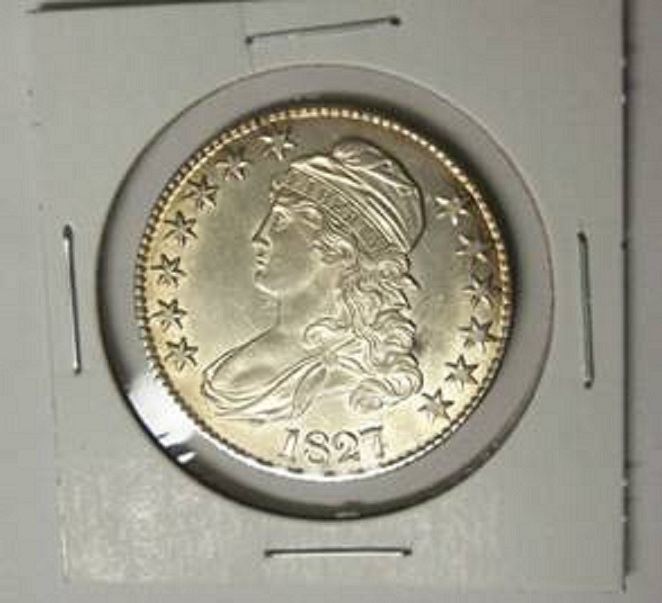 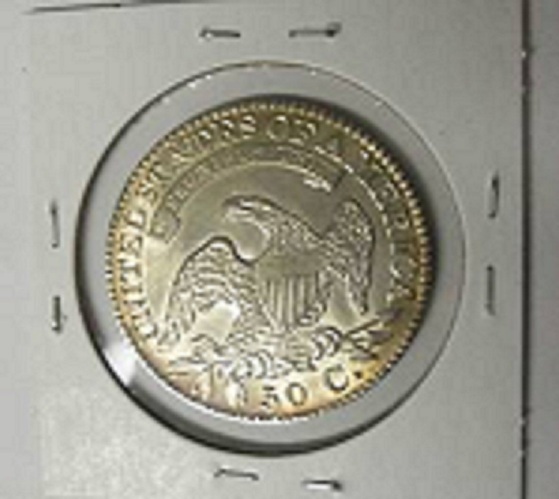 |
| |
Replies: 14 / Views: 1,949 |
|







 Posted 08/05/2012 4:25 pm





