| Author |
 Replies: 15 / Views: 4,724 Replies: 15 / Views: 4,724 |
|
|
New Member
New Zealand
7 Posts |
I have a $2 NZ coin. I checked it with a Coin collecting shop a few years ago when I got it, and he confirmed that it is real. I have no experience in this field, but would like any advice, evaluation, etc that anyone could offer. I acquired it in 2004, in my change. being that it has no pressing on it, I can't give you a date. It has both the correct edge, and rim. it also has a small marks around the rim where it looks like it was pressed, but left no images on either side of the coin. I have some images that may help. Thanks. 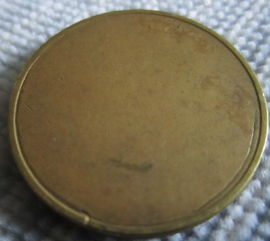 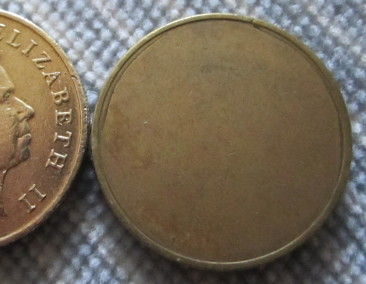 |
|
|
|
Pillar of the Community
Australia
2180 Posts |
Is it blank on both sides then?
|
|
Valued Member
United States
228 Posts |
|
|
Moderator
 Australia
16985 Posts |
If it has the "correct rim" for a New Zealand $2 coin (a security edge) then I'm pretty sure it must be post-mint damage rather than an error, because I'm pretty sure the edge is applied by the collar die at the same time as the obverse and reverse are applied with the main dies. A genuine unstruck $2 planchet should have a plain edge.
Don't say "infinitely" when you mean "very"; otherwise, you'll have no word left when you want to talk about something really infinite. - C. S. Lewis
|
|
New Member
 New Zealand
7 Posts |
It is blank on both sides. It doesn't look like it has post-mint damage. When I took it to a coin shop guy, he weighed it and it was the correct, and he confirmed it was a real $2 coin. This was about 8 years ago. The surface looks real smooth, except for the little bits around near the rims, where it looks like it was struck. as pictured about. How would I go about finding out if it was post-mint damage?
|
|
Pillar of the Community
Australia
2180 Posts |
Post a picture of the rim.
How much does it weigh?
|
|
New Member
New Zealand
7 Posts |
I'll have to get back to you on that. I tried but my camera wouldn't focus. I'll also have to find some scales. I don't collect coins or anything like that. So I'll see what I can work out. It's bed time for me, so I'll try and re-post in the next day or so. Thanks.
|
|
New Member
New Zealand
7 Posts |
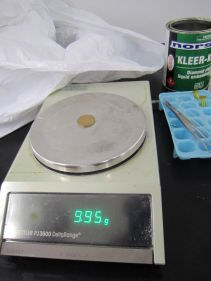
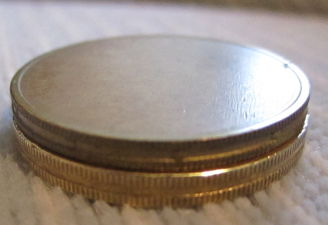
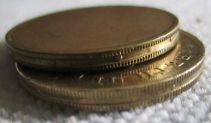
I have Weighed and measured my coin. Weight: 9.95 grams Diameter: 26mm Width: 2mm I don't actually have a proper ruler at home. so I had to use a real cheap measuring tape from cheap sowing kit. I was also told that scales weren't the "most accurate" either by the owner. But I hope this helps in getting a clearer picture. I can't get any better pictures of my coin either I'm afraid. You can see the 2 definitive marks, that follow the rim some what. And the big one in the picture actually left a mark on the rim. The other side of the coin has no marks as the pictured one does. I would love to know more about this coin and can try and do more investigation if needed to help you guys, help me learn more about it. Thanks. 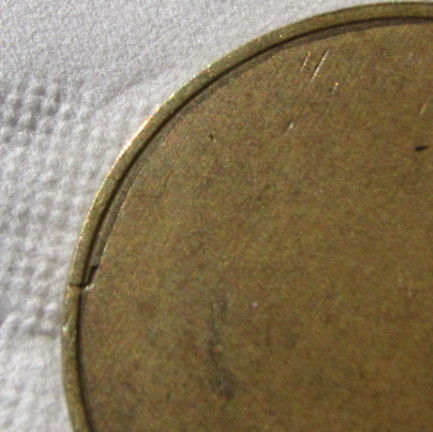 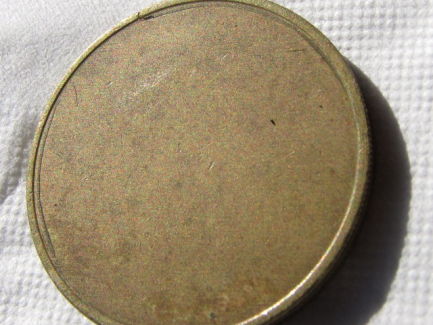 |
|
Pillar of the Community
Australia
2180 Posts |
Well I think a New Zealand $2 coin is meant to weight 10.00g, so 9.95g seems alright. If the scales weren't accurate you might want to find some better scales though (needs to read at least to the 0.01g).
Can you get a picture of the side of the coin?
|
|
New Member
New Zealand
7 Posts |
|
|
Pillar of the Community
Australia
2180 Posts |
Well I'm not sure about value.
You could try looking through some local or Australian auction catalogues for something similar (the old catalogues and prices realised are normally posted on their websites).
|
|
Pillar of the Community
Australia
4411 Posts |
Something I noticed when I was there a few weeks ago is there isn't a huge market for NZ error coins. Out of interest which dealer did you visit?
|
|
New Member
New Zealand
7 Posts |
Back then it was a shop at the bottom of queen st, in auckland. What site/s do you recommend I look at?
|
|
Pillar of the Community
Australia
1295 Posts |
Quote:
If it has the "correct rim" for a New Zealand $2 coin (a security edge) then I'm pretty sure it must be post-mint damage rather than an error, because I'm pretty sure the edge is applied by the collar die at the same time as the obverse and reverse are applied with the main dies. A genuine unstruck $2 planchet should have a plain edge. I think you'll find that most coins that have incuse elements on the edges, like lettering or security rims like this are applied before or after striking. The reason being that the coin press would need some sort of fancy split collar to enable the struck coin to be withdrawn. |
|
Pillar of the Community
Australia
2180 Posts |
|
|
New Member
New Zealand
7 Posts |
Couldn't find anything, but it's cool. Thanks heaps though. Might try again in 20 years or something. May even see if I can make an error coin nz set or something. Cheers.
|
| |
Replies: 15 / Views: 4,724 |
|







 Posted 08/08/2012 03:48 am