Coin Community Family of Web Sites Join Thousands of Coin, Bullion, & Money Collectors
Specializing in Modern Numismatics Join Thousands of Coin, Bullion, & Money Collectors Royal Estate Auctions - $1 Coin AuctionsCoin, Banknote and Medal Collectors's Online Mall Royal Canadian Mint products, Canadian, Polish, American, and world coins and banknotes. Vancouvers #1 Coin and Paper Money Dealer 300,000 items to help build your collection!


Username:
Password:
Save Password
Forgot your Password?


This page may contain links that result in small commissions to keep this free site up and running.

Welcome Guest! Registering and/or logging in will remove the anchor (bottom) ads. It's Free!

Acetone And Copper Test

To participate in the forum you must log in or register.
Author Previous TopicReplies: 35 / Views: 8,387Next Topic
Page: of 3
Bedrock of the Community
BadThad's Avatar
United States
19964 Posts
 Posted 09/19/2012  10:23 pm  Show Profile   Bookmark this reply Add BadThad to your friends list Get a Link to this Reply
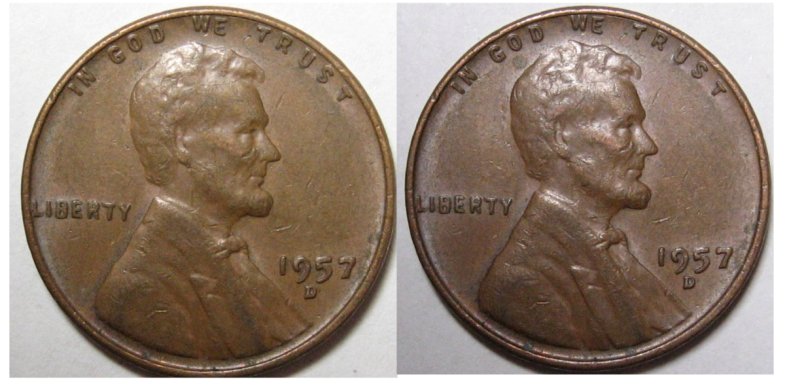
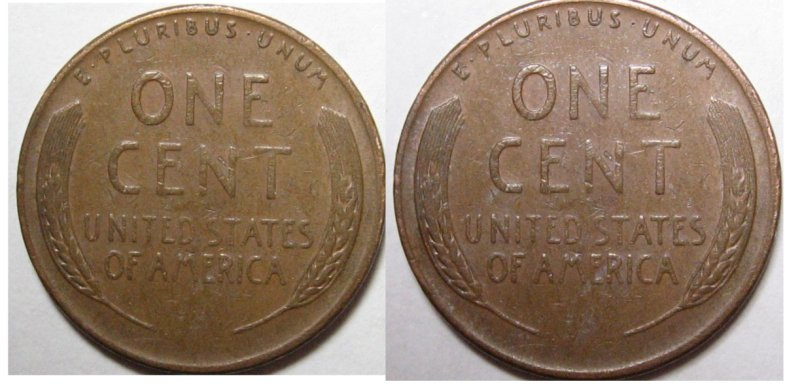
24 hours brown Wheat cent, left initial and right 24 hours.

I'm going to repeat this test because I'm surprized in the color difference. It didn't turn pink but the color appeared to change. I don't believe my camera settings or light changed but I'm going to repeat to make sure. Something is funky with my white balance....look at my background (white copy paper). I must have put the coin in a slightly different position on the paper.


Acetone-And-Copper-Test

Acetone-And-Copper-Test
Lincoln Cent Lover!
VERDI-CARE™ INVENTOR
https://verdi.care/
Edited by BadThad
09/19/2012 10:24 pm
Bedrock of the Community
biokemist6's Avatar
United States
12437 Posts
 Posted 09/20/2012  12:13 am  Show Profile   Bookmark this reply Add biokemist6 to your friends list Get a Link to this Reply

Quote:
I have discovered however, that there are coin like tubes that are made of *Nalgene* plastic which are surprisingly safe for acetone, and are soft

That would be polypropylene, aka #5 plastic
Bedrock of the Community
United States
20753 Posts
 Posted 09/20/2012  10:46 am  Show Profile   Bookmark this reply Add just carl to your friends list Get a Link to this Reply

Quote:
Carl, if you read my whole post, I wasn't advocating doing it. I did this as an experiment when I was a wee thing (like nine years old) and wondered if this might affect later acetone dips.

Being that long ago, probably would have no effect at all. If you mean the same coins and after all those years, Acetone should do nothing except remove new dirt. Hopefully there is no salt left on those coins now.
Thad: I still think there is a possibility it is something your doing and not the Acetone. I've done so many dips in that stuff with Copper coins and no reactions at all. However, never tried it on a new Cent. Although not noted anywhere, I wonder if the outer layer is not just Copper. To save money, the Mint may be telling their suppliers to mix STUFF in with the Copper.
Or your breathing on those coins.
Or something is in the Acetone.
I'm sort of wondering all sorts of possibilities on how Acetone can possibly effect Copper.

Pillar of the Community
Broseph's Avatar
United States
979 Posts
 Posted 11/13/2012  11:27 pm  Show Profile   Bookmark this reply Add Broseph to your friends list Get a Link to this Reply
Great experiment!
Bedrock of the Community
United States
20753 Posts
 Posted 11/14/2012  10:13 am  Show Profile   Bookmark this reply Add just carl to your friends list Get a Link to this Reply
May not be an answer to why things change in Acetone but there was an experiment a long time ago. In this experiment an attempt was made to make the purest water possible. Once made it was placed in a very clean glass jar and sealed. Eventually this jar was placed in a Museum somewhere and is now all cloudy. It was discovered that the glass was slowly disolving into the water. Glass is not perfect and does not only disolve but flows as well. Yes it takes time but it may well be possible that even with this type of experiment with Acetone and Copper in a glass container, some of the properties of the glass may be being absorbed into the solution. Knowing the type of glass, all it's properties, etc., may be a necessity in this type of experiment.
From Wikipedia:
The most familiar type of glass, used for centuries in windows and drinking vessels, is soda-lime glass, composed of about 75% silica (SiO2) plus sodium oxide Na2O from soda ash, lime CaO, and several minor additives. Often, the term glass is used in a restricted sense to refer to this specific use.
Edited by just carl
11/14/2012 10:18 am
  Previous TopicReplies: 35 / Views: 8,387Next Topic
Page: of 3

To participate in the forum you must log in or register.


Disclaimer: While a tremendous amount of effort goes into ensuring the accuracy of the information contained in this site, Coin Community assumes no liability for errors. Copyright 2005 - 2026 Coin Community Family- all rights reserved worldwide. Use of any images or content on this website without prior written permission of Coin Community or the original lender is strictly prohibited.
Contact Us  |  Advertise Here  |  Privacy Policy / Terms of Use

Coin Community Forum © 2005 - 2026 Coin Community Forums
It took 0.26 seconds to rattle this change. Forums