| Author |
 Replies: 35 / Views: 8,744 Replies: 35 / Views: 8,744 |
|
Bedrock of the Community
United States
20061 Posts |
TEST: DOES ACETONE TURN COPPER PINK?I'm going to test acetone on copper once again. (My only regret is that I didn't document my earlier tests.) In my experience, acetone has no effect on metals. I've used it on thousands of coins from cents to dollars. It's the best way to dehydrate the surfaces and remove any dust or light fingerprints before storage. A quick rinse will do. I have had a many occassions where I needed to soak coins in acetone. Sometimes a very light organic residues are removed and soaking works well with PVC residue. I also generally like it as a second stage in the polarity ladder (water, acetone, xylene) as it's somewhere between water and xylene chemically. Anyhow, here's what's up: THE TESTThe challenge given is to soak a fresh 2012 Lincoln Cent in acetone. Conditions: 1) Acetone ACS Grade - Fisher Scientific (15 mL) 2) 4 oz thick-wall, glass bottle with plastic lid and PTFE liner 3) No sunlight, dark about 16 hours a day (my basement) 4) Consistent temperature 70-75°F range Initial Pictures - TIME 0 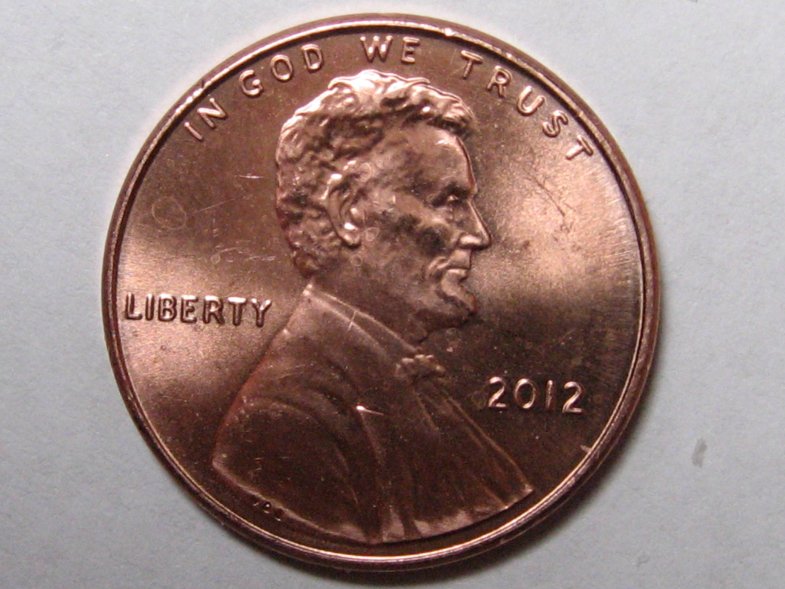 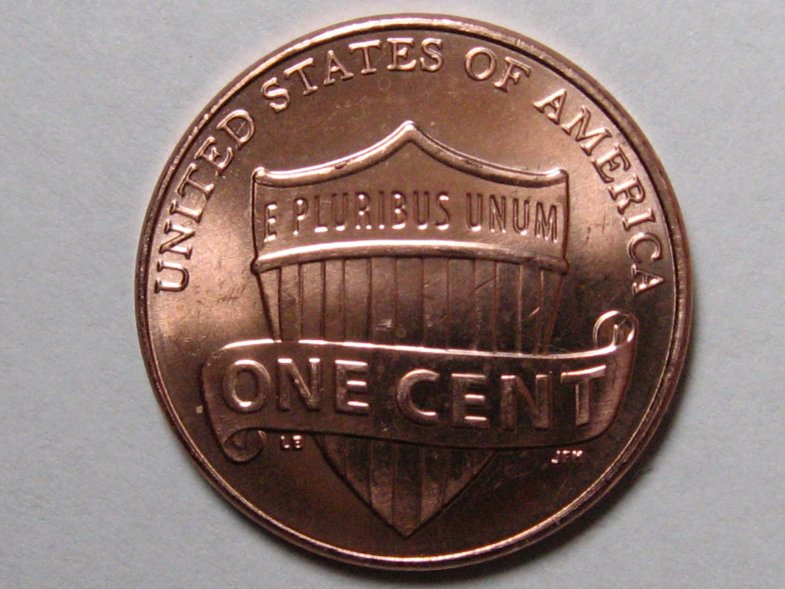 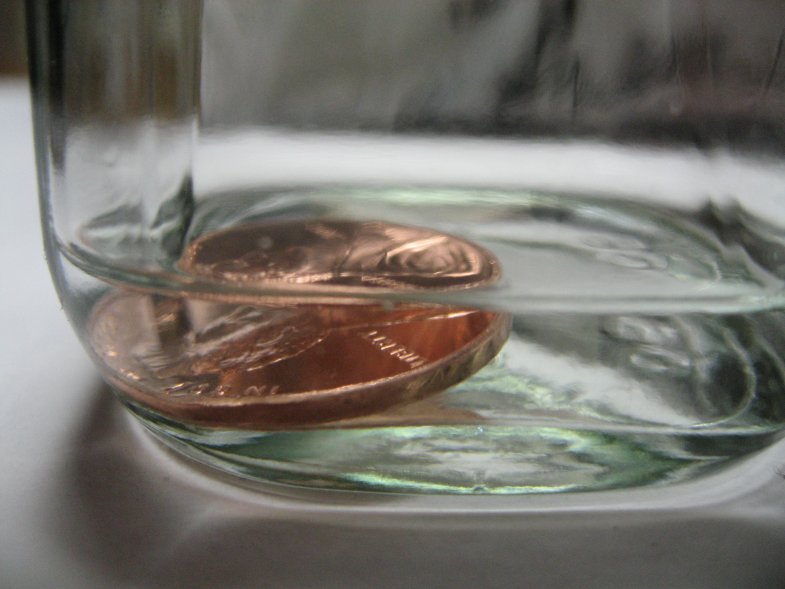
|
|
|
|
Pillar of the Community
United States
1391 Posts |
I've never had any problem with acetone. But I always make sure to get the pure stuff. Maybe some people use other things?  |
|
Pillar of the Community
Australia
4411 Posts |
Hopefully this puts the question to bed. I'll be watching but wont be expecting any change.
Edited by enworb
09/17/2012 11:04 pm
|
|
Valued Member
United States
419 Posts |
 Hopefully, this will confirm wether or not it changes the coin. Thanks Thad  |
|
Pillar of the Community
United States
1374 Posts |
BadThad, I really admire your test! Why don't you do a few more coins using the same method?
Say, perhaps, a copper cent, an old Indian Head copper-nickel, and a silver? And a nickel?
To be honest, I have not had unfavorable results lifting dust from copper using olive oil. In fact, NGC hasn't noticed (or if they have, they don't care). Of course, I NEVER rub the coin. Just press the coin hard between cotton to soak up the oil. Really no different than pinching a coin in your greasy fingers... you just don't end up with a bunch of skin cells on the coin.
Edited by Drsandman2
09/18/2012 02:18 am
|
|
Pillar of the Community
United States
1211 Posts |
Shouldn't you be using a pre-82 cent for this test?
|
|
Bedrock of the Community
 United States
20061 Posts |
Quote:
To be honest, I have not had unfavorable results lifting dust from copper using olive oil. Well, then you're the luckiest person on earth. Olive oil is acidic, acid + metal = bad. Slabbed coins with olive oil on them will eventually corrode and discolor. Lincoln Cent Lover!VERDI-CARE™ INVENTOR https://verdi.care/
|
|
Bedrock of the Community
United States
20753 Posts |
Think I've told this one before. Some time ago someone posted a link to a place that explained scientifically how Copper is effected in Acetone by Sunlight. So I put some Pennies in Acetone in a jar, closed the lid, placed in my garage in a dark place for a few weeks. Then moved it into the Sun on a window ledge but still inside. Few more weeks and moved the jar outside into the Sun. Still nothing happened. My conclusion is I am not using the same Sun the people from that link did. Some time later I decided to try putting a variety of coins in Acetone and again in dark, Sun lite window, then outside in the Sun. Coins were all rather on the dirty side os effects may have been due to contaminates.  Note the discoloration on the Large Cent. A little of the same with the IHC. Yet none of the other Cents were effected. Nothing on the Silver or Nickel coins at all. However, as noted previously, I may need a different Sun for these experiments. |
|
Bedrock of the Community
United States
20061 Posts |
I was hoping you'd chime in Carl.
My experiment will be without sunlight. If someone is using acetone on coins in the sun, they deserve to have some odd effect happen.
Lincoln Cent Lover!VERDI-CARE™ INVENTOR https://verdi.care/
|
|
Pillar of the Community
United States
3552 Posts |
Quote:
using acetone on coins in the sun If anyone must have direct natural sunlight in their work area affecting acetone-immersed coins, may I suggest that a similar environment can be created utilizing a similar but much less threatening light source. A simple $ 3, 120 volt, 14 watt, 5000 k, daylight compact fluorescent (CFL) bulb should closely create the effect of a naturally lit work space without adversely affecting the coins being soaked in acetone. The only negative drawback to this solution is that one would have to shell out extra money to purchase vitamin D tablets  since the natural effects of the sun's rays being absorbed through the skin would be the only totally free solution to an unlimited supply of this essential vitamin. I know I got off track a bit but that was your healthy tip of the day. mdpmedia |
|
Pillar of the Community
United States
1795 Posts |
Just Carl Ty so much for your input ...I find the Sunlight and Acetone Interesting.
|
|
Pillar of the Community
United States
2373 Posts |
I have found the use of acetone on copper a risky proposition. For some reason they have a tendency to turn into purple toners on occasion depending on what the coin may have come in contact with in the past. I would trust xylene on a red/brown before acetone. nlp
|
|
Moderator
 United States
23522 Posts |
Quote:
Some time ago someone posted a link to a place that explained scientifically how Copper is effected in Acetone by Sunlight. That was me, and this is the link: http://www.stonybrook.edu/vescalab/...search7.htmlFrankly, it's not a particularly well-presented piece of research - they offer no explanation of how the "water vapor" becomes part of the reaction. My conclusion is that the only way you'd see a reaction is if the coin were rinsed in water prior to immersion in acetone, so some water would remain in the vicinity of the copper. So, in the absence of light, or an appropriate quick rinse in acetone prior to immersion, the reaction would not happen. I cannot imagine any relative humidity short of equatorial to have any effect, and even then only in the thinnest-possible acetone coverages. Yet, the reaction happens, and has been demonstrated by both scientists and collectors. |
|
Bedrock of the Community
United States
20753 Posts |
Quote:
A simple $ 3, 120 volt, 14 watt, 5000 k, daylight compact fluorescent (CFL) bulb should closely create the effect of a naturally lit work space without adversely affecting the coins being soaked in acetone. Cost of electric to much for me. Now if you can find those powered by those Solar lites like the ones at Walmart, I'll try that next. Quote:
Yet, the reaction happens, and has been demonstrated by both scientists and collectors. Not sure who they are but so far in many, many attempts in the Sun, shade, house lighting, garage lighting and almost any thing else, so far a Copper coin in Acetone stays just the way it was when I put them in the jar. And I've tried with Large Cents, old Copper Cents, Indian Head cents, Copper wire and cable. So my conclusion is I'm using the wrong brand of Acetone, Wrong glass jar but I really think it would work in a different SUN. Wonder how this would work at Proxima Centuri A. |
|
Pillar of the Community
 Canada
9910 Posts |
Quote:
no explanation of how the "water vapor" becomes part of the reaction All commercially available acetone contains water,even the scientific grade BadThad is using may contain .5% water. "Dipping" is not considered cleaning...
-from PCGS website
|
|
Bedrock of the Community
United States
20061 Posts |
Just removed the coin, 24 hour soak. See next post for side by sides. 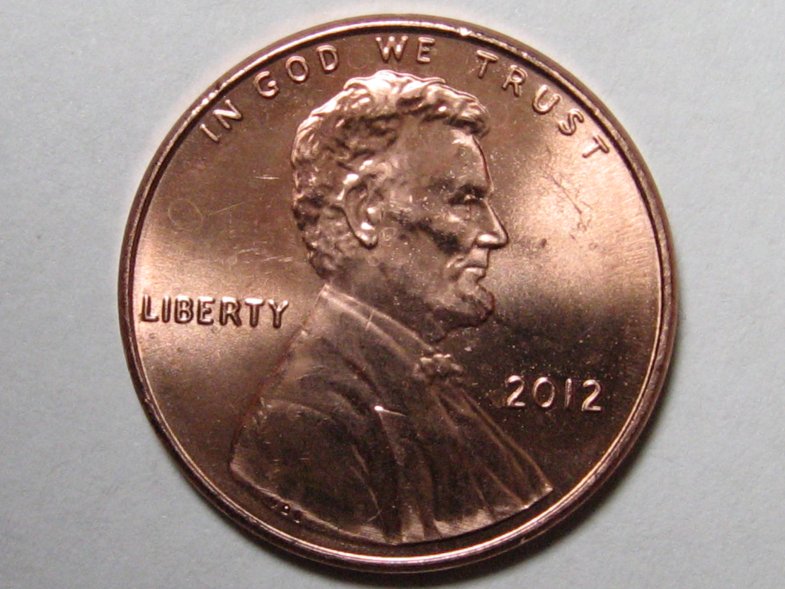 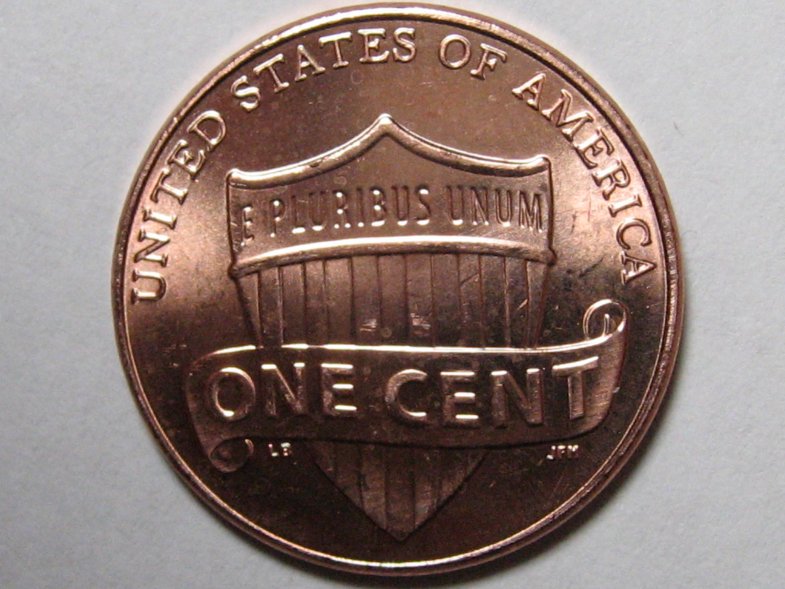 Edited by BadThad
09/18/2012 10:05 pm
|
| |
Replies: 35 / Views: 8,744 |




 Posted 09/17/2012 11:03 pm





