| Author |
 Replies: 13 / Views: 5,551 Replies: 13 / Views: 5,551 |
|
|
Pillar of the Community
2087 Posts |
I have noticed that the design of the Dutch lion Thaler ( The Arabic world called it the dog thaler) is very similar to the Jochimsthalerguilden Groschen, the first Thaler, (1519-1526. I am sure this is not coincidence does any one know of any reference that outlines the similarities between the two coins?
|
|
|
|
Valued Member
United States
54 Posts |
I looked on the internet and found this link that has a lot of information about thalers and daalders. I hope it helps and that this does not break the rules here since this is just an informational link: http://www.digplanet.com/wiki/Thaler |
|
Moderator
 Australia
17000 Posts |
For anyone wanting to compare for themselves: Early joachimsthaler, c. 1520, on British Museum website Dutch leeuwendaalder, 1585, on Dutch Wikipedia. The two main similarities I see are: the lion-in-circle on one side, and the standing figure holding a shield on the reverse. There are plenty of differences, of course: for one, "obverse" and "reverse" are swapped around; the lion is on the obverse of the joachimsthaler, but the reverse of the leeuwendaalder. The lion on the joachimsthaler is the Bohemian lion, with two tails. And the standing figures are different in nature: one is a haloed saint (St Joachim) while the other is an armoured soldier. But I do agree that the designs are at least at-first-glance similar, and I agree that this was intentional on the part of the Dutch. The Dutch copying the lion was, at least in part, a coincidence - this splayed-out appearance is the standard formulaic depiction of a heraldic lion, and both Bohemia and the Netherlands (particularly Brabant) had used a heraldic lion long before the invention of the thaler-sized coinage in either place. However, by the formation of the Dutch Republic, the Dutch lion had formally acquired additional attributes: a sword and clutch of arrows, which the leeuwendaalders omitted. The Low Countries had a long history of issuing local coins that superficially resembled the well-accepted trade coinage of their neighbours, in the hope that their less-fine silver coins might be accepted at par by unwary merchants. "Esterlings" were debased-silver Dutch copies of English pennies. And the leeuwendaalder was a debased-silver Dutch counterpart to the joachimsthaler. Quote:
( The Arabic world called it the dog thaler) The British called them "dog dollars", partly because the lion resembles a dog more than any other animal you're likely to encounter in Britain, partly because mistakenly accepting a leeuwendaalder in trade at "full face value" for a thaler usually left the merchant cursing and muttering at the rotten scoundrel that gave it to them. Don't say "infinitely" when you mean "very"; otherwise, you'll have no word left when you want to talk about something really infinite. - C. S. Lewis
|
|
Pillar of the Community
 2087 Posts |
Thanks Sap. For posting the links saves me posting photos. The reason I am suspicious about the design similarity is because of hints ( no direct references) that the Jochimsthaler Guildengroschen was also called Lion Thaler in the Levant. {Just to ensure every one is on the same page: the Jochimsthaler Guildengroshen was the coin that ultimately gave us the word the term "Dollar". It wasn't the first ancestor of the dollar, that distinction goes to the First hall mint Guildengroshen.}
It would make sense commercially to produce a coin that imitated an already recognized and accepted coin ( even debased) in the Ottoman Levant
Now I have recently discovered the Hall mint ( In modern day Tyrol, Austria) coin was traded to the Levant. Hall mint officials were furious when they discovered that someone had been taking the coins in bulk to Istanbul where they were immediately melted down and used to produce Ottoman coins. There is no record if they caught the culprit but it was regarded at that time as being a serious offence.
Edit: I hadn't heard about the Brits calling it Dog thaler. I was a little incorrect the Arab name for the Lion Thaler was Abu Kalb ( Father of the dog).
Edited by austrokiwi
11/30/2012 01:52 am
|
|
Pillar of the Community
Australia
585 Posts |
Quote:
It would make sense commercially to produce a coin that imitated an already recognized and accepted coin It was a common practice since ever, here is another example, first coin is King of England Aethelred II. second coin is Bohemian Boleslav II. 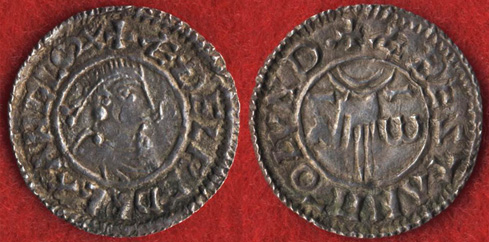 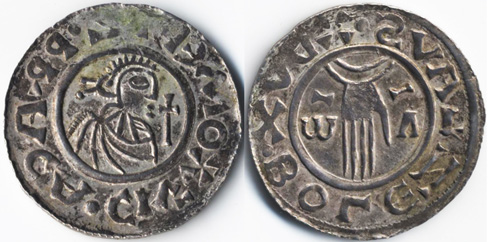 |
|
Pillar of the Community
Hong Kong
1270 Posts |
All were motivated by Levant trade.
Why did the Jochimsthaler appear for a short while of time while Lionthaler (dog dollar) also gave its service in North America except in East Mediterranean? Who knows the first year of issue of Lionthaler, 1575 or 1576?
|
|
Pillar of the Community
2087 Posts |
My knowledge is not in depth so hopefully some one can expand:
The Jochimsthaler Guildengroschen was produced by the Schlick Family from their silver mine in Jochimsthal ( St Jochims Valley). People focus on just the first few years but The last Thaler produced by the Schlick family was in 1767 (Although minted in Prague)
|
|
Pillar of the Community
Australia
585 Posts |
The Dutch brought Lionthaler (dog dollar) to America for circulation in their colony New Holland (today's New York). Lionthaler was minted since 1575 but first one had a little bit different design: 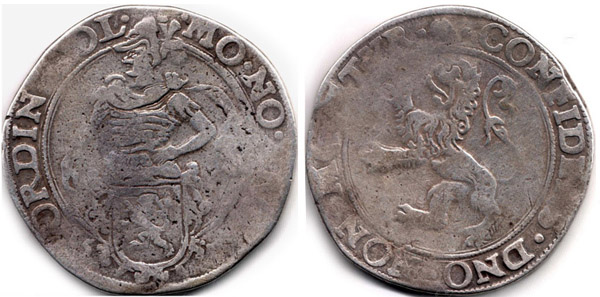 |
|
Pillar of the Community
Hong Kong
1270 Posts |
|
|
Pillar of the Community
2087 Posts |
That ebay listing seems to be of a genuine example (the seller is reputable) there are fakes of Lion Thalers' out there. The general principle to understand with Lion thalers' is they were often poorly struck, the Blank is not even, with varying thickness's across the coin. Counterfeiters usually make the mistake of using modern production methods so there coins are often of a higher quality. |
|
Pillar of the Community
Hong Kong
1270 Posts |
Valuable comments from austrokiwi that more people need to be noted so we join the force to avoid counterfeits.
|
|
Pillar of the Community
Belgium
1185 Posts |
Quote:This is my first time to see a 1575 Lionthaler. Thank you turtleoverhead. Many people suppose that 1576 was the first year of issue because there are still many Lionthaler 1576 for sale in ebay. @turtleoverhead very nice coin, type 1b Leeuwendaalder/Lion Dollar produced early in 1576 in Dordrecht, Holland @wonghinghi: this is not a 1575 (type 1a), which is very difficult to find |
|
Pillar of the Community
Belgium
1185 Posts |
sorry I jump in so late in this discussion; I read this tread only today the link to BM no longer works below are images of two prototypes: 1525 the first taler sized silver coin ever; the Joachimstaler 1575 the first taler sized silver coin of the early days of the Dutch revolt against Spain 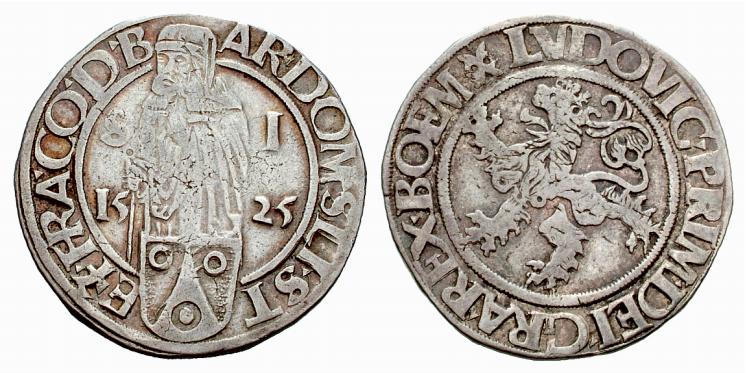 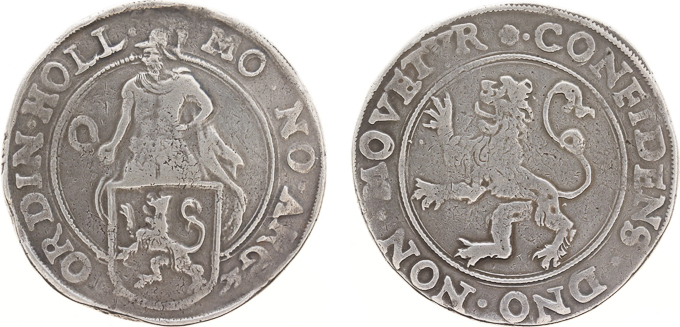 although the rampant lion is a common image (used in countless other coins, there is a thread about this topic) what is symbolized on these coins could not be more different the Joachimstaler combines on the OBV a late medieval symbol :the local saint (Sanctus Ioachim => letters S I) and on the REV text that connect to the local ruler, the king og Bohemia ( LVDOVICVS PRIM(vs) D(ei): GRACIA REX BO(hemiae) the Leeuwendaalder is a revolutionary coin symbolizing the growing independence of the United States (provinces) of The Netherlands. No image or mention of the king (officially Phillip II of Spain ruled still over the 17 provinces of The Netherlands; just mention of the fact that this is a New Silver Coin of the States of Holland ( Moneta Nova Argentea Ordinum Hollandiae). One reason for the Dutch revolt was religious freedom, the protestants were prosecuted for decades before the revolt started. The text on the REV side refers to this religious principle (Confidens Domino Non Movetur): translated it means something like 'IN GOD WE TRUST" a text that comes back in on coins that are the result of other famous revolutions. In summary: the two talers share only a few issues (taler-sized silver coin and rampant lion) but are fundamentally different: the Joachimstaler refers to the local saint and local king, something that was prevalent in Europe for a long time the Leeuwendaalder is a revolutionary coin meant to provoke the enemy and inspire (also support financially) the early days of the revolt |
|
Pillar of the Community
Hong Kong
1270 Posts |
Quote:
In summary: the two talers share only a few issues (taler-sized silver coin and rampant lion) but are fundamentally different:
the Joachimstaler refers to the local saint and local king, something that was prevalent in Europe for a long time
the Leeuwendaalder is a revolutionary coin meant to provoke the enemy and inspire (also support financially) the early days of the revolt @1c5d7n5m, many thanks, I see the first genuine 1575 Lion taler now and you let me more understanding to the History about these coins.  |
| |
Replies: 13 / Views: 5,551 |
|










 Posted 11/29/2012 8:58 pm


