| Author |
 Replies: 22 / Views: 3,181 Replies: 22 / Views: 3,181 |
|
Pillar of the Community
Hong Kong
1270 Posts |
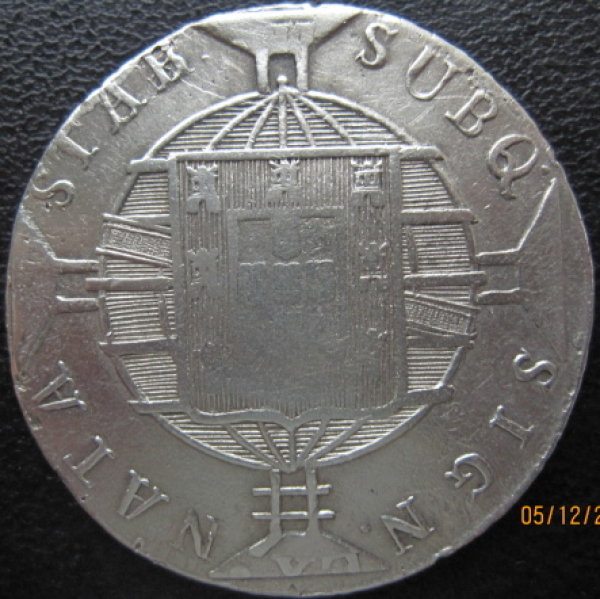
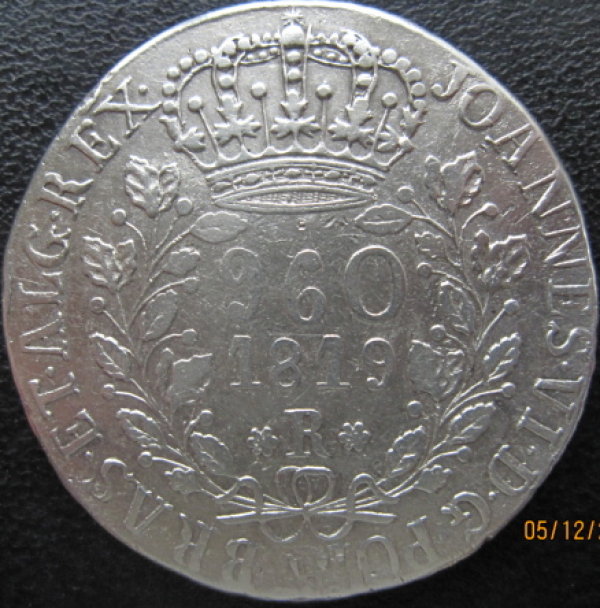
Hi group, I have a close examination on both sides of this coin and I am sure it is a restrike specimen from another coin as described by most of the coin books. The diameter of this coin is 40.8mm and it has a nice flora edge. However I can't be sure what the mother coin of this piece is. See you can tell something you know about this coin. My arguments about this coin: A flora edge would rule out it was from a Portrait dollar. (But could the edge of this restrike specimen be re-made before restriking? If it was, then it might be come from a Portrait dollar or any other coins.) The diameter of this coin is 40.8mm, it seems larger than most of the Portrait and Pillar dollars so it might come from other 'ready made' coins? (But what other coins could be used for the restrikes at that time?) Who can give an answer? Henry 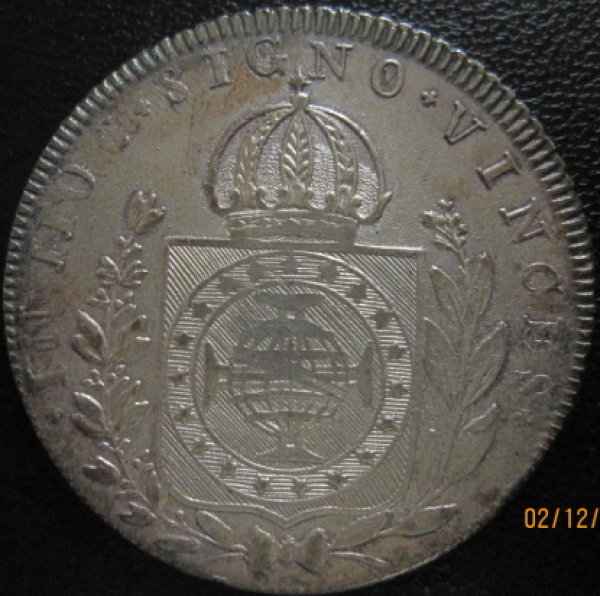 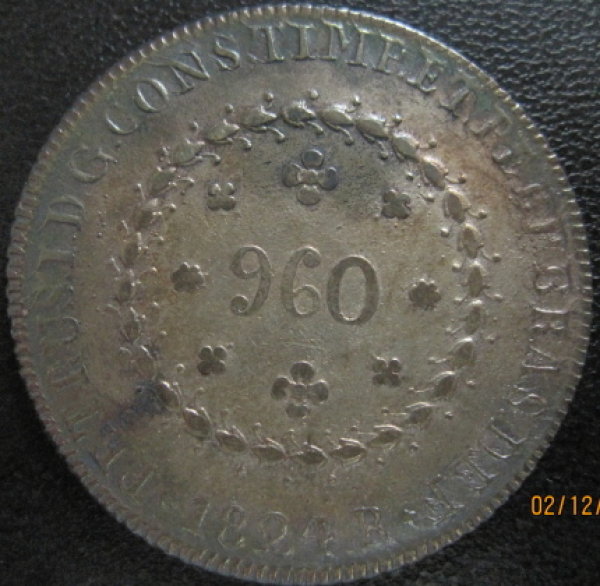   |
|
|
|
Pillar of the Community
2087 Posts |
I can't help but I think the term you should be using is "over-strike" rather than "re-strike"
|
|
Pillar of the Community
 Hong Kong
1270 Posts |
Yes, should be "over-strike", thank you austrokiwi. Forget my poor Englsih.
|
|
Pillar of the Community
United Kingdom
2932 Posts |
|
|
Pillar of the Community
Hong Kong
1270 Posts |
Yes, "forgive' is better, thank you Bacchus. :(
|
|
New Member
United States
17 Posts |
Hi,
You have an 1824-R 960 reis, 28 tulips, "CONS.T" legend variety.
It's a little difficult to see from the dark photos, could you attach some more with the light at another angle?
It is definitely an overstrike (not all 960 reis are overstrikes), I can just make out a couple of letters of the host legend at about 1:15 on the obverse and general host shadowing throughout. I'll keep looking at it some more to see if I can figure it out from these photos.
Regarding the size, when these were struck they went through an annealing process prior to the overstriking that oftentimes increased the diameter of the disk.
Overstrikes were made on any coin circulating in Brazil at the time, including all colonial and continental Spanish 8 reales, ex-colonial issues (e.g. independent Chile/Argentina pesos) and on very rare occasions non-Spanish crown-sized coins (e.g. US dollars).
|
|
New Member
United States
17 Posts |
I'm fairly confident that it's a FERDIN VII portrait 8 reales. The date might be discoverable, right around the BRAS legend (The B of BRAS appears to be over an 8 or a 0.
At 1:30 on the obverse, you see the A of the GRATIA host legend. The shadowing present below it, both inside and outside the tulips, are the folds of Ferdinand's clothing.
|
|
Pillar of the Community
France
1591 Posts |
Here is an earlier 960 reis which was an overstrike as well (just bought that one because I liked the overstrike). You can read CAROLUS / HISPAN and see a part of the pillar on it. I think it was pretty common in Brazil to do that back then - looks like they didn't had much silver ? 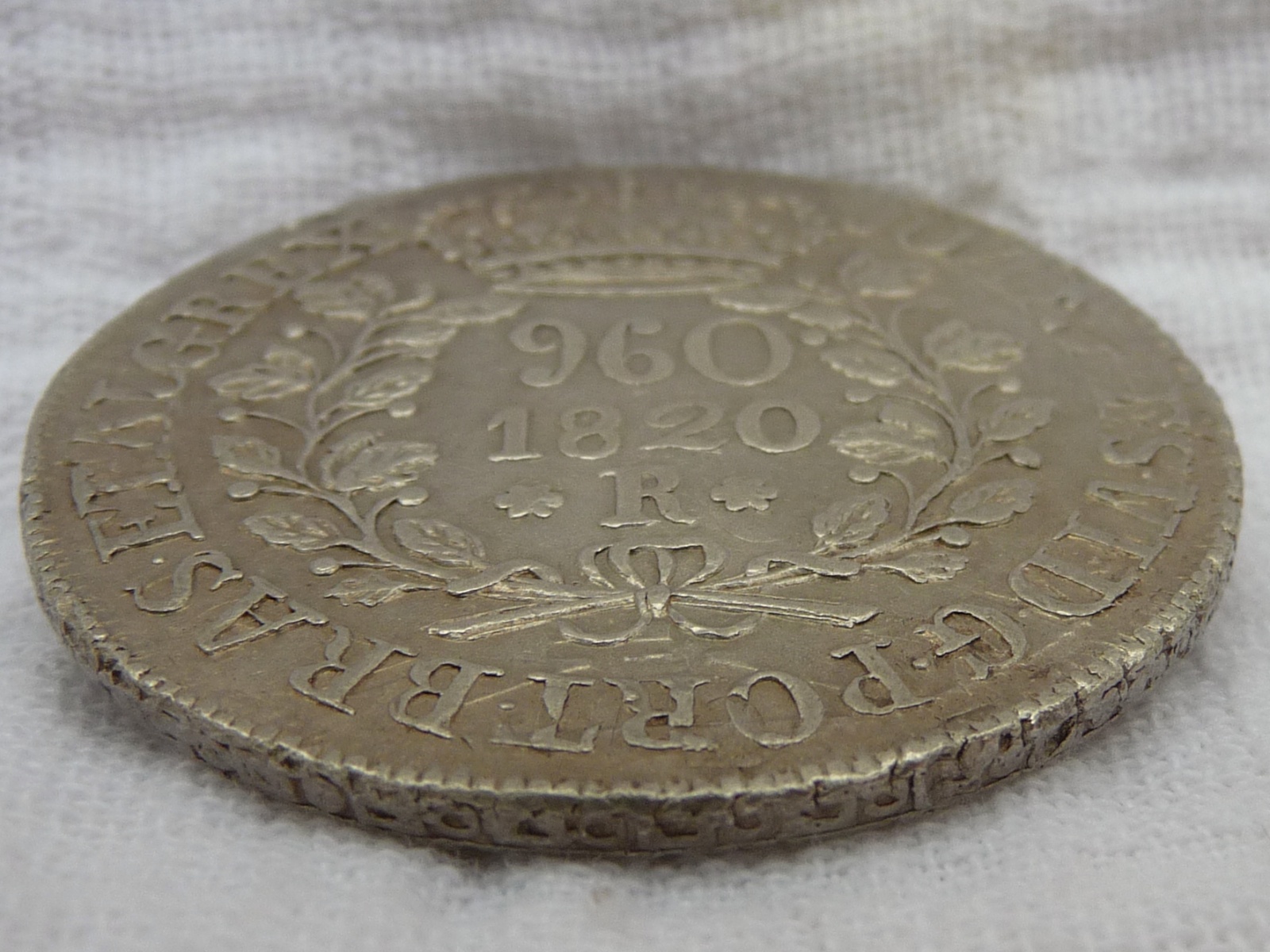 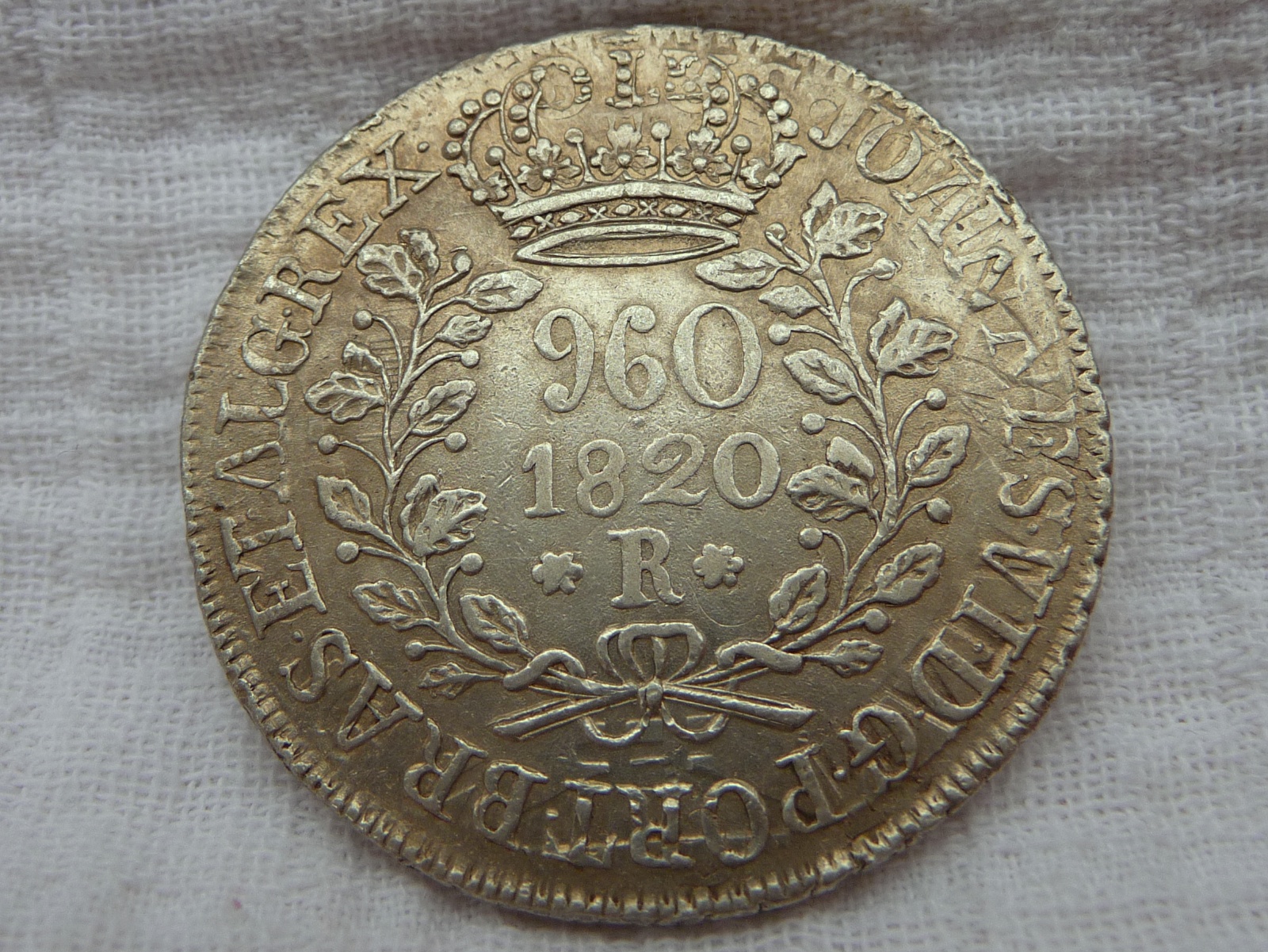 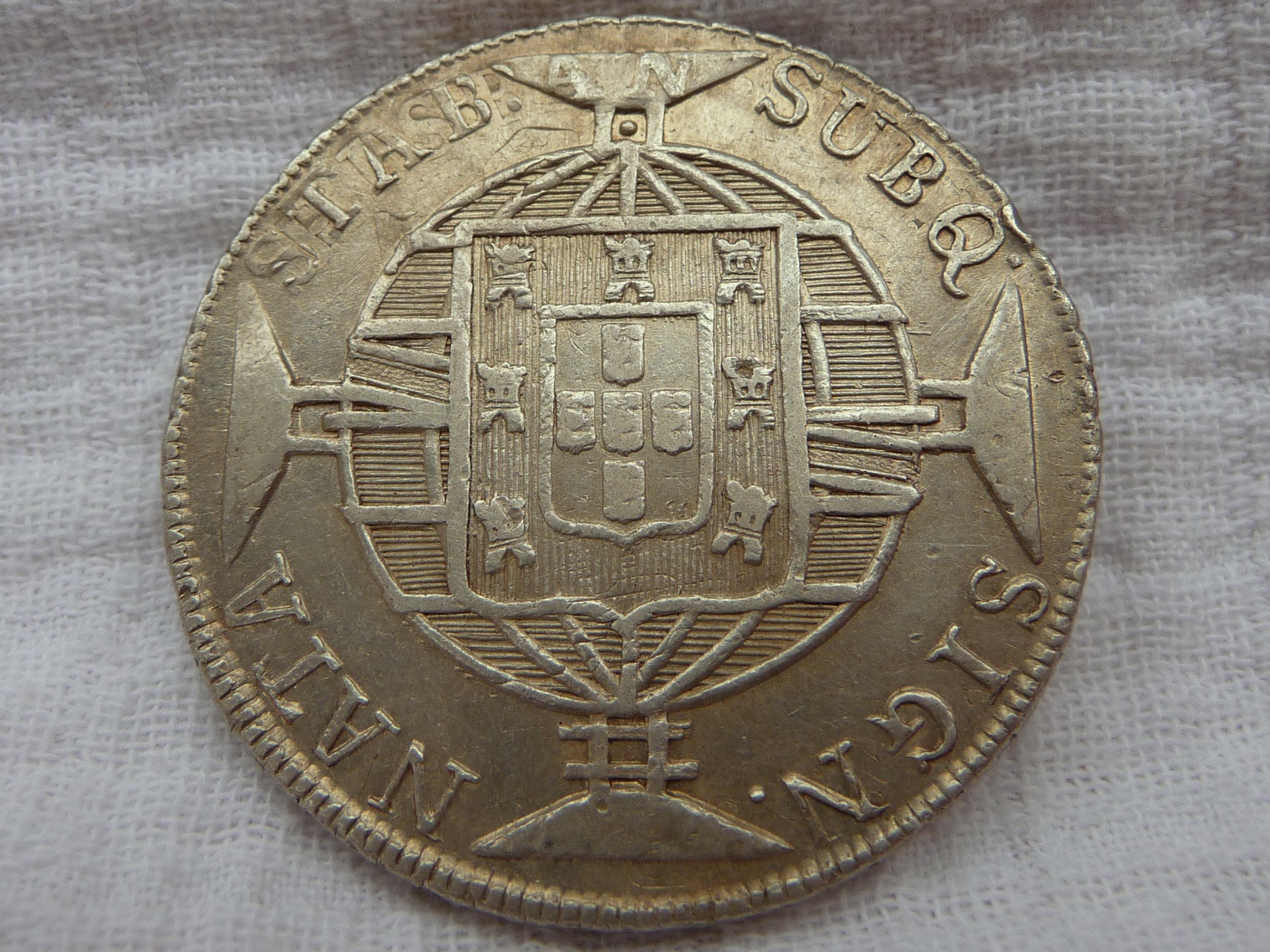 Edited by MathieuMa
12/03/2012 4:51 pm
|
|
New Member
United States
17 Posts |
That last one has some serious die clashing on the obverse, very nice.
Brazil has a tremendous amount of mineral wealth, including gold and diamonds, but never had much silver production. Primarily, though, overstriking was used as a government financing tool. The market rate of the 8 reales was about 750-800 reis, they were purchased on the market and then overstruck and used by the government at a value of 960 reis.
|
|
Pillar of the Community
France
1591 Posts |
Yes, this one background is a mix of the previous coin and die clash :) Very interesting to check, although I never figured out the date of the host coin.
(you can zoom the picture, I uploaded the hi-res ones)
|
|
New Member
United States
17 Posts |
Yeah, that date will be hard to make out, with both the effects of the overstrike and the clashing. It's clearly a CAROLUS IIII at least.
|
|
Pillar of the Community
Hong Kong
1270 Posts |
Hello 960Coins, you sound like an expert of those Brazilian overstrike coins. I find it very difficult to work out the year of the mother coin and most of the time, I also find it is not easy to rule out what the mother coin belongs to. Two more enlarged pictures for the coin 1824 to see: 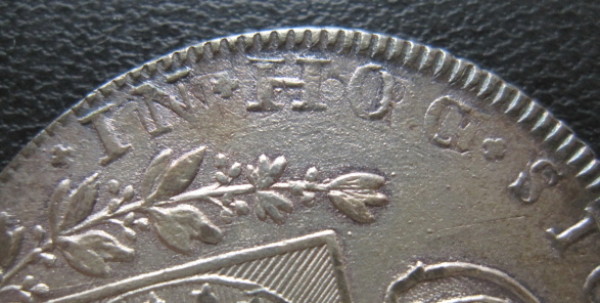 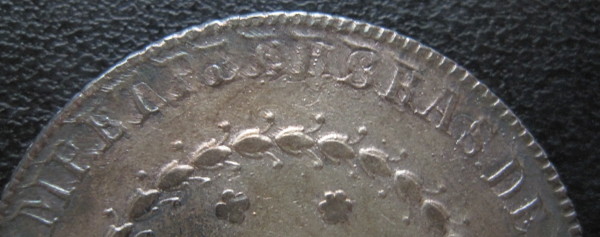 If anyone like more pictures, just tell me to do so. There is a question for you to answer, 960Coins, I know the coin was an overstrike from a Spanish Mexican 8R (you said this is a "FERDIN VII portrait 8 reales"), but do you think the coin had been re-edged (or edge re-minted) before or after it was struck? That is, mother coin is Spanish Mexican while the edge is Brazilian. Do you agree? P.S. Can you tell me how to upload a high resolution photos like yours, MathieuMa? |
|
Pillar of the Community
Hong Kong
1270 Posts |
|
|
Pillar of the Community
France
1591 Posts |
wonghinghi : I just host the pictures on my own place ... it's the only way.
The edge you just posted is excellent, we can see for sure the newly applied edge, and the previous one.
Very interesting, I was not aware of this process ! (well, I didn't saw many of those - as I don't collect this type)
|
|
New Member
United States
17 Posts |
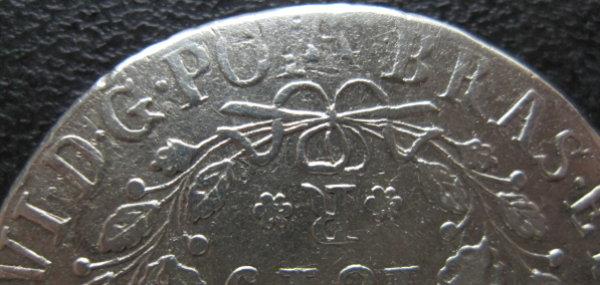
I'd say quite confidently that the host coin for the 1824-R is an 1813 FERDIN VII, possibly Mexico City minted (not confident, about that from the pictures). You can clearly see the 813 of the date in that picture you posted. In the Brazilian legend "ET.PERP.BRAS" the 3 is visible under the R of PERP, the 1 under the last P of PERP, the 8 under the B of BRAS.
The edge has been re-milled with the Brazilian design, that very often was not successfully applied.
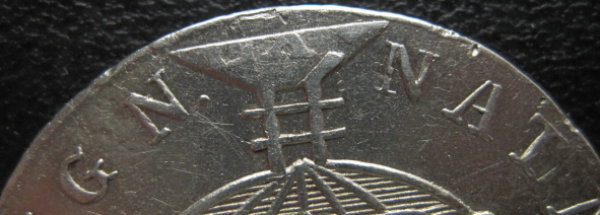
On the last coin, the 1819-R, I can't see enough to make anything out except for a few letters that don't help reveal the host identity.
Edited by 960Coins
12/05/2012 10:28 am
|
|
New Member
United States
17 Posts |
The 1819-R could be a Lima mint issue, if I had to guess from that one picture. The host mintmark is directly under the N of NATA, looks like it might just be the Lima mark.
|
| |
Replies: 22 / Views: 3,181 |







 Posted 12/02/2012 08:28 am